


Waymo, the leader in self-driving taxis that has been aggressively expanding this year, has encountered the most severe multiple crises since its operation in the past month. From a Waymo self-driving taxi driving directly into a flooded road in San Antonio in early May, leading to a large-scale software recall, to heavy rains in Atlanta and another car driving into a flooded area and breaking down, to a complete suspension of highway services due to construction zone problems, a series of events forced Waymo to completely shrink its operating territory in just three weeks, suspending passenger services and all highway routes in six cities.
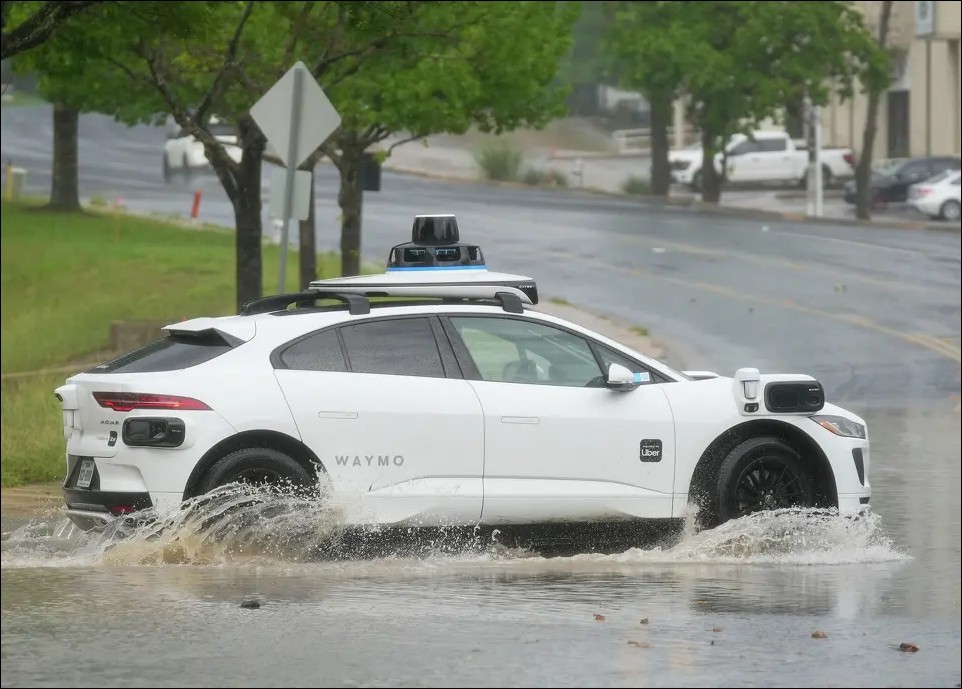
Waymo’s troubled summer: Service suspended in six cities, highways completely closed
Wave One: San Antonio Flooding Incidents and NHTSA Recalls
The crisis started in early May. One of Waymo’s self-driving taxis in San Antonio drove directly into a flooded road. Although no one was injured, it exposed a key flaw of the autonomous driving system in bad weather conditions. Waymo subsequently submitted a voluntary recall to the U.S. National Highway Traffic Safety Administration (NHTSA), involving approximately 3,800 robotaxi vehicles.
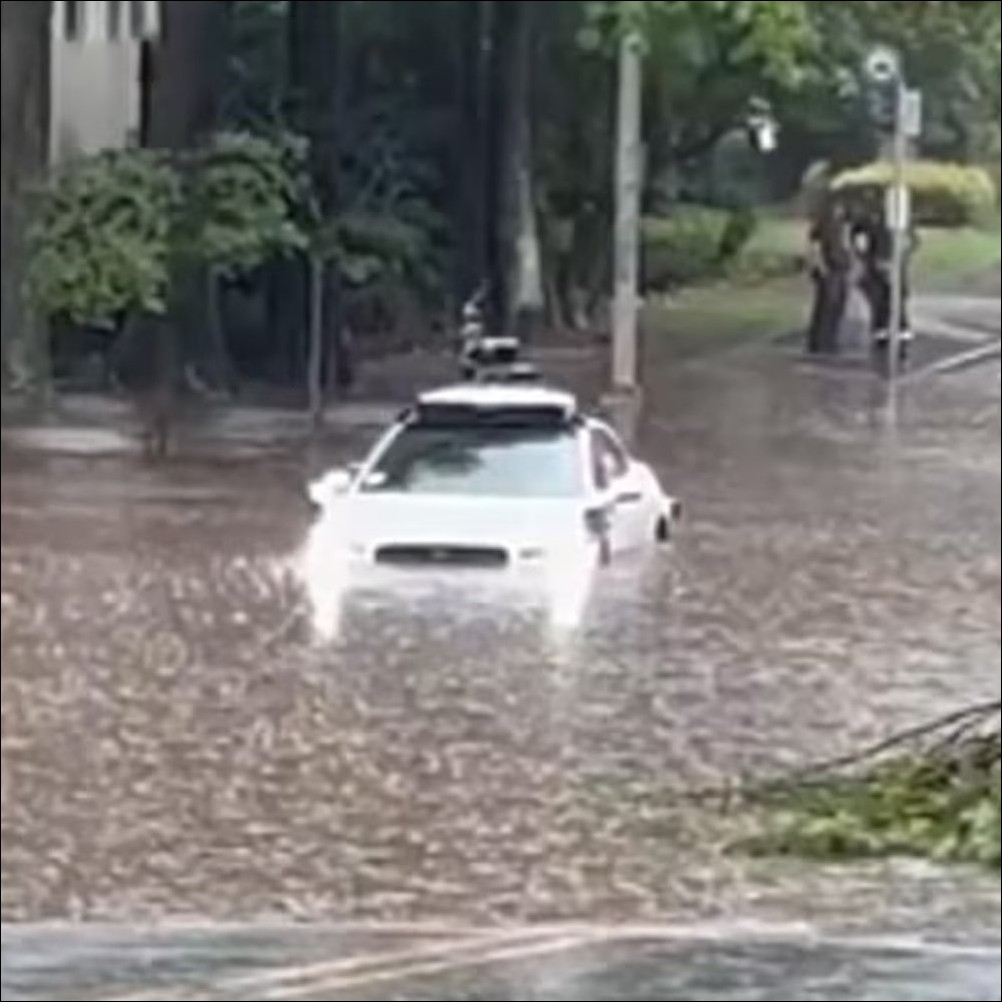
NHTSA’s recall report states: “When driving on highways, Waymo AV may slow down but not stop completely in response to detection of a potentially impassable water lane.” This means that although Waymo’s autonomous driving system can “detect” water, in high-speed driving scenarios, the decision-making logic does not prioritize “stop and wait”. Waymo said when filing the report that “corrections are under development.”
San Antonio is a city where Waymo just launched services in February this year. A major security incident occurred in just three months, which was a direct blow to Waymo’s expansion strategy.
Second wave: Atlanta will issue packages again, and services in six cities will be suspended simultaneously.
One wave comes after another. On May 22, Atlanta encountered heavy rains and floods. An unoccupied Waymo drove into a waterlogged road again and broke down in the water. A Waymo spokesperson confirmed that “the vehicle has been recovered and removed from the site,” but did not explain what technical problems the robotaxi encountered on the waterlogged road.
Waymo service was temporarily suspended in Atlanta on Wednesday after one of the company’s driverless vehicles appears to have stalled when it drove into floodwaters. https://t.co/1ovirfe24N pic.twitter.com/oSbzJ9mR8G
— ABC News (@ABC) May 22, 2026
By May 23, due to the expansion of heavy rains, WaymoPassenger services suspended in six cities: Atlanta (Georgia), Nashville (Tennessee), Austin, Dallas, Houston, San Antonio (Texas). These six cities cover almost all of Waymo’s new expansion markets this year, leaving only the most mature areas of Phoenix and San Francisco to continue operations.
The third wave: the highway is completely suspended
In addition to the water problem, Waymo also faces another operational challenge: the construction zone. On May 21, Waymo announced the suspension of freeway services in all operating areas, including San Francisco, Los Angeles, Phoenix and Miami, citing the “need to improve driving performance in construction areas.”
Waymo said in a statement: “We have temporarily suspended highway operations and are integrating the latest technical learning into the software. We expect to resume these routes soon.” However, Waymo did not elaborate on the specific construction scene that caused the system’s misjudgment.
Highway services are of great significance to Waymo. It is not only a key part of the user experience (many users rely on fast roads for commuting), but also a core capability indicator for Waymo to move from “slow street taxi hailing” to “complete urban transportation services”. The complete suspension of highway services means that Waymo’s autonomous driving technology still has significant shortcomings in complex dynamic scenarios.
Technical Dilemma: The “Bad Weather” Curse of Autonomous Driving
This chain of events exposed a fundamental limitation of current self-driving technology: its ability to adapt to bad weather. Scenes such as stagnant water, heavy rain, and construction zones are common sense judgments for human driving, but they pose great challenges to autonomous driving systems.
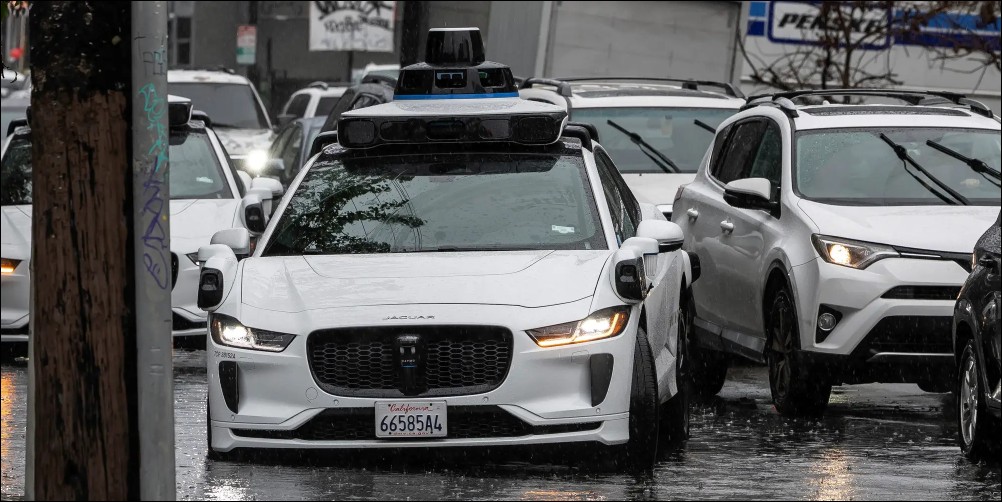
Autonomous vehicles rely on photographic lenses, radar and LiDAR to sense the environment. However, in heavy rain, the visibility of photographic lenses is significantly reduced, and LiDAR will also produce a lot of noise due to the reflection of raindrops. Water-filled roads are more complicated. The reflection from the water surface may cause the system to misjudge the road surface as a passable road, and fail to identify the actual water depth.
The construction zone problem Waymo encountered on the highway involved more complex scene understanding: temporary traffic cones, changing lane lines, and gesture commands from construction workers. These are extremely challenging edge cases for rule-based autonomous driving systems.
The contradiction between expanding vs. being forced to contract
Waymo opened six new cities this year (Miami, Dallas, Houston, San Antonio, Orlando, Nashville), demonstrating Alphabet’s strong ambition for the commercialization of autonomous driving. However, rapid expansion also means that vehicles need to drive in more diverse weather conditions and road environments, and every occurrence of edge cases is a test for the system.
From a business perspective, Waymo chose to quickly suspend service after discovering the problem instead of forcing operations, which is a responsible approach. But for users accustomed to Waymo’s services, frequent service outages are eroding trust in self-driving technology. As for Waymo’s business model, if self-driving taxis cannot operate on rainy days and cannot access highways, their usability will be greatly reduced compared with traditional ride-hailing services such as Uber/Lyft.
Conclusion
The service outages Waymo has experienced in the past month are a true reflection of the technological dilemma of the autonomous driving industry. From water accumulation in San Antonio to heavy rains in Atlanta to construction zones on highways across the United States, these “daily scenes” for human driving are still high walls that are difficult to overcome for autonomous driving systems.
Waymo chose to proactively recall and suspend services to solve the problem, which is the right direction. However, these incidents also highlight that there is still a huge technological gap between autonomous driving from “feasible under certain conditions” to “reliable in all weather and all scenarios”. For the entire industry, the Waymo crisis in 2026 is an important reminder: the popularization of autonomous driving will not only rely on algorithm advancement, but also must pass the rigorous test of the real world.
Source: KOCPC Chinese