


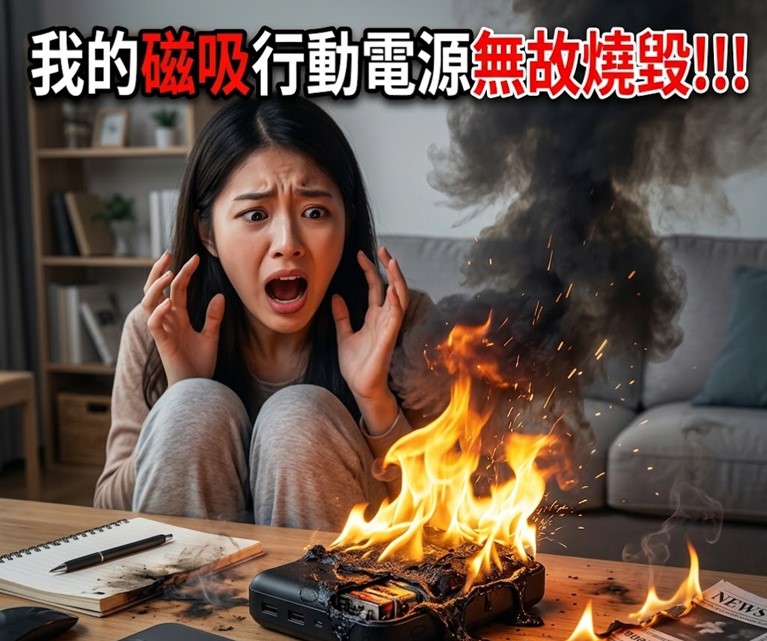
A few days ago, a Threads friend shared that a well-known brand of magnetic wireless charging power bank (hereinafter referred to as “magnetic power bank”) exploded and caught fire for no reason when it was used without charging. The netizen lamented that he had avoided buying an all-in-one power bank with a built-in plug and purchased a well-known brand. An accident occurred when the bank charger spontaneously ignited and caught fire. He was very distressed and panicked.
Is the risk of spontaneous combustion of magnetic power banks higher? What precautions should be taken when purchasing magnetic power banks? What are the common Q&A questions? The following is a summary and explanation:
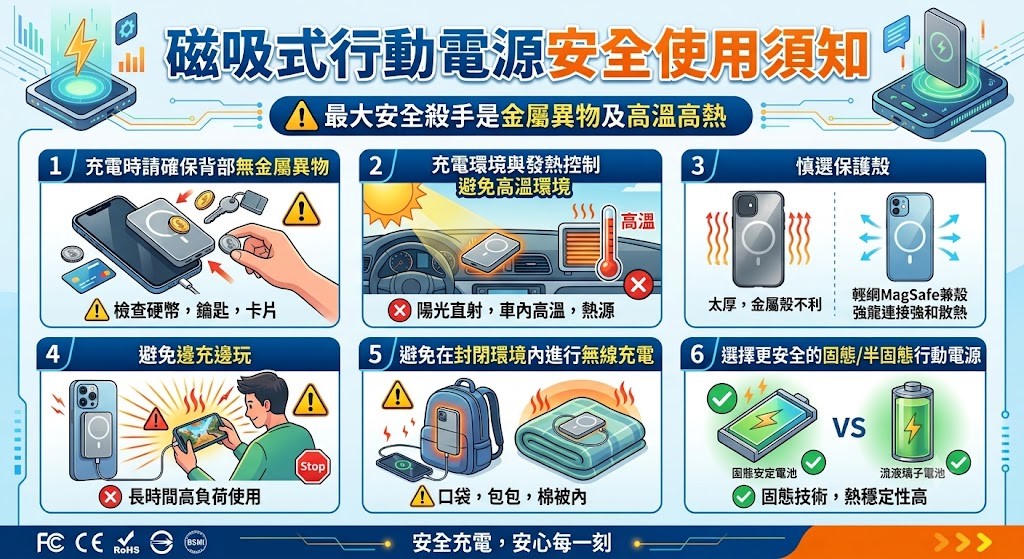
As flagship mobile phones generally support magnetic wireless charging, more and more people are purchasing power banks with magnetic wireless charging. It is very convenient to charge the magnetic power bank without a charging cable, but you must pay more attention to the six safety instructions when using it, so that convenience and safety can coexist. The following is a summary video and detailed instructions on the safe use of magnetic power banks:
1. Risks of magnetic power banks:
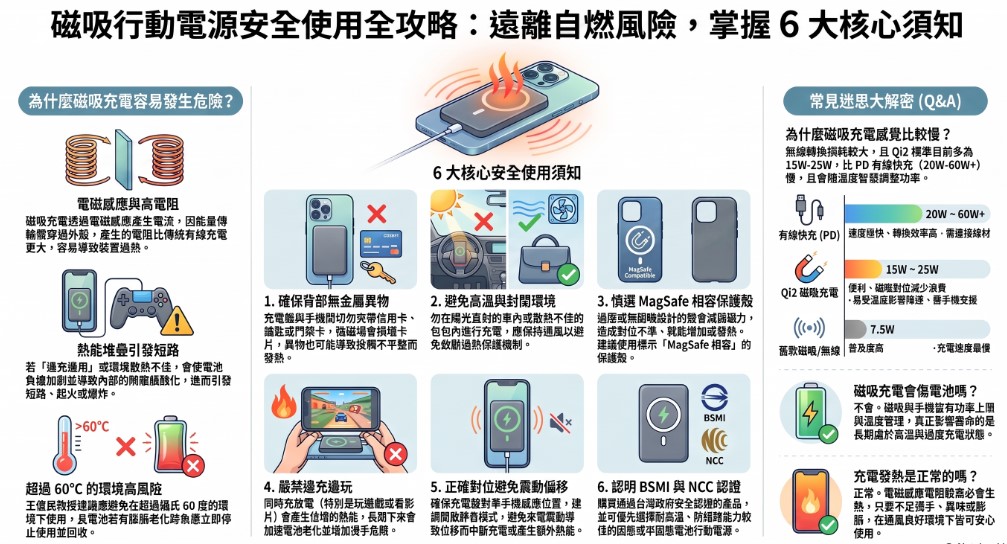
Since the structure of magnetic power banks is more complex than traditional power banks, the risk of spontaneous combustion accidents is higher if the product has quality defects or is used improperly.
According to Professor Wang Fumin of the National Taiwan University of Science and Technology in Taiwan TV News [discover science】An interview with the program pointed out: “Magnetic charging mainly generates current through electromagnetic induction, but because the energy transmission needs to pass through the casing, unlike wired charging, the power is directly input into the mobile phone without unnecessary indirect contact obstruction, so the resistance generated will be greater, and it is more likely to cause the device to overheat. In addition, users’ mobile phones are usually equipped with mobile phone cases. If a mobile phone case is too thick or not suitable for magnetic suction, the charging will be further increased. If the user has the habit of charging and discharging at the same time, it will greatly increase the energy consumption and make the mobile phone and power bank more likely to be overheated. If the mobile phone is used while charging, it will increase the burden on the battery and may cause the internal isolation film to melt, which may lead to short circuit, fire or explosion. “
Professor Wang Fumin specifically reminded that if the battery shows signs of swelling and aging, it should be stopped and recycled as soon as possible, and it is recommended to avoid using the mobile power supply in an environment exceeding 60 degrees Celsius. Learning proper care and usage habits is key to ensuring that this convenient technology does not turn into a public safety accident.
2. Instructions for safe use of magnetic power bank:
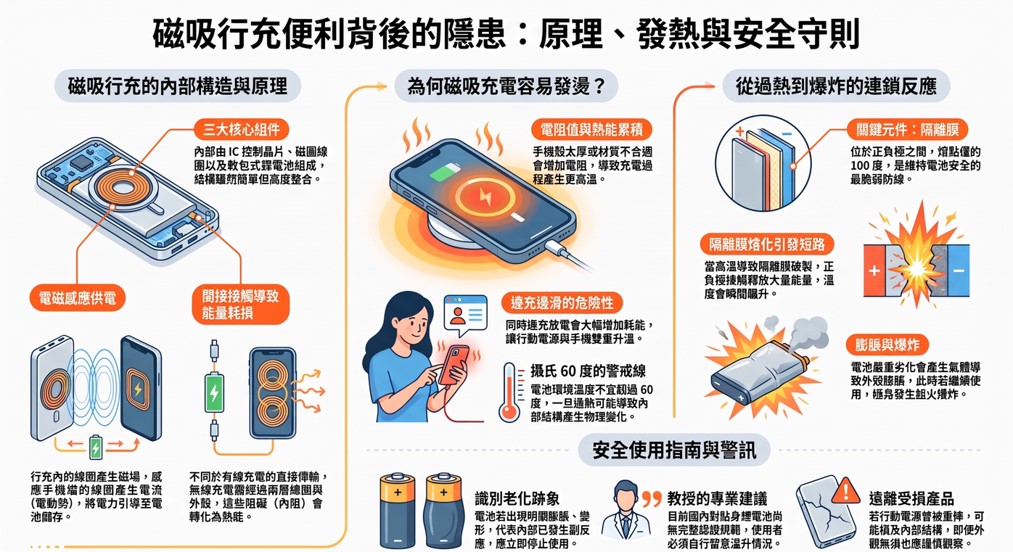
The biggest safety killers of magnetic power banks are metal foreign objects and high temperature. The following are six core considerations for daily use:
A. Please make sure there are no metal foreign objects on the back when charging:
When charging, please make sure there is no dust or metal foreign matter between the charging plate and the back of the phone, and ensure that the contact is smooth. Never place credit cards, access cards, passports or key rings between your phone and the magnetic charger. Strong magnetic fields can damage the card’s magnetic strip or chip.
B. Charging environment and heat control to avoid high temperature environments:
Avoid charging in direct sunlight or in a hot car to avoid the risk of overheating or activating the protection mechanism to reduce charging efficiency; please ensure proper alignment and maintain ventilation. If the phone vibrates when receiving a call, it may cause displacement. It is recommended to turn on mute to avoid interruption.
C. Choose your protective case carefully:
A phone case that is too thick or has no magnetic design will weaken the magnetic force, causing misalignment, increased heat generation, or interruption of charging. It is recommended to use a protective case marked “MagSafe Compatible” or use a bare metal charger.
D. Avoid charging and playing at the same time:
Using your phone while charging (especially playing games or watching videos) will superimpose heat energy, which can easily accelerate battery aging in the long run.
E. Avoid wireless charging in a closed environment:
Since magnetic charging generates high heat energy, it is recommended not to charge mobile phones and magnetic power banks in closed environments with poor heat dissipation (such as inside bags) to avoid overheating during charging and affecting product life due to poor heat dissipation.
F. Choose a safer solid/semi-solid power bank:
Since solid-state/semi-solid batteries can withstand higher temperatures than traditional lithium batteries, and the battery itself can avoid internal short circuits to the greatest extent, choosing solid-state/semi-solid batteries when purchasing a magnetic power bank will provide you with additional protection.
However, at present, solid-state/semi-solid-state battery power banks are booming, and the products are uneven. The fact that the battery is safer does not mean that the quality of other parts is compliant. It is recommended to purchase qualified products certified by Taiwan’s BSMI and NCC, and pay attention to the product’s reputation.
3. Common Q&A about magnetic power banks:
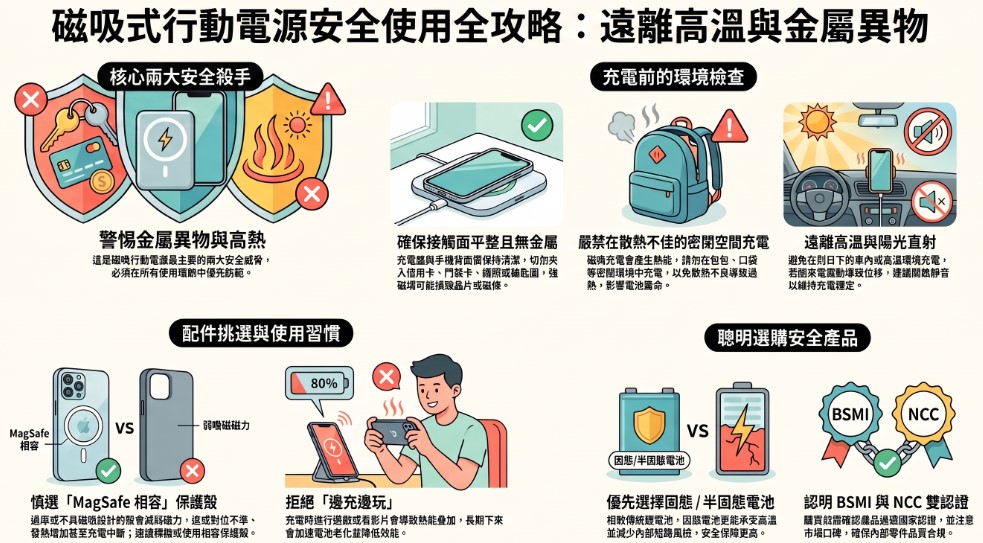
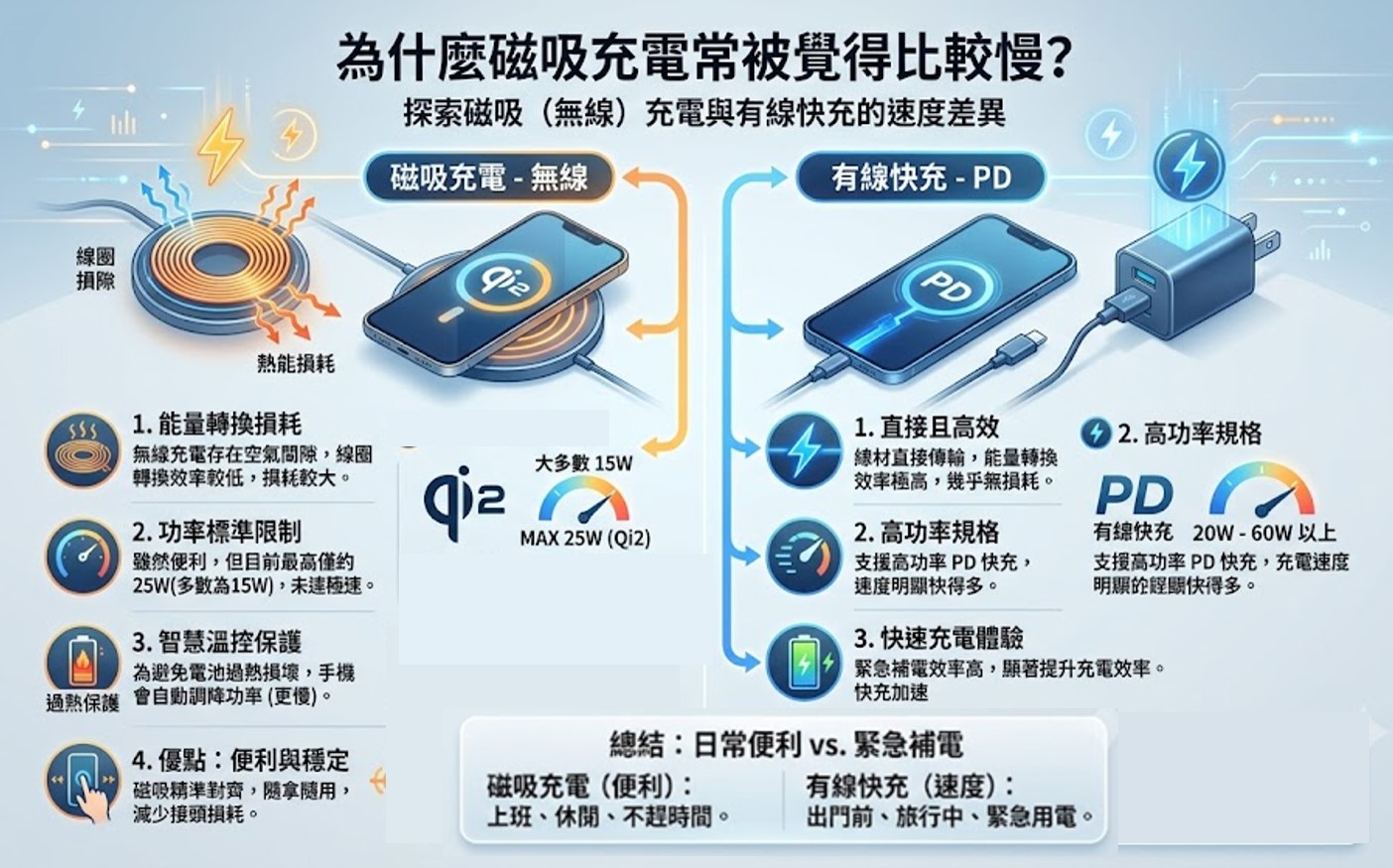
Q1: Why is magnetic charging often considered slow?
Magnetic charging focuses on convenience and stability, not extreme speed.
The energy conversion loss of wireless charging will be greater than that of wired charging. In addition, the Qi2 standard currently has a maximum of 25W (mostly 15W) and the output power will be automatically adjusted to avoid the risk of battery overheating. Compared with PD wired fast charging, it can reach up to 20W ~ 60W or more (depending on the mobile power supply capacity and output specifications), and the charging speed will indeed be slower.
Q2: How to ensure magnetic charging efficiency,Avoid charging too slowly?
Align correctly and use a compliant charger.
When charging, please make sure it is correctly aligned with the device and avoid dust or metal foreign objects. When charging the mobile power supply, you must use a USB-C charger that supports at least 20W and has BSMI safety certification, and avoid using cheap, uncertified (water-filled) chargers from unknown sources.
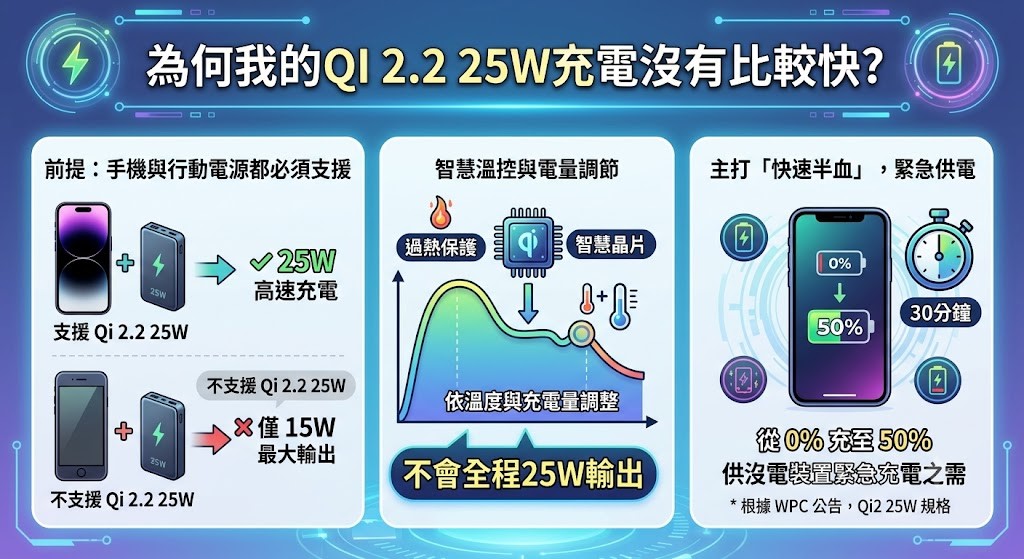
Q3: Why doesn’t my QI 2.2 25W charge faster?
The main feature of Qi 2.2 25W products is that it can quickly recharge the device for emergency charging.
The QI 2.2 25W mobile power bank must be used with a QI 2.2 25W mobile phone (such as the iPhone 17 series). If the phone does not support it, the QI 2.2 25W power bank can only output a maximum of 15W, and some old iPhones even only support 7.5W.Furthermore, in order to prevent the battery or mobile phone from overheating due to high-speed charging, the QI 2.2 25W mobile power supply will automatically and intelligently adjust the charging power based on temperature and charge level, and will not output 25W throughout the process. According to the WPC announcement, the Qi2 25W specification can charge some supported devices from 0% to 50% in about 30 minutes.
Q4: Will long-term use of magnetic charging damage the battery?
Won’t.
Mobile phones and magnetic power banks have charging power limits and temperature protection management. Long-term use of magnetic charging will not damage the battery. What really affects battery life is high temperature and long-term overcharging.
Q5: Is it normal to generate heat during wireless charging?
normal.
Wireless charging is electromagnetic induction. Compared with wired charging, it will generate higher temperature due to higher resistance. As long as it is not hot to your hands or smells bad, and the battery does not age or swell, please feel free to use it.
However, to avoid overheating during charging, please charge in a well-ventilated environment, use a magnetic phone case that is thin and easy to dissipate heat, and avoid playing while charging!
Q6: Does magnetic charging consume more power than ordinary wireless charging?
Won’t.
The advantage of magnetic charging is to improve the energy waste caused by “inaccurate alignment” and is more efficient than traditional wireless charging.
Q7: What are the safety precautions when using magnetic power banks?
When using a magnetic power bank for wireless charging, please pay attention to the six safety regulations, includingPlease make sure there is no metal foreign matter on the back when charging, Charging environment and heat control to avoid high temperature environment,Choose your protective case carefully、Avoid charging and playing at the same time,avoidNo need to perform wireless charging in a closed environment,priorityChoose a safer solid/semi-solid power bank。
Source: KOCPC Chinese