


Internet Protocol (IP) is a set of rules for moving data packets through a network to their intended destination. The two main versions currently in use are IPv4 and IPv6. This time, we will start with how IP addresses work, so that you can understand what IPv4 and IPv6 are, and what are the differences between them. To learn more about IP, be sure to read this article!

What is the difference between the two network protocols IPv4 and IPv6?
Quick overview of IP addresses
When information is sent over the Internet, it is broken down into data packets. To ensure that the data can be reassembled at the correct location after being transmitted, devices connected to the network will have a set of IP addresses that tell the data where to go. You can think of your IP address as your residential address. When the postman delivers the mail, he can use the residential address on the letter to deliver the mail correctly.

For example, every smartphone and computer has an IP address, but devices like printers and smart speakers also have their own IP addresses because they connect to the network and receive data. Data is routed by the network to a specific IP address, helping it find the correct receiving device among all the other devices connected to the network.
What is IPv4?
IPv4 is the first widely used version of the Internet protocol. First used in 1983 and still in use today, it represents the fourth version in the development process of Internet protocols. IP addresses using this protocol consist of 11 digits separated by periods, known as dotted hexadecimal notation. The IPv4 address appears as “192.168.10.150”. Each bit in an IP address stores information that tells the packet where to go. Each group of numbers can store one bit of information, and there are 4 groups in each IPv4 address, storing a total of 32 bits of information. Therefore, the IPv4 addressing system is a 32-bit system.
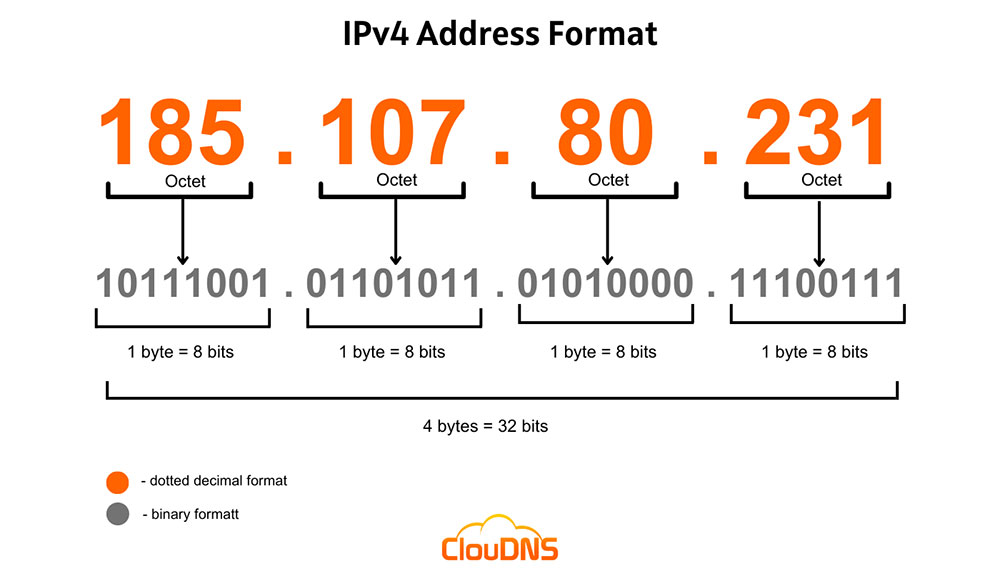
The system spawns as many as 4.3 billion (232) unique address may sound like a lot, but once you realize how many people and devices are connected to the Internet today, it’s far from enough. Nowadays, network technology has become so popular that almost everyone has IoT products and other devices that need to be connected to the network, such as game consoles, etc., and these devices also need to have individual IP addresses. , as our lives become increasingly connected to the Internet, the usage of the IPv4 address system has exploded, which means that the space of the IPv4 address system is about to be exhausted, accelerating the pace of entering the IPv6 era.
What is IPv6?
IPv6 is a newer version of the Internet protocol with longer addresses that contain numbers and letters. Although newer than version 4, it’s actually not that new, as it was first deployed online in 1999, but it hasn’t been fully rolled out yet. IPv6 addresses are 128 digits of information stored, and they are written in hexadecimal colon notation, which means that each set of numbers and letters is separated by a colon (:) instead of a period, such as “3002:0bd6:0000:0000:0000:ee00:0033:6778”.
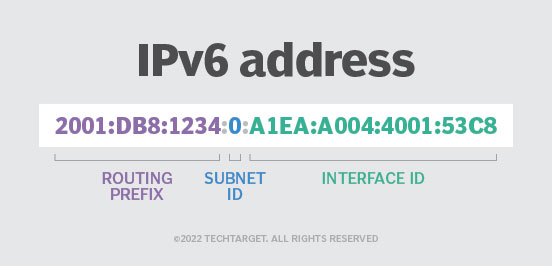
This longer address system supports 2128 (1632) addresses, which is 1028 times that of IPv4, providing a fairly large number of unique IP addresses, so you don’t have to worry about running out of them quickly. Even if the IPv6 address is omitted, it is still inconvenient for ordinary people to remember. Therefore, when accessing addresses on web pages or writing application call URLs, it is generally recommended not to use IPv6 addresses directly. It is more convenient to use DNS domain names.
How is IPv4 different from IPv6?
The main differences between the two are the length of each IP address and the total number of unique addresses that can be used, but there are more technical differences. Below we list some of the main features of IPv4 and IPv6:
【IPv4】
- no connection protocol
- Allows a simple virtual communication layer to be established across multiple devices
- Requires less memory
- Easier to remember addresses
- Get support from millions of devices
【IPv6】
- No Network Address Forwarding (NAT), allowing end-to-end connections at the IP layer
- Basic standards allow packets to be sent to multiple destinations simultaneously
- Prevent private address conflicts
- Simpler header format
- Overall simplified and more efficient routing
- Really improve QoS (Quality of Service)
- Flow Label
- Built-in security layer (IPsec)
- Flexible options and extensions
- No more DHCP required, easier management
IPv6 is more secure, more flexible, and allows a greater number of unique addresses than IPv4. IPv4 and IPv6 are also written in different formats, with IPv4 consisting of numbers separated by periods, while IPv6 addresses consist of numbers and letters separated by colons.
FAQ
Is IPv4 faster than IPv6?
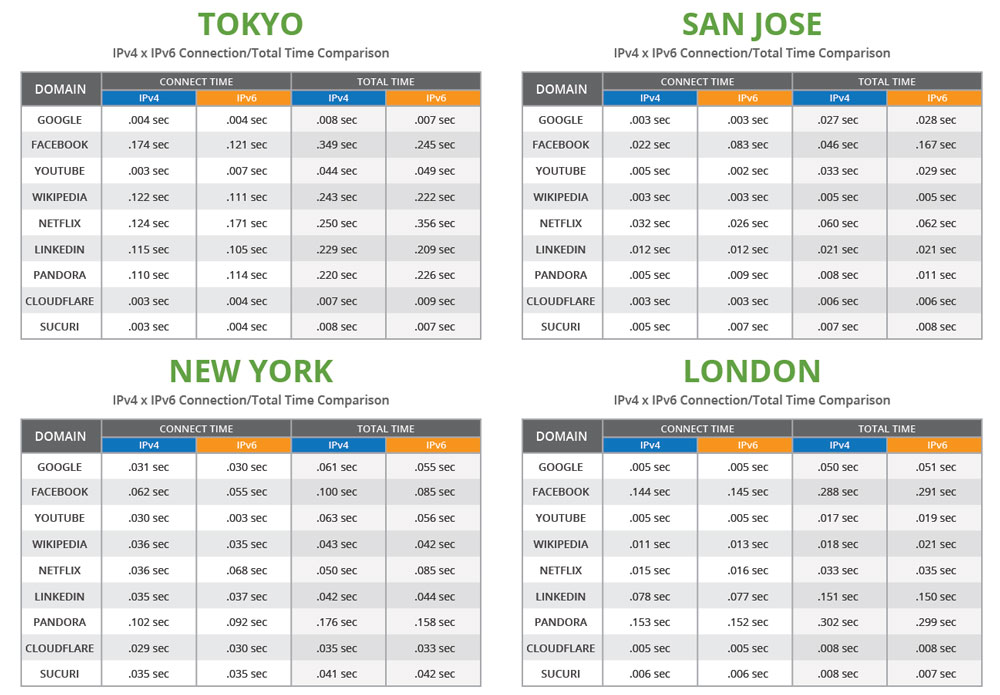
Most of the time, IPv6 doesn’t seem to be much faster than IPv4. Cloud Technology Company Sucuri tested both IP protocols in multiple cities and at multiple sites, didn’t seem to notice much difference in speed. However, IPv6 appears to be faster in some cases. For example,Facebook conducted a test in 2015, determined that their website loaded 10-12% faster on IPv6. There are a lot of variables between the two, and it’s hard to tell which is faster without extensive testing in a highly controlled environment.
How much of the world uses IPv6?
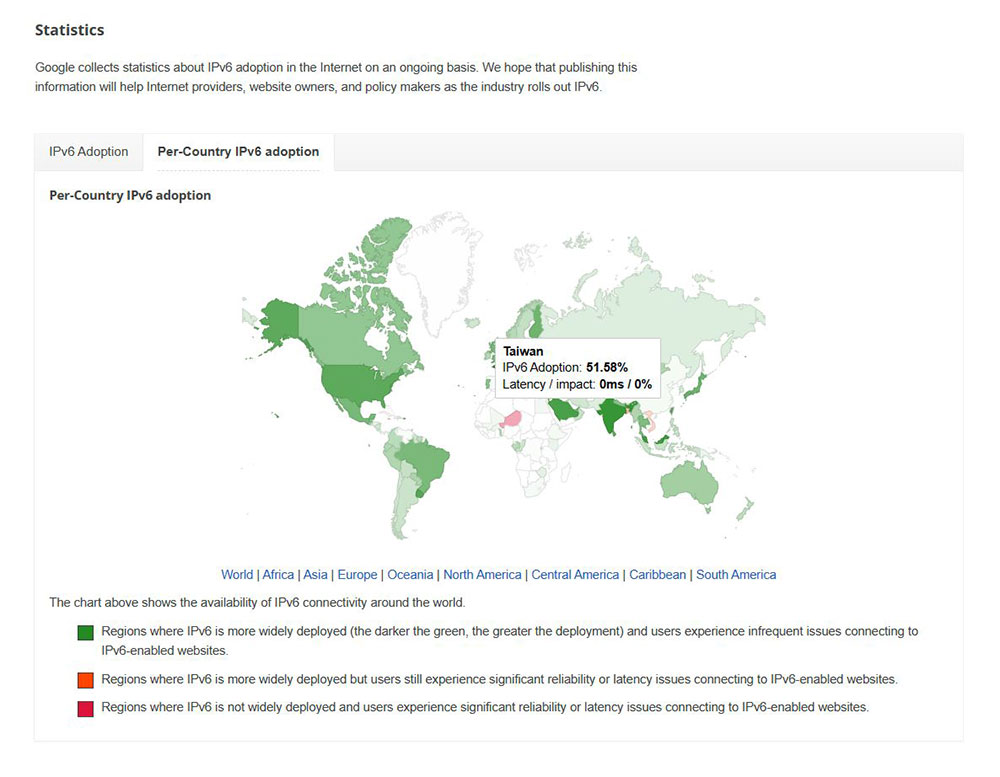
Since IPv4 has been around longer, it is more widely used, but IPv6 adoption is growing as addresses on older IPs are exhausted. According to Google data, as of June 2023, approximately 40% of the world has adopted IPv6. Google also breaks this data down by country, which varies widely from country to country. For example, the U.S. has an adoption rate of over 50%, while Australia has an adoption rate of just over 29%, Sweden has 19%, Argentina has 18.4%, and Taiwan has 51.58%.
Source: KOCPC Chinese