


DDoS and DoS attacks are one of our most common network attacks and have a long history. They are two classic attack methods, but how do they actually work? While both are basically capable of shutting down work, there are significant differences, so let’s go through each one to see how they differ and how to protect yourself from DoS vs. DDoS.

What are DoS and DDoS attacks? What’s the difference between them?
What is DoS?
DoS (denial of service attack) is the abbreviation of Denial-of-Service Attack. The attacker generates a large number of packets or requests, exhausting the target system resources and eventually interrupting or stopping the service, making other normal users unable to access it. This is usually used to attack a website, eventually causing the page to become unresponsive and shut down, blocking any services that could otherwise be provided, hence the name.
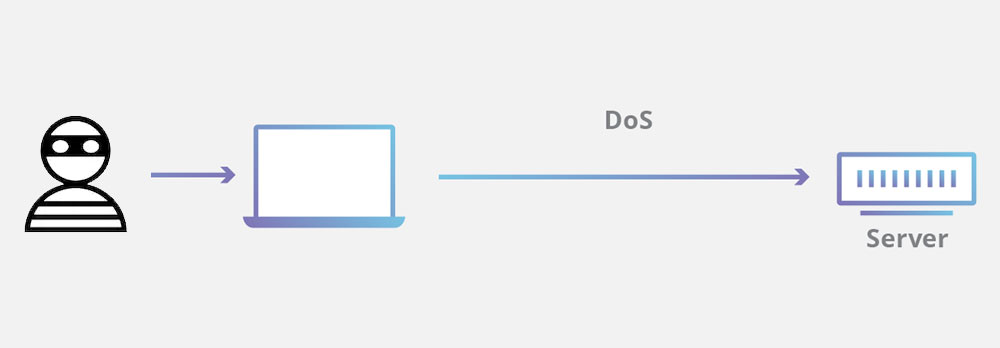
Unlike DDoS attacks, DoS attacks originate from a single source, specifically a computer connected to the network that sends a large number of requests with the goal of crashing the target system. Because DoS attacks tend to be smaller, they often target smaller websites and individuals because their resources are more limited than large enterprise websites like Amazon or Google. The good news is that due to its single source, as long as the source of DoS is identified, its attack can be blocked (usually through IP blocking), making it easier to deal with than DDoS attacks.
What is DDoS?
The full name of DDoS (Distributed Denial of Service Attack) is Distributed Denial – of – Service Attack. Although it has the same purpose as a DoS attack, it uses a connected computer network to target the target server from multiple points. Its traffic can do more than a typical DoS attack. DDoS attacks are usually carried out through botnets, which use malware or virus infection to make other people’s computer hosts available to attackers. Over time, attackers attack multiple computers to create a botnet, and then launch a DDoS attack from that network once they have enough computing power.
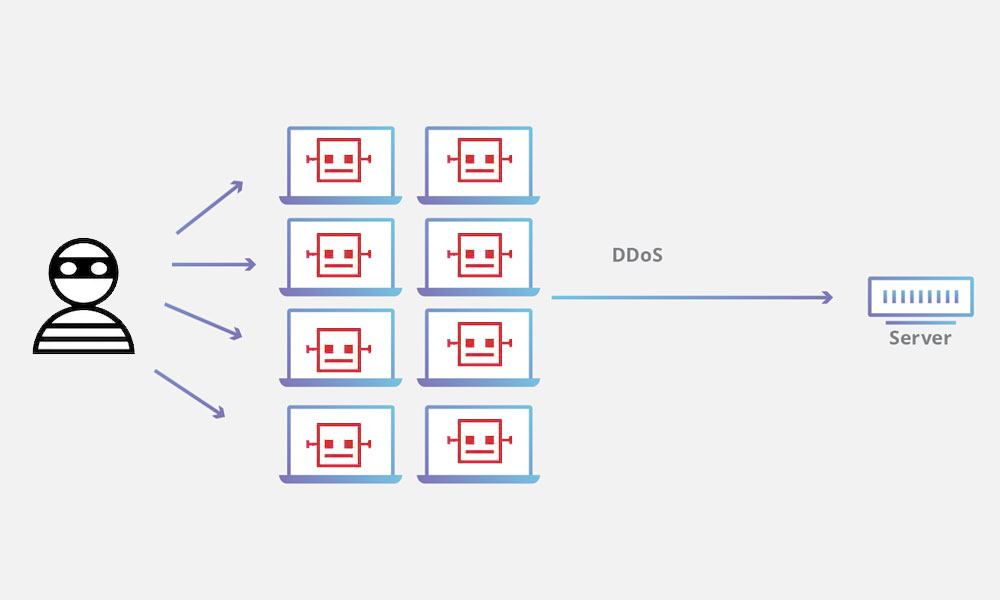
Because DDoS attacks are more powerful than DoS attacks, they are often used by malicious actors in conjunction with ransomware to render the target system inoperable until the ransom is received. At the same time, because DDoS uses multiple devices, and these devices may be located anywhere in the world with a network connection, it is more difficult to trace the source, so DDoS is considered a more difficult network threat than typical DoS attacks.

Common forms of DDoS attacks include volume (or capacity exhaustion) attacks and DNS server attacks. Capacity exhaustion attacks target network bandwidth and clog it with requests. DNS server attacks break into a system’s DNS server, spoof IP addresses, and then use these fake IP addresses to send large amounts of false information and overwhelm the target server.
Differences between DDoS and DoS attacks
They both stop the target. Here we list several key differences between DDoS and DoS:
- Number of computers involved
DoS attacks use one device connected to one network, while DDoS attacks use multiple devices connected to multiple networks. - Threat level
DoS attacks are generally considered smaller than DDoS attacks because they come from a single source and can be blocked once traced to the source. - Use of malware
DoS attacks usually do not involve other malware, but DDoS can use malware to infect computers and organize into botnets. - Initiate difficulty level
DoS attacks are easier to carry out than DDoS attacks. They only require a computer with an Internet connection to launch, and the threshold is lower. - Difficulty of prevention
DDoS can target systems from more points, send more data at one time than DoS attacks, and is more difficult to prevent.

How to protect yourself from DoS and DDoS attacks?
As always when discussing cyber threats, the best defense is to make yourself as difficult a target as possible. Make sure your antivirus and malware protection is up to date, don’t click on suspicious links, check whether the websites you visit use TLS or SSL encryption (look for the little lock icon next to the URL), and if possible, only access pages that have HTTPs enabled.

At the organizational level (enterprise, institution, etc.), configuring a firewall that only allows trusted IP addresses through is also a good solution.Cisco has a guide on how to do thisYou can refer to it. You can also invest in tools such as load balancers, firewalls and user authentication to strengthen protection; limiting the number of network access points, like establishing tunnel gates, can limit the entry points for malicious actors to enter the system.

Once security and threat protection are in place, remember to regularly test the security to ensure it remains strong and patch any weaknesses you discover.Sunny Valley Networks It provides detailed measures that enterprises can take to ensure the security of their data, which you can refer to. Every enterprise should take preventive measures. No matter which method and anti-virus you choose to use, it is much more difficult to repair the damage afterwards than to establish a strong pre-emptive defense. Instead of making up for it, it is better to strengthen the walls from the beginning, so that prevention is truly better than cure.
Source: KOCPC Chinese