


The humanoid robot industry has been developing rapidly lately, with many tech companies joining the competition. These days, humanoid robots that can walk are no longer anything special—people are starting to focus on what humanoid robots can actually be used for, wanting to see robots serve purposes beyond walking and dancing. Today, foreign AI robot company Figure announced its own in-house AI called “Helix.” Helix has reasoning capabilities similar to humans, and using Helix allows Figure’s robots to now handle almost all household items. Just hearing this might make you a bit confused about what Helix can actually do, so today let’s take a look at what Figure AI Helix is used for!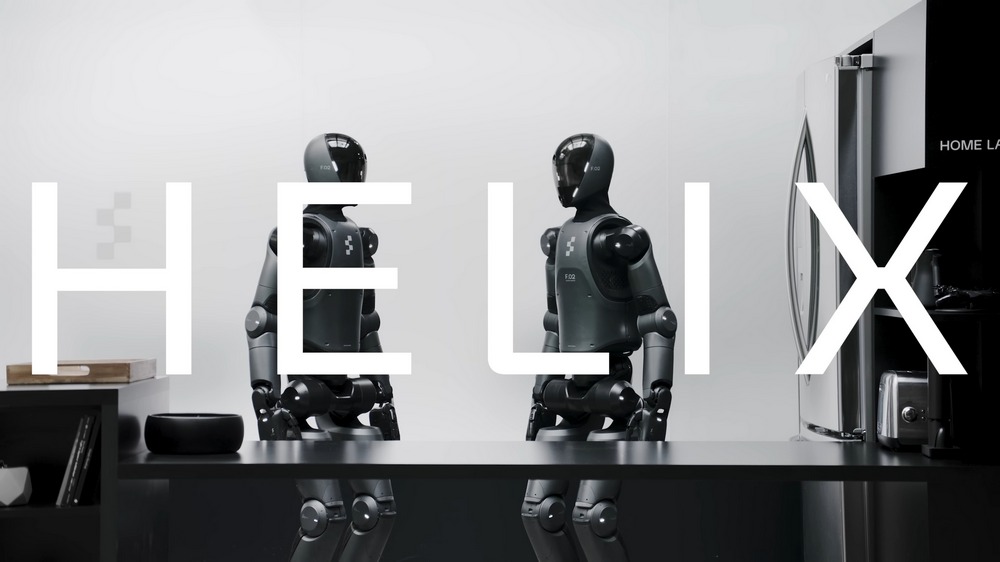
Figure launches Helix AI: Making humanoid robots smarter and better at handling household items!
AI robotics company Figure has unveiled its self-developed VLA multimodal AI model, “Helix.” Helix integrates three modalities—vision, language, and action—enabling AI to understand visual information, process language input, and take appropriate actions based on that data. Figure states that Helix addresses several long-standing challenges in customer service robotics, and thanks to Helix, the company’s robots can enter homes and begin working more quickly. Figure-02 is now capable of handling nearly all household items.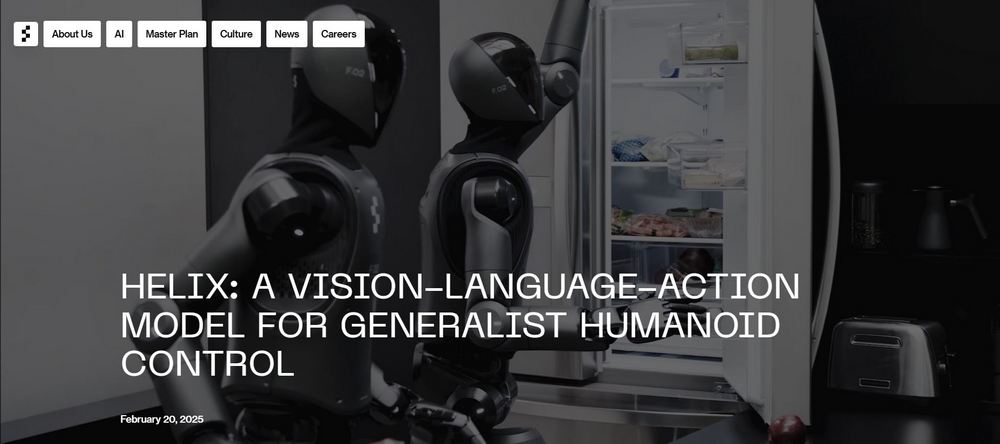
Figure fully independently developed the end-to-end Helix system. Robots equipped with Helix can now pick up almost any household item without any code or pre-training. For example, if you come home from grocery shopping today, you just need to hand the groceries to Figure-02, and the Helix AI model onboard Figure-02 can recognize the items and put them all in the refrigerator.
Helix is primarily designed to control the entire upper body of a humanoid robot, from the head, torso, and wrists down to individual fingers, all of which it can control at high speed and continuously.
Additionally, Helix enables multiple robots to collaborate. Helix is the first VLA model that can run on two robots simultaneously, allowing robots to easily handle objects they have never seen before.
Figure states that the home environment is the biggest challenge in robotics, because unlike the uniform setting of a factory, homes may contain delicate glassware, toys scattered on the floor, and piles of unfolded clothing—items whose shapes, sizes, colors, and textures are unpredictable, making them a major challenge for robots. For a robot to be useful in the home, it needs the ability to handle these situations, and Helix is the model Figure developed to help robots cope. Robots equipped with Helix can pick up almost any small household item, even ones the robot has never encountered before.
Figure states that Helix is the first VLA model capable of running on embedded low-power GPUs and is ready for commercial deployment right now. If anyone is interested, feel free toGo to the Figure official website.Learn more about Helix:
Meet Helix, our in-house AI that reasons like a human
Robotics won’t get to the home without a step change in capabilities
Our robots can now handle virtually any household item: pic.twitter.com/Wsx5s8Qelc
— Figure (@Figure_robot) February 20, 2025
Source: KOCPC Chinese