


Days ago, Sam Altman had already announced on social media that he would be launching a professional version. AI Tools – everyone originally thought it would be a tool similar to Cowork, but it turned out not to be. Instead, it’s a more professional tool: “Prism,” a LaTeX editor specifically designed for scientists, with built-in OpenAI The GPT-5.2 model enables users to directly leverage AI for content generation during research and writing, with full support for all standard LaTeX features.
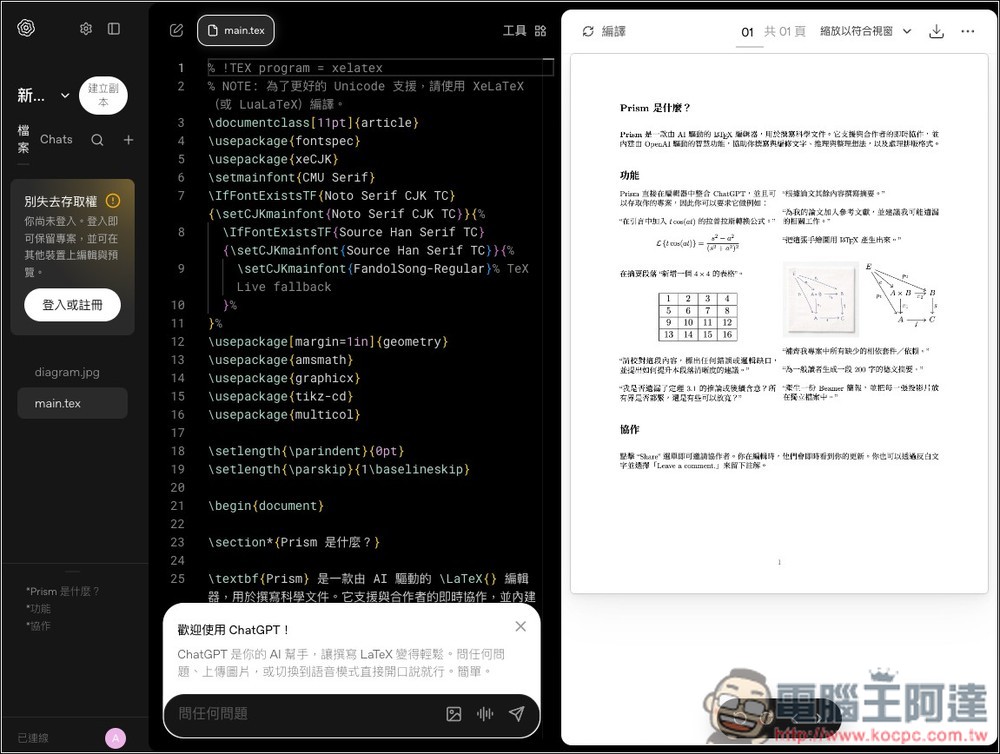
Prism: A free AI tool designed specifically for scientific writing
OpenAI said, “Over the past year, AI has started accelerating the pace of scientific research across different fields. Advanced reasoning systems like GPT-5 are pushing the frontiers of mathematics, speeding up analysis in human immune cell experiments, and improving the efficiency of iterative testing in molecular biology.”
However, many daily steps in research work—such as writing papers, revising arguments, managing equations and citations, and coordinating among collaborators—have so far been scattered across multiple tools. That’s why they decided to launch “Prism,” a LaTeX editor powered by GPT-5.2.
While traditional LaTeX editors are powerful, they often feel overwhelming for beginners, requiring significant time to learn syntax and formatting. Prism directly embeds GPT-5.2, enabling AI to automatically generate text, edit content, and even suggest structure.
For instance, if you’re writing a physics paper, simply input a brief prompt, and the AI can help you generate an abstract, introduction, or automatically insert references. That is, Prism can:
- Chat with GPT-5.2 Thinking to understand content and edit it directly in your documents.
- Write and revise papers within their full document context
- Search for and incorporate relevant literature (such as papers from arXiv)
- Create, reorganize, and analyze formulas, citations, and charts
- Convert whiteboard formulas or charts directly to LaTeX
- Supports real-time collaboration, allowing multiple people to edit the same document simultaneously, just like Google Docs.
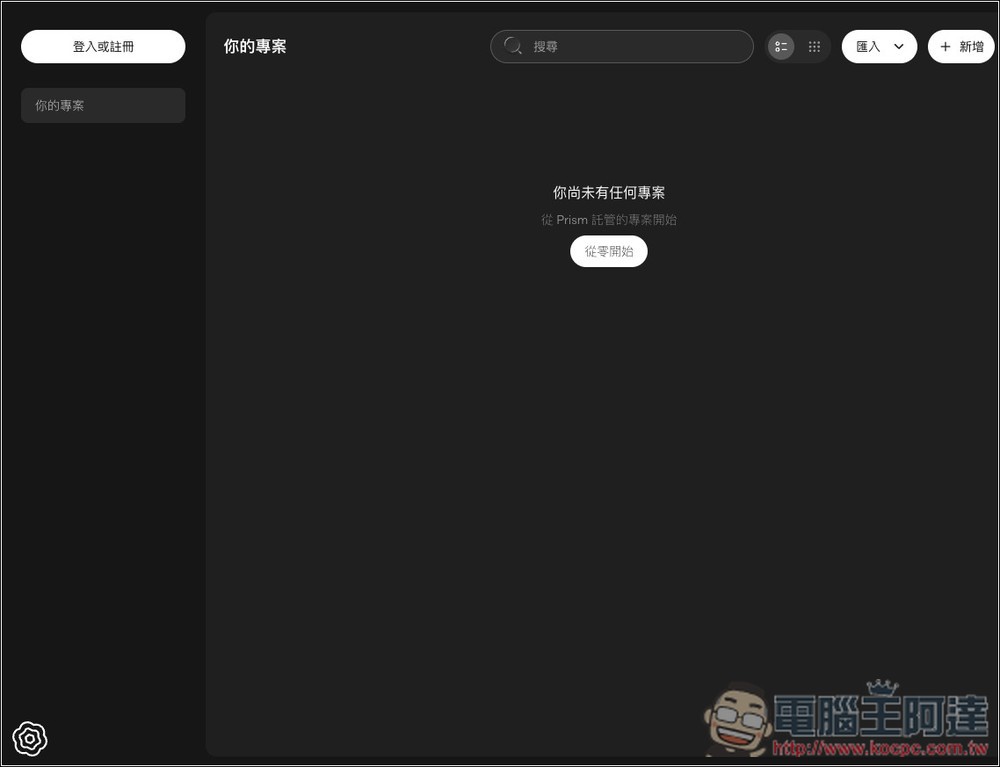
Prism supports a Chinese interface, and you can start using it without logging in or registering an account. However, logging in lets you save projects and edit or preview them on any device.
The document content is shown on the left, with a preview on the right. You can chat with AI at the bottom—for example, you can ask AI to rewrite certain content to make it more detailed, and AI will provide suggestions based on the context. Once everything looks good, click Compile in the top right corner to apply the changes.
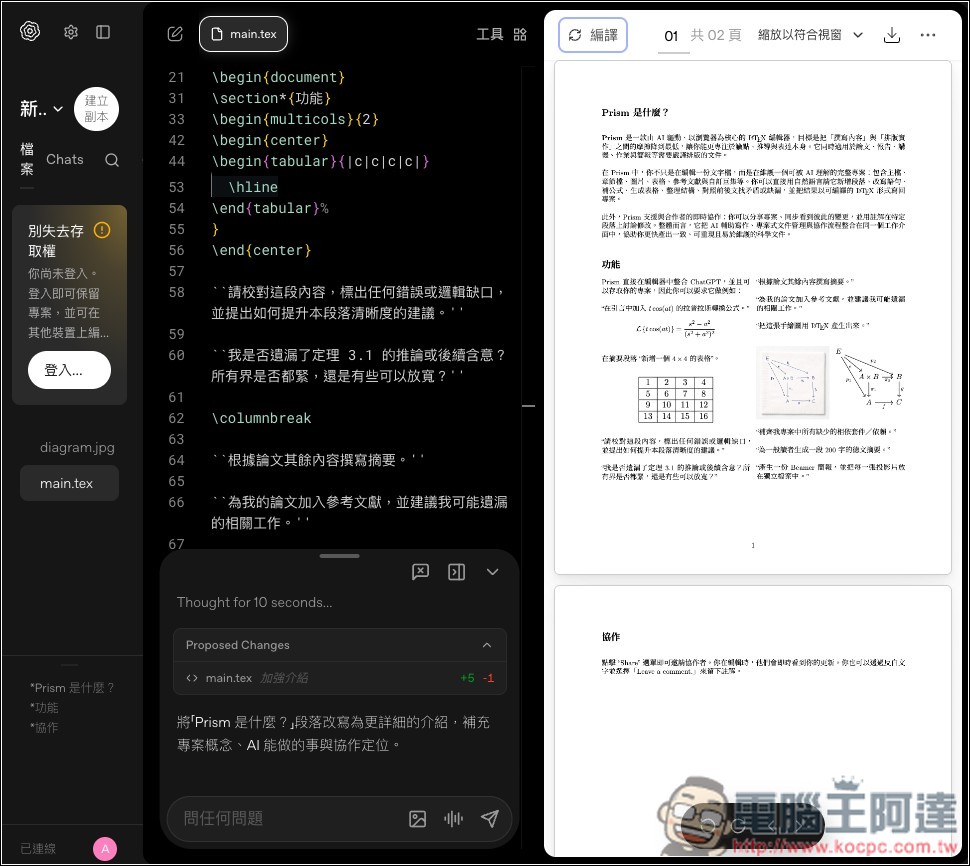
It also supports all standard LaTeX features, such as mathematical formulas, figures and tables, and citation management. Additionally, you can use Prism to automatically check for grammatical errors, suggest improvements to your writing style, and even generate code snippets to assist with data analysis, making the process of writing papers more efficient and time-saving.
Prism focuses on academic paper workflows, so it’s not suitable for all users. If you don’t need LaTeX and scientific reasoning, you can just use regular AI tools.
Who is Prism suitable for:
- Scientific researchers
- Graduate students and doctoral students
- University professors and lecturers
- Interdisciplinary or international research teams
- Researchers who are new to the field or have limited resources
Source: KOCPC Chinese