


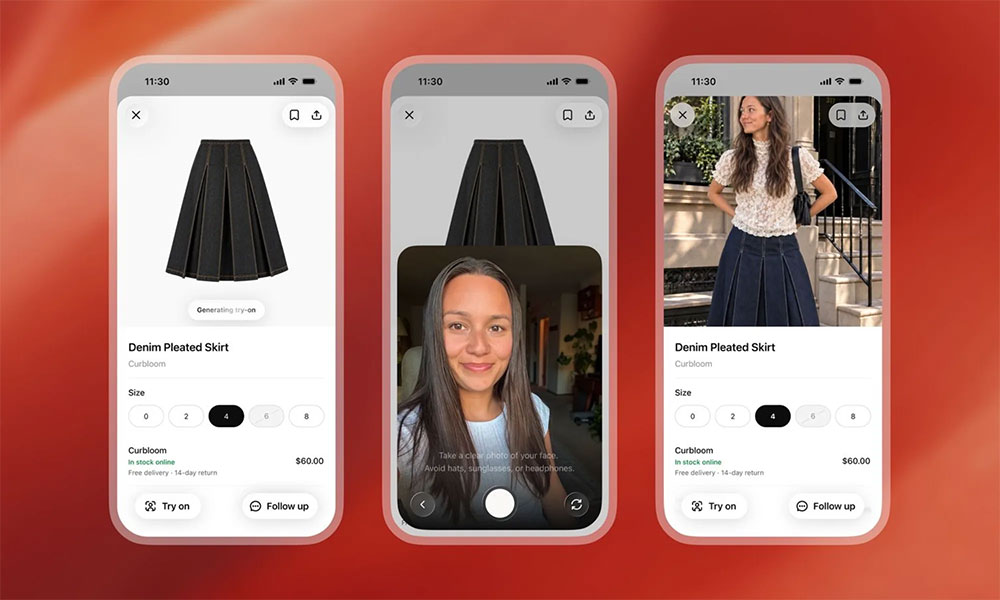
OpenAI continues to double down on e-commerce and shopping, and this time it is targeting a more immersive visual experience. The company recently announced that ChatGPT has officially launched a new “Try On” feature, allowing users to preview how clothing looks on them directly through personal photos. Also launching is a “Favorites” feature, making it easy for users to save favorite items and try-on results. Both features will gradually become available in global markets.
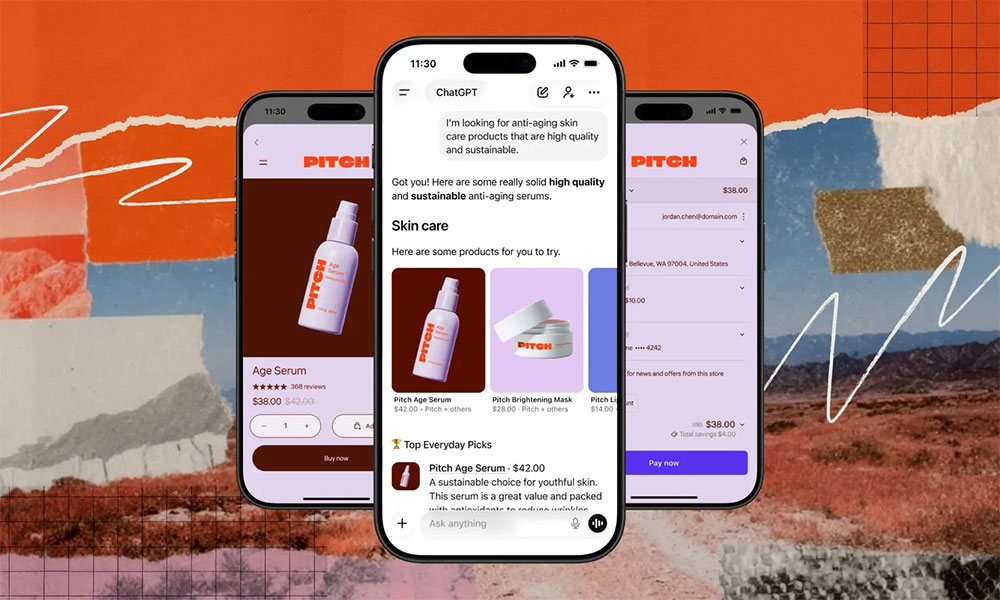
OpenAI wants you to try on clothes in ChatGPT before shopping online.
Virtual try-on is quite intuitive. Users only need to upload a selfie or full-body photo, then click the “Try On” button in ChatGPT’s shopping search results to quickly see a simulated effect of the clothing on themselves. In addition, if they see an item they like, they can directly upload a product screenshot, and the system will automatically generate a try-on image, making it easier to assess whether it suits their style and body shape. Beyond trying on products directly, ChatGPT also offers more flexible ways to explore fashion. For example, users can enter outfit needs such as “black backless evening gown,” and the system will find similar styles and related products based on the description. They can even upload photos of outfits worn by celebrities or influencers, letting AI help search for clothing with a similar style, shortening the decision-making process from gathering inspiration to making an actual purchase.
This feature is powered by the latest ChatGPT Images 2.5 model. Compared with previous versions, the new model can more accurately reproduce clothing texture, material details, and lighting and shadow effects, making try-on results look more natural and realistic. At the same time, the system’s processing speed has also improved, which can reduce wait times and further enhance the overall user experience.
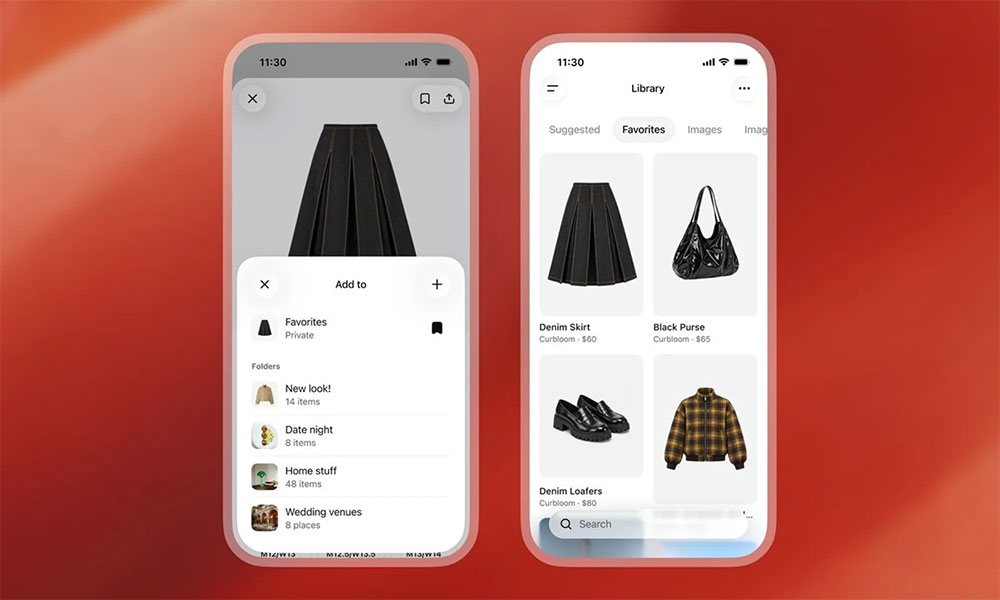
Launched alongside virtual try-on, the “Favorites” feature plays the role of a shopping management tool, allowing users to save liked products, try-on results, or inspiration images in their personal gallery for easy browsing and comparison later. This design makes ChatGPT no longer just a search tool, but gradually a one-stop platform connecting product discovery, try-on experiences, and shopping decisions.
In fact, these two new features are tightly integrated with each other. Users first discover products through AI search and recommendations, then use virtual try-on to assess how they would actually look when worn, and finally decide to buy immediately or save them for later consideration. This complete shopping flow closely resembles the shopping model of today’s mainstream e-commerce platforms, and it also reflects OpenAI’s ambition to become more involved in the consumer shopping journey.
From a market perspective, the timing of the launch is also worth noting. ChatGPT’s weekly active users have now surpassed 1.2 billion, and many people are already used to using AI to gather shopping information, find outfit inspiration, or compare products. OpenAI is not trying to cultivate entirely new user behavior; instead, it is extending its services on top of existing needs and habits to increase user engagement time and commercial value. However, OpenAI’s attempts in shopping have not been smooth sailing. Its previously launched instant checkout feature is said to have had limited results and failed to meet market expectations. At the same time, some competitors have recently drawn scrutiny because their product recommendation content is overly commercial and looks more like advertising than useful advice. How to strike a balance between commercial partnerships and user trust remains an important challenge for generative AI shopping services.
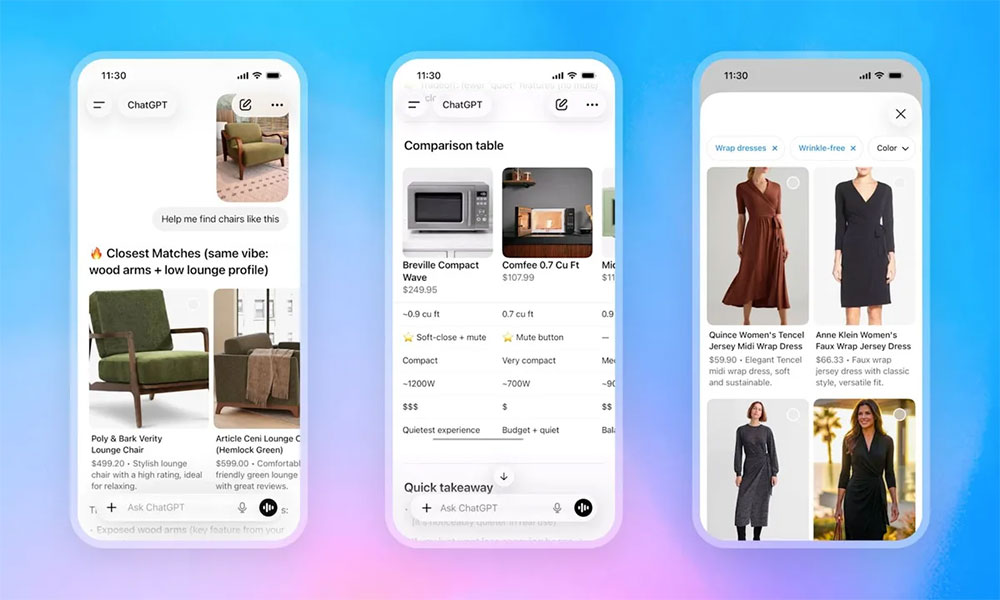
It is worth noting that AI virtual try-on is not an entirely new concept. Google launched similar features long ago, allowing consumers to simulate how clothes look through AI. Therefore, OpenAI’s move this time looks more like accelerating its efforts to catch up with competitors. At the same time, its product positioning is somewhat similar to platforms centered on inspiration discovery, such as Pinterest, but places greater emphasis on conversational interaction and personalized recommendations. In the future, whether such services can truly change how consumers shop will still hinge on users’ level of trust in AI-generated images. If virtual try-on results are realistic enough and offer sufficient reference value, they can help reduce the uncertainty of online shopping; conversely, if the rendered effect differs too greatly from how the clothes actually fit, consumers may still find it difficult to rely entirely on AI as a basis for shopping decisions.
Source: KOCPC Chinese