


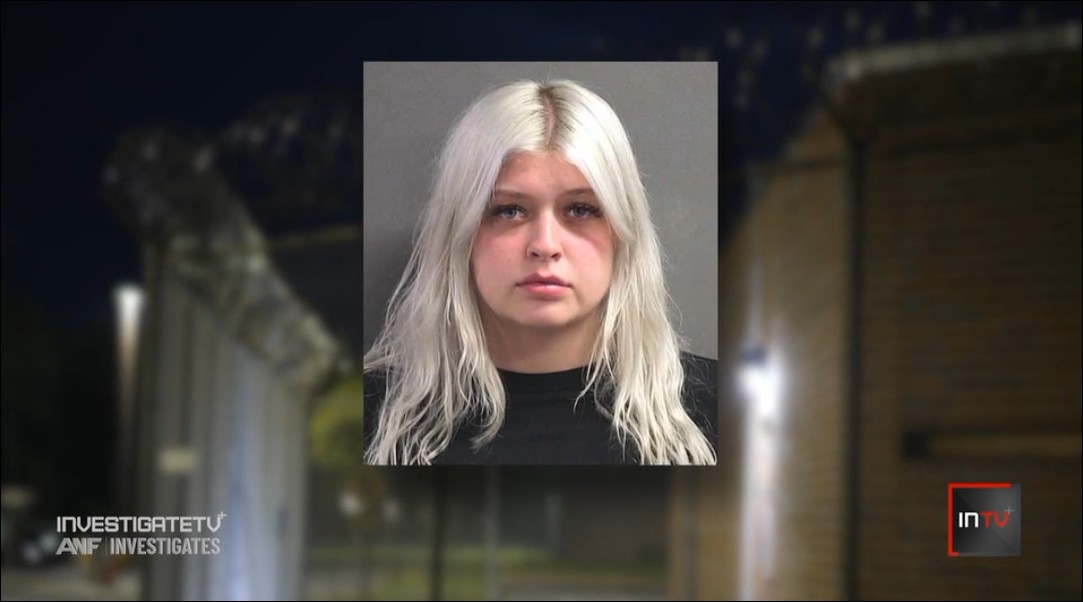
A single “hit” by an AI license plate recognition camera kept 23-year-old Lindsey Brooke Isaacs in jail for 13 days. In October 2025, after a crash that killed three people on Florida’s I-4 highway, police used Flock Safety’s AI surveillance network to match a same-model Dodge Durango, and that system match put her directly in the defendant’s seat: three felony counts of vehicular homicide, no bail, including about 86 hours in solitary confinement. Only when her lawyer presented photos of the vehicle proving her car had no collision damage was the AI misidentification exposed; prosecutors dropped all eight charges, and the real culprit was someone else.
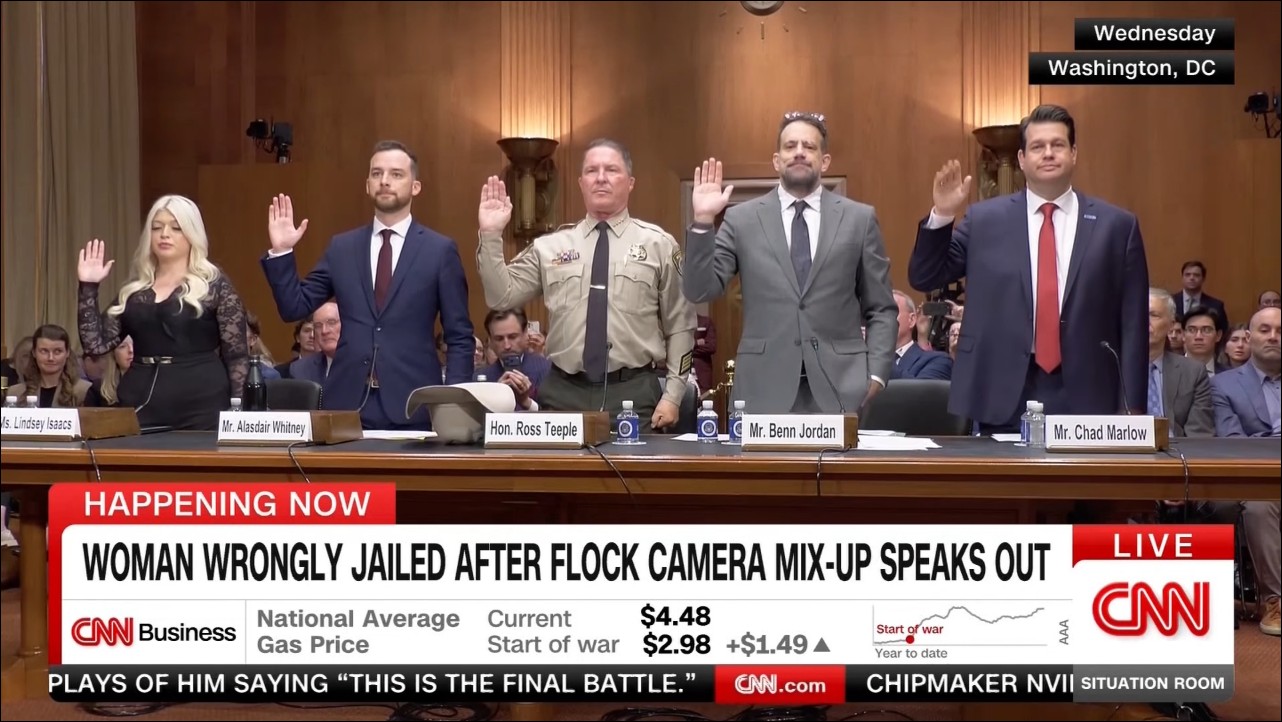
After this wrongful conviction case caused by AI misidentification came to light, it continued to gain momentum: In June, Isaacs filed a federal civil rights lawsuit against two state troopers, and on September 23 testified before the U.S. Senate Judiciary Committee hearing titled “Always Watching: Flock’s Nationwide AI Surveillance Network,” which focused precisely on the systemic risks of AI surveillance networks. Florida has revoked the system’s permit for state highways, and Flock announced it would shorten its data retention period.
AI Misidentifies a Car: When the Algorithm Says It’s This One
At 9:53 p.m. on October 4, 2025, a multi-vehicle pileup near DeBary on Interstate 4 in Florida left 3 people dead and another person seriously injured. Investigators, looking for clues in the timeline, submitted search criteria to Flock Safety’s license plate recognition camera network to find a Dodge Durango that appeared in the area during the crash time window.
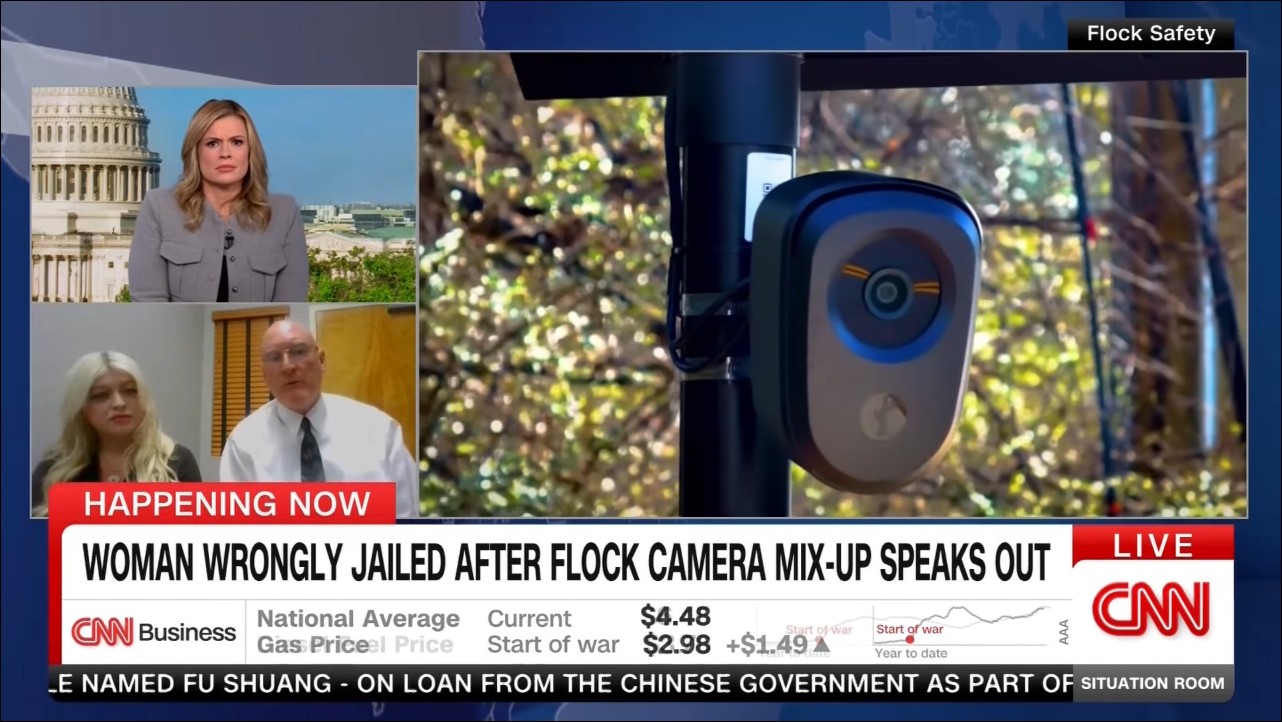
The system returned a hit: at 9:51 p.m., a black Durango passed a camera near the Seminole-Volusia county line, about 3 miles from the crash scene, and was registered to Isaacs. Police used this AI match as the starting point of the investigation, seized her car, claimed it had scratch marks “consistent with a collision,” and then issued an arrest warrant for her.
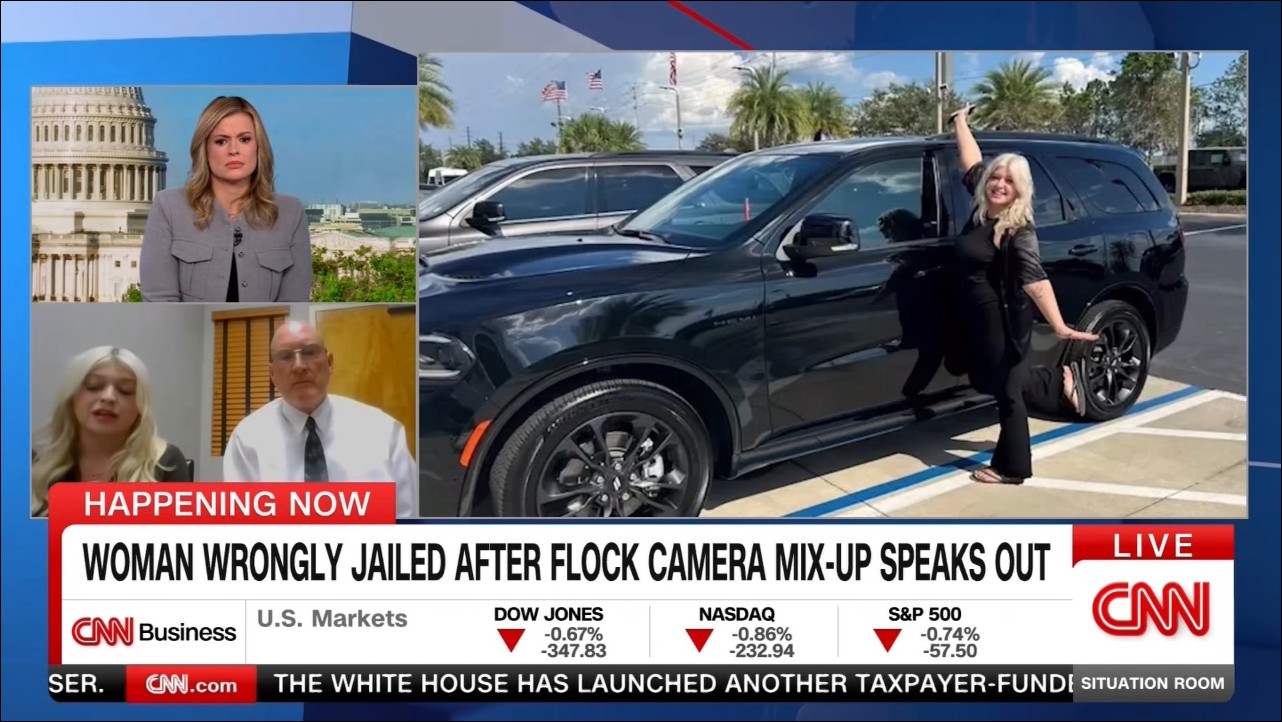
The problem is that this “hit” was never the suspect vehicle at any point. Isaacs’s attorney Patrick McGeehan later conducted a time-distance analysis and determined that the 9:51 record showed her 3 miles from the scene; the first 911 call did not come in until two minutes later; and by the time the crash occurred, she had already passed the accident location. More importantly, the 911 caller described the suspect vehicle as a dark red Durango and provided the first 3 digits of its license plate, “458,” which did not match Isaacs’s license plate, and neither piece of information was included in the documents seeking the arrest warrant.
An AI recognition system can only answer, “Has this car appeared here before?” It cannot answer, “Did this car hit someone?” The algorithm translates the appearance of the same model of car nearby into suspicion, and investigators then treat that suspicion as a conclusion. That is the step where the chain of misjudgment links up. The color was wrong, the license plate didn’t match, there was a time discrepancy, it was 3 miles away—any one of these manual checks would have been enough to overturn it, but the system’s “hit” made people skip these checks.
The Cost of AI Misjudgment: 13 Days Wrongfully Imprisoned, 86 Hours in Solitary Confinement
After the incident, the vehicle was seized, and Isaacs kept waiting for it to be returned; on April 17, 2026, what she got was a call from her lawyer informing her that she had to turn herself in that day. She was booked into Volusia County Jail, held without bail, facing 8 felony counts: 3 counts of vehicular homicide, 3 counts of hit-and-run, 1 count of leaving the scene of an accident involving serious injury, and 1 count of reckless driving causing serious injury, and could face up to life in prison.
She described her 13 days in jail as “worse than hell.” At a Senate hearing, she described how after the cell door closed, it did not open for about 86 hours; prison staff gave her a suicide-prevention garment whose Velcro was broken, leaving her nearly naked while wearing it; she was then transferred to a mental health unit for about 24 hours, and then to a maximum-security unit for about 10 days. She said she was “terrified” at the time because she might spend the rest of her life in prison over a car accident that had nothing to do with her.

The case took a turn at the bail hearing. Attorney McGeehan presented photos of the vehicle parked in the police impound lot, proving that the body had no collision damage at all, contradicting the police’s description of scratches. The prosecutor handling the case, Mike Willard, found this evidence persuasive and proactively contacted the state police’s accident reconstruction team to reopen the investigation; Isaacs was granted bail on April 29, ending 13 days in custody.
Exposing a Wrongful Conviction: Photos Overturn the Case, Real Culprit Caught
On its first day after taking over, the reconstruction team confirmed that Isaacs’s black Durango had no damage consistent with this crash, and that the “vehicle responsible” initially identified by AI had never hit anyone. After re-interviewing witnesses, the investigation turned to another driver, Alisa Lee Montalvo, and her dark red Durango: the vehicle was linked to one of the deceased, its license plate matched the first 3 digits “458” reported in the 911 call, it had been repaired after the crash, and prosecutors alleged the driver tried to conceal evidence.
On May 22, prosecutors declined to prosecute Isaacs and withdrew all eight charges; hours later, Montalvo was arrested and faced nine charges, including three counts of vehicular manslaughter and evidence tampering. She has pleaded not guilty, and the charges are still pending trial.
In hindsight, the reversal depended on the most traditional kind of physical verification: a car doesn’t lie, and whether it has crash marks is clear at a glance. After the police referred the case, the independent gatekeeping of the prosecutorial system was the last line of defense. This time the gatekeeping worked, except that it only took effect after Isaacs had been locked up for 13 days.
She sued the police, not AI, but Congress has its sights set on AI.
In June, Isaacs filed a civil rights lawsuit in the U.S. District Court for the Middle District of Florida against two state troopers who conducted the investigation, Tiffany Jateff and Joshua Buday, on claims of unlawful arrest, false imprisonment, and malicious prosecution. The complaint alleges that the two ignored exculpatory evidence and made false statements about vehicle damage, affecting the probable cause determination for the arrest warrant. There was a clear litigation strategy choice: she sued law enforcement officers and did not sue Flock Safety.
On September 23, Isaacs testified at a hearing of the Senate Judiciary Committee’s Subcommittee on Crime and Terrorism. She said at the hearing, “I came here today because I want you to understand that surveillance technology does not exist in a vacuum. The information technology collects becomes part of an investigation and affects a real person.” She also recounted how that AI identification record became the starting point of a wrongful conviction, landing her in prison for 13 days on 3 counts of vehicular homicide. She also revealed that she is still receiving psychological therapy to this day, saying, “It may take years to recover psychologically, physically, and emotionally from this wrongful conviction.”
The civil society organization Institute for Justice also testified at the hearing, saying that Isaacs’s experience was part of a systemic problem in law enforcement’s use of AI surveillance systems, and that there are many more similar cases beyond this individual case.
Flock Safety’s Response and the Nationwide Regulatory Wave
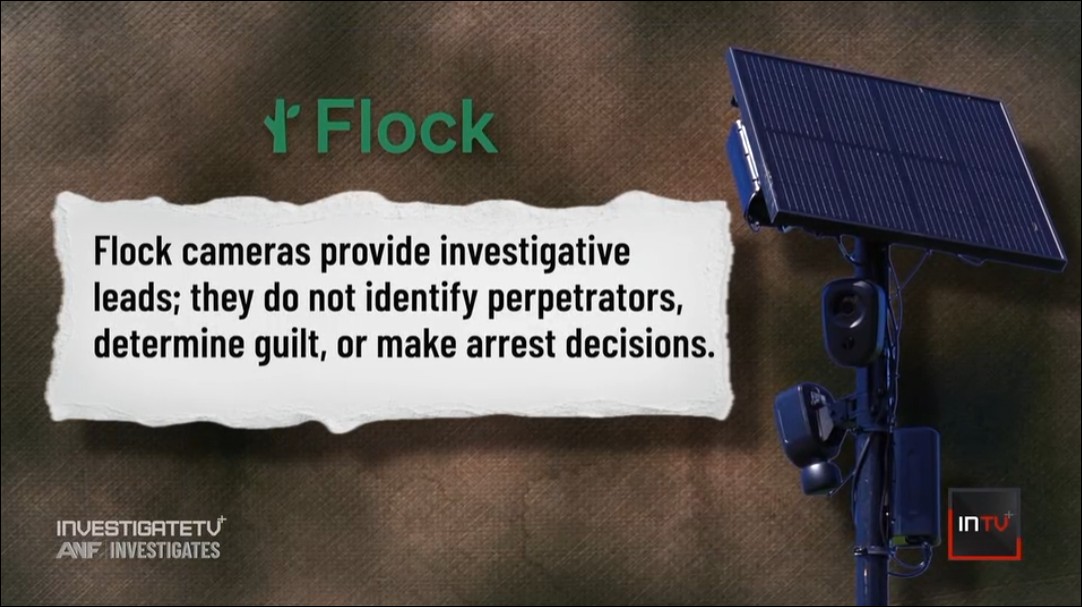
Flock Safety’s response to this case is that the cameras are meant to provide investigative leads, not to identify suspects, determine guilt, or make arrest decisions. The company noted that Isaacs’s complaint itself describes the Flock evidence as material “favorable to the defense and unfavorable to the charges,” because the system accurately recorded that her car was 3 miles from the scene two minutes before the crash, effectively ruling her out as the perpetrator; blaming the wrongful conviction on Flock’s technology is a misreading of what happened. Flock also stressed that its system correctly reads about 93 out of every 100 identifications, but even when the data is read correctly, the person charged can still be the wrong person, as in Isaacs’s case.
Flock’s defense precisely points to the pattern of AI misjudgment: this failure came from the process of “the system says there is, so people believe it”; the accuracy of image recognition, by contrast, was not what went wrong. What the algorithm outputs are probabilities and clues; it is the investigative system that reads them as incriminating evidence; a 93% recognition rate cannot stop the remaining 7%, nor can it stop the inferential error of treating the same model of car as the same car.
There is more than one similar case: a Rhode Island woman filed suit in June.Lawsuit, alleging that they were wrongfully arrested because of Flock footage and charged with reckless driving, evading police, and other offenses. Controversies over wrongful arrests, data misuse, and stalking have also continued to emerge across the United States, prompting the U.S. Senate to launch an investigation.
Regulatory actions have unfolded at the state level: the Florida Department of Transportation on August 31 revoked permits for license plate recognition systems within state highway rights-of-way, requiring removal within 30 days and halting new permits, citing rapid system growth, misuse of alerts, and privacy concerns; systems installed by local governments on city streets are not affected by this order. Flock also announced two adjustments: shortening the data retention period from 30 days to 7 days, and requiring law enforcement agencies to enter a case code when querying by the end of the year; emergency queries can bypass this but will be flagged for review.
Conclusion
The lesson this wrongful conviction case offers for the era of AI law enforcement is clear: the risk of misjudgment lies not only in whether the model is accurate, but also in people treating system output as a verdict. Institutional designs such as 7-day data retention and case codes can reduce the risk of abuse, but they cannot stop investigators from placing excessive trust in the screen. This case has already entered mediation proceedings in federal litigation, and Congress has also launched a systematic investigation into Flock AI’s surveillance network. The next question is whether institutions can force people to take one more look at the evidence before pressing the arrest button.
Data source:CNN / investigatetv
Source: KOCPC Chinese