


There had already been leaks claiming that the 1TB and 2TB iPhone 18 Pro series models would switch to cheaper QLC NAND, and with the appearance of a hands-on video from the Chinese Bilibili hardware channel HOMOLAB, it looks to be true. They stress-tested a 1TB iPhone 18 Pro Max and confirmed that the 1TB version really does use QLC, not TLC. Once the cache is exhausted, sustained write speeds can drop to as low as 1.1MB/s, slower than a cheap microSD card.
Of course, this is an extreme case involving sustained heavy writes. With ordinary web browsing, messaging, or everyday photography, it’s generally hard to notice any difference; but if you’re recording 4K or ProRes video for extended periods, transferring large files, or restoring backups, you’re more likely to encounter performance degradation.
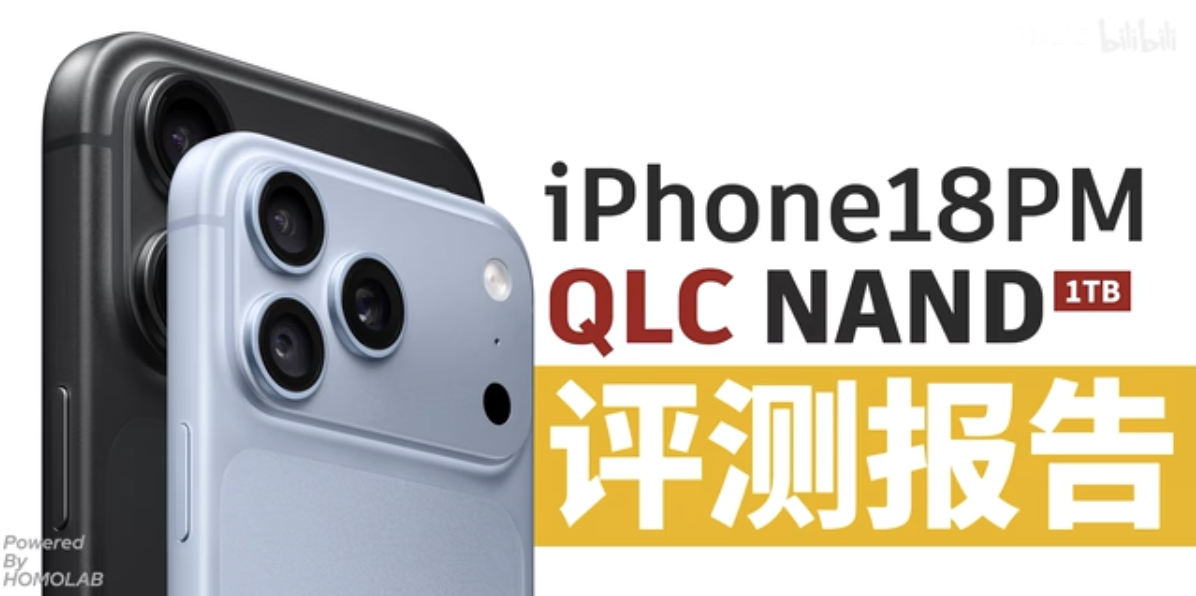
iPhone 18 Pro Max 1TB found in testing to use QLC: after dual-layer cache is exhausted, it drops to 79MB/s; when 60% full, as low as 1.1MB/s
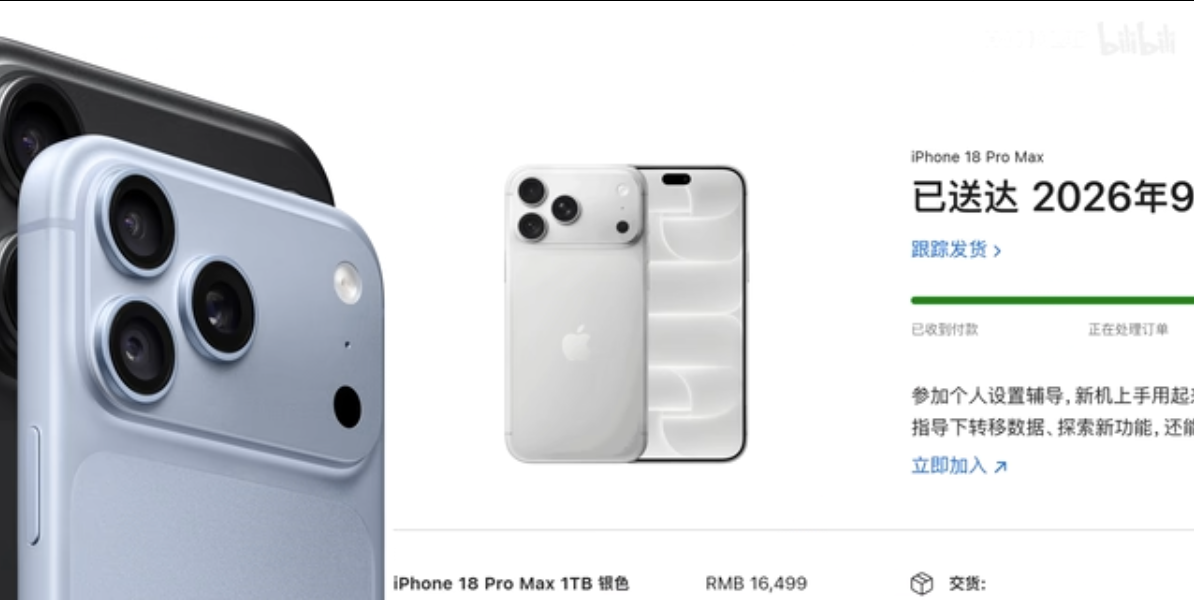
Recently, the Chinese Bilibili hardware channel HOMOLAB uploaded a storage benchmark of the iPhone 18 Pro Max 1TB. They used a Silver iPhone 18 Pro Max 1TB bought from Apple China’s official website, priced at RMB 16,499, with a 512GB iPhone 18 Pro as the control group:
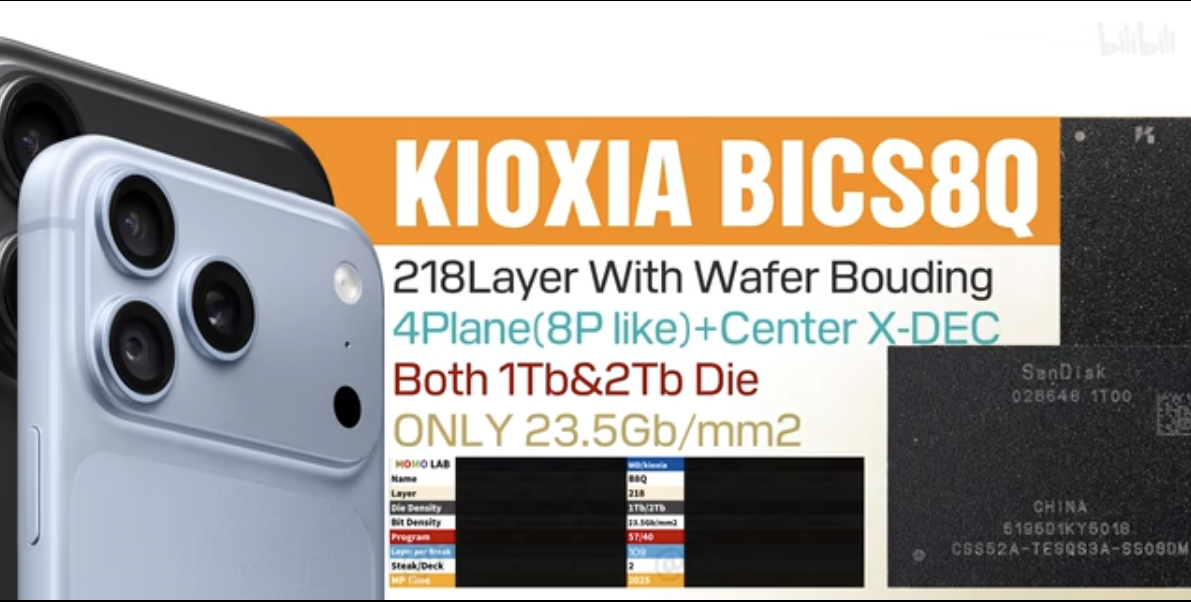
The flash memory used in the iPhone 18 Pro Max 1TB is Kioxia BiCS8Q, a QLC NAND die with a 218-layer stack and 2Tb per die. HOMOLAB says this type of die was originally created to reduce costs and is generally only used in ultra-high-capacity enterprise SSDs that don’t care about write performance, but now it has appeared in a flagship phone costing 20,000 yuan:
The testing tool is FIO for iOS, which they compiled themselves with AI assistance. FIO is a stress testing tool widely recognized in PC and server SSD circles; it lets you customize the read/write ratio, file size, and queue depth, and it records the speed for every second and plots it as a scatter plot instead of giving only a peak value.
This time, HOMOLAB ran a total of four tests:
- Test 1: 4K Random Read/Write (Empty Device). It processes small 4KB files at a time, which is what phones normally do, such as opening apps, reading databases, and writing caches, with thousands of small files coming and going. It separately tests pure reads, pure writes, and 7R3W mixed (70% reads and 30% writes running together, which is closer to real-world use than pure read or pure write). Each item is further divided into four stress levels: Q1T1, Q2T1, Q4T1, and Q4T4: Q is queue depth (the number of requests simultaneously queued for processing), and T is the number of threads.
- Test 2: QLC 1TB vs. TLC 512GB. Run the same 4K test suite on an iPhone 18 Pro 512GB to see how much the two types of NAND flash differ under read and mixed workloads at various queue depths.
- Test 3: 128K sequential sustained write (empty phone). Write 128KB large blocks at a time, keep filling until the phone is full; this corresponds to scenarios such as video recording, backup and restore, and moving tens of GB of video footage at once. The goal is to write through the cache and see how fast the QLC itself actually is after the cache is used up.
- Test 4: 128K sequential sustained write (storage 60% full). First, use real files to fill the phone to 600GB, then run Test 3 again. This is the closest to the state of a 1TB iPhone after one year of use; cache and free space are shared, and as the phone’s storage gets fuller, the cache also becomes smaller.
Additional note: Q1T1 means “do only one thing at a time, and finish it before starting the next,” while Q4T4 means “four lanes, each with four things queued,” simulating the limit of multitasking and mainly testing the upper limit.
In Test 1, the iPhone 18 Pro Max 1TB QLC version’s 4K read reached 16,071 IOPS at Q1T1 and 131,977 IOPS at Q4T4, which is pretty good for a phone. But write performance is not so great: only 13,890 IOPS at Q4T4, which translates to just over 50 MB/s. With writes dragging it down, mixed-workload results are naturally not great either: the 7R3W mix at Q4T4 was only 32,219 IOPS, roughly only one-third of that of UFS 4.0 Android phones in the video:
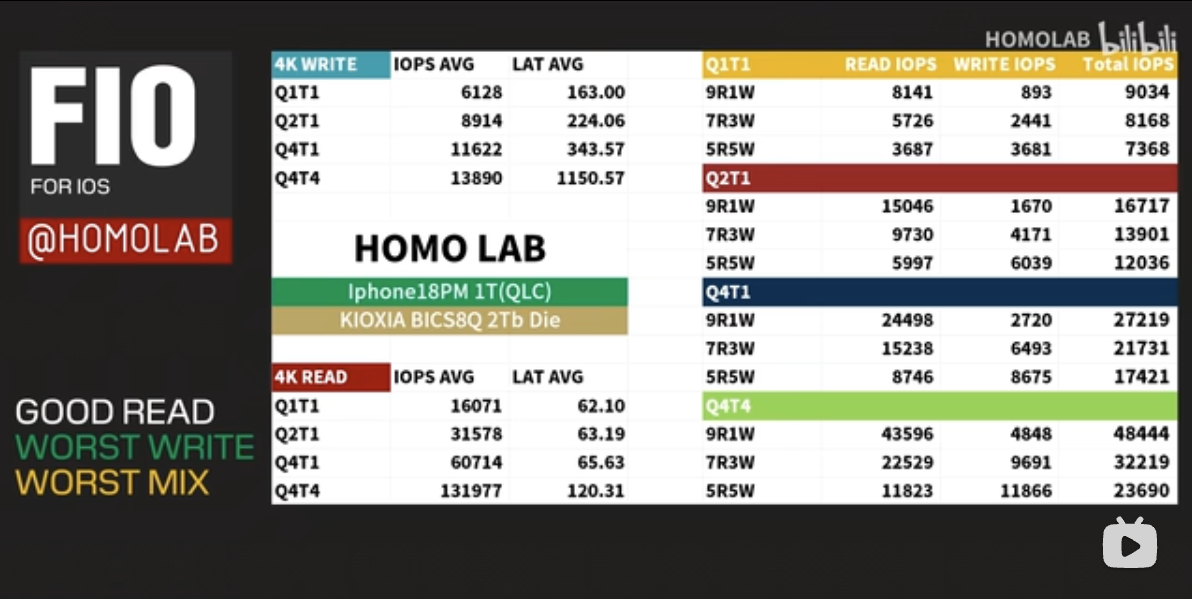
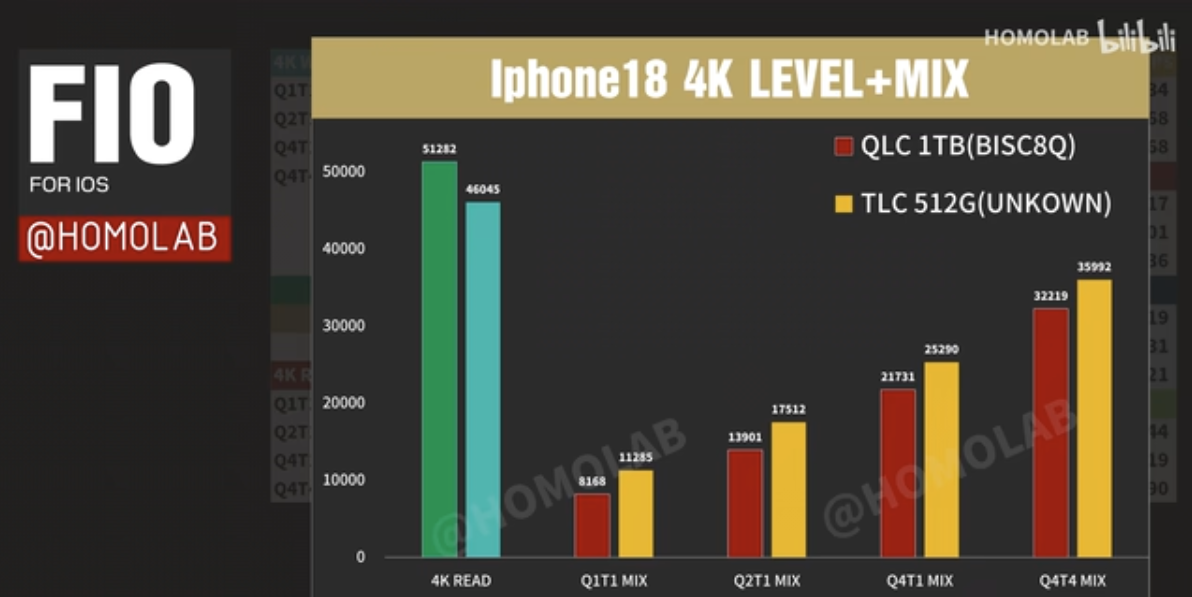
In Test 2, compared with the TLC version of the iPhone 18 Pro 512GB, the difference is immediately obvious. Although the iPhone 18 Pro Max 1TB (QLC) slightly leads by 11% in the 4K read test, it lags behind in all the others, especially in the Q1T1 test closest to everyday use, where it trails the iPhone 18 Pro 512GB (TLC) by as much as 38%. As multitasking increases, the gap gradually narrows:
| Test Item | iPhone 18 Pro Max 1TB(QLC) | iPhone 18 Pro 512GB(TLC) | TLC’s lead margin |
|---|---|---|---|
| 4K Read (Weighted) | 51,282 | 46,045 | QLC is actually 11% higher |
| Q1T1 Mixed (closest to everyday) | 8,168 | 11,285 | 38% |
| Q2T1 Mixed | 13,901 | 17,512 | 26% |
| Q4T1 Mixed | 21,731 | 25,290 | 16% |
| Q4T4 Hybrid (Multitasking Extreme) | 32,219 | 35,992 | 12% |
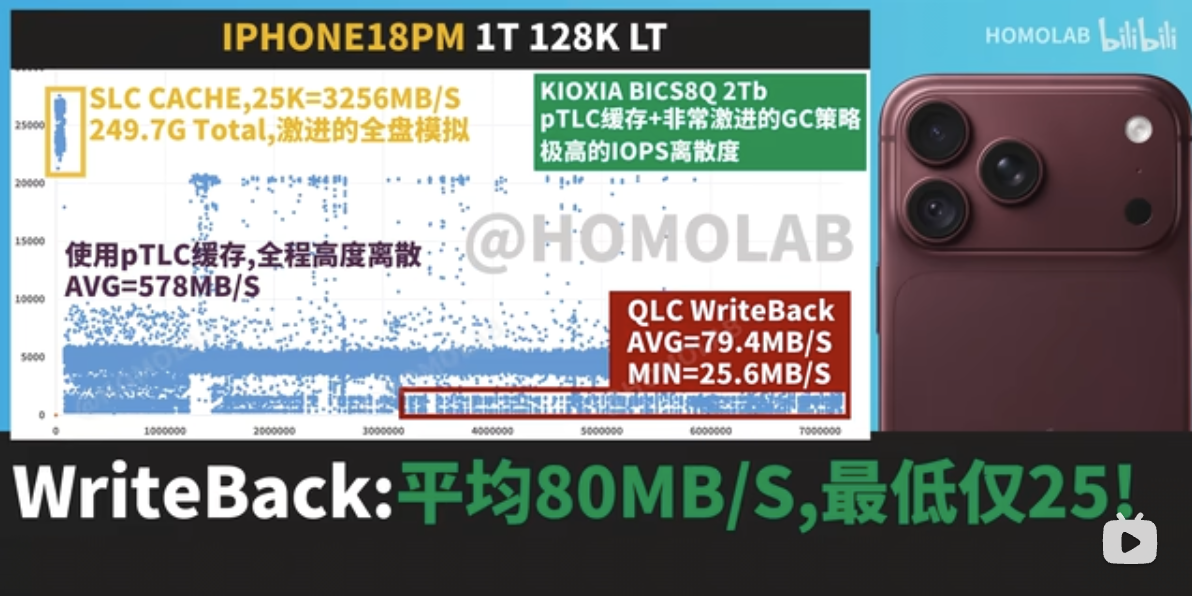
All three speed segments in Test 3 of the iPhone 18 Pro Max 1TB dropped.
At first, writes go into the SLC cache at 3,256MB/s, with 249.7GB available in this segment. After the cache fills up, it drops to the second stage, averaging 578MB/s; this is an additional pTLC cache layer that iPhone adds. Once both cache layers are full, data can only be written directly to the QLC itself, and the average speed drops to only 79.4MB/s, with a low point of just 25.6MB/s. HOMOLAB says this is slower than the microSD cards they have tested before, and foreign outlet Tom’s Hardware also compared it to traditional hard drives: a typical HDD still has sequential write speeds of 100 to 200MB/s:
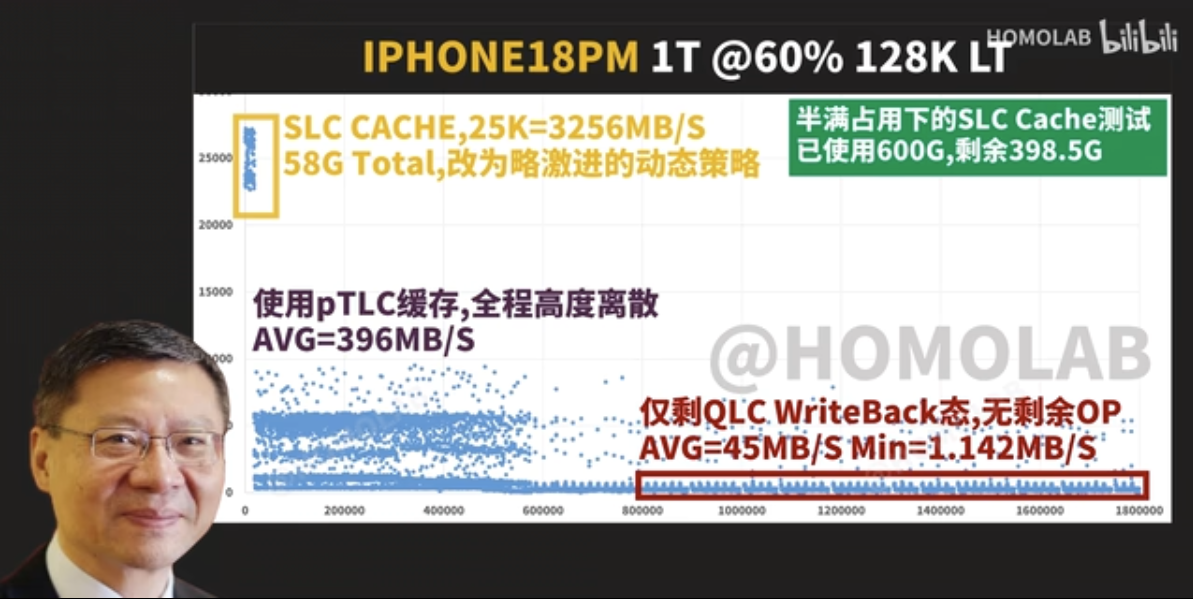
In Test 4, after filling an iPhone 18 Pro Max 1TB to 60% full—meaning 600GB used and 398.5GB remaining—the SLC cache shrank from 249.7GB to only 58GB, pTLC fell to an average of 396MB/s, and average QLC direct-write speed dropped to only 45MB/s, bottoming out at 1.142MB/s:
HOMOLAB’s test simulated a worst-case scenario. For everyday web browsing, messaging, gaming, and photography, you won’t notice anything at all; you’d need to write several tens of GB in one go to feel a difference, such as continuously recording 4K ProRes video, restoring a full backup from an old phone, or importing a large batch of video footage from a computer at once. Therefore, those buying a 1TB Pro Max specifically for ProRes recording should pay special attention to this.
Source: KOCPC Chinese