


AI technology is becoming more widespread, but cases of it being used as a tool for fraud are also emerging one after another. China Central Television’s “Legal Online” program recently exposed a new type of scam: unscrupulous operators use AI to generate completely nonexistent “perfect matchmaking candidates,” targeting middle-aged and elderly women on short video platforms. In less than a year, they defrauded victims of over one million RMB (approximately NT$4.1 million).
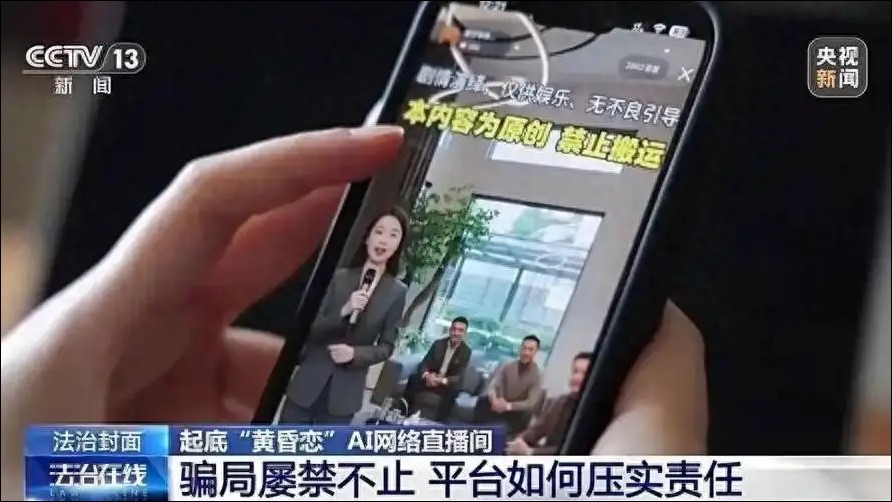
China sees AI matchmaking scams: AI-generated “perfect uncles” target middle-aged and older women
According to CCTV reports, a woman surnamed Bian in Chengdu expressed interest in dating after seeing an advertisement from a matchmaking agency on a short-video platform. A person with the username “Director Wang of the Matching Center” then sent over detailed information about “Brother Li,” which stated: 67 years old, refined and elegant appearance, annual income of 6 million RMB, multiple properties in Hangzhou and Shanghai, no parents or children, and healthy leisure hobbies.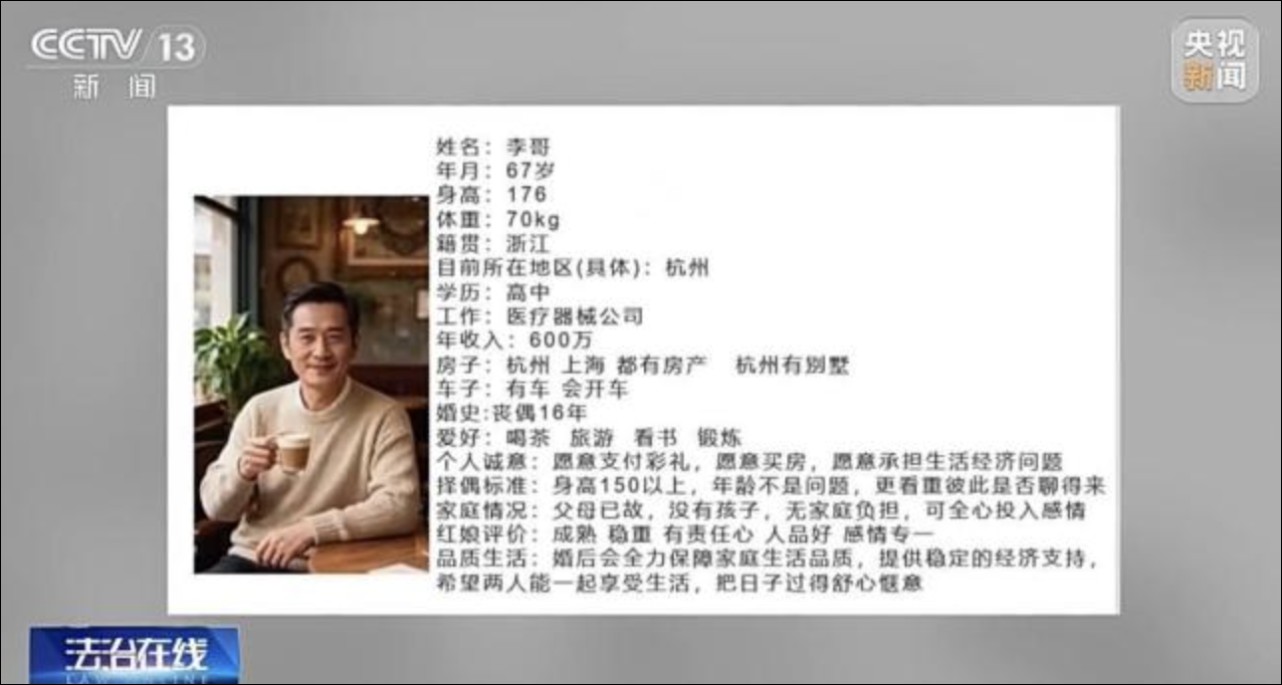
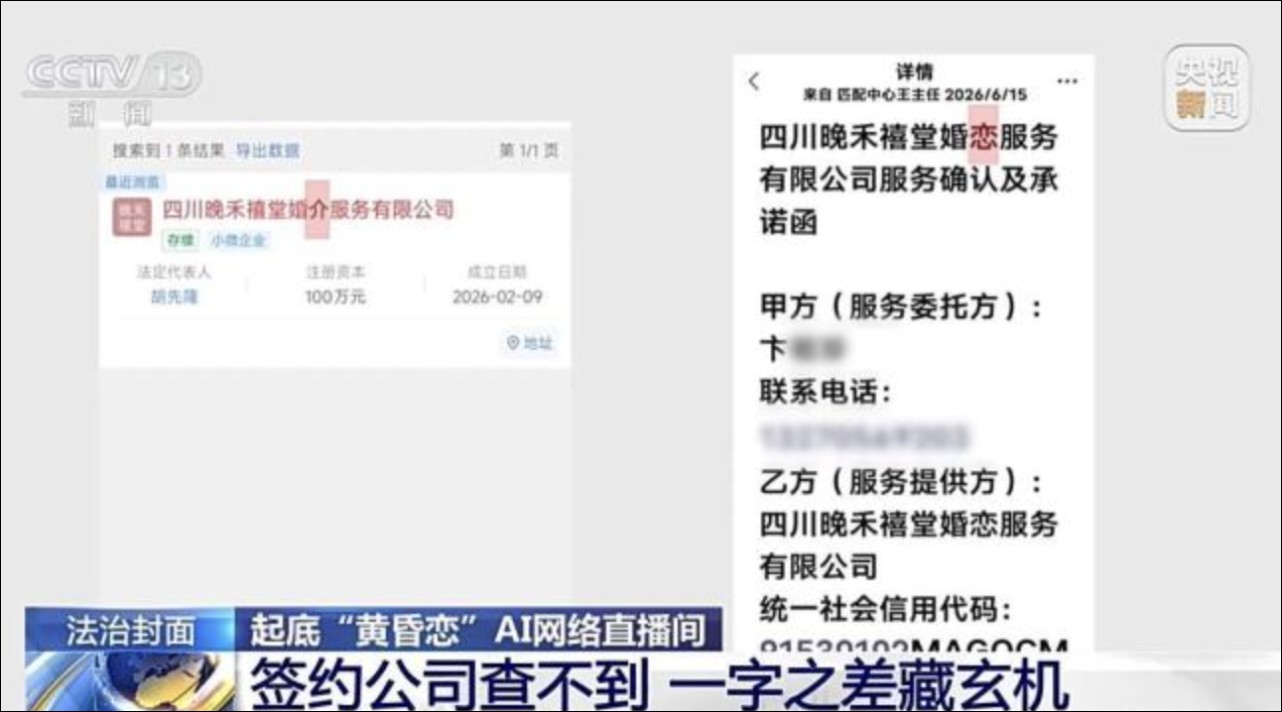
“Director Wang” promised that as long as she paid, she could exchange contact information. Ms. Bian paid a matchmaking service fee of 2,000 RMB (about NT$8,200) in installments and also signed a letter of commitment with “Sichuan Wanhe Xitang Marriage and Dating Services Co., Ltd.” But after getting “Brother Li’s” phone number, she couldn’t get through no matter how many times she called, and even “Director Wang” stopped reading or replying to her messages. Only then did she realize she had been scammed and reported it to the police.
There is no matchmaker inside the company, only streamers and editors.
Police investigation found that the “Sichuan Wanhe Xitang Matchmaking Service Co., Ltd.” named in the contract did not exist at all, but an on-site visit uncovered a highly similar company. This company nominally operated a matchmaking business, yet there were no matchmaking clients or so-called matchmakers on the premises—only three positions: sales, video editors, and streamers. On the editor’s computer, police saw AI-generated images identical to the male guest profiles the victim had received.

The police contacted the company owner, Wang, through an employee at the scene. Wang agreed over the phone to refund the money, but consistently avoided questions about the contract. Although Ms. Bian’s refund request was fulfilled, the investigators did not stop there. After days of monitoring the owner’s livestream account, they discovered that the figure of “Li Ge” frequently appeared in the footage.
A fraud assembly line with 28 people working in clearly defined roles.
After obtaining conclusive evidence, the police arrested all 28 suspects, including Wang. The arrest scene was quite ironic: the group was still livestreaming using AI male personas, with ready-made scripts and talking points for pressuring orders laid out on the table. From developing the AI personas to scripting interactions, every step was meticulously designed.
To deepen netizens’ trust, these streamers also use voice changers to pose as “quality men seeking marriage” during live call-ins. After victims pay the service fee, the people actually chatting with them are the company’s after-sales staff continuing the double act. From top to bottom, the entire company is nothing but a full-fledged fraud assembly line.
According to the investigation, this criminal group defrauded more than 1 million RMB (approximately NT$4.1 million) in less than a year, with over 50 victims. Currently, Wang and 28 others have been subjected to criminal compulsory measures by public security authorities in accordance with the law.
According to data from China’s Tianyancha, Sichuan Wanhe Xitang Matchmaking Service Co., Ltd. was established on February 9, 2026, with a registered capital of 1 million RMB. Its legal representative is Hu Xianlong. On July 29 of this year, the company was placed on the abnormal business operations list by the Chengdu High-tech Zone Market Supervision Administration because it could not be reached at its registered address.
Behind the perfect personas of the “Li Ge” crowd.
The core tactic of this type of scam is precisely targeting the emotional needs of middle-aged and older women. Scammers flood livestreams with AI-generated dating videos, all featuring tailor-made personas: retired officials, small business owners, grown children with no dependents — profiles so flawless they’re nearly impossible to find fault with. As soon as a victim leaves a comment or follows, someone quickly reaches out via private message, claiming they can provide exclusive matches with high-quality men.
A reporter’s test found that “Mr. Liu,” recommended in a live-streaming room, claimed to earn ten million a year and own a house and car, but the photos were clearly identified as AI-generated. Multiple accounts on these platforms had similar issues: they went silent immediately after receiving payment, and the matchmaking companies didn’t ask about clients’ needs or arrange meetings at all—they just kept pushing for money.
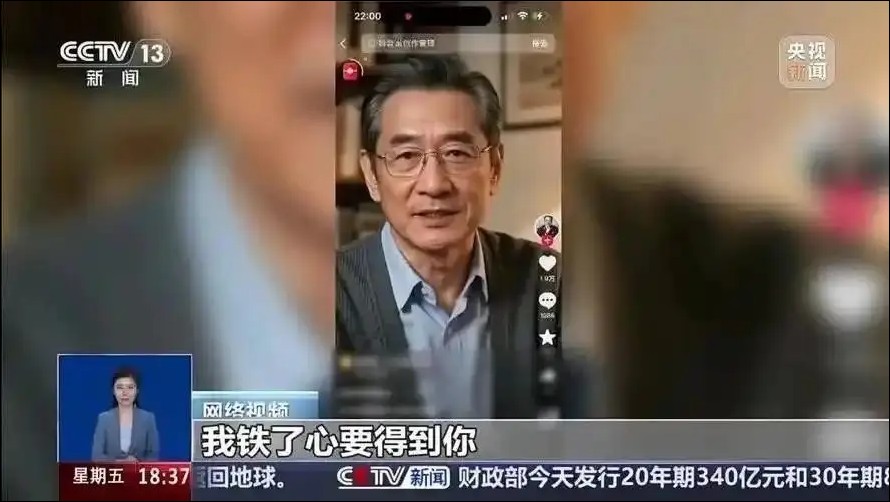
Even more dangerous are AI virtual personas in some livestreams that deliberately play on sympathy—claiming their businesses are failing or they’re in poor health, which tugs at the heartstrings of many older women who end up sending gifts, shelling out tens or hundreds of yuan at a time. Others operate under the guise of “family businesses” and use matchmaking as a pretext to sell cheap crafts and health supplements at inflated prices. The worst of all are those who lure victims into downloading “exclusive matchmaking apps” embedded with trojan programs—once a user enters their bank card information, a lifetime of retirement savings can be wiped out in an instant.
CCTV also reported another case: in June this year, police in Yantai, Shandong, cracked a romance scam in which a woman surnamed Wang met a man on a social platform who claimed to be the owner of a medical equipment company. The man shared many everyday photos of children, which moved Wang, herself a single mother. But when Wang requested a video call, the man refused, citing a “sad reason.” The man then claimed to have a side business of “scalping celebrity concert tickets,” and guided Wang to send 850 grams of gold (worth over 1 million RMB, about NT$4.1 million) to a so-called third-party platform for investment. Police intercepted it in time, but afterward confirmed that those life photos were all forged using AI tools.
Who should be held accountable? Platform and regulatory loopholes
Experts point out that for scenarios where risks have already been exposed, platforms cannot stop at merely labeling AI content. When live streams and short videos are detected as suspected AI-generated and carrying characteristics of steering users toward dating or matchmaking platforms, while also showing signs of fraud such as directing users off-platform or soliciting service fees, platforms should adopt tiered restrictive measures and forward fraud-related clues to supervisory authorities, including public security and cyberspace administration.
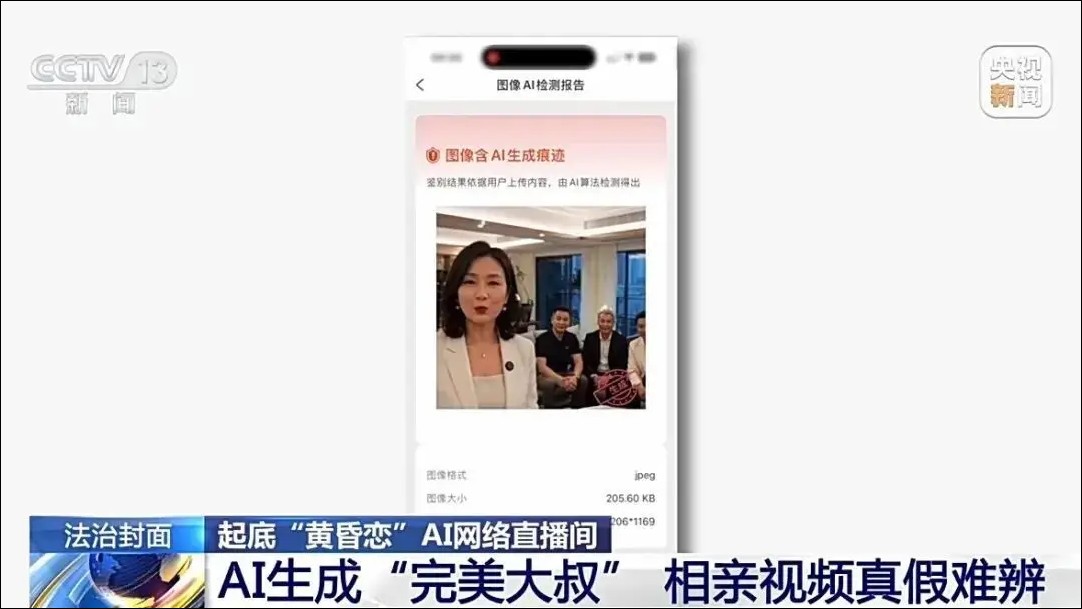
AI-generated content is now flooding every corner of the internet, yet many platforms still rely on outdated review systems: no dedicated risk controls for AI-driven virtual personas, and no prominent anti-fraud warnings. A shell matchmaking agency can get away with fraud using nothing more than a business license, and even if it gets caught, it can just rebrand and start over on another platform. The cost of breaking the law is absurdly low.
For regular users, experts advise raising risk awareness and using technical detection tools to verify the authenticity of suspected AI-generated content. At the same time, social media platforms should strengthen their obligations to label AI content and improve identification and risk control systems, so as to reduce the space for false information to spread at its source.
Conclusion
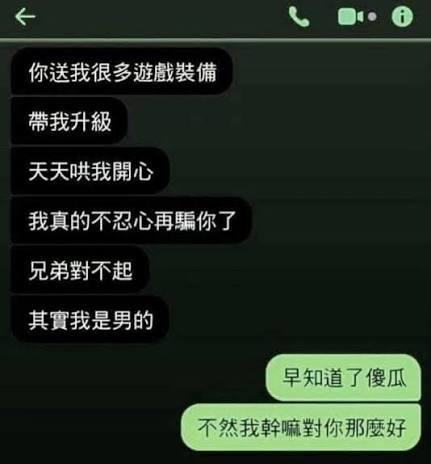
AI technology itself is neutral, but when used as a tool for scams, it’s far more devastating than traditional methods: no need to hire actors, no need to shoot on location—just type in a few lines of text and you can mass-produce dozens of different flawless personas at near-zero cost, while multiplying efficiency tenfold. This wave of AI matchmaking scams exposes not just the problem of technology abuse, but also the reality that the emotional needs of middle-aged and elderly people have long been neglected. In the context of Taiwan, the more common phenomenon here is fake AI girlfriends defrauding naive men with no dating experience. The only advice I can offer is to remind everyone to stay vigilant in online dating—unless you’ve met the person in person, it’s safer to assume they’re AI (and actually, even after meeting, it could still be a badger game or you might be taken for a sugar daddy), so you have to stay on guard.
Source: KOCPC Chinese