


As players around the world eagerly await the release of Grand Theft Auto VI (GTA 6), many hope to get any news about the new installment as early as possible. However, during the long wait, some cybercriminals have seized on players’ anticipation, using GTA 6’s immense popularity to set traps and turn players who are closely following the game’s updates into targets of cyberattacks.

If you see a 《GTA 6》 demo, don’t rush to download it — it’s actually just malware.
Since GTA 5 was released in 2013, it has achieved remarkable commercial success, not only holding a steady spot on popular game charts for years but also becoming the second best-selling game in gaming history, behind only Minecraft. Even more than a decade after its release, players’ enthusiasm for the series remains undiminished, which is why GTA 6 has become one of the most highly anticipated games in recent years. However, due to the lengthy development period and multiple adjustments to its release date, many fans are paying close attention to any possible new information.

It is precisely this eager anticipation that cybercriminals are exploiting to create multiple pages posing as official Rockstar Games websites. These sites closely mimic the official design and even claim to offer “GTA 6 Early Access Trial” or “Limited Experience Edition Download” to lure players into clicking. In reality, no public trial version of GTA 6 has been released, and the downloads offered on these websites have nothing to do with the game.
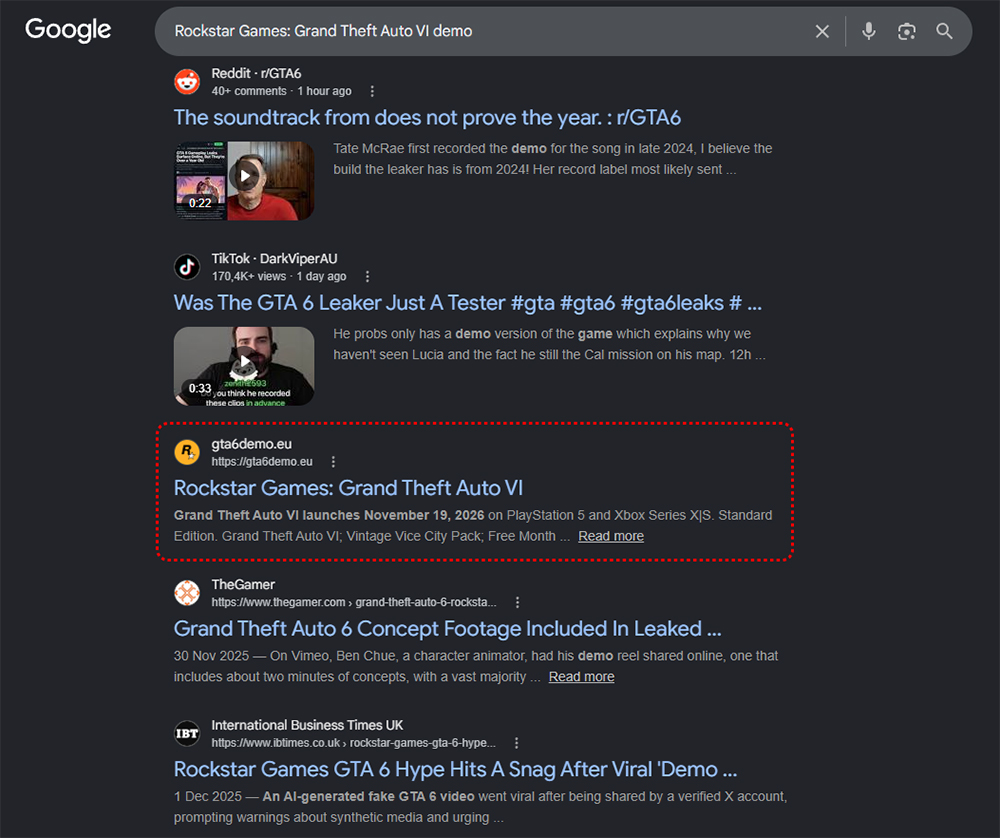
According to a cybersecurity company Malwarebytes’ researchWhen players click the “Play Now” or download buttons on these fraudulent websites, the system downloads a file that appears to be a game installer. However, this file is not a game program, but rather malware specifically designed to steal personal data. Once executed, the victim’s device may be compromised, posing a serious information security risk.
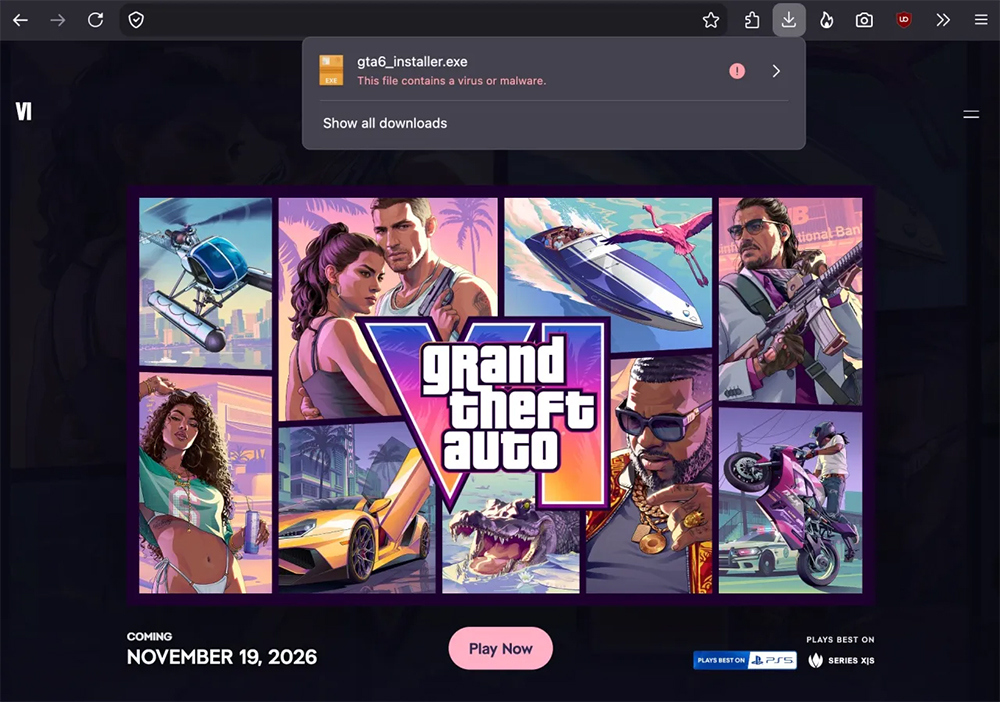
This type of malware is classified as “Infostealer,” and its primary goal is to collect and steal sensitive data stored on users’ computers, including account credentials from browser records, cookies, login credentials, and other important account-related information. After obtaining this data, hackers may further compromise email accounts, social media platforms, gaming accounts, and even financial service accounts. In some cases, even if users have enabled multi-factor authentication (MFA), attackers can still bypass certain security mechanisms using stolen login session information and directly gain access to accounts.

Given the high level of attention on gaming information, rumors, leaks, and fake news about GTA 6 continue to circulate online. When searching for related information, players should pay special attention to whether the source comes from official channels, such as the Rockstar Games official website, official social media platforms, or trusted media reports. For any content claiming to offer “early download,” “early trial play,” or “internal leaked versions,” players should remain highly vigilant.

In the face of endless online scams and malicious attacks, the most important protective principle remains unchanged: do not easily download files from unknown sources, and do not click on links from suspicious origins. In an environment where it is hard to tell real from fake, maintaining skepticism and verifying information through official channels can often keep you from becoming the next victim. For players eagerly awaiting GTA 6, patiently waiting for official announcements is far safer than risking a download of so-called “demo versions.”
Source: KOCPC Chinese