


Bloomberg reporter Mark Gurman, who specializes in leaking Apple insider news, revealed the latest internal test feedback on Apple’s foldable iPhone in his latest Power On newsletter. According to him, the foldable device, which everyone inside Apple calls the “iPhone Ultra,” has already impressed early testers, but the camera specs have become the biggest point of contention. Additionally, Gurman revealed that Apple is making “major adjustments” to its retail stores to make room for upcoming smart home products, including a new HomePod mini, Apple TV 4K, and the first smart home hub device with a display.
Apple is preparing to make retail store changes to its accessory and home device sections, indicating that major new products in that space (HomePod mini, Apple TV, and the smart home hub with screen) are coming. https://t.co/Y4pBJA9NOa
— Mark Gurman (@markgurman) August 23, 2026
iPhone Ultra: Foldable iPhone Design and Specifications
Based on aggregated information from multiple sources, the iPhone Ultra adopts a book-style foldable design, with an external screen of approximately 5.5 inches and an internal screen of about 7.8 inches when unfolded, similar to the screen size of the iPad mini. The body features a titanium metal frame, with a thickness of roughly 4.5mm when folded, and it becomes extremely thin when unfolded.
iPhone Ultra (Fold) rumored specs:
> 5.5″ cover & 7.8″ inner display
> 4:3 aspect ratio
> Nearly invisible crease
> Advanced hinge mechanism
> Touch ID (no Face ID)
> No Telephoto camera
> No Action button
> Dual 48MP cameras
> iPad-like app layout
> A20 Pro chip (2nm)
> 12GB… pic.twitter.com/i74OnvFnTx— apple files (@applefiles_) August 24, 2026
The screen crease is the problem Apple has devoted the most technical resources to solving. According to Gurman, the inner display of the iPhone Ultra shows virtually no crease, in stark contrast to Samsung’s Galaxy Z Fold 8. Although Samsung also touted a “crease-free” design on this year’s Z Fold 8, the crease remains visible in real-world use.
In terms of core specs, the iPhone Ultra is expected to feature the A20 Pro chip (TSMC 2nm process), 12GB LPDDR5 memory, a battery capacity of approximately 5,400 to 5,800mAh, and support for 40W wired fast charging and 15W MagSafe wireless charging.
Camera: Dual-lens configuration sparks controversy
The biggest letdown for early testers is the camera. The iPhone Ultra only comes with a dual-lens setup (dual 48MP), lacking a telephoto lens. For a flagship device expected to cost over $1,999 (approximately NT$65,000), this configuration does feel underwhelming. By comparison, the Samsung Galaxy Z Fold 8, while also criticized for its mediocre camera, at least offers a triple-lens setup that includes a telephoto lens. The iPhone Ultra’s lack of a telephoto at this price point has been described as a “glaring weakness.”
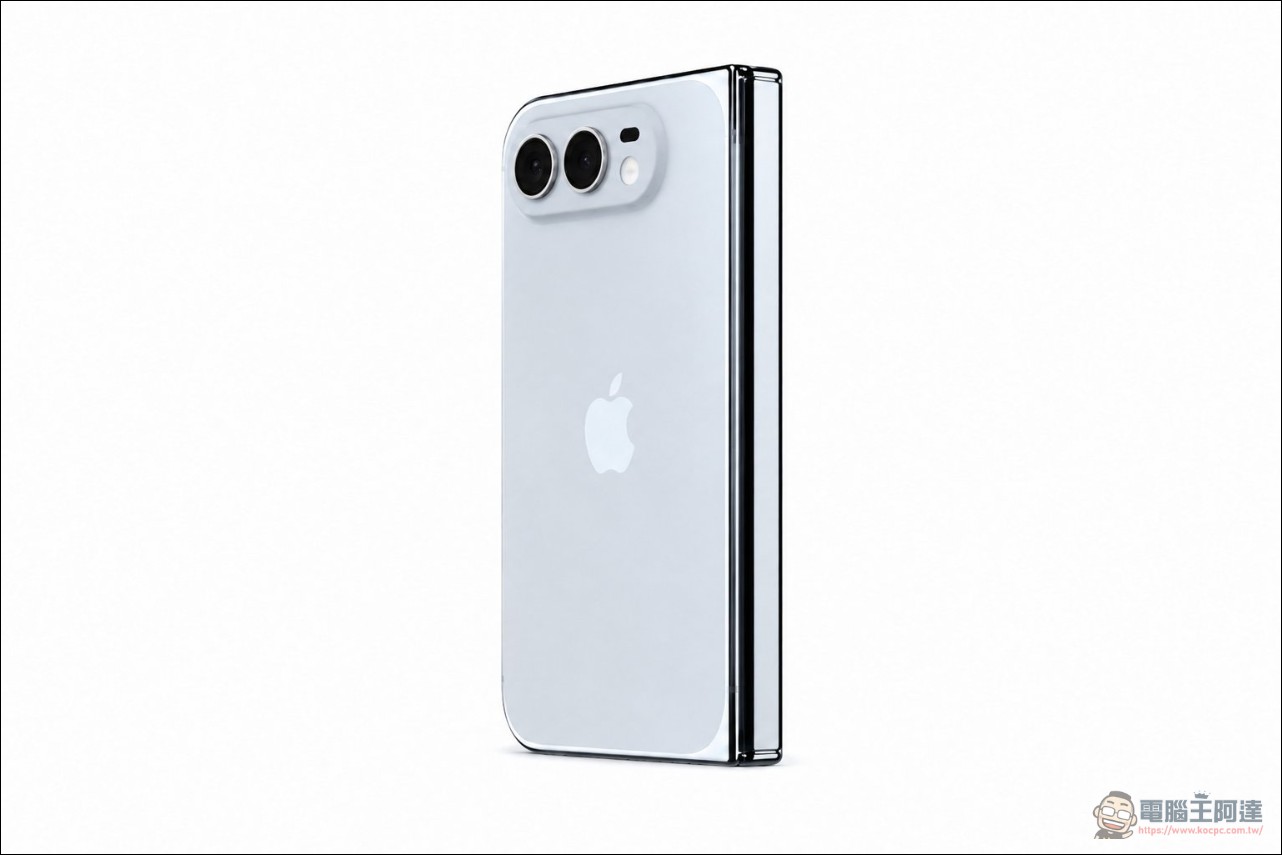
However, some argue that the telephoto lenses on foldable phones are generally underwhelming, with most featuring only a small 10MP sensor that limits real-world performance. Apple’s decision to prioritize the quality of a dual-lens setup on the first-generation foldable iPhone, rather than adding a mediocre third lens, may be the more pragmatic approach. Discussions on the MacRumors forums also point out that most foldable phone users rarely use the telephoto lens in daily use, making a dual-lens configuration more than adequate for a first-generation product.
Software experience: close to iPad when unfolded.
Gurman notes that when the iPhone Ultra is unfolded, the software experience is close to that of the iPad, with apps presented in an iPad-style layout rather than simply scaling up the iPhone interface. This indicates that Apple has made considerable software adaptations to fully utilize the 7.8-inch large screen.
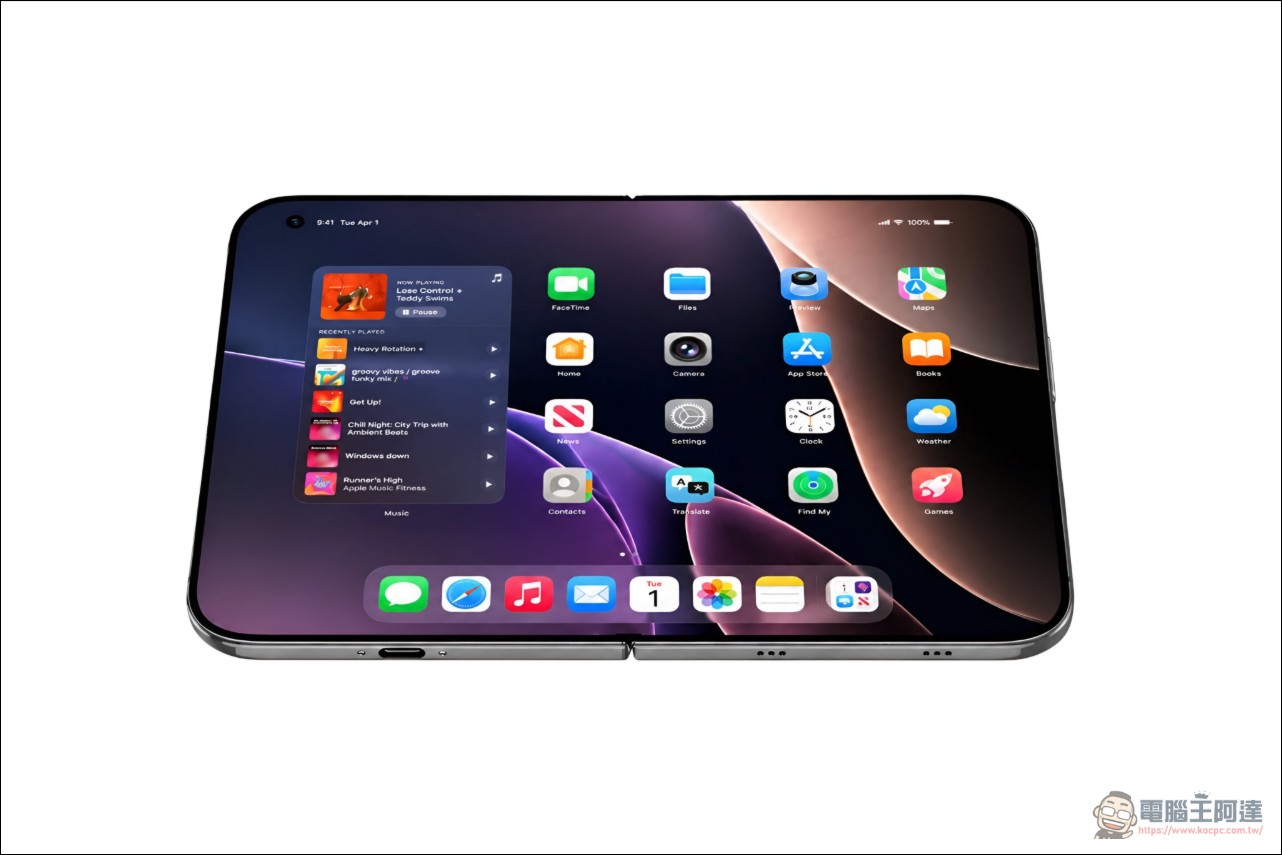
Additionally, the iPhone Ultra is expected to integrate Touch ID into the power button rather than using Face ID. This design choice may stem from the structural constraints of a foldable display, which make it difficult for the existing Face ID sensor array to function properly in the folded state. The hinge also uses titanium, with durability and the opening/closing feel being one of Apple’s key testing focuses during development. Based on currently leaked information, the hinge feels quite solid and stable when opened and closed, without the loose, flimsy feel seen in Samsung’s early foldable phones.
Launch schedule and pricing
According to Gurman’s previous reports, the iPhone Ultra is expected to launch this September alongside the iPhone 18 Pro. However, initial supply may be limited, as production capacity needs time to ramp up. As for pricing, multiple sources point to a starting price of $1,999 (approximately NT$65,000), which is comparable to the starting price of the Samsung Galaxy Z Fold 8.
New Smart Home Products: Store Undergoing Rearrangement
In the same column, Gurman revealed that Apple is making “significant changes” to the accessories and home device sections in its retail stores, clearing out display space for upcoming new products. These new products include three items:
- New HomePod miniThe current model has been on the market for years, and its specifications urgently need an update.
- New Apple TV 4K: Expected to add more AI features.
- Smart Home Hub Device (Codename J490)Equipped with a 7-inch square screen, featuring a semicircular base design (similar to half a HomePod mini), with Siri AI at its core, it is expected to launch between October this year and early 2027.
This smart home hub is a major step for Apple in entering the smart home market. The smart home display market is currently dominated by the Amazon Echo Show and Google Nest Hub, and Apple has long been absent from this product category. The launch of the J490 will fill the final gap in Apple’s smart home hardware lineup. By placing Siri AI at the core of this device, Apple is signaling higher expectations for AI assistants in home scenarios, rather than just treating it as a small speaker that can play music.
Apple’s fall offensive
Based on this report, Apple’s fall product lineup this year is quite dense. In September, there’s the iPhone Ultra foldable and the iPhone 18 Pro series, and around October, new smart home products will follow in succession. This is the largest expansion of Apple’s product line in recent years, with new faces in every category, from foldable phones to smart home hubs.
For Taiwanese consumers, the iPhone Ultra’s $1,999 USD price tag converts to approximately NT$65,000, and with potential tariffs and exchange rate adjustments in Taiwan, the actual retail price will likely be even higher (personally, I think it will start at NT$70,000 or more). But as Apple’s first foldable device, its significance lies in Apple finally entering the foldable phone market, which will directly shape the direction of the entire foldable phone industry over the next few years.
From an industry perspective, Apple’s entry will accelerate the maturity of foldable phone technology. Samsung has worked in the foldable phone market for years, but it has never been able to solve the crease problem or bring foldable phones into the mainstream market. Apple’s arrival brings not just competition, but also a boost to the entire supply chain. When Apple begins mass purchasing foldable screens and hinge modules, the cost of related components will drop rapidly, and ultimately all consumers will benefit.
Source: KOCPC Chinese