


As global memory supply remains tight and graphics card prices stay high, even being hyped to historic levels, repair shops in Japan and China have sniffed out another business opportunity. “AI to GPU Expert,” located in Saitama Prefecture, Japan, has begun offering VRAM upgrade services for graphics cards, doubling the NVIDIA GeForce RTX 2080 Ti from its original 11GB to 22GB for 45,000 yen (about $282, or roughly NT$9,100). This approach of expanding VRAM by replacing memory chips and modifying the BIOS is known as “magic-modified cards” in Chinese-speaking circles, and it’s already a mature industry chain on Chinese second-hand platforms.
Samsung製 GDDR6 2GBメモリ、200個到着しました!🔥
引き続きRTX 2080 Tiの22GB化を進めていきます!💪
まだまだ改造していきます!#RTX2080Ti #VRAM #メモリ増設 #GDDR6 #GPU改造 pic.twitter.com/y4XoMXwcaH— AI向GPU専門家 (@xingyao74043) August 15, 2026
This price equates to roughly $25 USD (about NT$810) per additional 1GB of VRAM. Based on the upgraded 22GB total, the average cost per GB comes to about $12.84. On China’s Xianyu platform, the RTX 2080 Ti 22GB modding service is listed at around 960 RMB (about NT$4,200).
The full graphics card modding process: replacing chips, adjusting resistors, and flashing the BIOS—all three steps are indispensable.
The RTX 2080 Ti’s 22GB mod is not as simple as a software hack—it requires a dual-pronged effort of hardware soldering and BIOS modification. (On the mainland, “Brother Zhang, who repairs graphics cards,” also offers memory capacity mod services in addition to repairs.)
The first step is replacing the memory chips. The technician uses a preheater to heat the PCB, then uses a hot air gun to blow off the original 11 1GB (8 Gb density) GDDR6 memory modules one by one. After cleaning the solder pads, 11 2GB (16 Gb density) Samsung GDDR6 chips are installed. The commonly used model is Samsung K4ZAF325BM-HC14, with a capacity of 2GB per chip. The Japanese store has already stocked 200 such chips.
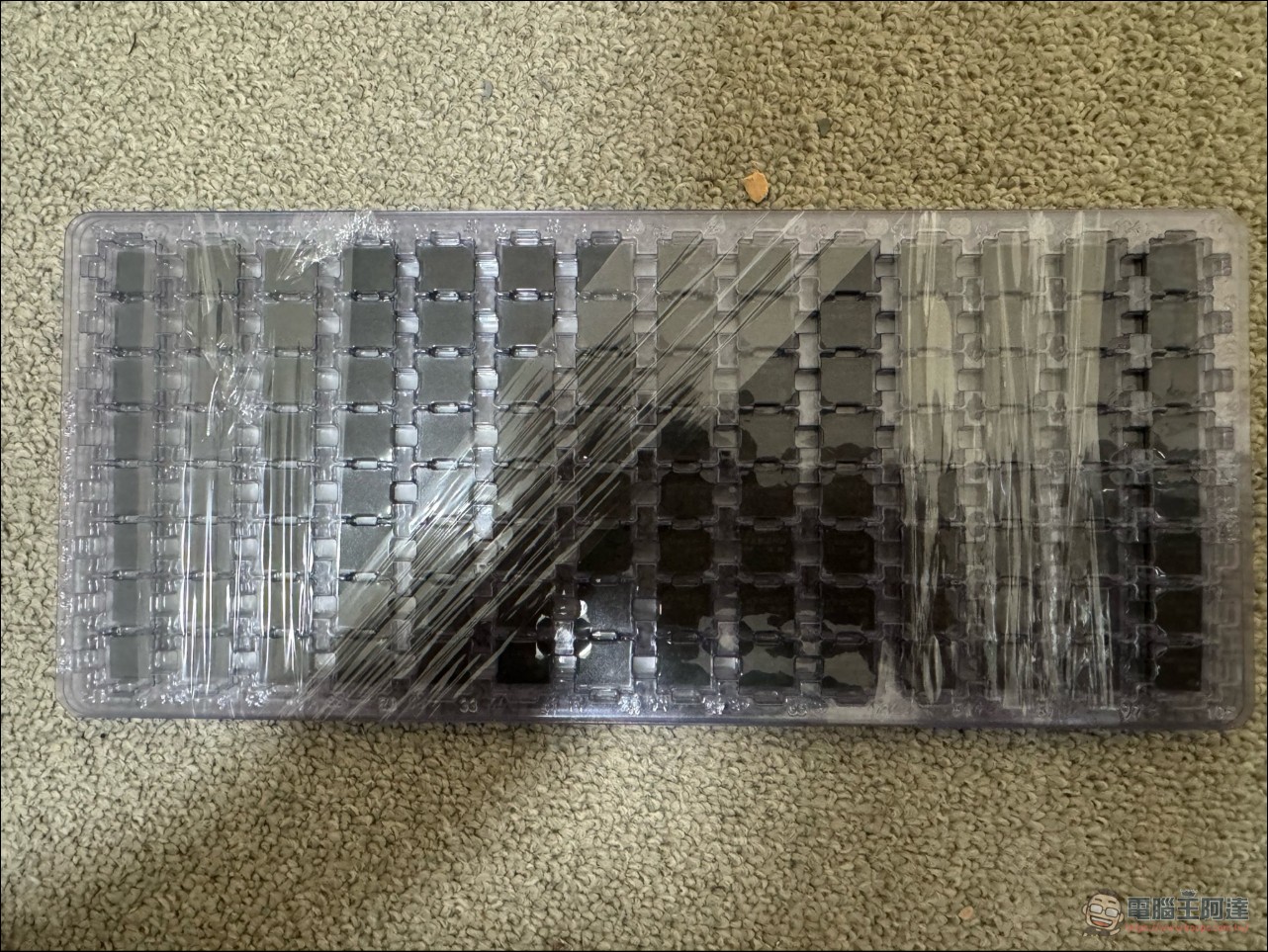
The second step is to adjust the strap resistors on the back of the PCB. These tiny resistors act as hardware jumpers, and their placement determines the memory density configuration that the GPU memory controller reads at boot. After replacing the chips, the strap resistors must be moved to the correct 16 Gb configuration position; otherwise, the GPU will not properly recognize the new capacity.
The third step is to modify the graphics card BIOS. Hardware adjustments alone are not enough; you must use a hex editor to modify the VRAM identification parameters in the BIOS, changing the original 11GB label to 22GB, while also adjusting the memory timing parameters (such as increasing tRFC from 550ns to 800ns) to ensure stable operation of the new memory chips. In other words, the premise of the so-called “natively recognized by the original driver” is that the BIOS has been correctly modified, not that no software is touched at all.
Not all graphics cards can be modified: the model and core ID are key.
VRAM modding doesn’t work on every graphics card. Whether the mod succeeds depends on the GPU core’s own support ceiling and the PCB design. Take the RTX 2080 Ti as an example—its TU102 core theoretically supports up to 24GB of VRAM, and back then NVIDIA simply limited it to 11GB through hardware configuration, so modding it up to 22GB is technically feasible. The RTX 3080 is a more complicated case. The 20GB modded version is extremely popular in the Chinese market, but not all RTX 3080s can be modded. Buyers must confirm whether the core ID is GA102-200, as differences in PCB layout and memory configuration across different versions directly affect the success rate of the mod.
The Japanese retailer currently lists modding services covering multiple graphics cards:
- RTX 2080 Ti:11GB → 22GB
- RTX A2000:6GB → 12GB
- RTX 3070:8GB → 16GB
- RTX 3080:10GB → 20GB
- RTX 4080 / 4080 SUPER:16GB → 32GB
- RTX 4090:24GB → 48GB
China’s modded card market: a mature industry chain on Xianyu
Compared to Japanese stores just beginning to offer related services, China’s graphics card modding market has been developing for years. The Xianyu platform is flooded with modded RTX 3080 20GB turbo cards, priced at around 3,160 RMB (about NT$15,000), attracting AI developers and professional rendering users with large capacity and low prices.
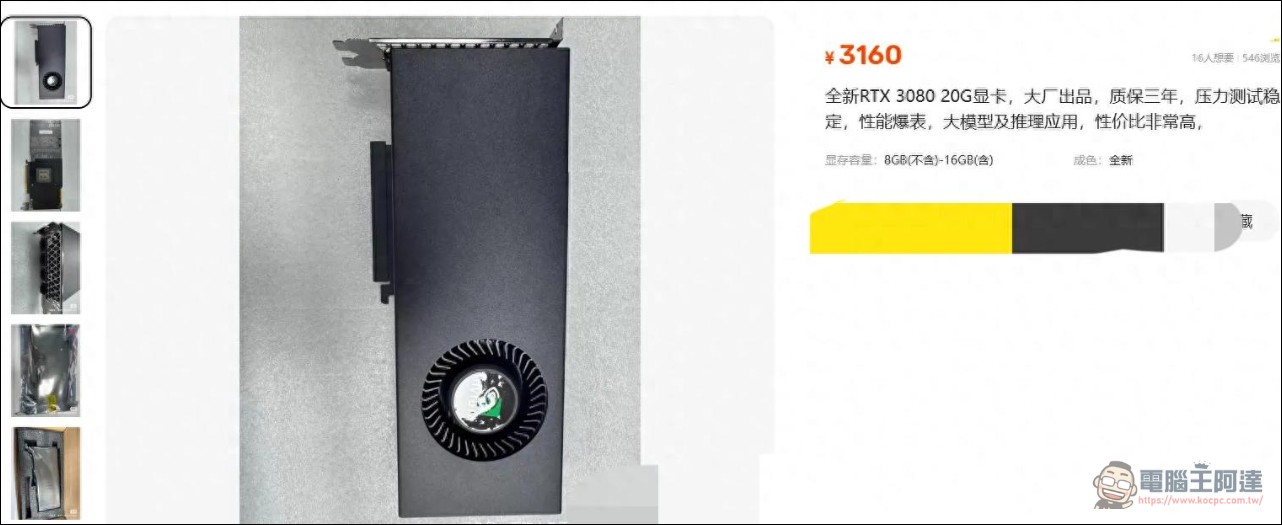
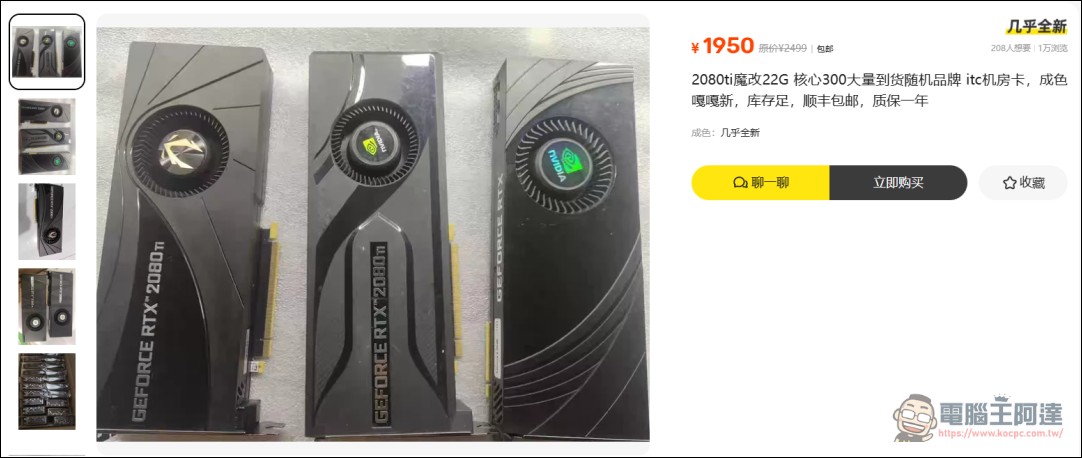
These modded cards mostly come from small workshops in China, and some are also refurbished and modified from mining cards after the mining boom. Since NVIDIA never officially released a 20GB version of the RTX 3080 or a 22GB version of the RTX 2080 Ti, all these products circulating on the market are unofficial modifications.
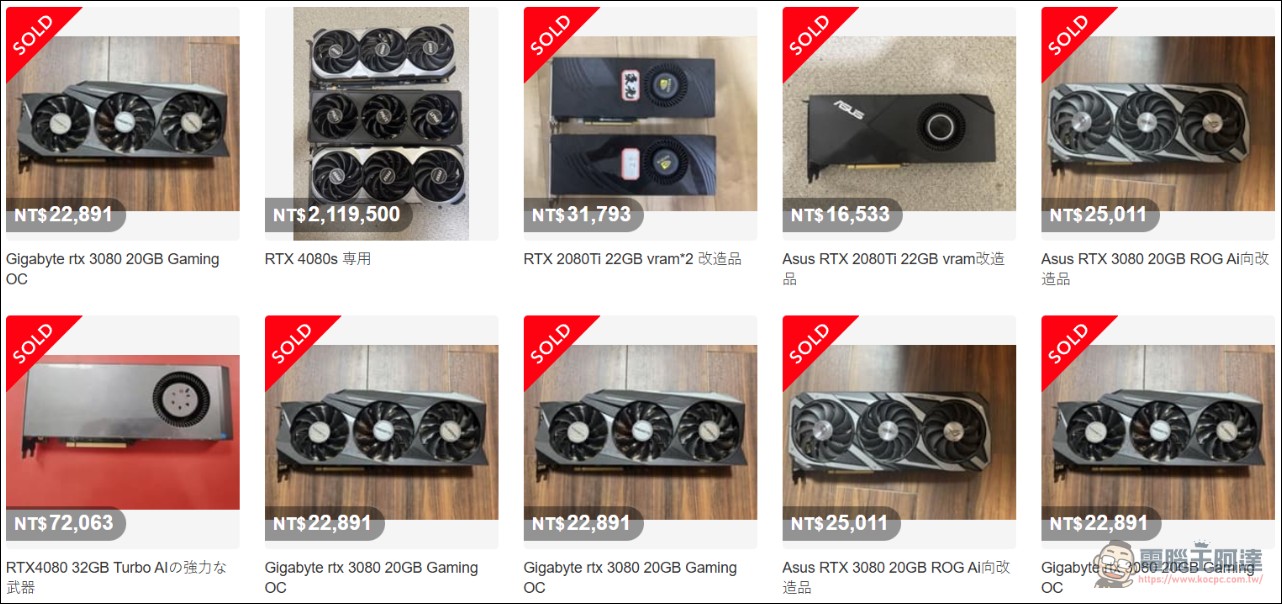
The Japanese store is also on a second-hand platform. Mercari Modified graphics cards are currently on sale. An MSI RTX 2080 Ti 22GB version is priced at about $800 (approximately NT$25,800), while the RTX 3080 20GB version is about $700 (approximately NT$22,600).
Why is the RTX 2080 Ti so popular?
RTX 2080 Ti is considered an ideal upgrade target in the modding community, due to its memory architecture. This graphics card, released in 2018, features a 352-bit memory bus and memory bandwidth of about 616 GB/s, far higher than current mid-range cards such as the RTX 4060 Ti 16GB’s 128-bit bus (about 288 GB/s).
The RTX 2080 Ti’s memory bandwidth is already more than sufficient—what it lacks is capacity. After doubling the VRAM from 11GB to 22GB, this card can run quantized 14B or even 32B parameter language models. However, doubling VRAM capacity does not improve the GPU’s compute performance or memory bandwidth; the modified card’s 3DMark Time Spy graphics score drops about 2.4% compared to the original, and memory bandwidth also slightly decreases to 598 GB/s. The main beneficiaries of this modification are AI developers who need large VRAM capacity, not gamers chasing gaming performance.
The driving force behind this modding trend is the global memory supply shortage. GDDR6 memory prices continue to climb, which in turn pushes up the prices of new graphics cards. The actual selling price of the RTX 5060 Ti 16GB has soared to nearly twice its suggested retail price. In this environment, modding the VRAM on older graphics cards has become a practical alternative. However, these services are also facing cost pressures. UK-based company GPU Solutions, which previously offered similar services, has suspended its VRAM upgrade services for the RTX 2080 Ti and RTX 3070 due to significant increases in memory component prices.
Modded items carry risks: be sure to confirm before purchasing
The risks of modified graphics cards should not be underestimated. Setting aside the fact that these cards certainly no longer have original manufacturer warranty, there’s a strong chance they were previously used as “mining cards” that have been running under heavy load for a long time—how much longer they’ll last is anyone’s guess. On the hardware side, BGA soldering requires professional equipment, and damaged solder pads or GPU chip overheating can completely destroy the card. On the software side, improper BIOS modifications can prevent the card from booting, requiring a reflash to restore functionality. Furthermore, modified graphics cards come with absolutely no warranty (some shops may offer a short-term warranty), so the buyer must assume all subsequent risks.
If considering buying a used modified card, make sure to confirm the seller has passed CUDA memory tests and stress tests, and verify the corresponding core ID and BIOS version. Regarding cooling, the original cooling design of the RTX 2080 Ti is for the 11GB configuration; after upgrading to 22GB, the heat output from the memory modules may increase slightly, so pay attention to temperature performance during prolonged high-load operation.
Source: KOCPC Chinese