


If there’s one identity that makes ASUS most familiar to people, it’s as a manufacturer of motherboards and gaming laptops. So this new product that recently appeared on their official website might give you pause: a “smart bicycle assist device” with an unannounced price tag that clamps onto the seat post to turn a regular bike into an electric-assist one.Oxiis E250G1The computer company Asus has gone and built bicycles—at first glance, a major leap, but look closer and it’s very Asus. Over the past three decades, this company has never missed a chance to dabble in things that seem off-brand, from the PadFone that combines a tablet and laptop, laptops whose lids give off a fragrance, walking home robots, wristbands that measure blood pressure, bamboo laptop shells… Almost every few years, they roll out a product that has media headlines writing “Asus is at it again.” This time, the Oxiis is just the latest example.
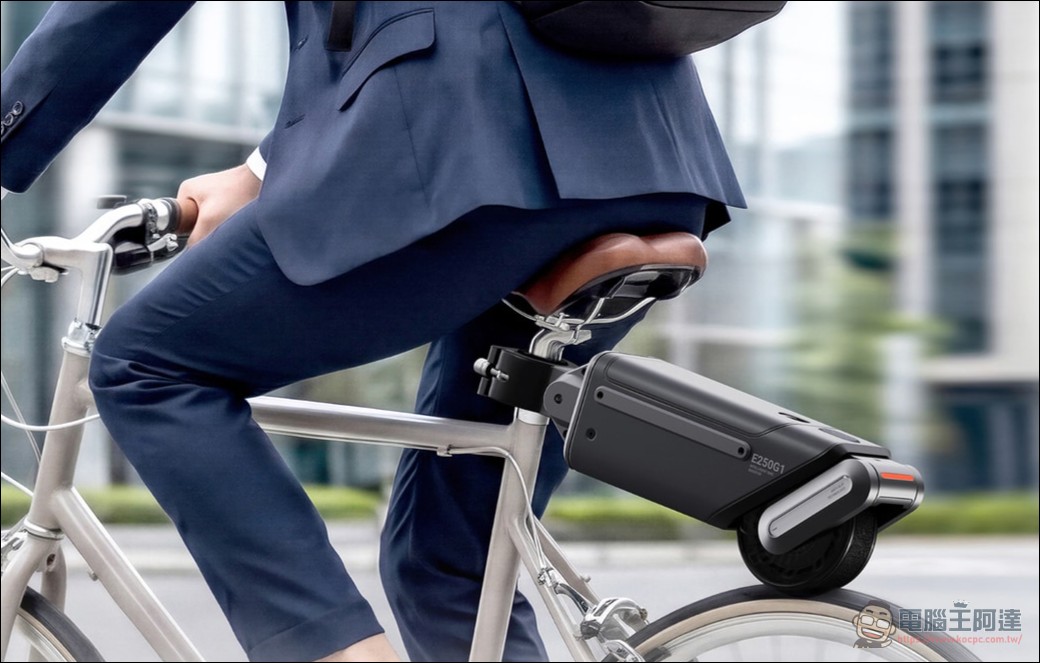
Instantly Turn Your Bicycle into an E-Bike: What Is the Oxiis E250G1?
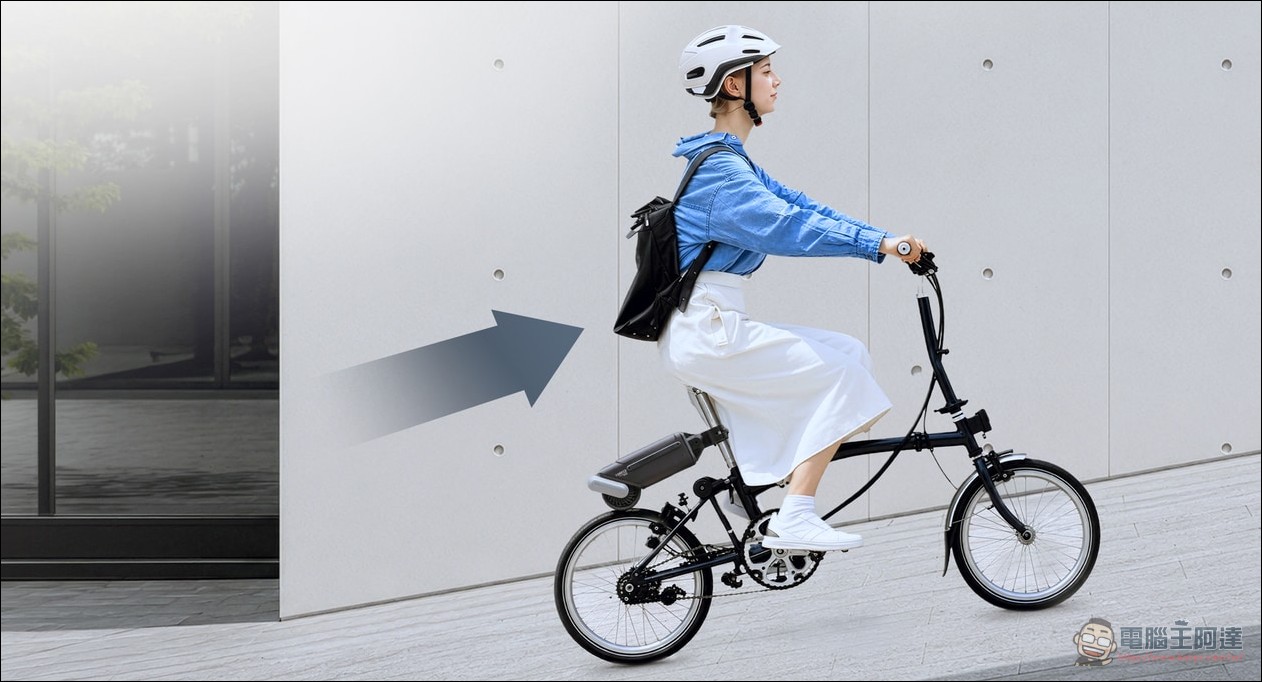
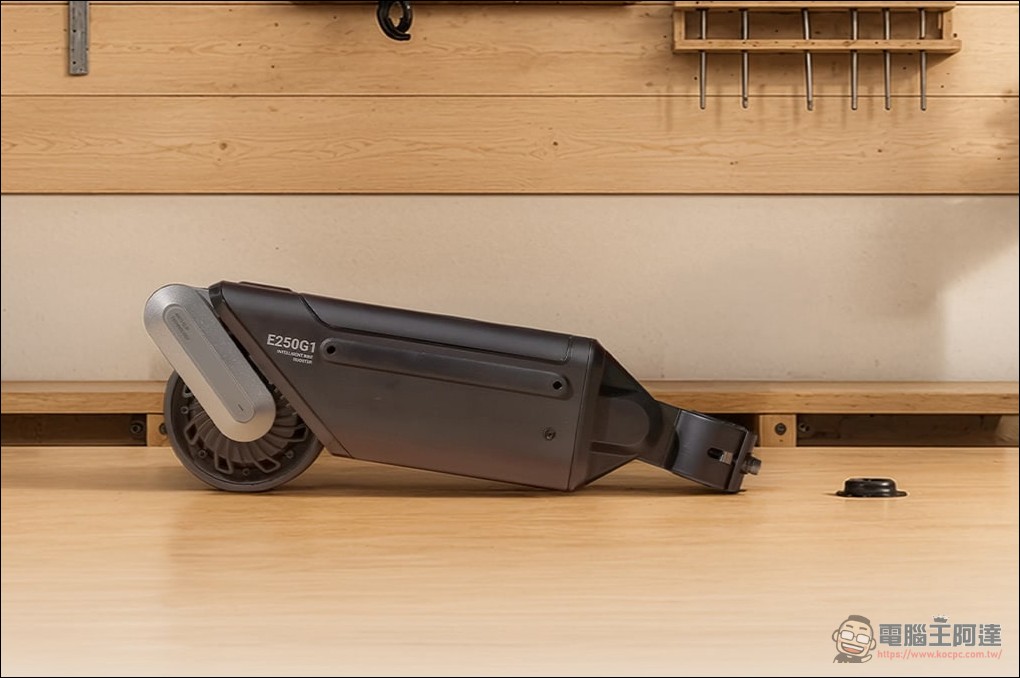
The ASUS Oxiis E250G1 is an add-on friction-drive motor system that mounts to the bicycle’s seat tube. A powered roller presses directly against the rear tire to transmit drive, with no need to replace the wheels or modify the existing gearing or braking setup. The official name combines the Greek word Oxis (agile) with Axis (pivot), emphasizing instant acceleration and responsive handling.
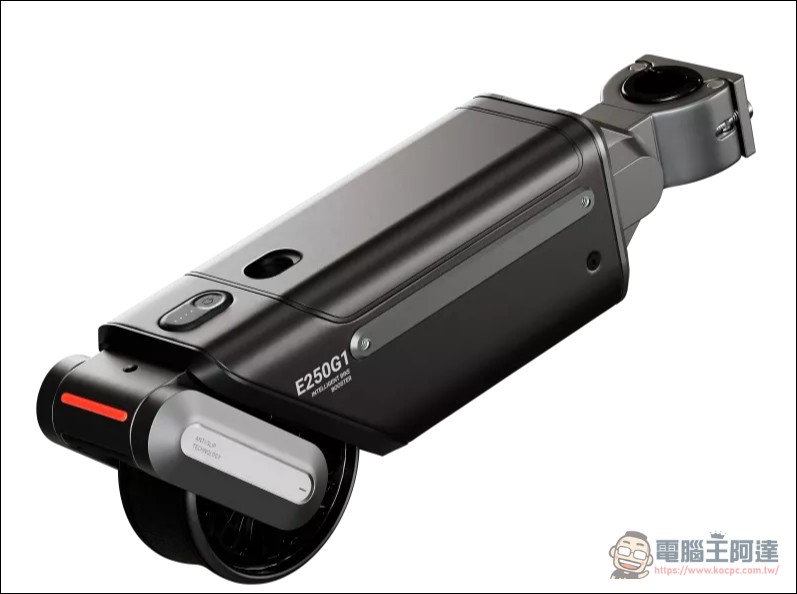
The complete unit weighs 3.7 kg including the battery, with dimensions of 400 x 84 x 128 mm. It’s touted for its quick-release installation, allowing you to pack it into a backpack and carry it away, so you don’t have to leave the expensive electronic control system locked to a bike rack on the street. For installation, it secures via a seatpost clamp, with three sets of shims included in the box to fit seatpost diameters from 25.4 to 34.9 mm. Tire width support goes up to 60 mm, and wheel sizes range from 16 inches to 29 inches, plus 700C.
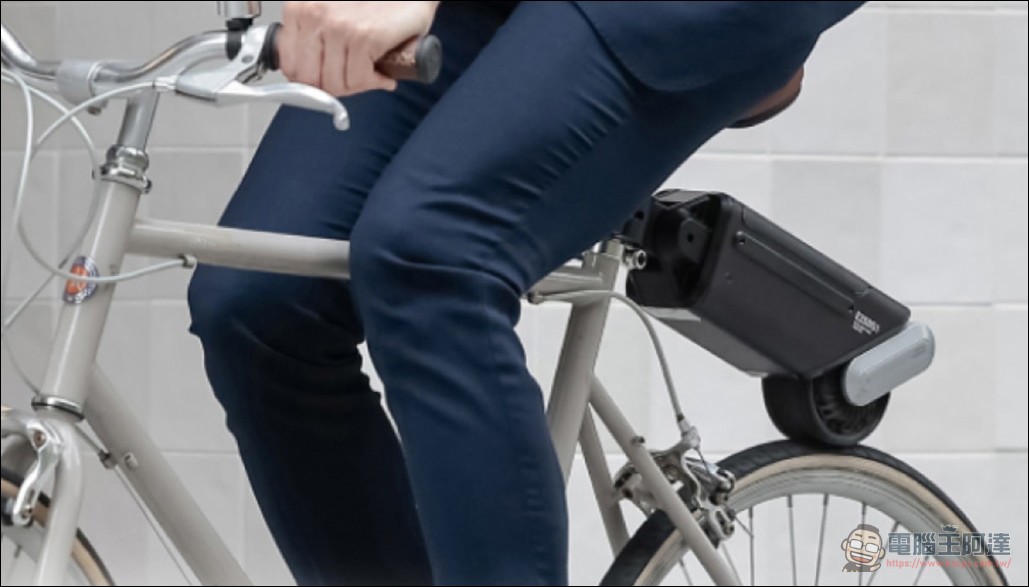
In terms of power specifications, the official ratings list 250W rated power and 500W peak power, with a maximum assisted speed of 32 km/h. In regions where a 25 km/h speed limit is enforced, the system automatically limits the speed. The battery is detachable at 158.4Wh, 36V, with a range of approximately 50 km in Eco mode and roughly 10 km in Sport mode. It can be fully charged in about 2 hours via a 100W USB-C PD charger. Since the capacity is below 160Wh, the official notes that it complies with carry-on airline regulations, but prior approval from the airline is still required.
- Control methodThe body buttons or the ASUS Oxiis App (supports Android and iOS) can switch between three modes: Eco, Normal, and Sport.
- SensingThe wireless cadence sensor mounts on the crank arm with no wiring; officially called Adaptive Boost Technology, it detects slope and headwind and automatically delivers supplemental power.
- Anti-slip and heat dissipationThe official highlights the dynamic pressure anti-slip mechanism, which prevents the rollers from slipping on bumpy surfaces, along with an efficient heat dissipation structure.
- security details: Tail light features brake detection, automatically brightening when you decelerate; water resistance rated IPX4, splash-proof only, not recommended for prolonged use in heavy rain.
In terms of compatibility, ASUS lists city bikes, road bikes, gravel bikes, folding bikes, and hardtail mountain bikes as compatible, but full-suspension models and carbon fiber seatposts are not supported. For treads, Slick, Semi-slick, or Textured tires are recommended; knobby tires are not recommended.
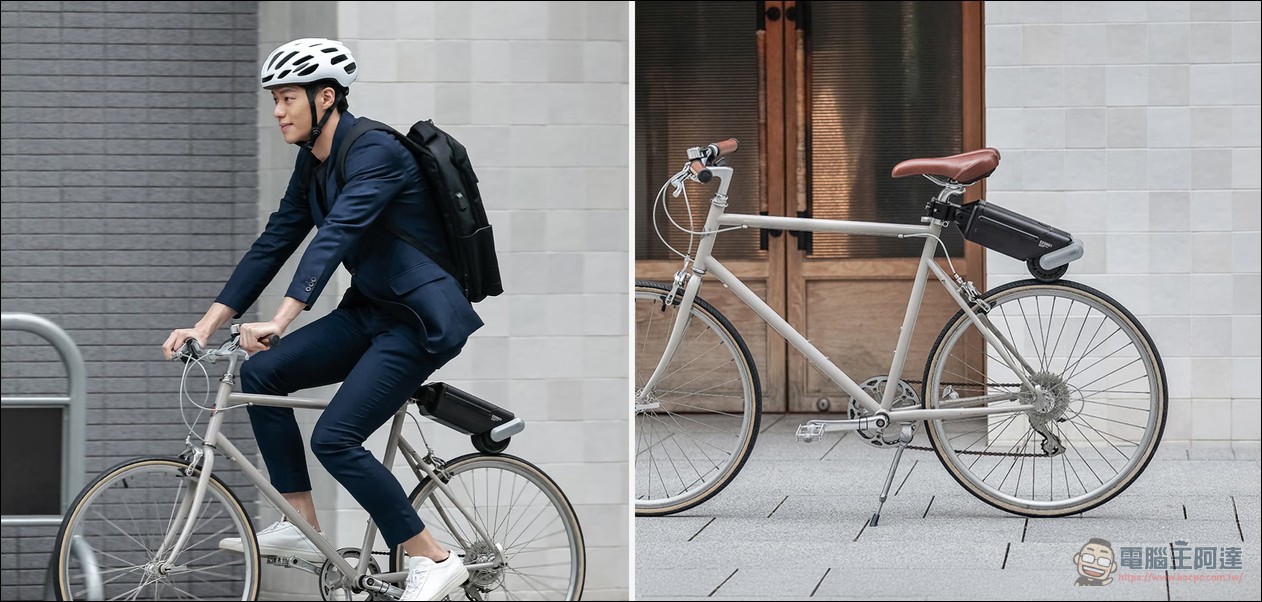

The friction drive is an old idea—why is ASUS only doing it now?
Friction drive isn’t a new invention. Its advantage is a simple structure—no need to swap wheels and it works with any frame. The downsides are just as straightforward: reduced grip in wet conditions, and prolonged friction against the tire accelerates wear. Oxiis’s goal is to let people who don’t want to part with their old bikes experience electric assist at the lowest conversion cost. Operation is done by selecting a mode in a mobile app, and the concept is basically making electric assist a detachable add-on.
From a supply chain perspective, ASUS’s move into bicycles is not necessarily a whim. Batteries, motors, thermal management, apps, and power management are already part of the daily routine in its laptop and ROG product lines. Friction drive mechanisms and relatively low-power motors are hardly unfamiliar territory for a company that has long built motherboards and cooling modules. This also explains why the product page places particular emphasis on USB-C PD fast charging and a removable battery—the logic is exactly the same as with laptop peripherals.
ASUS’s Oddities Showroom: Laptops and Mice That Emit Fragrance
When it comes to ASUS’s most chuckle-worthy crossover in the past two years, it has to be “fragrance.” In July 2024, the Adol 14 Air first launched in China, partnering with fashion brand Anna Sui to place a magnetic fragrance diffuser compartment in the center of the lid, with replaceable scent discs in small round cases featuring fragrances like Basil and Mandarin. This 14-inch model is essentially built on the Vivobook architecture, powered by an AMD Ryzen 9 8945H, 32GB RAM, 1TB SSD, and a 2880 x 1800 OLED display, but the lid features an extra speaker-like circular disc that passively diffuses scent using waste heat from the chassis and screen, with no fan or heating circuitry involved.

ASUS apparently felt one wasn’t enough, so in February 2025 they released the Fragrance Mouse, which features a washable, refillable vial next to the battery compartment on the bottom of the mouse that holds essential oils to let the mouse itself emit a pleasant scent. For now, both the scent laptop and scent mouse feel more like marketing experiments—the Adol 14 Air is only sold in China, with a suggested retail price of around 6,999 RMB (roughly NT$31,000), and comes with a matching velvet pouch and Anna Sui perfume. The Fragrance Mouse’s official pricing has yet to be announced.

Earlier crossovers: the storytelling Zenbo and the wristband used to measure blood pressure
Looking back over the past decade, ASUS’s most ambitious crossover was the home companion robot unveiled before Computex 2016. ZenboAt the time, Chairman Jonney Shih proclaimed the goal of bringing robots into every home. Zenbo was priced at $599, cheaper than an iPhone back then, and could tell stories, make video calls, take photos, look up information, and also connect to TVs and air conditioners as a universal remote control.

Zenbo later evolved into Zenbo Junior and Zenbo Junior II, which features generative AI, shifting toward educational scenarios with capabilities such as pronunciation detection, contextual dialogue, and one-click question generation. Its official positioning has moved from living room companion to campus and care applications. Although it never became a consumer electronic device in everyone’s hands, Zenbo allowed ASUS to accumulate experience in voice, vision, mobility, and cloud integration—capabilities that are now distributed across different product lines.
Even earlier, in 2008, ASUS had launched the U6V bamboo laptop with a bamboo casing, attempting to address environmental concerns with renewable materials. Although it was criticized at the time for having only the casing made of bamboo while the interior still used traditional manufacturing processes, it already showed ASUS’s interest in experimenting with materials and lifestyle.
Conclusion
What makes the Oxiis E250G1 interesting isn’t whether it becomes a hit — it’s that it once again shows ASUS’s product philosophy: when core PC market growth slows, package your existing battery, motor, thermal, and software capabilities and toss them into an seemingly unrelated scenario to test the waters. Bicycle assist units, fragrance laptops, companion robots — the appearances couldn’t be more different, but behind all of them lies the same reuse of capabilities. For consumers, this means you can experience electric assist without replacing your beloved bike — or you can simply choose not to buy in. For ASUS, every crossover is a low-cost market probe; if it works, a new product line opens up; if not, it gets pulled back and repurposed as a technology showcase. The ultimate test for Oxiis remains price and durability — if it’s priced reasonably and survives rain and wear-and-tear, it has a chance to find its place among folding bike and commuter cyclists. Will it, like Zenbo and Adol, become another quirky object in ASUS’s showroom that makes people smile knowingly? And ASUS clearly doesn’t mind collecting a few more.
Source: KOCPC Chinese