


The scenes of humanoid robots cleaning and doing chores around the house that we often saw in sci-fi movies as kids may actually become a reality! Alexander Koch, CEO of US startup Tau Robotics, announced on platform X that booking is now open for its humanoid robot cleaning service in the San Francisco area. A single robot costs $30 for 60 minutes of work, while two robots operating in the same time slot costs $60, approximately NT$1,950.
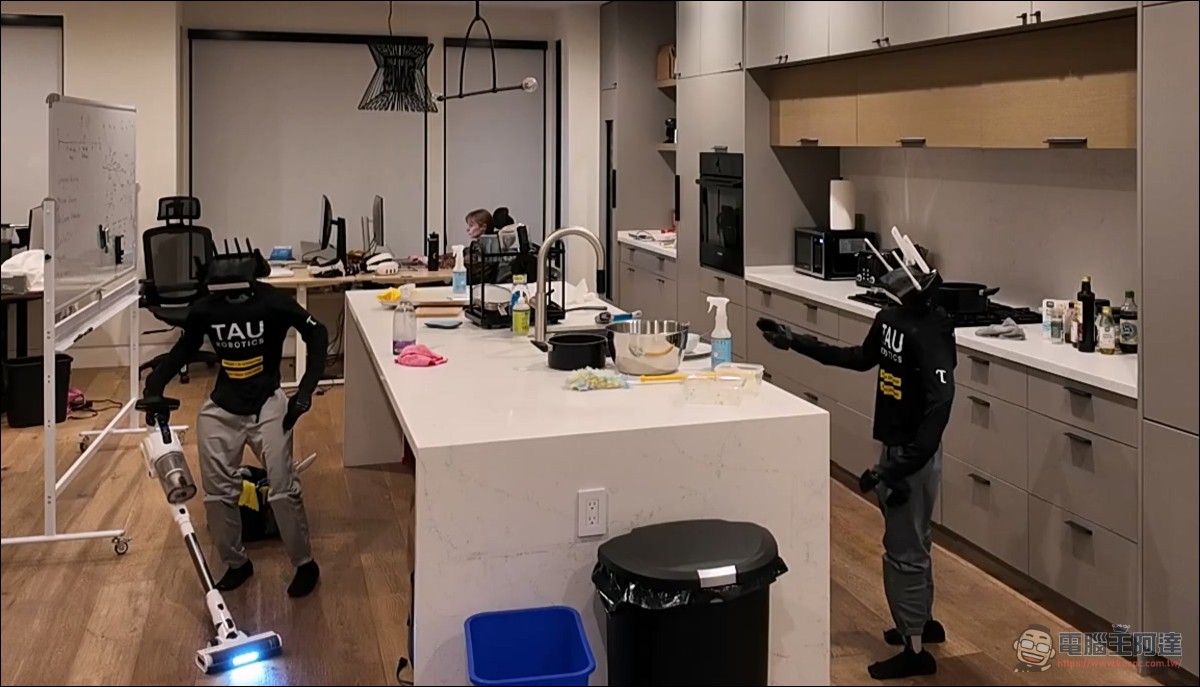
US startup Tau Robotics opens reservations for in-home cleaning by humanoid robots
Tau Robotics’ cleaning service was first publicly announced by Koch on July 28, positioned as an invitation-only pilot at $30 per hour, emphasizing that the robots are jointly controlled by human operators and AI. The description on the official website tau-robotics.com maintains the same pricing, with one hour as a booking unit; the robot starts working at the scheduled time and finishes after 60 minutes. The August 13 update marked the first time two humanoid robots could be booked for the same time slot, operating in parallel within the same hour, with the fee calculated per robot. (The video below is played at 5X speed.)
You can now book two humanoids for our cleaning service in SF. One humanoid for 60 minutes is $30, two are $60.
You can book a cleaning at https://t.co/Brl42KyISx. If you don’t have an invite code yet, join the waitlist. Timelapse at 5× speed (~40 minutes in real time). pic.twitter.com/lUbBT7Kjet
— Alexander Koch (@alexkoch_ai) August 13, 2026
This service currently uses an invitation system, and all new users must still go throughOfficial websiteTo obtain an invitation code from the waitlist, spots are released based on waitlist order and region. Users must first select a date and time slot, then choose one or two robots, and then decide whether to allow access to the bedroom and bathroom. The system defaults to marking the bedroom and bathroom as restricted areas; they are only included if the user actively checks them. A text field is also provided for users to note other restricted areas, such as a nursery, a desk piled with documents, or a glass cabinet in the hallway. Finally, users enter the invitation code along with a San Francisco address, email, and phone number to complete the process.
The pricing of $30 USD (approximately NT$975) places the service within the range of typical human cleaner rates in the San Francisco market. Some industry observers note that local rates for hourly human cleaning services fall between $25 and $30 per hour, and Tau’s robot service has not adopted an overtly aggressive low-price strategy. In a local media interview, Koch said that early customers are mostly households that previously did not hire regular cleaners or had them come infrequently, and the service aims to expand the overall market rather than directly replace existing cleaning workers. Each robot costs approximately $50,000 to manufacture—around NT$1.625 million—and the company currently absorbs ongoing operational and human supervision costs, making the current hourly rate closer to an introductory price for the pilot phase.
Human in the loop: AI and remote operators working together
The question the outside world cares most about is whether the robots work fully automatically and autonomously. Koch said that human operators will supervise the AI throughout the process and intervene and guide at different levels; it is not fully autonomous operation. Tau’s humanoid robots wear black uniforms and are given names such as Chelsea and Elon. During actual operations, remote technicians see the robot’s perspective through a head-mounted device and take over or assist the AI’s actions in real time.
— Alexander Koch (@alexkoch_ai) July 28, 2026
Koch describes the model as similar to autonomous driving: before the technology can be trusted independently, humans still hold the reins. He also said that at present robots cannot go up and down stairs by themselves, nor do they know where to start vacuuming; most paths and decisions are still made by humans. The company’s internal goal is to gradually remove human oversight around 2028 to 2029, but for now it remains in the testing and data collection phase.
Why start with home cleaning?
Treating cleaning services as a product entry point has been the core philosophy of Tau Robotics since its founding. The company was established in 2024 by Koch and co-founder Cornelia Weinzierl, advocating for building general-purpose robot AI that continuously learns from real-world interactions. The publicly announced plan is to start with San Francisco as a pilot, targeting 1,000 cleanings per week by 2027, then expanding to other U.S. cities and overseas markets in 2028. In terms of business model, home environments provide high-frequency, repetitive, and standardizable data covering different housing layouts, furniture arrangements, and dirt patterns, paired with real-time demonstrations and corrections from human operators, which together form a closed loop for training vision and manipulation models.
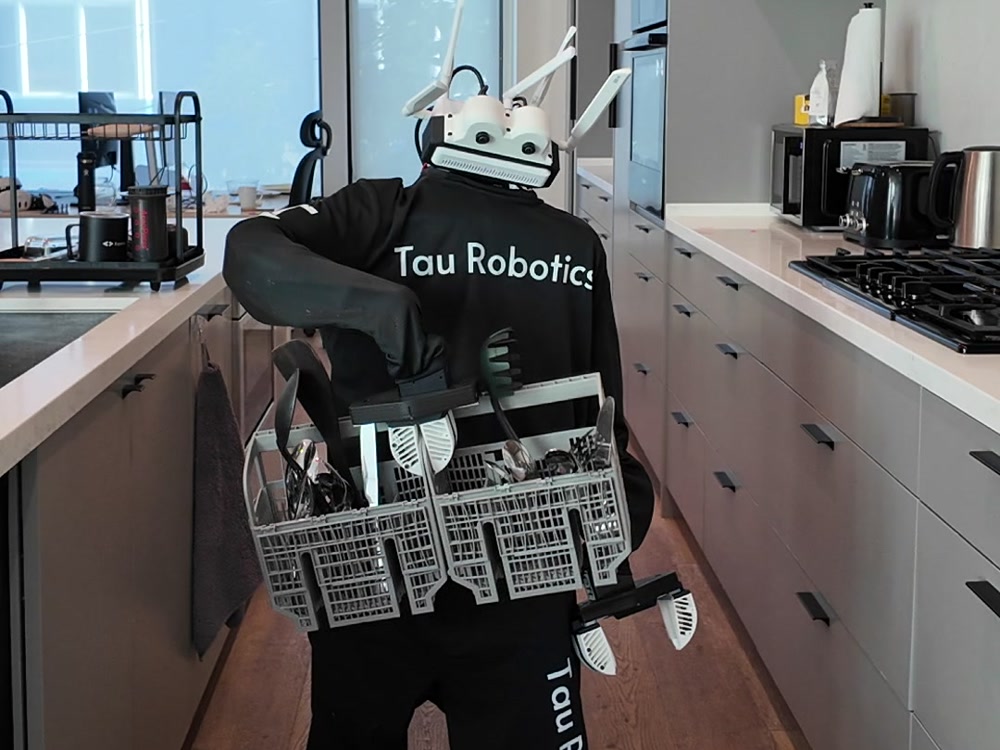
Users obtain cleaning services at prices relatively close to market rates, while the company gains imaging and operational data from continuous operation in real home environments—the two parties exchange data usage rights through a service contract. For users, the transaction terms are spelled out in the service privacy policy and the options on the booking page. Whether to open up private spaces or indicate restricted areas is decided by the user at the time of booking. The service is still in its very early stages, and whether it will succeed remains to be seen. But at the very least, it has already brought humanoid robots from factory pilots into home settings. Perhaps in a few more years, every household could have its own domestic robot.
Source: KOCPC Chinese