


Google Creative Lab recently released an eye-catching open source project on GitHub: Gemma Translator. It is a fully offline DIY voice translation device, and the core hardware is a… Raspberry Pi 5(8GB RAM), paired with commercially available power banks, a touchscreen, speakers, and a mini keyboard, all housed in a 3D-printed shell. The total parts cost for the entire device is about $80 USD (approximately NT$2,500), with no internet connection required, no API key needed, and no cloud fees incurred.
Instant translation without cloud or internet: Google open-sources Gemma Translator.
Technical architecture: Three models share the workload, all running locally.
Gemma Translator’s AI technology stack consists of three independent models, each responsible for one stage of the speech translation pipeline, connected in sequence to form a complete processing flow. For speech recognition (STT), it uses Moonshine, a lightweight speech recognition engine that officials claim can reach speeds up to five times faster than Whisper Tiny. The translation stage is handled by Gemma Four E2B models are responsible, running on-device via Google’s LiteRT-LM inference framework. Text-to-speech (TTS) is also handled by Moonshine’s speech synthesis module.
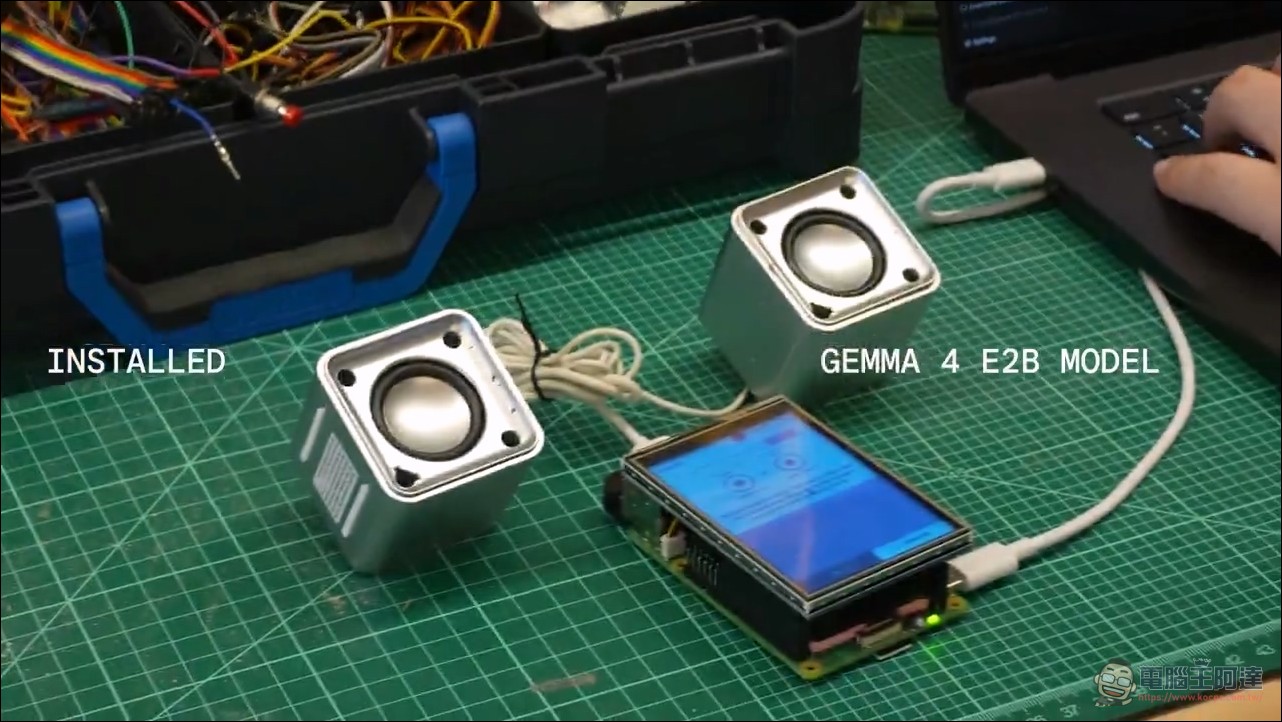
On a Raspberry Pi 5 with 8GB RAM, the inference speed of the Gemma 4 E2B model is about 6 tokens per second, with memory usage below 1.5GB. Although this speed is not fast compared to cloud APIs, it is sufficient for real-time conversational translation scenarios. All three models run entirely on-device, and the entire process from speech input to translation output does not go through any external servers.
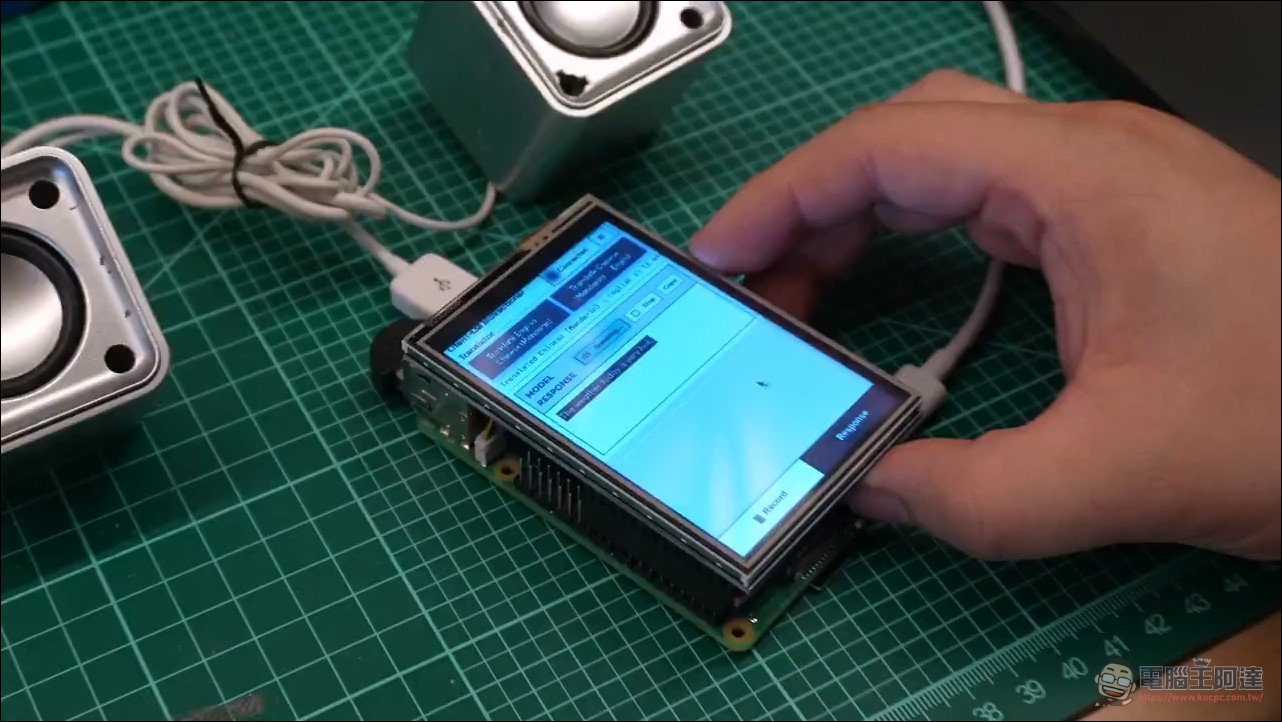
The frontend interface is built with React and Vite, optimized for small handheld screens (480×320 resolution), with a retro terminal-style visual design. The backend uses Python’s built-in http.server as the API server, communicating with the LiteRT-LM inference engine. The entire system can start the LLM server, Python API, and React frontend simultaneously through a single startup script.
Operation method: two-person dialogue mode, with push-rod language switching.
The Gemma Translator interface uses a “dual-lane” design: the left and right sides of the screen each represent one user, letting each person choose their own language. To use it, hold down the button and speak; on release, the system automatically performs speech recognition, translates, and plays the translated result out loud for the other person using synthesized speech. Language switching uses a revolver-style rotating interface, so you can cycle through different languages with the directional keys.
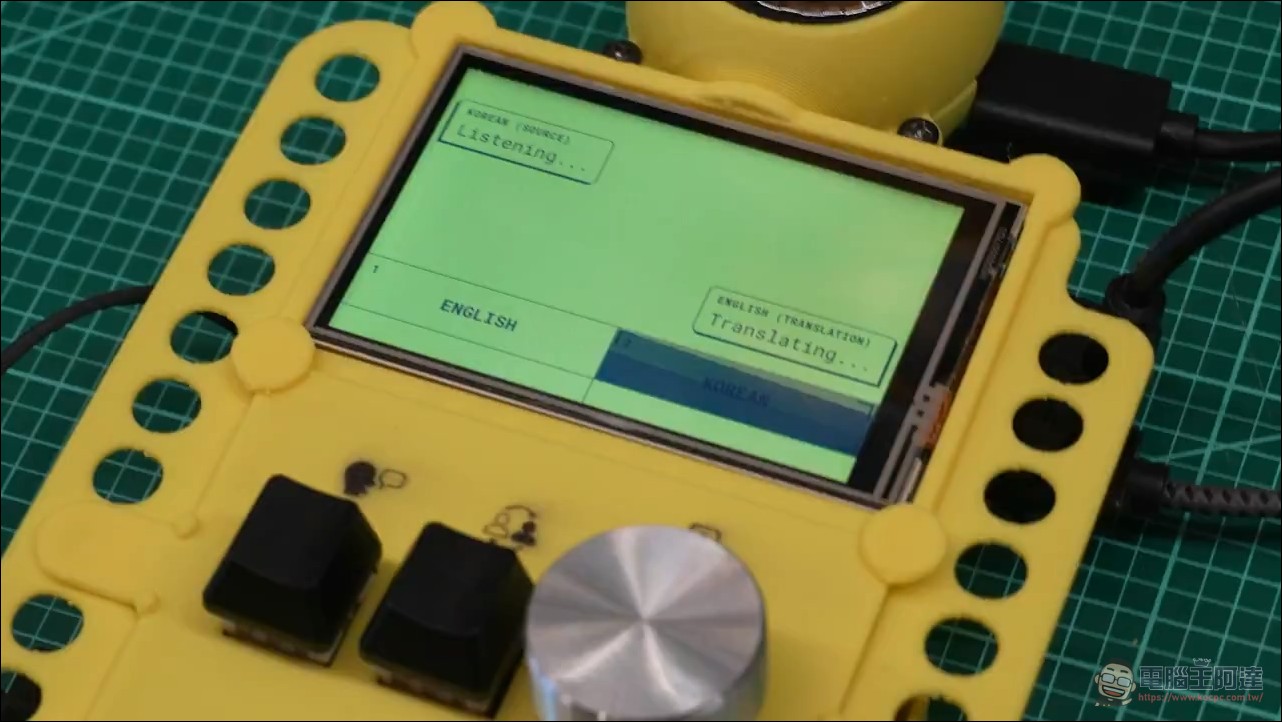
The project supports two keyboard modes: landscape mode lets a single player use the spacebar to switch the focus lane, while portrait mode lets two players control simultaneously with independent keys. Users can switch from the settings panel, and the choice is stored in the browser’s localStorage. Additionally, the project provides complete shortcut key instructions so both players can perform all operations without touching the screen. You can watch the video below to see how the system works (DEMO starts at 44 seconds):
Meet Gemma Translator: a completely offline, DIY translation device powered by Gemma 4 and built with Antigravity. 🧵 pic.twitter.com/oZ7WDdYsqo
— Google Antigravity (@antigravity) August 5, 2026
In addition to Raspberry Pi, this project can also run on laptops and Android devices. The entire repository is released under the Apache 2.0 license, and the project also includes STL files for a 3D-printed enclosure, allowing users to print it themselves and assemble all parts into a handheld device. Judging from the video attached to the Google Antigravity post, the finished product is roughly the size of a small handheld game console, making it easy to carry.
Gemma Translator Open Source Project
The development team and current limitations
Gemma Translator was developed by Alan Yam, Shashwath Santosh, and Dan Motzenbecker of Google Creative Lab, with the code completed with assistance from the Google Antigravity platform. The project README includes Google’s standard disclaimer, clearly stating that “This is not a Google-supported product,” making it something born out of the researchers’ personal interest. It should be quite useful for translation needs that require privacy protection or a fully offline environment (such as travel). If you’re interested, you can try it out yourself. Personally, I’d rather they just package and sell it — much faster that way (lazy).
Source: KOCPC Chinese