


For a long time, the mobile phone’s mobile processor (SoC) has been the single most expensive component in the bill of materials (BOM) of a smartphone. However, with the recent explosion of AI, the normality of the traditional mobile phone supply chain is undergoing earth-shaking changes due to the AI wave. According to the latest industry data, the purchase price of LPDDR5X memory and UFS 4.1 flash storage continues to soar. The total cost of both has begun to be on par with flagship processors such as Snapdragon 8 Gen 3/4, and has even officially surpassed the cost of the processor in some high-end versions.

Memory purchase prices skyrocketed by more than 100%
The main reason for this wave of out-of-control costs lies in the strategic shift of the world’s leading memory manufacturers. In response to the explosive demand for high-bandwidth memory (HBM) in AI servers, Samsung Electronics and SK Hynix have significantly adjusted their production capacity allocation, resulting in tight supply of consumer-grade LPDDR5X. According to industry surveys, the unit price of 12GB LPDDR5X has climbed from about US$30 to about US$70, an increase of more than 100%.
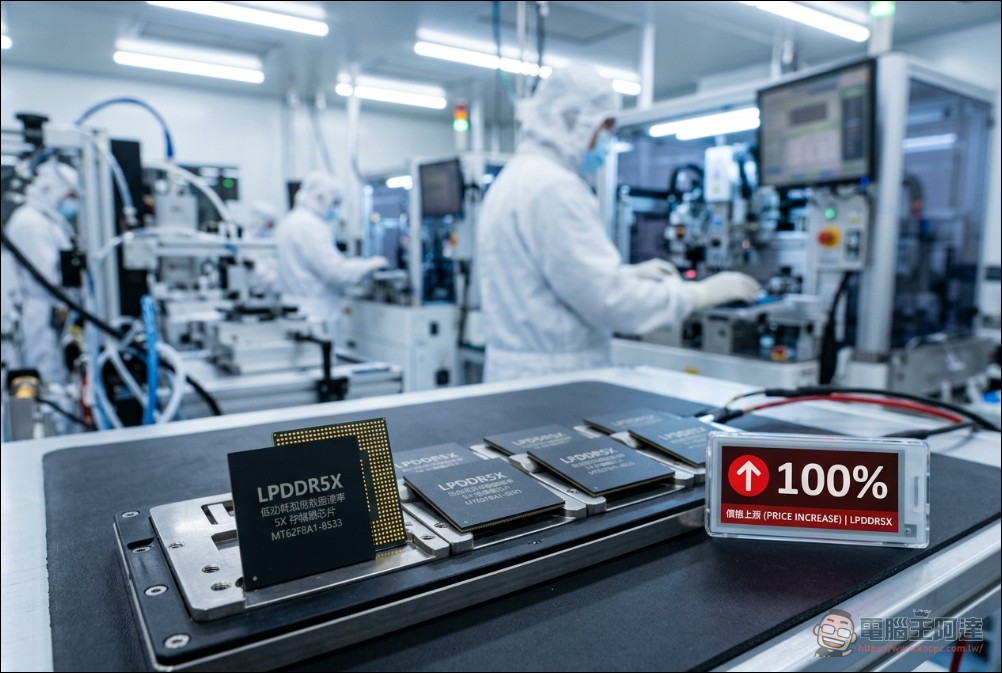
Samsung is even reported to have made a request to major customers such as Apple to significantly increase the supply price of LPDDR5X in 2025 (Apple is rumored to have agreed). Moreover, this price increase request is not a gradual increase, but a direct “double” impact on the profit structure of mobile phone manufacturers. With flagship phones seeing 16GB or even 24GB of memory as standard for generative AI operations, memory’s share of BOM cost is expanding at an unprecedented rate.
Flagship processor vs. memory combination: cost “death cross” appears
To quantify the impact, we can directly compare core component cost data. Qualcomm’s current main flagship Snapdragon 8 Gen 4 has a unit cost estimated to be about US$200, which is an increase of about 25% compared to the previous generation. As for the Snapdragon 8 Gen 5 (or 8 Elite) used in this year’s flagship machine, due to the use of TSMC’s 3-nanometer NP process, the cost is expected to further rise to more than 240 US dollars or higher (240 to 280 US dollars).
However, when we look at “memory + storage” as a combination, the numbers become staggering. Calculated based on the flagship configuration of 16GB LPDDR5X paired with 512GB/1TB UFS 4.1, under the contract price structure at the end of 2025, the total purchase cost of this combination has easily exceeded the US$200 level. In other words, mobile phone manufacturers’ spending on core computing units and storage components has evolved from the traditional “SoC alone” to a “SoC and Memory double kill” situation.
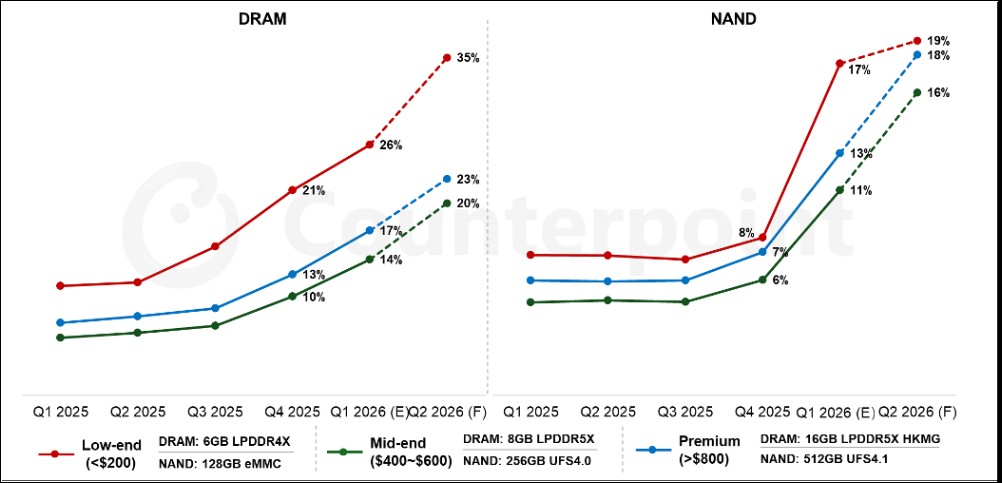
Forecast data points out that in 2026, with the small-scale introduction of LPDDR6 and UFS 5.0 specifications, the BOM cost of a top-of-the-range combination of 16GB memory and 1TB storage is likely to officially surpass the top processors at that time, setting a new record in the history of the mobile phone industry.
HBM Squeeze Effect: Structural Price Increase under the AI Wave
The source of this price storm is not in the smartphone market itself, but in the data center. Since generative AI’s demand for high-end memories such as HBM3E/HBM4 is almost plundering regardless of cost, original manufacturers such as Samsung and Hynix have shifted a large amount of wafer production capacity to the production of more profitable HBM. This directly resulted in the supply of LPDDR5X and NAND Flash chips being severely squeezed.
Now even Chinese brands that have always focused on cost-effectiveness have begun to have to increase prices. Even Xiaomi CEO Lei Jun said that the prices of related parts have increased to the point that they have to adjust product prices:
Industrial Impact: The Dilemma of Mobile Phone Manufacturers
Faced with the strange phenomenon that “memory is more expensive than processor”, mobile phone manufacturers are in a dilemma. On the one hand, in order to support on-device AI functions, large-capacity memory and high-speed UFS are indispensable hardware thresholds; on the other hand, rising costs force manufacturers to make a choice between “raising terminal prices” or “sacrifice profits.” Some manufacturers may be forced to reduce memory specifications on entry-level or mid-range flagships, or extend the life of older technologies such as UFS 3.1 to save costs.
In summary, 2026 is a turning point in the cost structure of smartphones. Memory and storage space have officially jumped from the original “supporting role” to the “protagonist” on an equal footing with the processor. This structural price increase driven by AI demand will profoundly affect the pricing strategy and specifications of smartphones in the next year. For consumers, future flagship mobile phones will not only have powerful processors, but a large part of their expensive price actually comes from those invisible memory chips.
Source: KOCPC Chinese