


Nowadays, there are quite a few on the internet AI Chatbots, but many people may be concerned about whether their data could be used for other purposes, such as training AI. Recently, Proton, a company known for its strong focus on privacy and security, launched its own Lumo AI chatbot service, which retains the same privacy-first approach, claiming that all chat data will not be used for any other purposes and open-sourcing it to ensure transparency. I tested it and had no issues conversing in Chinese. It also supports web search and file uploads, and can be used without registration. It’s available on web, iOS, and Android.
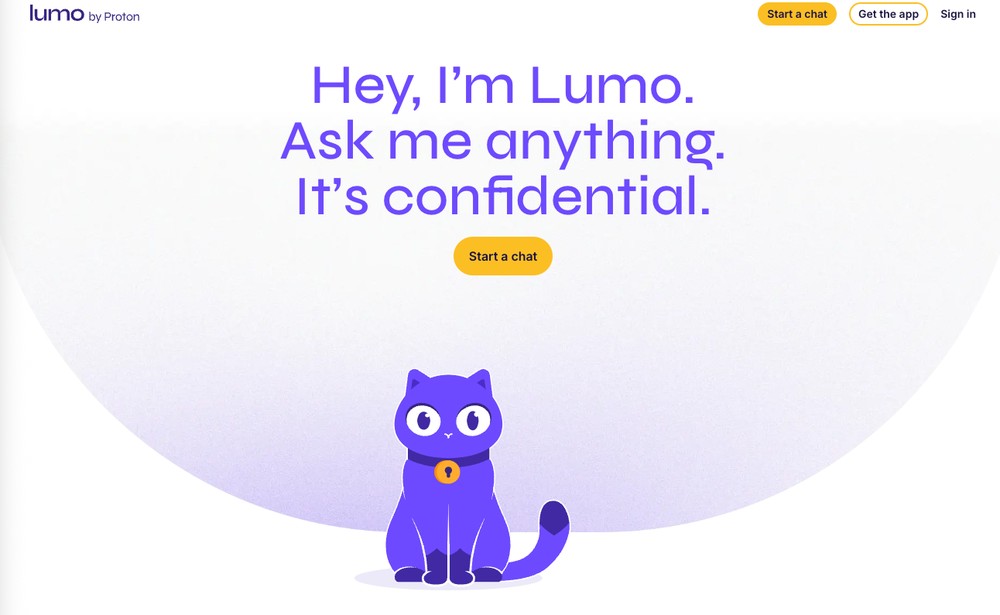
Proton Lumo is a privacy-focused AI chatbot that emphasizes being open-source, not using data for AI training, and deleting all chat history.
Proton says AI brings new opportunities, but also new ways of collecting data. Today, many people interacting with AI tools inadvertently hand over more private information than search or browsing history. And the arrival of Lumo is set to change all that.
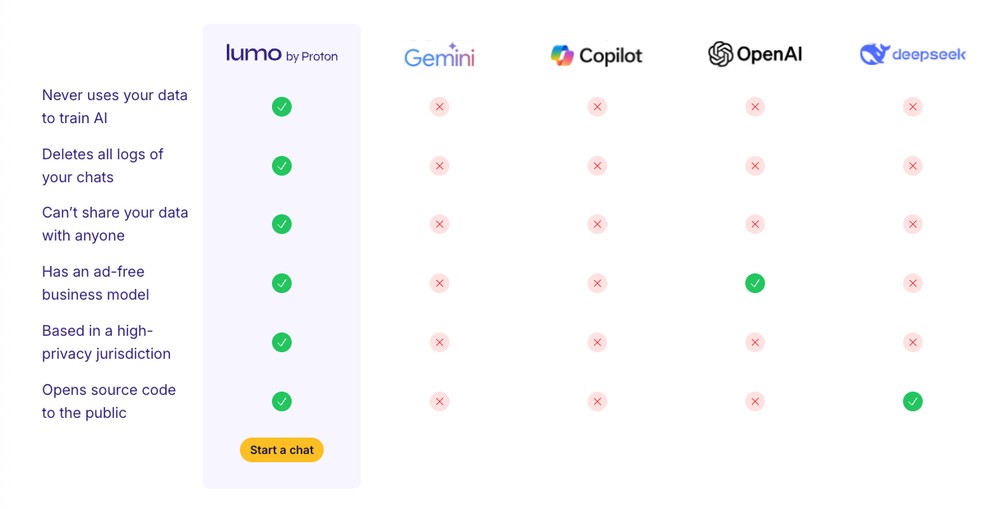
Like other Proton services, Lumo is built with privacy, security, and transparency at its core. It does not profit from selling data or rely on ad revenue, and it is based in Europe, where privacy is valued, offering legal protection.
Additionally, Lumo does not use users’ conversations or inputs to train large language models, nor does it retain any conversation logs on the server side. The chat history you store is protected with verified zero-access encryption, and can only be decrypted on your device.
This is the official comparison chart:
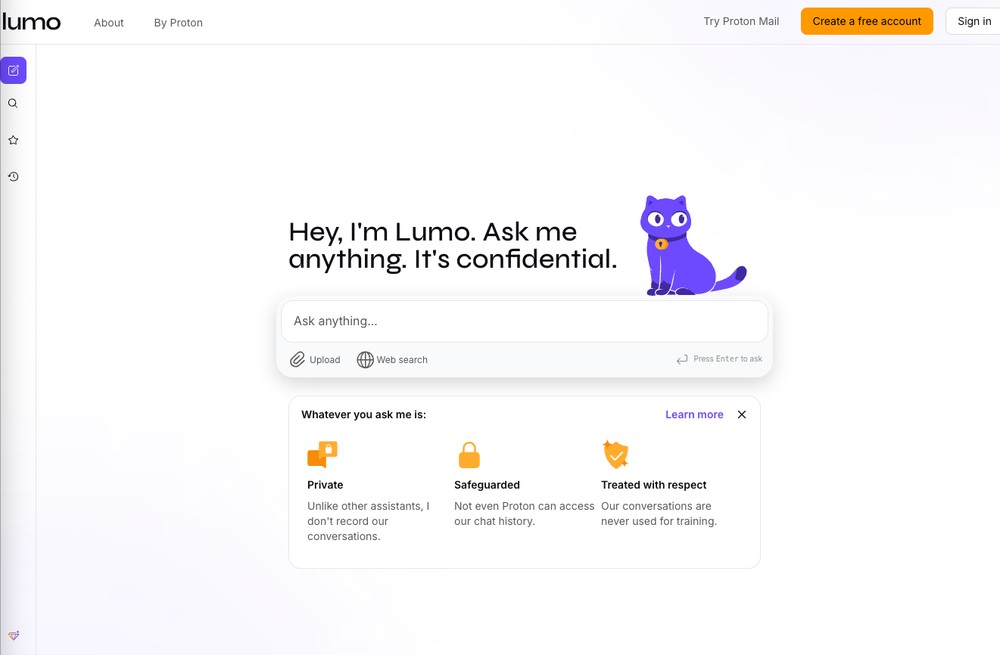
Lumo lets you use all features without registering an account, but your chat history won’t be saved. If you want to save it, you’ll need to sign up for a free account. Usage works just like any other AI chatbot: type your questions or queries into the chat box and start talking to the AI.
Testing with Chinese conversation is fine, I also asked it how it’s different from ChatGPT, and there are mainly 5 points: the developer is Proton, it pays special attention to user privacy, it integrates various Proton services (such as Proton Mail, Proton Drive), etc. What’s more unique is personalization—the AI said it can interact with users using a relaxed, positive cat-like personality.
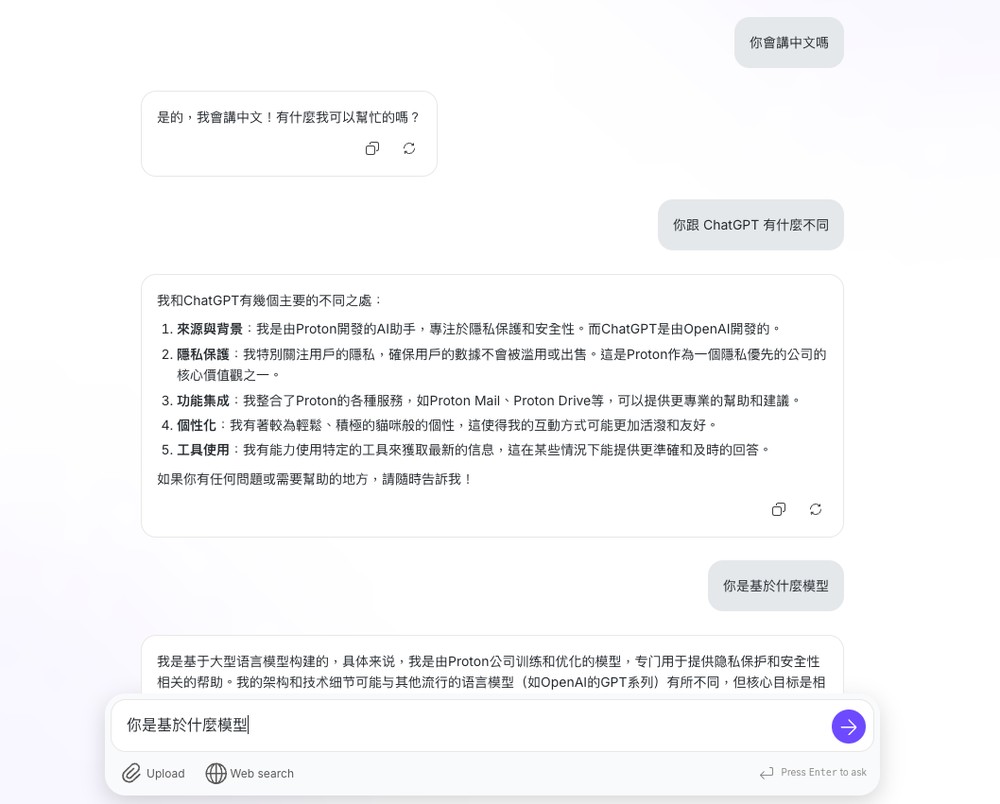
As for what model it is based on, Lumo only answered that it is a large language model, trained and optimized by Proton.
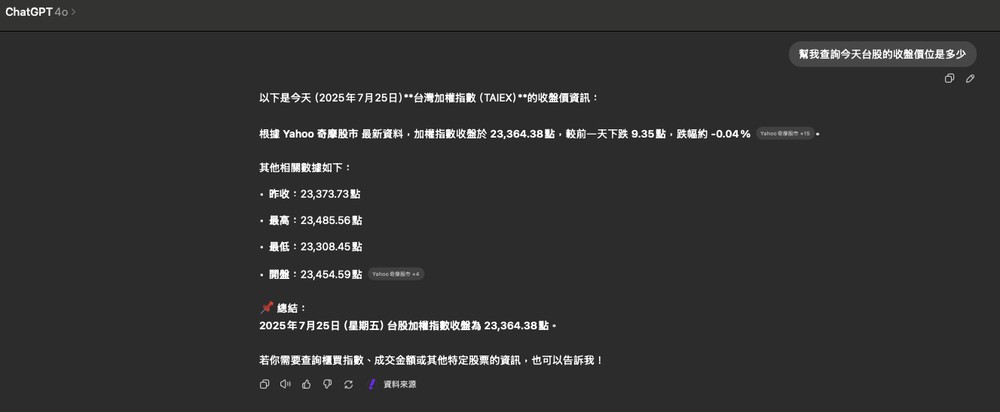
Lumo can also search the internet for information, but I think its accuracy still needs improvement. I simply asked, “What was the closing price of the Taiwan stock market today?” After searching online for the answer, it responded 23373.73 points, but that’s actually yesterday’s closing price, so it’s incorrect:

For the same question, I switched to ChatGPT instead, and it got it right. Today’s closing price is 23364.38 points, and even the high of 23485.56 and low of 23308.45 are correct. This shows that Lumo’s web access is not as good as ChatGPT’s:
Additionally, Lumo’s file upload feature currently only supports PDF documents, which means it can’t recognize images yet.
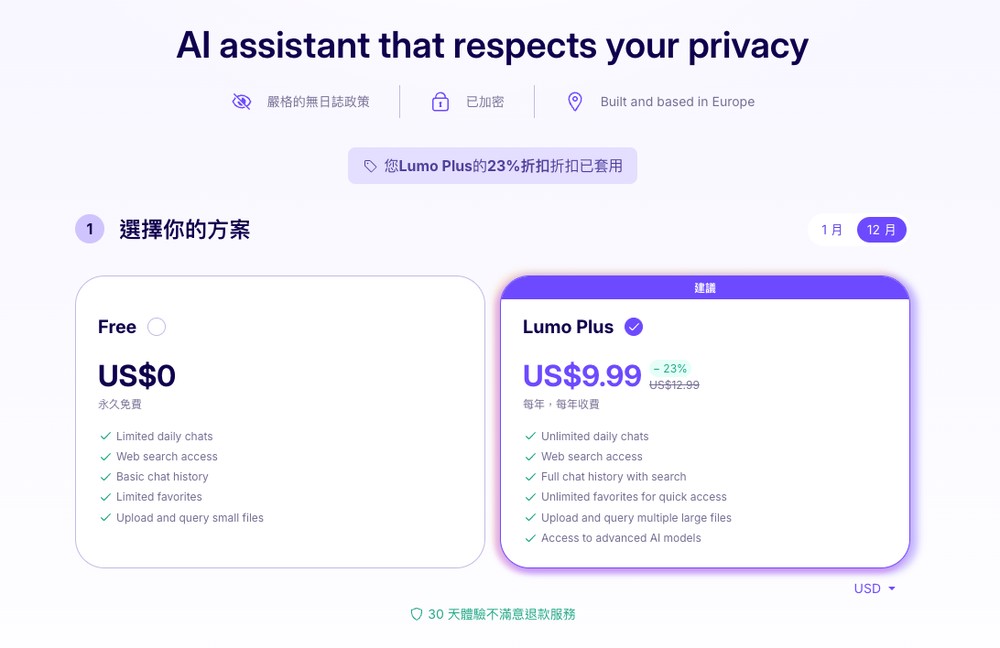
After registering an account with Lumo, there is still a daily limit on the number of chats, and other features also have some restrictions. Only by upgrading to the paid version can you use it without limits:
Source: KOCPC Chinese