


Recently, DeepSeek, an AI startup founded by China’s High-Flyer Quantitative, has seen a significant surge in usefulness after releasing its new V3 model and deep reasoning model R1. Foreign large model testers have said that DeepSeek-R1 is on par with OpenAI o1, and even rivals OpenAI o1 in reasoning capability. So today, let’s test whether DeepSeek is really as impressive as the internet claims!
China’s free DeepSeek-V3 and R1 models put to the test—claimed to rival OpenAI o1, are they really that impressive?
DeepSeek was founded in 2023. Last year, we tested DeepSeek’s capabilities in various areas, and at the time we found it still produced a fair amount of nonsense, so we didn’t share it with everyone. However, in December last year, DeepSeek updated its model to the latest DeepSeek-V3, and this year it launched the DeepSeek-R1, which is capable of deep reasoning. These updates have made DeepSeek much more usable than before. DeepSeek even says its DeepSeek-R1 model can directly rival OpenAI’s o1 official version. So today, we’re going to introduce DeepSeek-V3 and see whether this smart assistant is really as impressive as DeepSeek claims.
🚀 Introducing DeepSeek-V3!
Biggest leap forward yet:
⚡ 60 tokens/second (3x faster than V2!)
💪 Enhanced capabilities
🛠 API compatibility intact
🌍 Fully open-source models & papers🐋 1/n pic.twitter.com/p1dV9gJ2Sd
— DeepSeek (@deepseek_ai) December 26, 2024
🚀 DeepSeek-R1 is here!
⚡ Performance on par with OpenAI-o1
📖 Fully open-source model & technical report
🏆 MIT licensed: Distill & commercialize freely!🌐 Website & API are live now! Try DeepThink at https://t.co/v1TFy7LHNy today!
🐋 1/n pic.twitter.com/7BlpWAPu6y
— DeepSeek (@deepseek_ai) January 20, 2025
Go try the DeepSeek-V3 smart assistant for free.
To experience DeepSeek-V3, you need to register for an account, and you can use your Gmail account to sign up for DeepSeek-V3. After registering, you can start using DeepSeek-V3. Note: DeepSeek-V3 is a product of a Chinese tech startup, so those with concerns should consider carefully before using it.
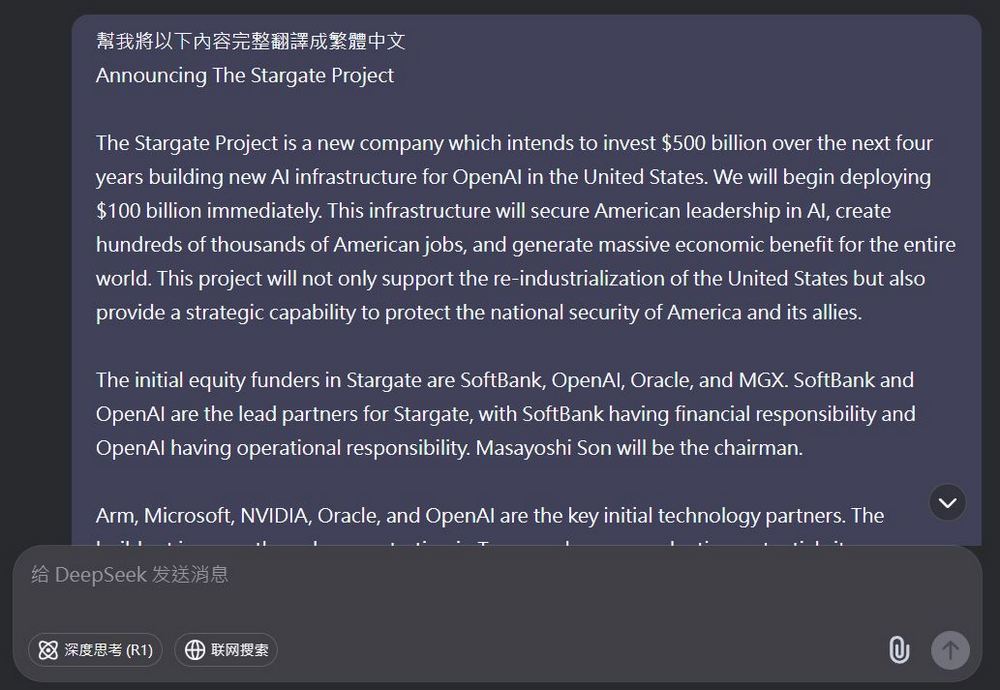
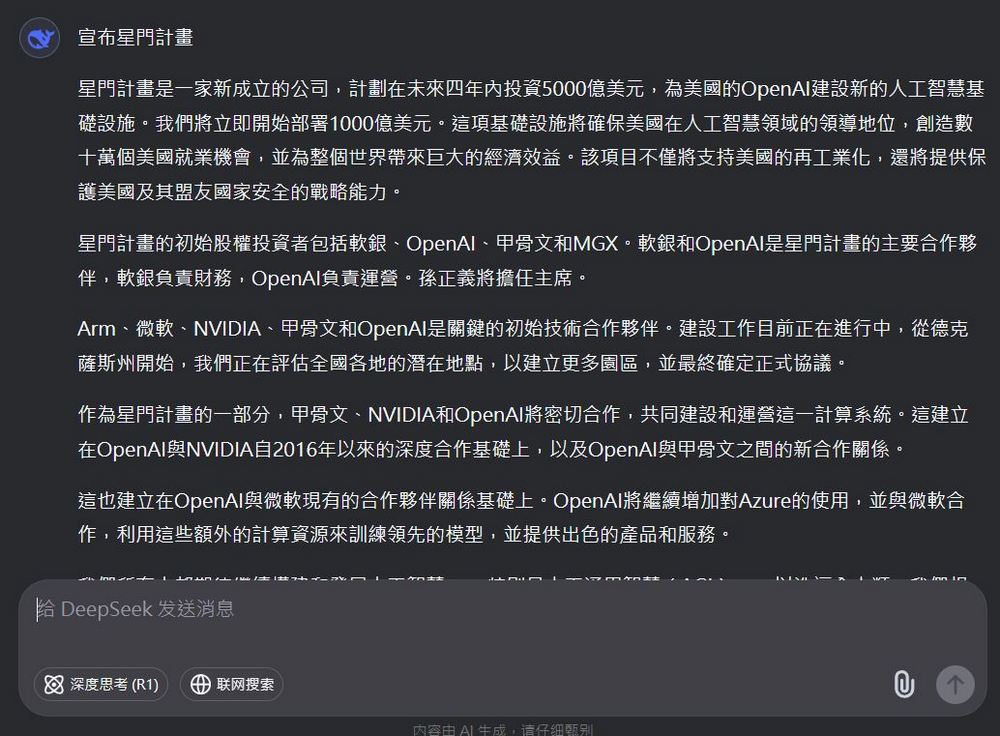
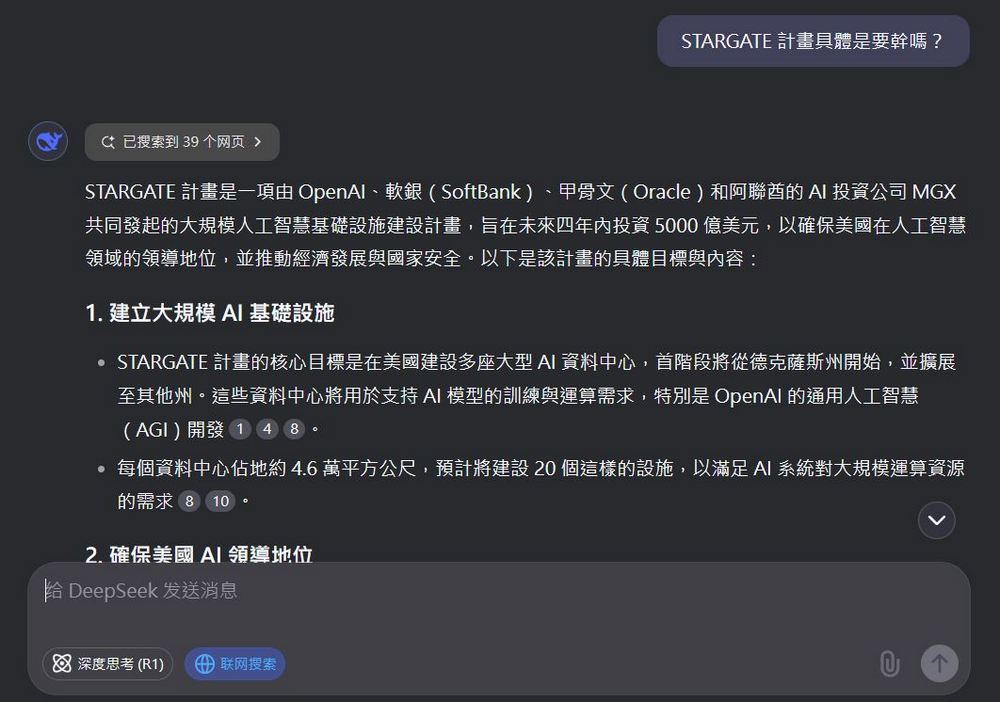
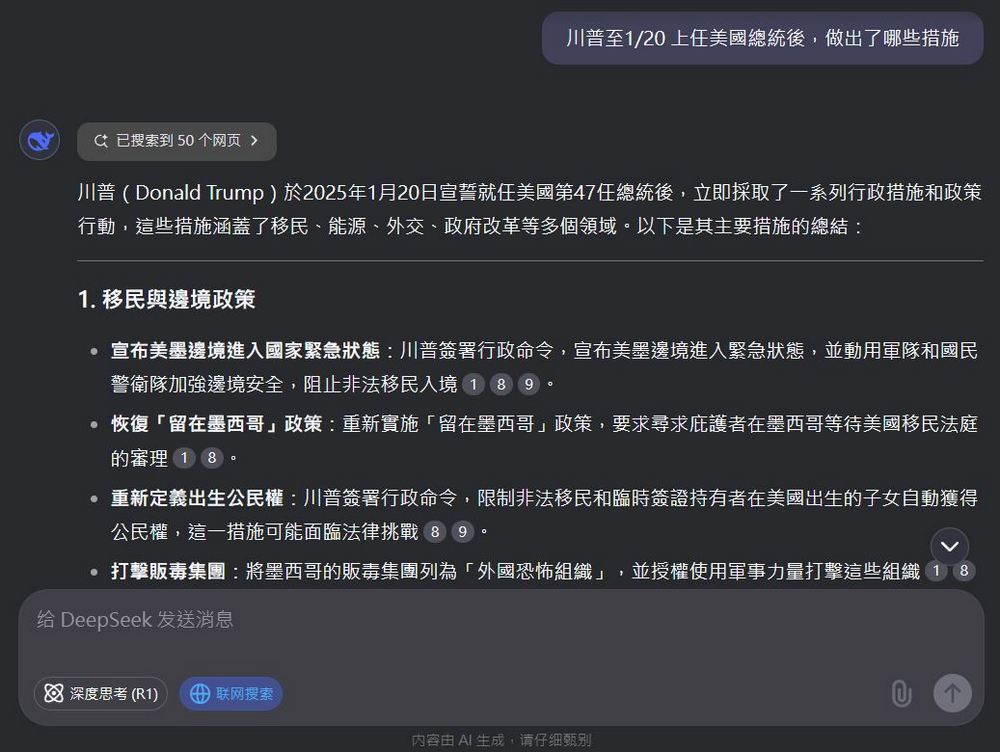
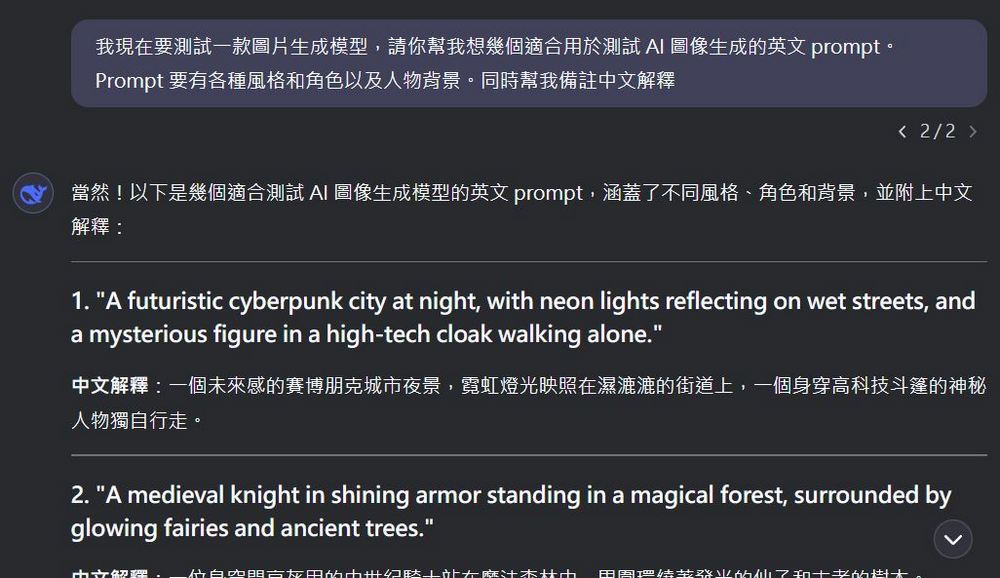
DeepSeek-V3 now supports web search, and with this connectivity, its accuracy is much higher than before. I tested DeepSeek-V3’s translation, event summarization, and image generation prompt capabilities, and the results were pretty good across the board. Of course, you still need to watch out for AI hallucinations—you can click the web sources DeepSeek-V3 provides to verify the accuracy of the content.
- translate
- Stargate’s Specific Plan
- Summarize the measures Trump has taken since taking office.
- Provide image generation prompt
Beyond what ordinary large language models can do, DeepSeek emphasizes that its recently released DeepSeek-R1 model can match the official OpenAI o1 in deep thinking. So the editor used the examples that OpenAI previously cited when introducing the logical reasoning abilities of OpenAI o1 to test DeepSeek-R1, to see whether DeepSeek-R1 is really as good as they claim.
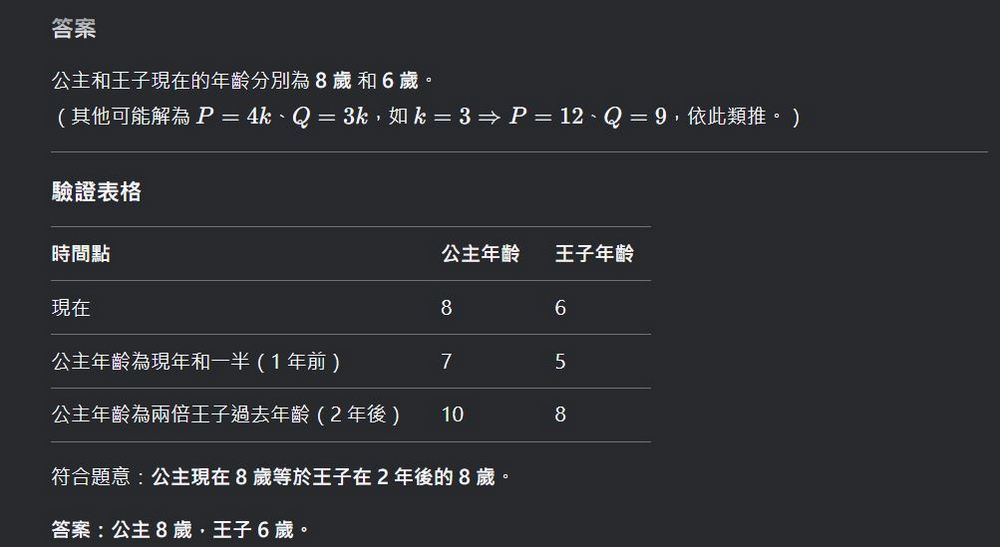
First, I tested DeepSeek-R1 with the logic question “A princess is as old as the prince will be when the princess is twice as old as the prince was when the princess’s age was half the sum of their present age,” and asked DeepSeek-R1 to answer how old the princess and the prince are now. Based on the response, everyone can take a look at DeepSeek-R1’s answer.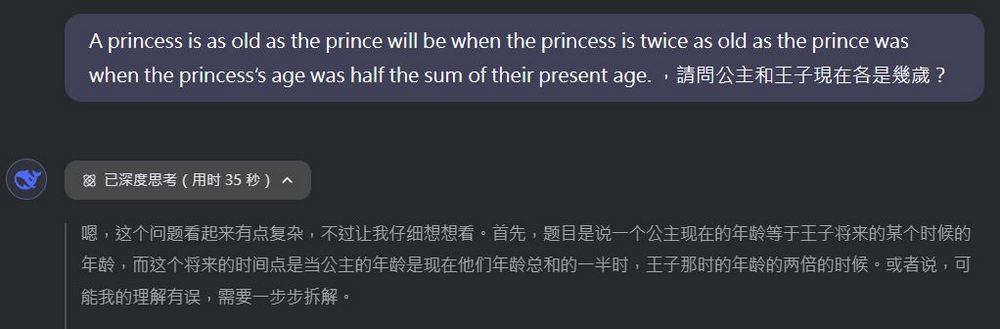
Next, regarding the question of how many r’s are in the word “Strawberry,” after confirmation, DeepSeek-R1 answered correctly—there are 3 r’s in total.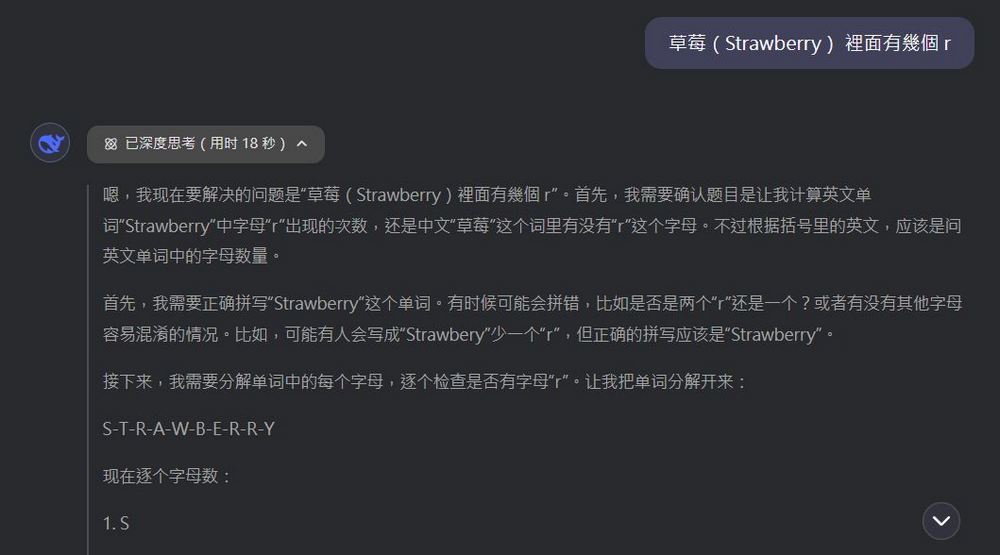

Beyond logic problems, we also explored DeepSeek-R1’s mathematical knowledge, asking it to generate a 5×5 Nonogram puzzle whose final answer would be the English letter “M.” After testing, DeepSeek-R1 initially answered incorrectly, but after a reminder, although its answer differed from OpenAI o1’s, DeepSeek-R1’s response still clearly showed an M pattern.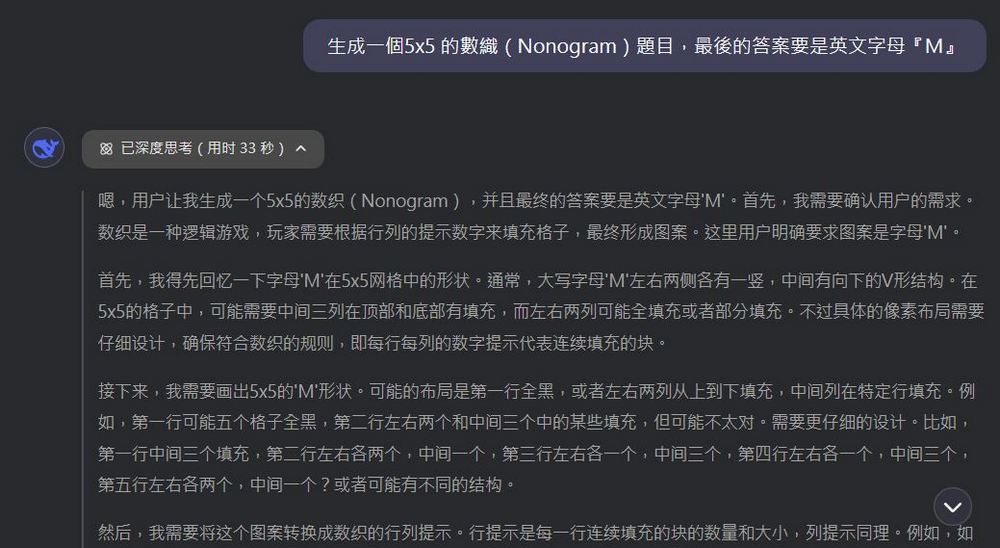

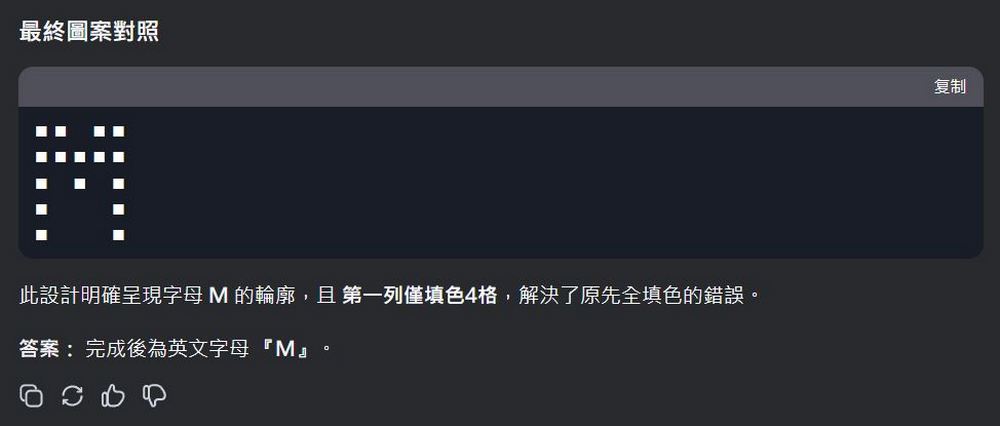
I wonder what everyone thinks of the DeepSeek-V3 and DeepSeek-R1 models? If you’re interested, you can head over to DeepSeek and try them out yourself. The answers provided by DeepSeek are AI-generated, so you should still verify them when using them to avoid unnecessary trouble.
If you are interested in OpenAI o1’s logical reasoning and application cases, you can also click the link below to read the related report:
Source: KOCPC Chinese