


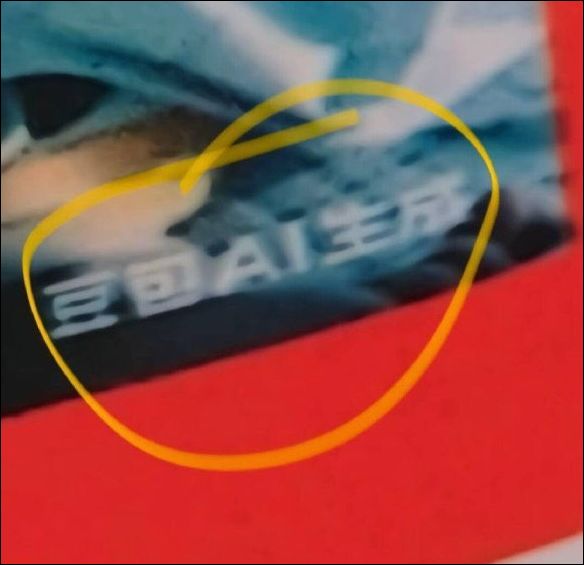
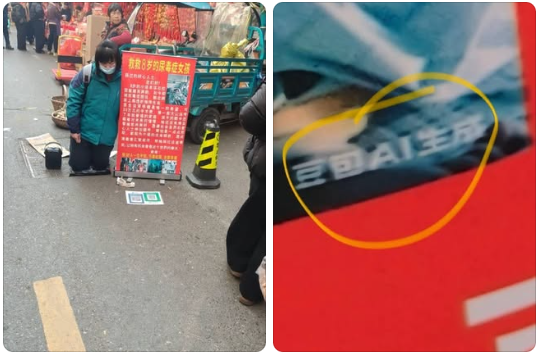
Recently, a post appeared on Threads.postThe content is quite comical: the scene appears to be a street in mainland China, where a female beggar placed a large roll-up banner by the roadside to solicit donations, claiming she was raising 300,000 yuan for an “8-year-old uremia girl” to pay for a life-saving kidney transplant. The story itself is nothing new; what really made the incident go viral online was the six bold characters prominently printed in the bottom-right corner of the “critically ill girl’s” photo:「Doubao AI Generate。
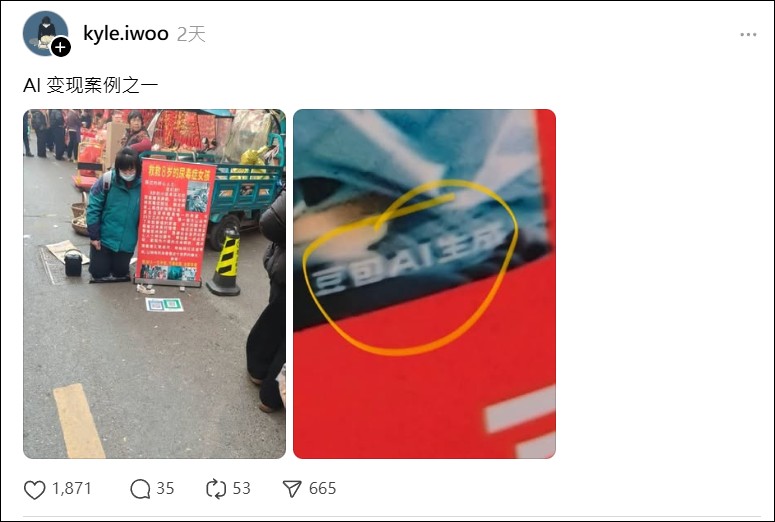
The beggar had apparently used Doubao, the AI tool by ByteDance, to generate this photo of a pitiful girl lying in a hospital bed, but made a mistake that even an elementary school student shouldn’t make: not removing the AI watermark. After being exposed by a netizen in a post on Threads, the incident quickly spread and sparked heated discussion. Some netizens joked that this was the perfect example of “AI empowerment,” proving that AI really can help people make money. One comment read, “Even a scam would at least Photoshop out the watermark,” while others sarcastically remarked, “At least he’s willing to earn money on his knees.”
在 Threads 查看
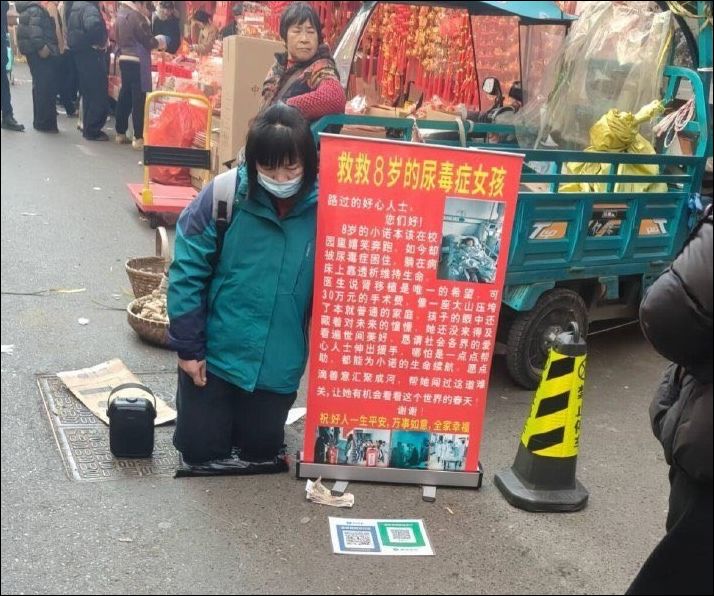
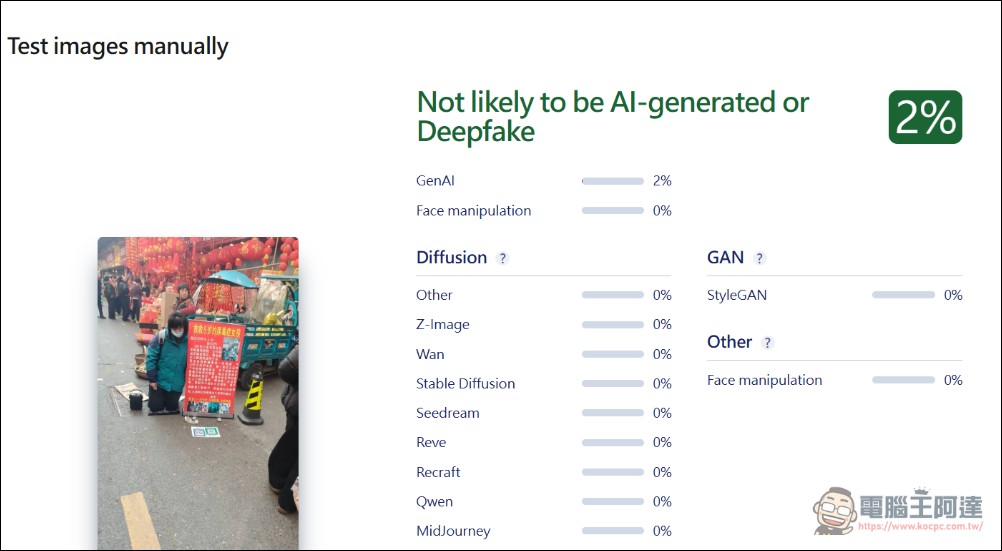
More interesting still, some sharp-eyed netizens questioned: “Could that photo of the beggar’s scam scene also be AI-generated?” After using AI image detection tools (such as Sightengine) analysis indicated that the street photo is “very likely to be real,” but the website also states that results may be inaccurate and should be judged at one’s own discretion.
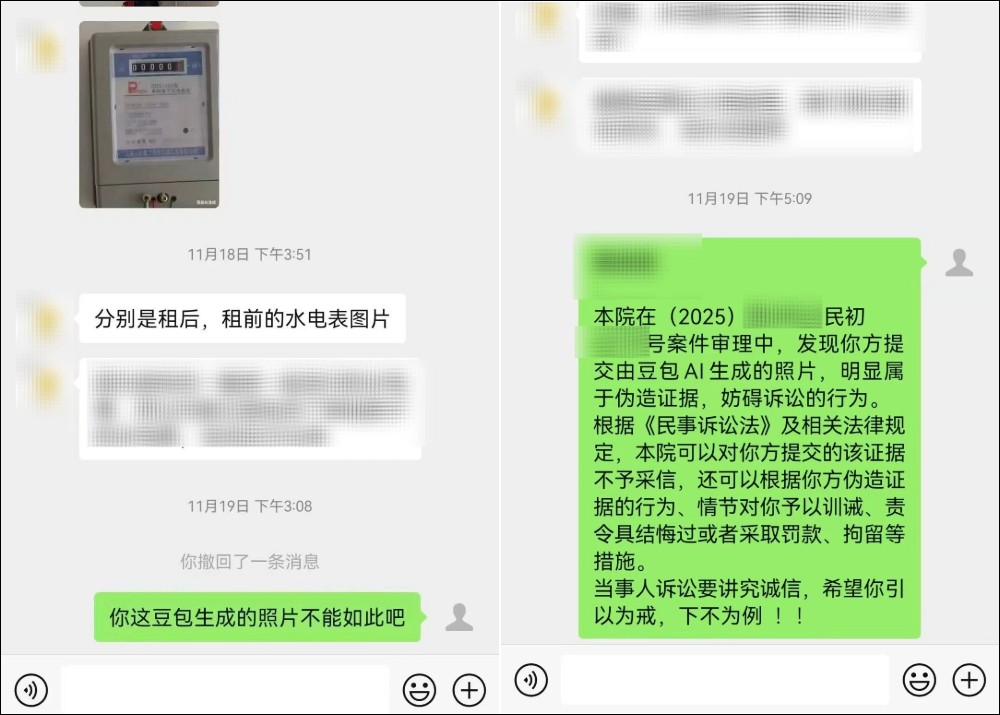
Apart from this case, a Chinese court once handled a case in which photos of water and electricity meters submitted by the plaintiff’s daughter actually carried a “Doubao AI Generated” watermark. The judge identified the evidence as forged, and the party was subjected to…admonishThe person involved was incredibly audacious.
What is Doubao AI?
the ” that appeared in this incidentDoubao AI, is an AI-powered smart assistant platform launched by Chinese tech giant ByteDance in 2023.

bean paste bunMore than just a chatbot, it is a platform-level product integrating multiple AI capabilities. Key features include:
- AI Conversational Chat: Natural Language Interaction and Question Answering
- Copywriting: Assistance with articles and advertising copy.
- Image generation and editing: This is exactly the feature beggars used to generate the “critically ill girl.”
- Video Generation: Supports AI-powered video content creation
- PDF Q&A and Long-Text Analysis
ByteDance has built a complete product ecosystem around the Doubao large model, including the AI chat assistant “Doubao,” the AI application development platform “Coze,” the interactive entertainment app “Maoxiang,” the AI creation tool “Xinghui,” and the recently viral “Jimeng” (Seedance). The Doubao large model has already been integrated into more than 50 ByteDance ecosystem businesses, including Douyin, Fanqie Novel, Feishu, and Ocean Engine.
Doubao AI offers a web version, a desktop app, and mobile apps for iOS and Android, so the barrier to entry is extremely low. It is also almost free for everyday users, and honestly, it works pretty well. That also explains why even a street beggar can easily pick it up.
AI image scams have become a global wave.
This “forgot-to-delete-the-watermark” farce may seem absurd, but it is only the tip of the iceberg of AI fraud. From Taiwan to the international stage, AI-generated images and Deepfake technology are being used on a large scale to commit fraud.
Taiwan: Monthly losses of up to NT$6 billion
Taiwan has recently seen frequent reports of major AI fraud cases, with methods constantly evolving. It is estimated that losses across Taiwan from deepfake scams reach as high as NT$6 billion per month.
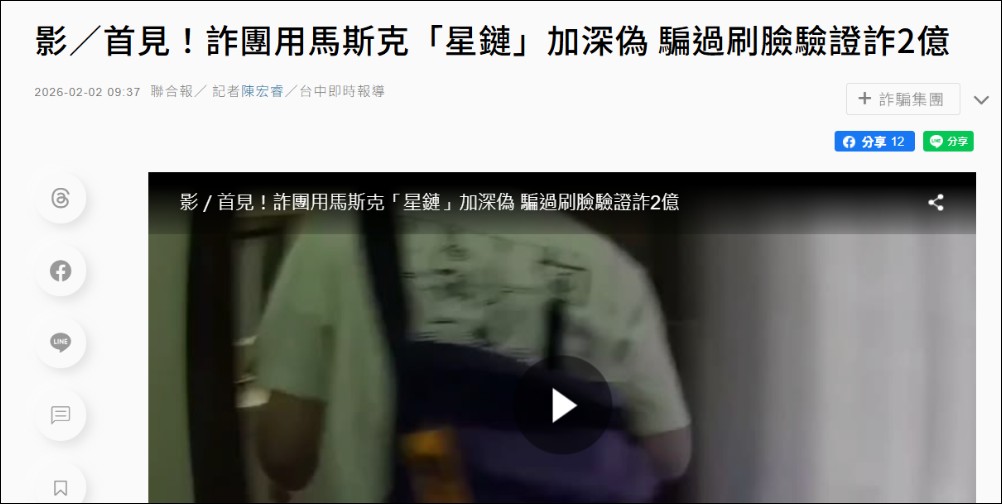
Taiwan’s first scam case combining Elon Musk’s technologyfraud caseA fraud syndicate used Starlink satellite networks combined with AI deepfake face-swapping technology to successfully bypass banks’ facial recognition verification and steal approximately NT$200 million worth of digital yuan, with more than 55 victims.
Celebrity impersonation scams are on the rise.TSMC’s Morris Chang and his wife, along with C. C. Wei, were impersonated in social media ads; Miaoli County Magistrate Chung Tung-chin was impersonated in a deepfake video to falsely endorse fake emblica fruit; Changhua County Magistrate Wang Hui-mei was impersonated to recommend tartary buckwheat tea; and renowned lung cancer specialist Chen Chin-hsing was impersonated to sell a “miracle lung medicine.”
Fake Doctor Health Channels: AI-generated fake doctor channels have appeared on YouTube with 200,000 followers and over a million views, spreading incorrect medical information and seriously endangering seniors’ health.
How to identify AI-generated fake photos?
In the face of the overwhelming amount of AI scam content, the general public can become more vigilant by using the following methods:
Photo Checking Tips

- Finger count: AI often gets the number or shape of fingers wrong, which is the most common giveaway.
- Background anomaly: unnatural lighting, blurred or distorted edges
- Text distortion: Text in images often appears garbled or illegible.
- Symmetry issues: Ears, eyes, and other symmetrical features are inconsistent.
- Skin texture: overly smooth or unnatural texture
Video call test
- Ask them to turn to the side: AI face swaps often show flaws from side angles.
- Specific movement test: Ask the other person to “look left, look right”
- Passphrase: Ask a personal question only the real person would know the answer to.
- Observe latency: AI generation may exhibit noticeable delays or stuttering.
- Lip-sync check: Deepfake videos often have lip movements that are out of sync with the audio.
Recommended Testing Tools and Methods
- AI image detection tools such as Sightengine, Hive Moderation, and Illuminarty
- Trend Micro”AI Anti-Fraud Expertcan detect AI face swaps in real time during video calls
- Multi-factor verification: After ending the call, contact the person directly through another communication method to confirm. Don’t believe it blindly, and never go to an ATM or financial institution to transfer money.
Have regulations caught up?
Mainland China’s “Measures for the Labeling of AI-Generated Content”
The Chinese government has recognized the severity of the problem. On March 7, 2025, the Cyberspace Administration of China, the Ministry of Industry and Information Technology, the Ministry of Public Security, and the National Radio and Television Administration jointly issued the Measures for the Identification of Artificial Intelligence-Generated Synthetic Content, which formally took effect on September 1, 2025.
The main provisions include:
- Explicit Labeling: Adding visible markers such as text, audio, and graphics to generated synthetic content.
- Implicit identifier: Add generated synthetic content attribute information to file metadata
- Platform Responsibilities: Distribution platforms must verify file metadata and add conspicuous notices around the publication of AI-generated or synthetic content.
- Prohibited Acts: Maliciously deleting, altering, fabricating, or concealing labels identifying generated synthetic content.
Those who violate the regulations will face penalties such as reprimand, fines, and detention; in serious cases, criminal liability may be pursued.
Taiwan’s current practice
Taiwan currently relies mainly on the 165 anti-fraud hotline,Whoscall and other apps provide caller ID for unknown numbers, as well as AI anti-fraud tools developed by private companies such as Trend Micro. Compared with mainland China’s mandatory labeling regulations, Taiwan still has room for improvement in terms of dedicated legislation on AI-generated content.
Summary
The “beggar forgot to remove the AI watermark” incident may seem funny at first, but the more you think about it, the more chilling it becomes. The punchline is this: someone trying to scam others with the latest technology doesn’t even know how to handle the most basic watermark—a gap between “tech literacy” and “criminal IQ” that is practically the perfect example of black humor. It also indirectly proves how ubiquitous AI tools have become: even a street beggar can easily get access to them, with barriers to entry lower than ever before.
But the worrying part is: if this beggar was caught today for being “too clumsy,” tomorrow there will be smarter fraud rings that wipe watermarks clean without a trace. In fact, it’s already happening. From monthly deepfake fraud losses reaching 6 billion yuan, to the Musk scam that fooled a bank’s facial recognition system, AI fraud is no longer a laughing matter—it’s a serious social issue. The centuries-old wisdom that “seeing is believing” is being completely upended in the AI age. A photo, a video, or a video call is no longer credible evidence. This not only inflicts massive economic damage but also erodes the very foundation of social trust; when a real cry for help appears, people may choose to turn a cold shoulder out of fear of being deceived.
AI technology is a double-edged sword. It makes creation easier, and it also makes fraud easier; it empowers well-meaning creators, and it empowers malicious scammers. In this arms race between generative AI and detection technology, the only thing ordinary people can do is stay alert, improve their digital literacy, and when faced with any “the picture proves it” message, ask one more question: “Is this real?”
After all, in this day and age, even street beggars are using AI—what’s left that couldn’t possibly be fake?
Source: KOCPC Chinese