


Meta recently announced that it will release a new software update for its Ray-Ban Meta smart glasses and Meta smart glasses to further strengthen privacy protections, preventing users from circumventing the recording indicator mechanism through various means. The focus of this update is to patch a long-standing and relatively easy-to-exploit vulnerability, ensuring that the privacy indicator light on the glasses continues to effectively alert people nearby.
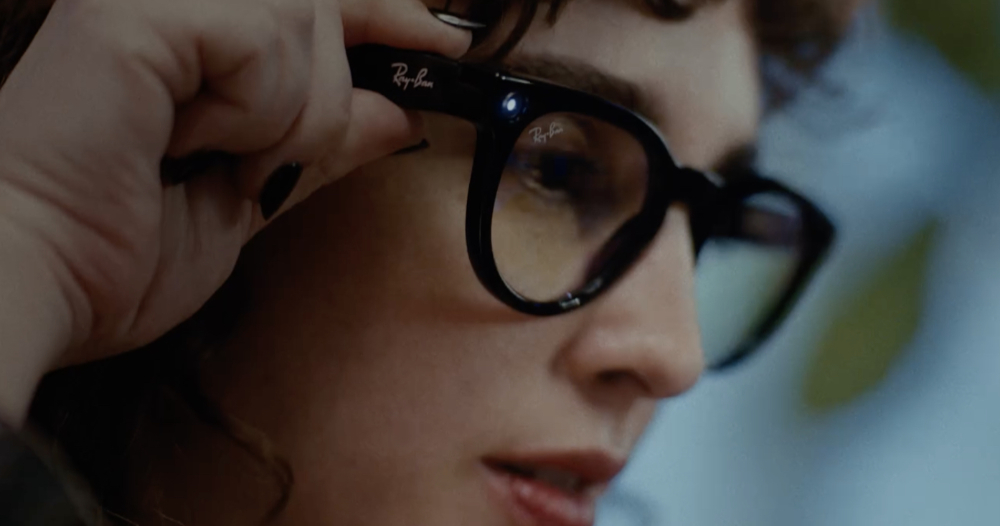
Meta strengthens smart glasses privacy mechanism, fixes privacy indicator light vulnerability.
Meta AR Vice President Alex Himel Stated via ThreadsThe company has been committed to improving the reliability of the LED indicator on smart glasses, so that others can clearly know when the glasses are taking photos or recording videos. In the past, Meta has taken measures against users who modify hardware to disable the LED indicator. When the system detects that the indicator has been physically damaged, removed, or deliberately tampered with, it directly disables the camera function to avoid privacy risks.
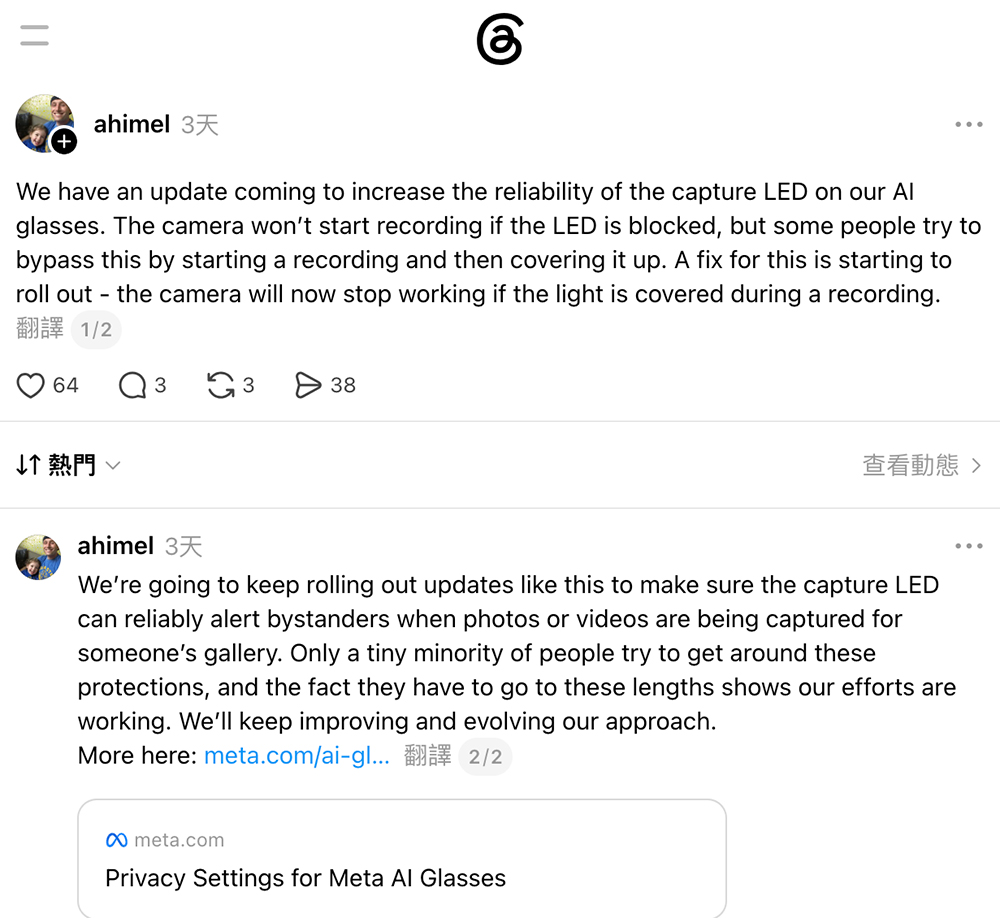
However, there remains a vulnerability in the current design. Although the smart glasses refuse to start recording when they detect that the LED indicator is blocked, some users have found that if they start recording first and then cover the indicator during recording, the system will continue to record content, effectively bypassing the safety restriction. This makes it difficult for people nearby to realize they are being filmed, and has also raised concerns about privacy issues with smart glasses.

In response to this vulnerability, Meta has begun rolling out a fix incrementally. Once the update is complete, if the system detects that the LED indicator is blocked during recording, the camera will stop working immediately and will not be able to continue capturing. In other words, whether before recording begins or during recording, if the indicator light cannot display properly, the camera function will be restricted.

Alex Himel stressed that the purpose of the recording indicator light is to give those around a clear and reliable signal that image or video recording is underway. Meta will continue rolling out similar updates in the future to block potential workarounds. He noted that only a very small minority truly attempts to bypass these protections, and doing so usually requires considerable effort, which shows that existing safeguards are already fairly effective. Still, Meta will keep improving its system design to strengthen overall privacy protection.

existIn the official privacy statement pageMeta also reiterated that if the smart glasses detect that the recording indicator light has been blocked, damaged, or subjected to any form of physical interference, the camera function will be automatically disabled. The company also provided several usage recommendations, such as proactively turning off the glasses’ features in medical facilities, schools, or other privacy-sensitive locations, and reminded users to follow a simple principle: if a situation is not suitable for taking out your phone to record, then it is equally unsuitable for shooting with smart glasses.

Notably, Meta stated on the relevant page that only the user themselves can view photos and videos taken by the glasses. However, this explanation has also sparked some discussion, as earlier media reports indicated that human reviewers may, in certain cases, have access to image content related to product features, raising outside questions about the scope of data access.
Currently, Meta has not yet announced a specific timeline for the full rollout of this update. However, against the backdrop of the growing prevalence of generative AI and wearable devices, smart glasses are drawing increasing attention from regulators, privacy advocacy groups, and general consumers. As one of the most representative smart glasses brands on the market, Meta’s privacy policies and technical measures are bound to remain a focal point of discussion across various sectors in the future.
Source: KOCPC Chinese