


Google co-founder Sergey Brin is reportedly set to directly oversee the development of its flagship AI model, Gemini, marking a core shift in Google’s recent AI leadership restructuring. According to a report from the UK’s Financial Times, Google is pulling control of its AI operations back from London to Silicon Valley, with the reorganization beginning on Wednesday, August 5th, led by Google officially announcedFrom the change at DeepMind’s helm, the chief scientist’s departure to found a startup, to the founder’s return to the front lines—all in one sweeping move. The outside world largely reads this as Google’s full-scale counterstrike against the mounting pressure from OpenAI and Anthropic, and the most profound recalibration of AI strategy yet for the tech giant, which holds a market value of roughly $4.4 trillion (about NT$143 trillion).
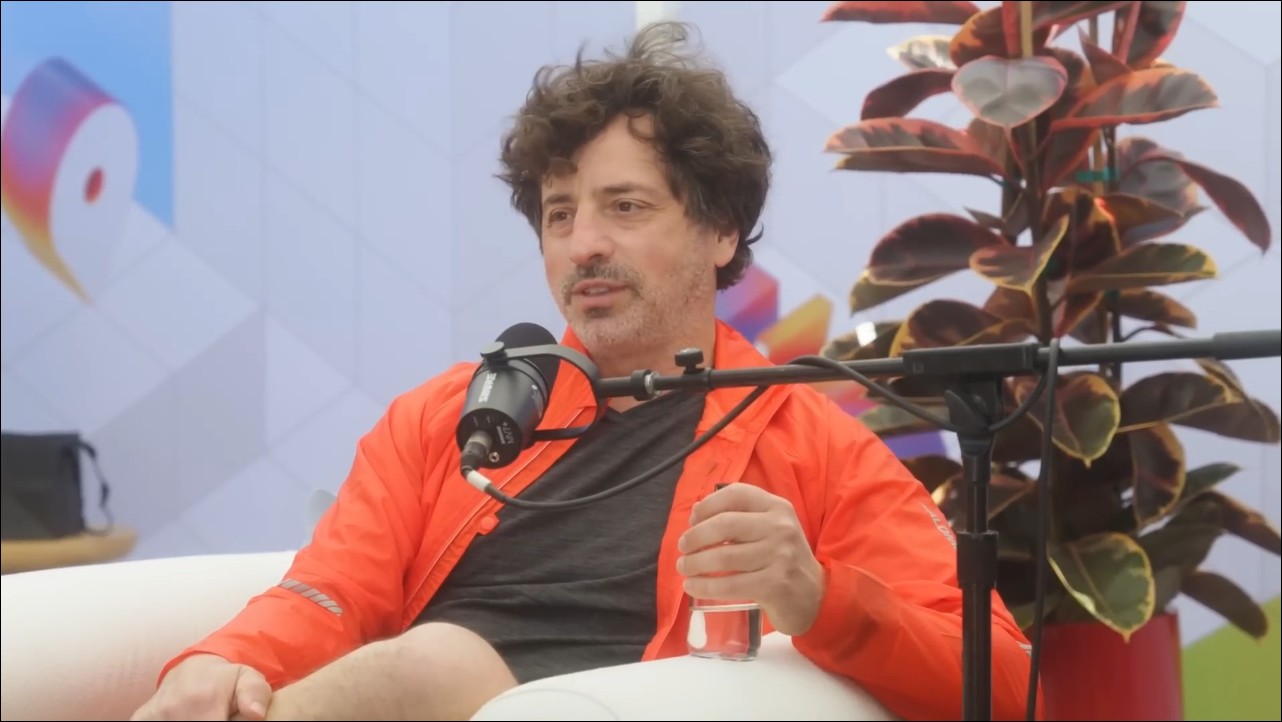
Google AI leadership reshuffle: Brin retakes oversight of Gemini, Hassabis steps into the background
The central figure in this restructuring is Demis Hassabis, who has led DeepMind for over a decade. He stepped down as CEO of Google DeepMind to become Chairman of DeepMind and Chief Scientist at Alphabet, while continuing to lead the AI drug design company Isomorphic Labs. Hassabis said on social media that this change allows him to focus on long-term strategy and accelerate scientific breakthroughs.
I’ve been working towards AGI my whole life, and as we enter this pivotal moment, I’m stepping into a new role as Chair of Google DeepMind & Chief Scientist of Alphabet. This will allow me to focus on long-term strategy, and accelerating scientific breakthroughs, including…
— Demis Hassabis (@demishassabis) August 5, 2026
Taking over Hassabis’s day-to-day management duties is Koray Kavukcuoglu, formerly the CTO. He has been appointed Senior Vice President at Google DeepMind, overseeing all operations related to model development, advanced AI research, the Gemini app, and development teams. Kavukcuoglu has been at DeepMind for over 13 years and has driven key technologies such as WaveNet and DQN. Last year, he moved from London to the Mountain View headquarters in the U.S., and his desk is now right next to Brin’s, directly leading Gemini’s R&D work.
On the same day, Jeff Dean, chief scientist who had worked at Google for 27 years, announced his departure to co-found Discovery Loop, a public benefit company (PBC), alongside senior researchers including Sanjay Ghemawat, Quoc Le, and Oriol Vinyals. The goal is to automate experimentation in machine learning, science, and engineering. Google said it will support the startup (Google has also invested in it).
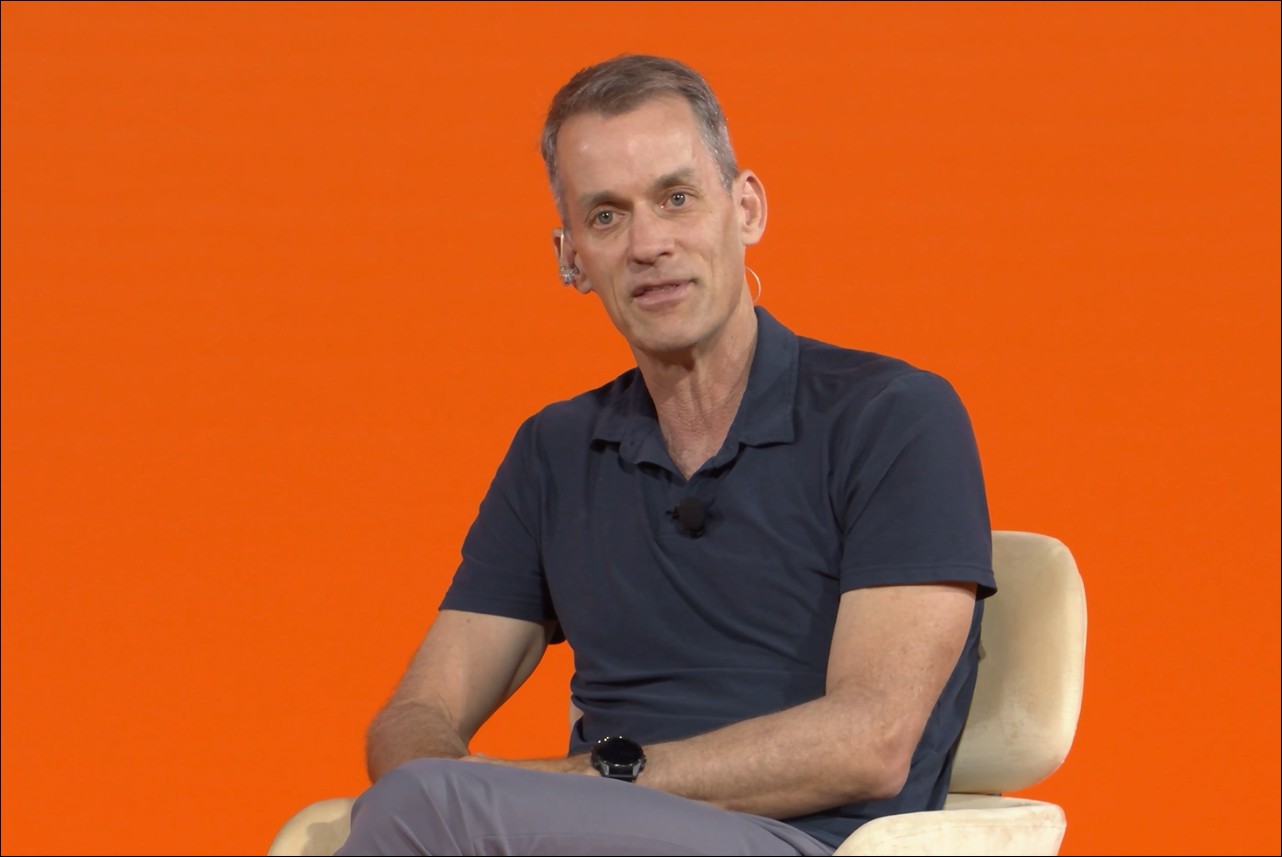
Power returns from London to Silicon Valley, as research culture gives way to commercialization.
The Financial Times, citing more than a dozen people familiar with Google, including current and former employees, reported that this restructuring is a fundamental overhaul of Google’s AI leadership and that the transition has been in the works for months. Hassabis, whose DeepMind was acquired for £400 million (approximately NT$16.4 billion) in 2014, once represented London’s research culture. Now, the urgent push for commercialization has overshadowed DeepMind’s research-driven corporate culture of more than a decade, and the center of gravity in AI operations is clearly shifting toward the California headquarters.
Brin’s changing role is the most closely watched aspect of this restructuring. After stepping back from day-to-day operations in 2019, he returned to the company amid the AI boom sparked by ChatGPT’s debut. Although he never held an official executive title, he has been steering AI R&D decisions behind the scenes, with his involvement in Gemini’s development growing ever deeper. South Korea’s Chosun Ilbo analyzed that Brin’s core mission in returning to the front lines this time is to boost Gemini’s competitiveness and speed up commercialization. He represents a productization and commercialization approach, in contrast to Hassabis’s focus on long-term scientific research.
Beset by delays and talent drain, where does Google’s pressure come from?
Google’s major adjustment is directly tied to the competitive pressure it now faces. Its flagship model, Gemini 3.5 Pro, was originally set for a June release but has been delayed by several months. Meanwhile, OpenAI and Anthropic have successively rolled out next-generation models, securing an early lead in coding tools and enterprise-grade AI applications.
Talent attrition is also giving Google a headache. Noam Shazeer, co-lead of Gemini, jumped to OpenAI in June, and Nobel Chemistry laureate John Jumper had previously left DeepMind for Anthropic. Now even Dean has handed in his resignation. Google’s military AI contract with the Pentagon has sparked internal ethical disputes, and Dean has publicly opposed mass surveillance and autonomous weapons in the past, also signing an amicus brief in Anthropic’s lawsuit against the US Department of Defense—all factors that have deepened the tensions behind the wave of departures.
Investors’ reactions also revealed market concerns. After the restructuring announcement, Alphabet’s stock fell nearly 5% at one point, reflecting worries over Google’s continuously rising AI investment costs and whether it can turn its research capabilities into commercial success.
Internal Vibrations and External Reviews
The personnel shake-up has caused quite a stir inside DeepMind. Several current and former employees revealed that the restructuring has rocked the London-based lab, with some worried that the research culture Hassabis had long safeguarded is now coming to an end. A former DeepMind executive who jumped to a rival company even said he had received calls from multiple colleagues expressing their readiness to look for other opportunities. Yann LeCun, Meta’s former chief AI scientist, came to Hassabis’s defense, saying that stepping down from a management role may not be a bad thing. He said Hassabis has his own vision for AI research, and that doing research himself and inspiring others to follow can achieve goals more effectively than giving orders as a manager. People always want to focus on what they have a unique talent for.
People close to Hassabis say he feels relieved by the adjustment and optimistic about the future—able to retain significant influence without relocating to the U.S., while also freeing up more time to devote to Isomorphic Labs, a venture he is deeply passionate about. However, the Financial Times also reported that executives were frustrated with Hassabis’s relatively dismissive attitude toward commercializing AI. For instance, his decision to make AlphaFold—the protein structure prediction system that won the 2024 Nobel Prize in Chemistry—freely available, a costly investment with almost no commercial return, had sparked tensions within the company.
Official Stance: Accelerate, Focus on the AI Frontier
Google officially framed the restructuring as a necessary adjustment amid intensifying competition. CEO Sundar Pichai said in an open letter to employees: “We must accelerate all related work and stay focused on the AI frontier.” He emphasized that Google has top talent and world-class computing resources, with the goal of bringing AI to more people, and acknowledged that the company must move faster.
Looking back at the context of this shift, in 2023 Pichai merged DeepMind with Google Brain, with Hassabis taking charge of the combined unit, making DeepMind the core of Google’s AI ambitions. Last year, the Gemini 3 series models and the viral AI image editing tool Nano Banana briefly revived Google’s momentum. However, because Google has been unable to release a newer, more powerful model—Gemini 3.5 Pro (rumored to have failed internal testing)—the market broadly believes Google is now at a disadvantage in the AI large model race, with OpenAI and Anthropic having already seized the lead.
Conclusion
From London to Silicon Valley, from research to commercialization, from scientist to founder—Google’s latest AI leadership reshuffle has completely flipped a decade of “research-led” culture into “product-first.” The symbolic weight of Brin retaking oversight of Gemini is far greater than any title change, effectively declaring that Google will have a founder personally leading the charge to close the gap in the AI race. Whether Google can truly catch up will depend on Brin’s resolve (editor’s note: I personally believe Google’s AI problem isn’t a lack of capability, but “degraded intelligence”—in the past six months, Gemini and Nano Banana have performed significantly worse than at launch, which looks more like a compute bottleneck).
Source: KOCPC Chinese