


When the computer runs very slowly, some people may curse a few words. Most of these are just to vent their emotions, because the computer will not suddenly become faster because of this. But you know what? If you’re yelling at a traditional HDD hard drive close enough and loud enough, it might actually run slower. A foreign engineer discovered this 17 years ago. He yelled at the HDD in the server cabinet, and the monitoring screen showed that the hard disk latency increased.
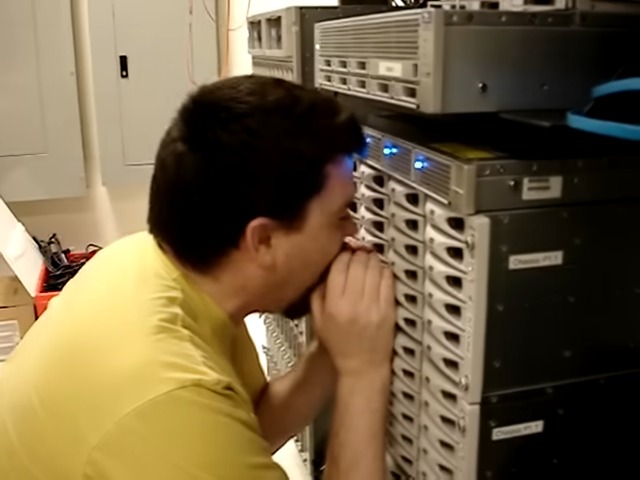
Engineers measured in a data center and found that shouting at close range will increase HDD latency.
Recently foreign media PC Gamer Digging out a classic video from 17 years ago, Brendan Gregg, a well-known system performance engineer, uploaded a “Shouting in the Datacenter” video in 2008. The content was that he was in the data center, yelling at the HDD in the server cabinet.
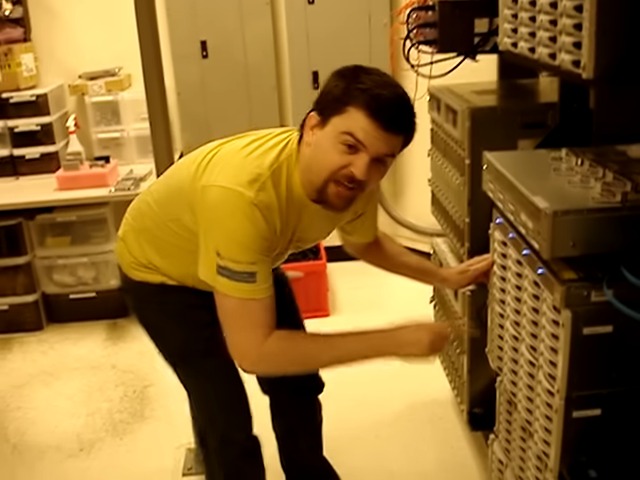
Gregg stood in front of the server cabinet, put his hand close to the area where the hard drive was, and then yelled at the hard drive. It can be seen from the monitoring system that the operation time of some disks has become longer, that is, the delay has suddenly increased and the performance has deteriorated. He can even pinpoint which areas are affected by the shout, as the system flags disks that are taking longer than usual:
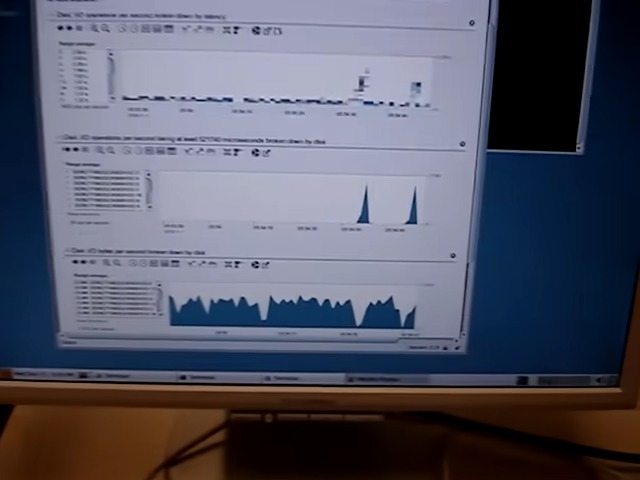
Full video of Brendan Gregg’s demonstration:
The reason why HDD traditional hard disk has this phenomenon is mainly related to its mechanical structure. A traditional hard drive contains high-speed rotating discs and heads responsible for reading and writing data. When data is read and written correctly, the position of the magnetic head must be very precise. Once external vibration affects the internal components, it may slow down the read and write operations, cause retries, and even increase disk latency.
The sound waves generated by Gregg’s roar will vibrate the hard drive. Of course, this needs to be very close to the hard drive for it to happen more easily.
This is also a big difference between HDD and SSD. SSD does not have a rotating disk, nor does it have a traditional magnetic head read-write structure. Data access mainly relies on flash memory and electronic signals. In the same way, SSD will not be affected, so it is faster and more shock-resistant.
In 2017, researchers also published “Acoustic Denial of Service Attacks on HDDs”, explores how acoustic resonance can cause a denial of service attack on HDDs. It was written in the study that using specific sound signals to produce significant vibrations in the internal components of the HDD may indeed affect the performance of the embedded hard drive system. Personal computers and surveillance systems were used as case tests.
PC Gamer also added a more exaggerated case. Microsoft engineer Raymond Chen once shared a story from the Windows XP period on the official Dev Blogs.
At that time, a large computer manufacturer discovered that playing Janet Jackson’s “Rhythm Nation” music video would cause certain models of laptops to crash. What’s even more exaggerated is that not only the laptop playing videos will be affected, but another laptop nearby that is not playing videos may also suffer:
After investigation, it was found that the song contained the natural resonance frequency of certain 5400 RPM laptop hard drives. The sound hit the frequency at which certain mechanical structures of the hard drive were sensitive, causing the hard drive to have problems. The manufacturer ended up adding a custom filter to the audio process to filter out the frequencies that would cause problems. This incident was later registered as CVE-2022-38392.
So, next time your computer slows down, if you still use an HDD traditional hard drive, don’t yell at it yet, it may respond to you with a slower speed (laughs).
Source: KOCPC Chinese