


What are you most afraid of when sending your phone for repair? It wasn’t a long wait or a canned reply from customer service, but the last thing I received was another broken phone.
Recently, a foreign user encountered this exaggerated situation. His Pixel 9 Pro XL had a green line problem on the screen, so he sent it to Google for repair. When he received the package, it was not a repaired Pixel 9 Pro XL, nor a replacement of the same model, but a Galaxy S22 Ultra with a cracked screen.
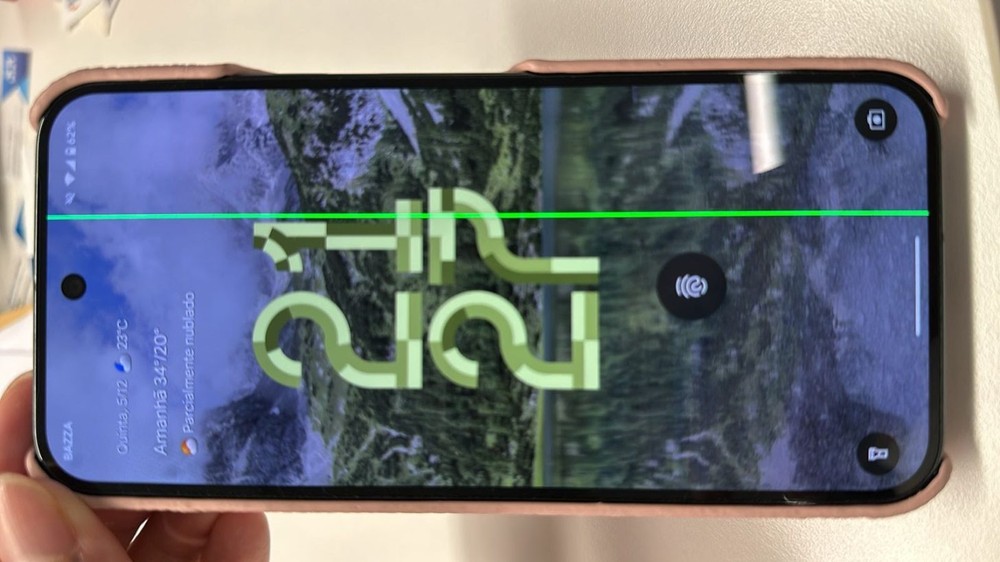
Image source:Wccftech
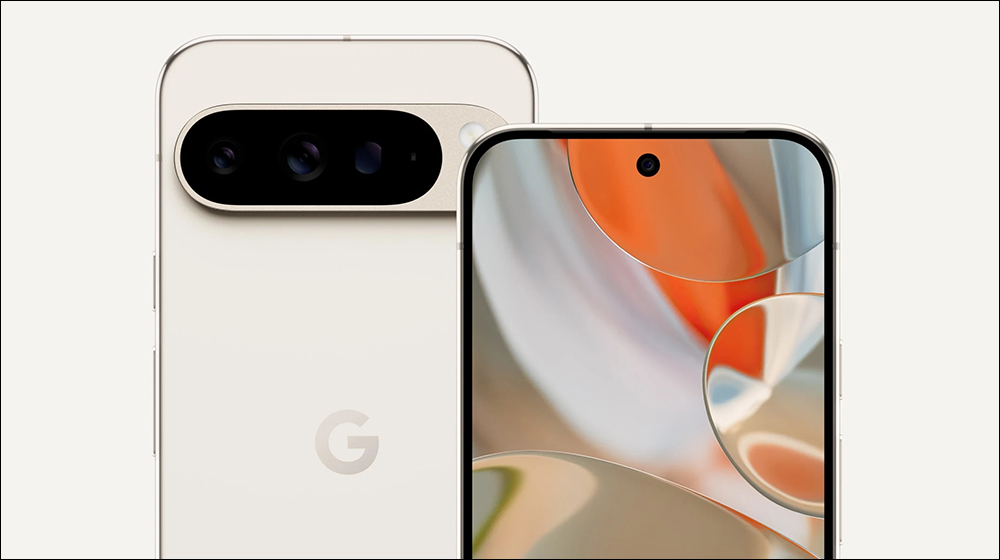
Pixel 9 Pro
According to Wccftech reports, this person Reddit User tjebakka originally sent his Pixel 9 Pro XL for repair because green lines appeared on the screen. This type of problem is often heard in OLED phones.
Later, when he received the package from Google, he first saw a card from a “Google technician”. Logically speaking, the next step should be a repaired phone, or at least a replacement phone of the same model. Unexpectedly, after taking it apart, I discovered that the phone inside was actually a Samsung Galaxy S22 Ultra, and the screen was still broken.
我打開包裹,讀了那張來自「Google 維修技術人員」的卡片,接著把手機拆開包裝,結果發現裡面竟然是一支螢幕已經破裂的 Samsung S22 Ultra。這到底是怎麼可能發生的?
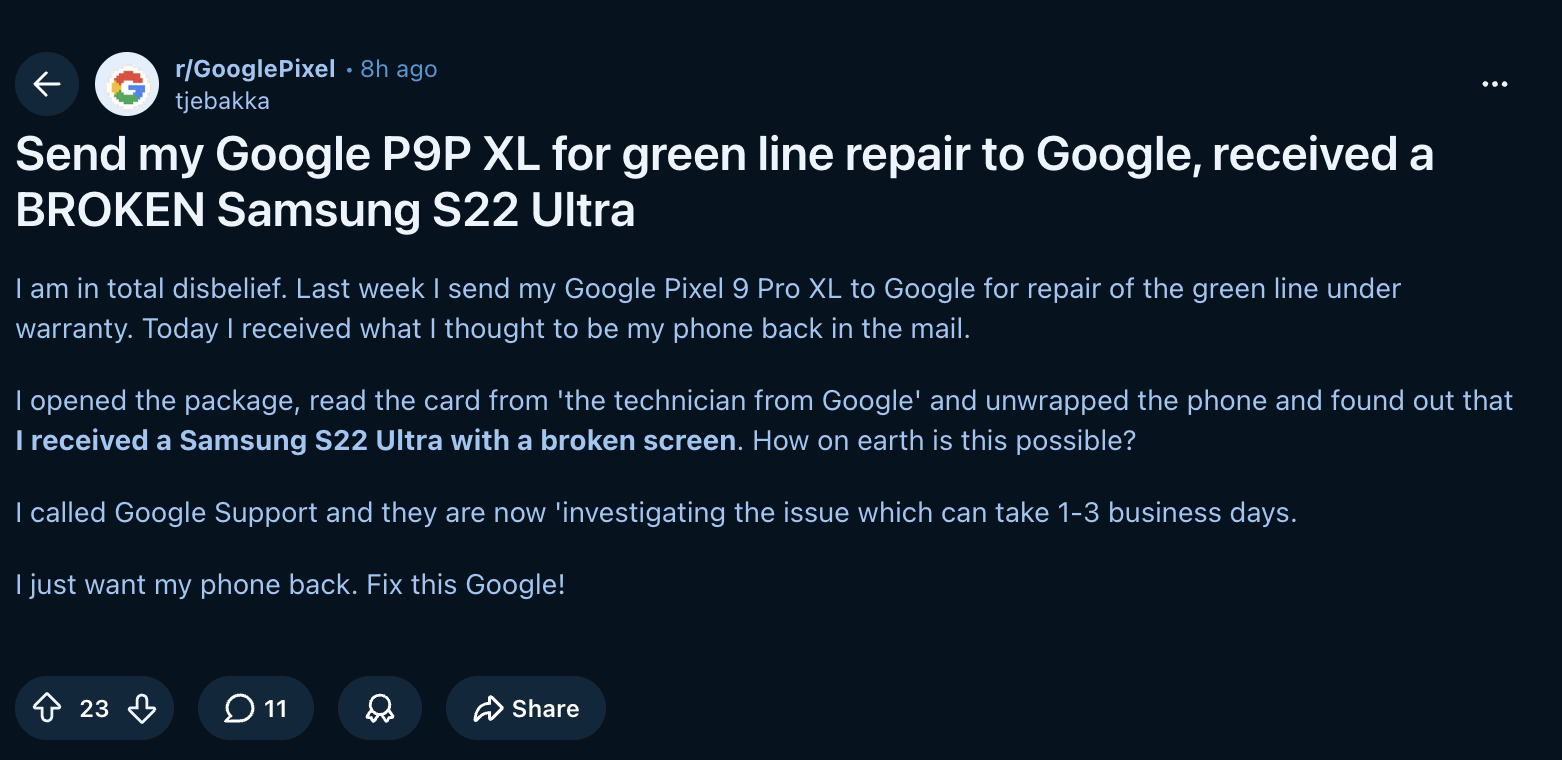
It’s quite an exaggeration to receive the same Pixel phone but it’s broken, and it turns out to be a flagship phone from a completely different brand.
It is speculated that this Galaxy S22 Ultra may have been received by Google through trade-in old machine recycling or other processes. As a result, during the repair or shipping process, it was accidentally mixed into the package originally sent to Pixel users.
Google has not publicly stated the real reason, but Google customer service has responded to the user and stated that it is investigating the situation and it may take 1 to 3 working days to resolve the issue.
That said, it’s not yet certain that the problem lies with Google’s internal repair centers, third-party repair partners, logistics sorting, or some aspect of replacement/recycler inventory management.
From a consumer perspective, the most troublesome aspect of this type of incident is the cost of proof. Before sending the phone for repair, the user usually has sent the device. If the content of the package returned is incorrect, the next step is to prove which phone they sent, what condition the package was in when it was received, and whether the unpacking process was modified.
This is why when sending high-priced mobile phones, laptops, and graphics cards for repair, it is recommended to take photos or videos before sending them out, including the appearance of the phone, IMEI, serial number, packaging process, and logistics order number. It is also best to record the unboxing of the repaired products when they are received. This may seem a bit troublesome, but when you encounter such an oolong incident, these records are the most direct evidence for communicating with customer service.
Source: KOCPC Chinese