


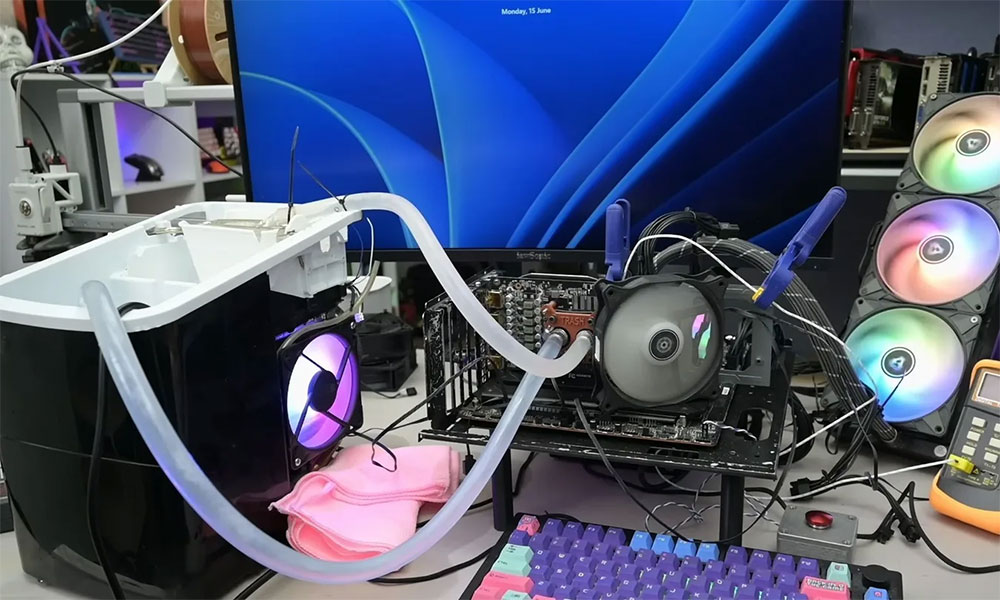
Desktop ice machines have always been incompatible with computer hardware, but YouTuber TrashBench recently used a crazy and technical experiment to prove that as long as the method is correct, it can be transformed into an amazingly efficient customized GPU cooling system. In his latest video, he uses a commercially available ice machine as the core to create a completely unorthodox cooling solution for the Nvidia GeForce RTX 3060, and the end result is far more effective than he expected.
Foreign YouTuber modifies ice machine to cool down Nvidia RTX GPU for gaming
The project was inspired by another creator, Yeester, who used ice machines to cool CPUs to the extreme. TrashBench chose to go in a different direction. Instead of pouring ice cubes into the water-cooling circuit, it directly transformed the ice machine itself into the cooling body, allowing it to maintain the low temperature of the circulating water, thereby providing stable and powerful heat dissipation for the GPU.
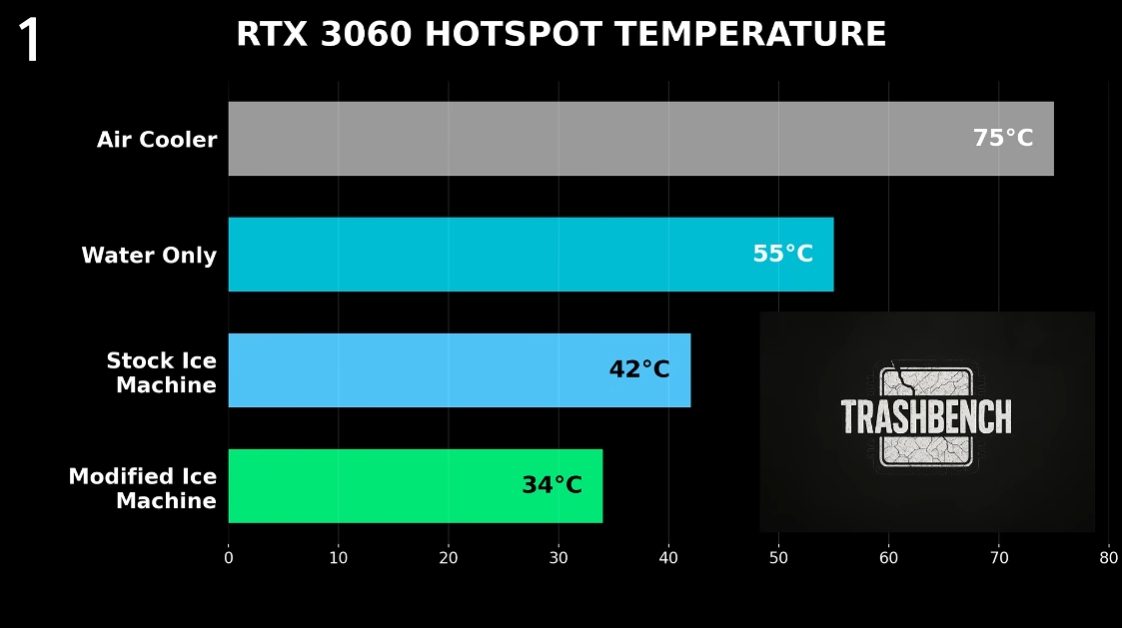
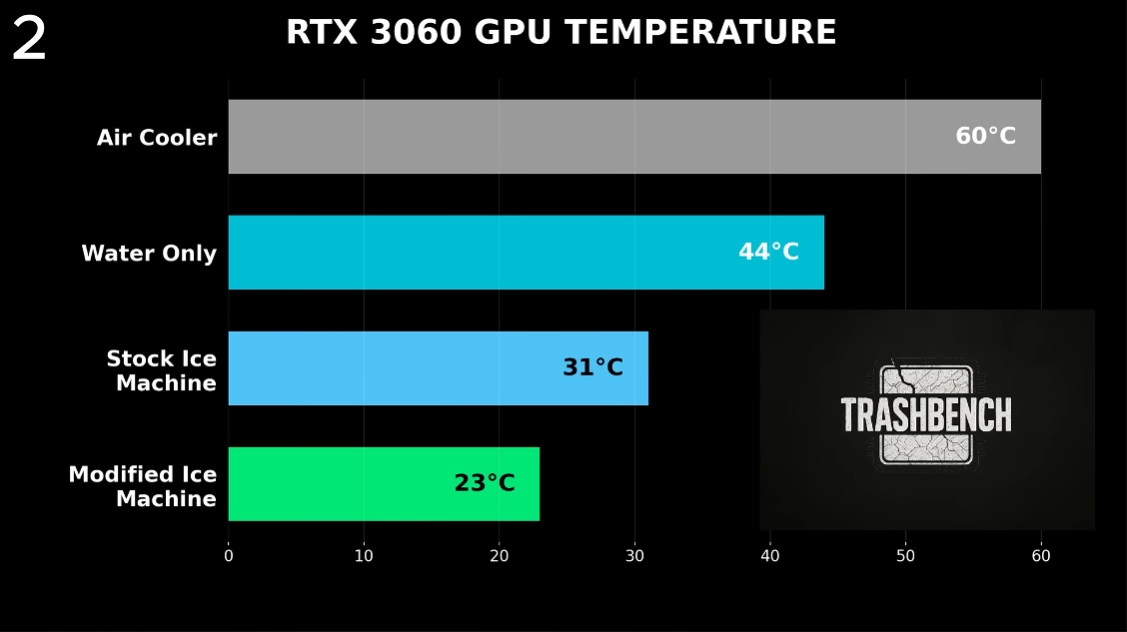
Before the transformation started, the temperature performance of the RTX 3060 was actually within the normal range. In Cyberpunk 2077, the air-cooled version of the GPU tops out at around 60°C, while the GPU hotspot is around 75°C. Those numbers aren’t that high for the 3060, but TrashBench wanted to see how far extreme cooling could push the temperatures.
The results of the transformation are jaw-dropping. When the ice machine continued to operate and successfully cooled down the circulating water, also in the “Cyberpunk 2077” scene, the GPU temperature was only 22–23°C, and the hotspot temperature dropped significantly to about 34°C. This is almost a cooling performance that is difficult to achieve by ordinary water cooling systems, and even approaches the level of liquid cooling.
However, there are actually quite a few engineering tweaks behind the system that makes it work. The average desktop ice maker is not designed to withstand the high heat output of the GPU for long periods of time. Its operating logic is: ice making → compressor stops → water replenishment → ice making again. This intermittent cycle is normal for beverage ice, but with the heat the RTX 3060 is constantly pumping out, the water temperature quickly rises back up and the compressor can’t keep it cold.
To solve the problem, TrashBench added an external thermostat (he says this type of device is commonly used in beer refrigerators) that forces the compressor to run continuously and prevents the ice machine from going into a sleep cycle. He also repositioned the evaporator so that the cooling area could more effectively contact the circulating water, ensuring that the entire water cooling circuit could stably maintain low temperatures.
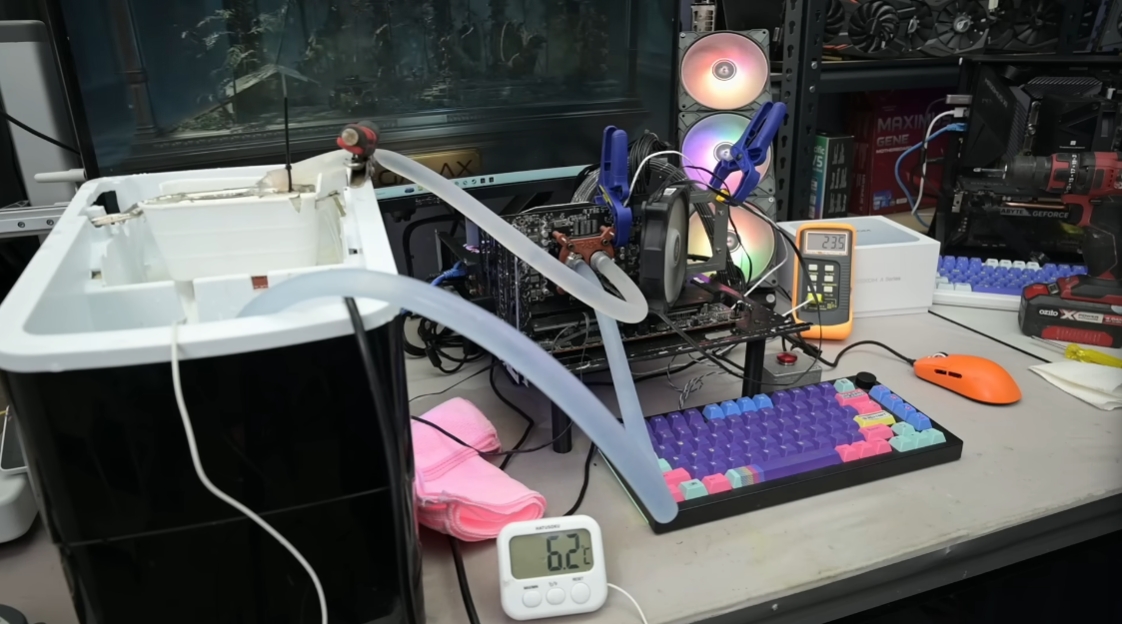
While the results are impressive, this experiment clearly demonstrates why it can only be classified as a “proof of concept.” When the water temperature is lower than the ambient temperature, condensed water will quickly accumulate on pipelines and hardware surfaces, creating a potential risk of short circuit. Coupled with the cumbersome installation process, the need to modify electrical appliances, the lifespan of the compressor running for a long time, and the safety of the overall system, this approach is obviously not suitable for ordinary players to try.
In other words, the ice machine does make the RTX 3060 incredibly cold, but it’s more of an experiment in creativity and engineering skill than a practical thermal upgrade. For most people, the risks and costs of such modifications far outweigh the benefits. However, as a highly entertaining and inspiring DIY project, it has undoubtedly succeeded in attracting the attention of all hardware enthusiasts.
Source: KOCPC Chinese