


In late August, an incident occurred on a South Korean campus.Nearly 200 female students and teachers were victims of a deepfake incident.Among them, the youngest age group even includes elementary school students. This incident has caused an uproar in South Korea. At the time, the South Korean government stated that it had established an emergency task force on deepfake response in schools to handle the issue of deepfake incidents on campus. Meanwhile, the South Korean National Assembly also discussed AI-related bills. Recently, the National Assembly finally passed a law: anyone found to possess, purchase, store, or watch deepfake pornographic content will face up to 3 years in prison or a fine of up to 30 million Korean won (approximately 720,000 New Taiwan dollars). In addition, producing or distributing such content carries a maximum penalty of 5 years in prison or a fine of up to 50 million Korean won (approximately 1.2 million New Taiwan dollars).
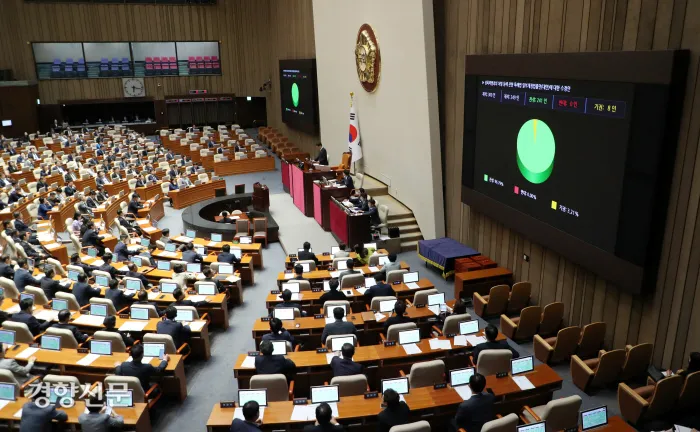
South Korea strengthens crackdown on deepfake crimes, imposing severe penalties on those who possess, purchase, store, or view such content.
For those friends who may not be familiar with what deepfake crime is, let me introduce it here. I wonder if you’ve heard about the deepfake crime incidents in Taiwan. About two years ago, Taiwanese YouTuber Xiao Yu used deepfake technology to swap the faces of many female celebrities and female YouTubers in Taiwan’s entertainment industry. This caused quite a stir at the time. Xiao Yu placed the faces of many actresses and female YouTubers onto adult film actresses’ bodies, leading many people to believe it was real. If you’re interested in learning about the emotional experiences of those actresses and female YouTubers who were deepfaked at the time, you can watch the video below by Zhiqi七七 to find out more:
Pornographic deepfake incidents happen in every country. In August this year, deepfake incidents also surfaced in South Korean schools and the entertainment industry, with the youngest school victim being only in elementary school. Since the incidents had just occurred in August, the South Korean government had not yet formulated countermeasures and could only first establish an emergency task force for responding to school deepfakes (학교 딥페이크 대응 긴급 TF) to address how to handle these cases. For more details, click the link to read the related report:
And just one month later, according toForeign mediaReports say that South Korea’s National Assembly passed an amendment to the Special Act on Punishment of Sexual Violence Crimes (성폭력범죄처벌특례법) on September 26, strengthening penalties for deepfake sexual exploitation materials. A new provision was added to the Special Act on Punishment of Sexual Violence Crimes, stipulating that “those who possess, purchase, store, or view deepfake videos will be sentenced to up to 3 years in prison or fined 30 million Korean won (approximately 720,000 New Taiwan dollars).” The National Assembly has now passed the provision, and it will take effect once South Korean President Yoon Suk-yeol approves it.

Before the aforementioned new provisions were passed, South Korea had already criminalized the production of sexually explicit deepfake content, with those caught creating and distributing deepfake content facing up to five years in prison or a fine of 50 million Korean won (approximately NT$1.2 million). After the incident, South Korea’s National Assembly increased the penalties for both production and distribution.Adjusted from the original 5 years to 7 years.。

South Korea’s National Security Committee stated that Telegram has adopted a zero-tolerance policy toward illegal information that abuses technologies such as deepfakes, and is actively cooperating with the South Korean government to combat crimes spread on Telegram, including pornography, prostitution, drugs, gambling, and deepfakes. As a result, Telegram is cooperating with the demands of South Korea’s National Security Committee, which holds exclusive authority to review content and can require Telegram to promptly delete and block users’ illegal activities on the platform. According toReportFrom September 3rd to 25th, a total of 148 digital crime messages were removed. (In less than a month, there were already 148 digital crime messages—it’s really hard to imagine how many crime messages there must be each year.)
To summarize, after a month of deliberation, South Korea has announced new provisions stating that those who possess, purchase, store, or view deepfake videos will face up to 3 years in prison or a fine of 30 million KRW (approximately NT$720,000). It has also increased the sentencing for producing and distributing deepfake content from 5 years to 7 years. At the same time, it is cooperating with Telegram to remove messages related to illegal digital crimes. What does everyone think of the South Korean government’s measures? Do you think they should be punished more severely?
Source: KOCPC Chinese