


Tim Cook first confirmed in an exclusive interview with WSJ that due to the soaring cost of memory and storage chips, price increases for Apple products are “inevitable.” But at that time, he did not specify when the price would rise, how much it would rise, or which products would rise.
Now part of the answer is out, Apple has already increased the price of many models MacBook, Mac, iPad, Apple TV, HomePod and Vision Pro prices, Taiwan is also on this wave of adjustments. What’s even more subtle is that Apple used the term “starting to increase” in subsequent external statements, so this adjustment of Mac and iPad may be just the first wave. If memory prices continue to deteriorate, there may be a second wave. Although iPhone, Apple Watch, and AirPods have not increased currently, it does not mean that they will be safe in the future.

Image source:9to5Mac
Apple’s price increase may have just begun: Mac and iPad have been raised first, and iPhone may follow in the fall
Of course, the one who is most affected by this wave of price increases is Mac or iPad.
Especially the entry-level iPad has been adjusted from the original price of NT$10,900 to NT$14,900, which is equivalent to an increase of NT$4,000, an increase of 36.7%. The MacBook Air has gone from NT$35,900 to NT$42,900, an increase of NT$7,000; the MacBook Pro has gone from NT$54,900 to NT$64,900, an increase of NT$10,000; the iPad Air has gone from NT$19,900 to NT$24,900, an increase of NT$5,000.

The reason given by Apple is that the cost of memory and storage chips has risen too fast. Foreign media Bloomberg The official statement pointed out that the company has tried its best to absorb costs for consumers in the past, but now it has reached a stage where it must “begin to increase” the prices of some products, and includes this adjustment of iPad and Mac as part of it.
The wording in the statement is quite intriguing. Apple did not simply say “today’s adjustment of iPad and Mac prices.” Instead, it appeared in two tones: “begin raising prices” and “including today’s increases.” Many people interpreted that today’s price increase is just the beginning, not the end.
iPhone, Apple Watch and AirPods are not affected by this price increase, but foreign media speculate that these products may only increase in price when new products are released in the fall.
Therefore, for those who are interested in buying Apple products such as Macs and iPads, you should really buy them quickly, especially if you can still find the selling price before the price increase or even cheaper, don’t think about it for too long. Judging from the current market conditions, the prices of memory and storage chips are unlikely to fall in the short term, and it may take another 1 to 2 years.
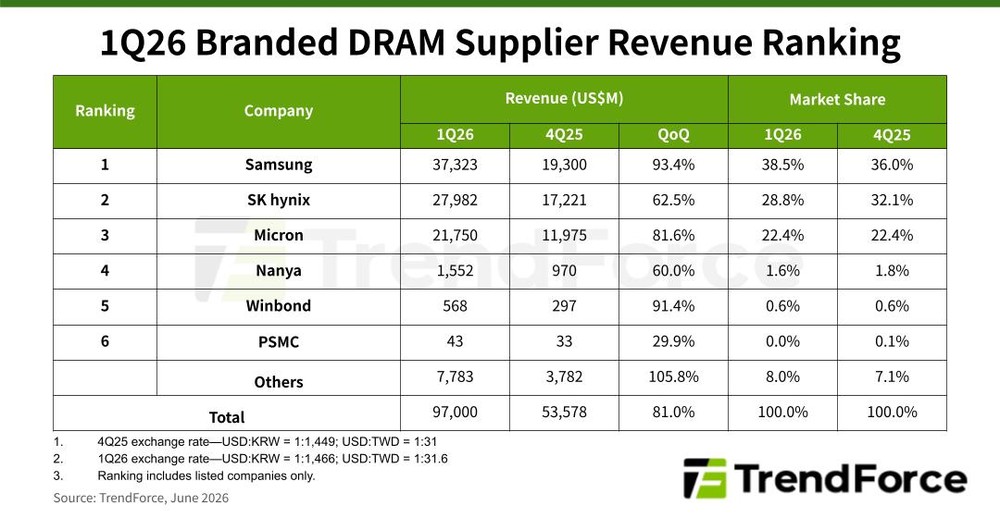
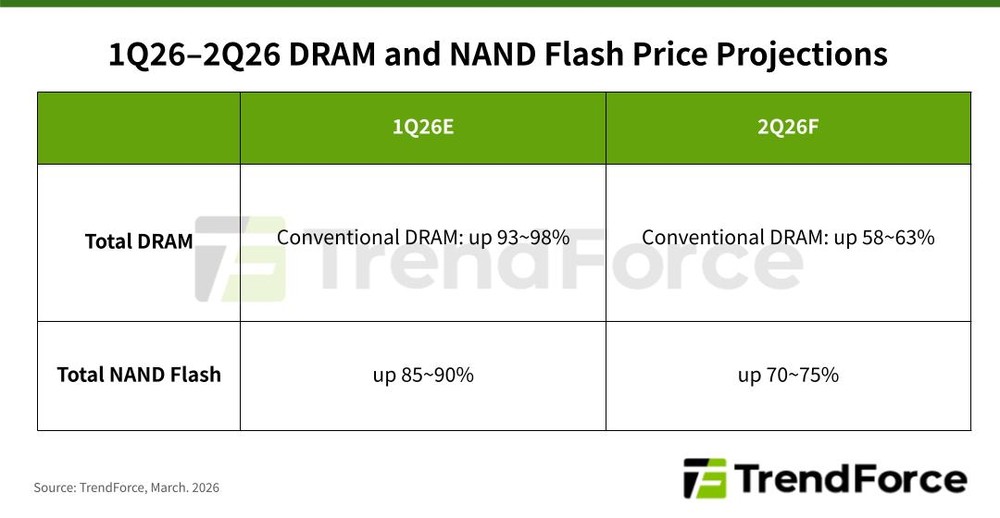
TrendForce reported in early June this year that, in the first quarter of 2026, the contract price of traditional DRAM will increase by approximately 93% to 98% quarter-on-quarter, which will also increase the DRAM industry revenue by 81% quarter-on-quarter. In the second quarter, because DRAM supplier inventories are still extremely low, and new supplies are prioritizing high-capacity RDIMMs for AI servers, TrendForce estimates that traditional DRAM contract prices will increase by another 58% to 63% quarterly:
The storage side is similar.A TrendForce report at the end of March mentioned, AI and data center demand continue to push up the NAND Flash market, and NAND Flash contract prices in the second quarter are expected to increase by 70% to 75% quarter-to-quarter. The report also mentioned that the demand for enterprise-level SSDs is still strong, and suppliers will prioritize allocating production capacity to data centers and high-profit products. Consumer-level applications will naturally face cost pressures:
Source: KOCPC Chinese