


Recently, a “Sinchon Bank” (새마을금고) branch in Gyeongju City, Gyeongsangbuk-do, South Korea, recently broke out in a ridiculous and outrageous case of embezzlement of public funds: a branch manager stole approximately 70 million won (approximately NT$145) from the vault. After receiving 10,000 yuan in cash, he went online to buy fake toys with cartoon ducks and other animal designs and stuffed them into the vault to top up the money, in an attempt to deceive others. What’s even more ridiculous is that these “cute banknotes” that were immediately obvious to be fake were lying in the vault for a full two weeks before they were discovered.
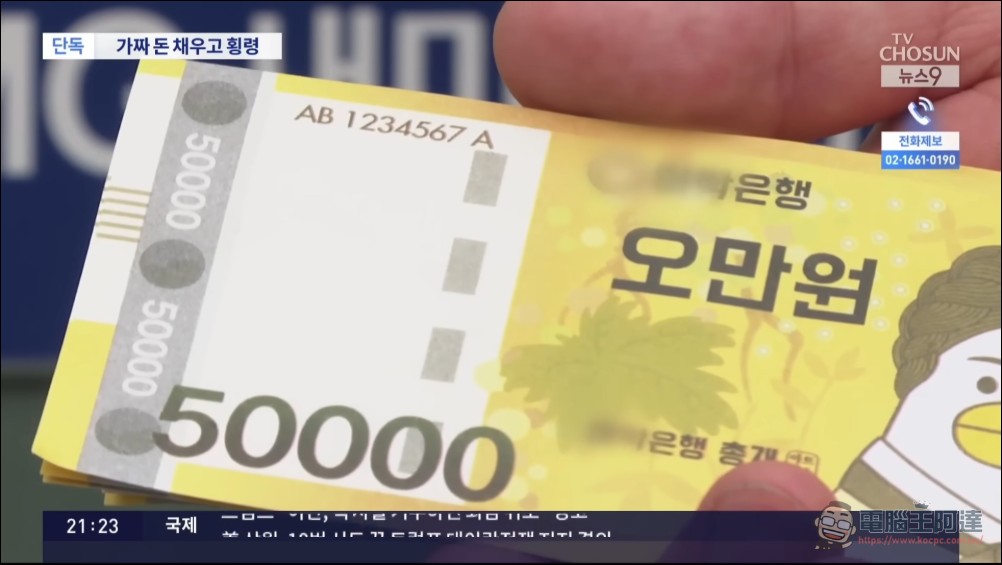
Bank manager stole 70 million won and used fake cartoon money to top up the money
According to an investigation by the Gyeongju Police Department, the incident took place at a Sinchon Bank branch near Hwangridan-ro (황리단길), a famous tourist attraction in Gyeongju. In January this year, it was discovered that about 70 million won in cash had been illegally withdrawn from the branch, and the person who embezzled public funds was the manager A who was responsible for managing the branch.

After stealing cash from the vault, Mr. A bought counterfeit 50,000 won toy bills online with cartoon animal designs (including ducks and other characters) printed on them, and stuffed these counterfeit bills into the vault to fill the gap. The roughness of this batch of counterfeit banknotes is staggering. The paper texture and printing quality are so different from real banknotes that anyone can tell the authenticity at a glance.
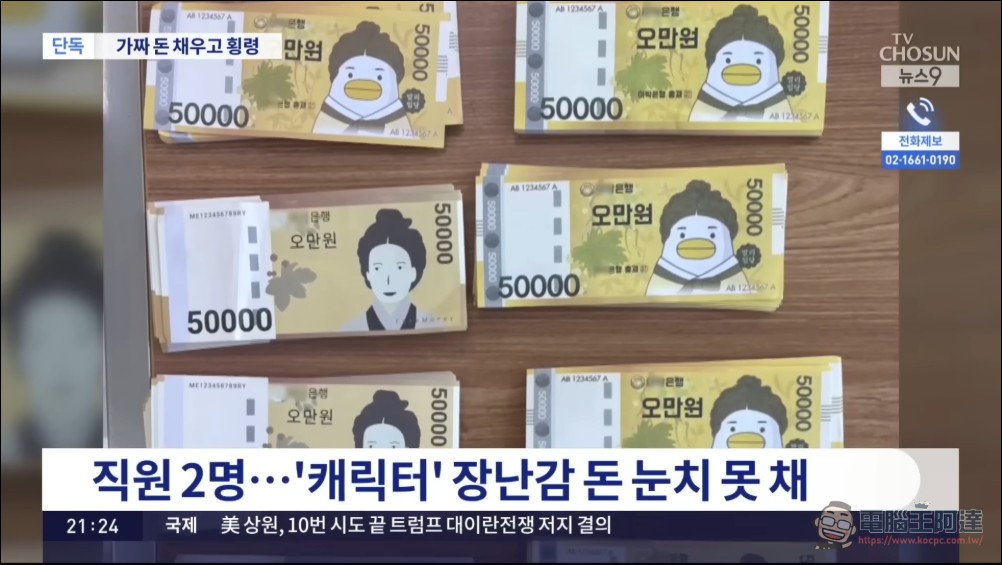
However, the key to A’s ability to successfully cover up his crime for two weeks was that the branch was extremely small, with only two employees in the entire branch: the manager himself and a section chief. A takes advantage of his position to personally take charge of the treasury operations during daily checkout. He also frequently says to the section leader, “I’ll put the money in,” thereby eliminating the opportunity for other employees to come into contact with the accounts. During this period, only person A entered and exited the vault. It was not until an employee noticed something unusual and reported it to the police that the incident came to light.
Delayed alarm raises suspicions of cover-up
After the incident was exposed, the handling methods of Sinchon Treasury aroused strong doubts from the outside world. According to reports, Sinchon Treasury did not immediately report the case to the police after discovering the misappropriation. Instead, it conducted an internal investigation first. The outside world believed that this move was to “reduce a major issue to a trivial matter.” What makes the outside world even more dissatisfied is that after the incident, it was reported that the senior management responsible for supervision and management was promoted instead, making the public question whether there is a culture of cover-up within Sinchon Treasury. A finally surrendered to the police about 15 days after the incident. The whole case has now entered the judicial process, and the court has recently issued a summary prosecution sanction against A.
In response, Sinchon Treasury responded that A was immediately relieved of his duties after the incident was exposed, and all the misappropriated funds have been recovered, emphasizing that “the case has been completed through internal processing.” But such a statement obviously cannot quell outsiders’ doubts about the failure of the regulatory mechanism.
Netizens focus on counterfeit banknotes
This case sparked heated discussions on Korean social media, but surprisingly, most netizens focused not on the embezzlement of public funds itself, but on the batch of “super cute counterfeit banknotes.” The cartoon animal patterns on the counterfeit banknotes became the focus of ridicule among netizens, with various messages pouring in:
- “This fake banknote is so cute, I want to collect it.”
- “You’re so careless about making counterfeit money. Do you really take crime seriously?”
- “Because the prerequisite for the crime of counterfeiting currency is that it can be mistaken for real banknotes, this kind of toy banknotes cannot constitute the crime of counterfeiting currency at all.”
- “The original purpose of making counterfeit banknotes is to prevent others from discovering it. How did you think of doing this?”
- “Even the Oolong Police Station dared not write like this.”
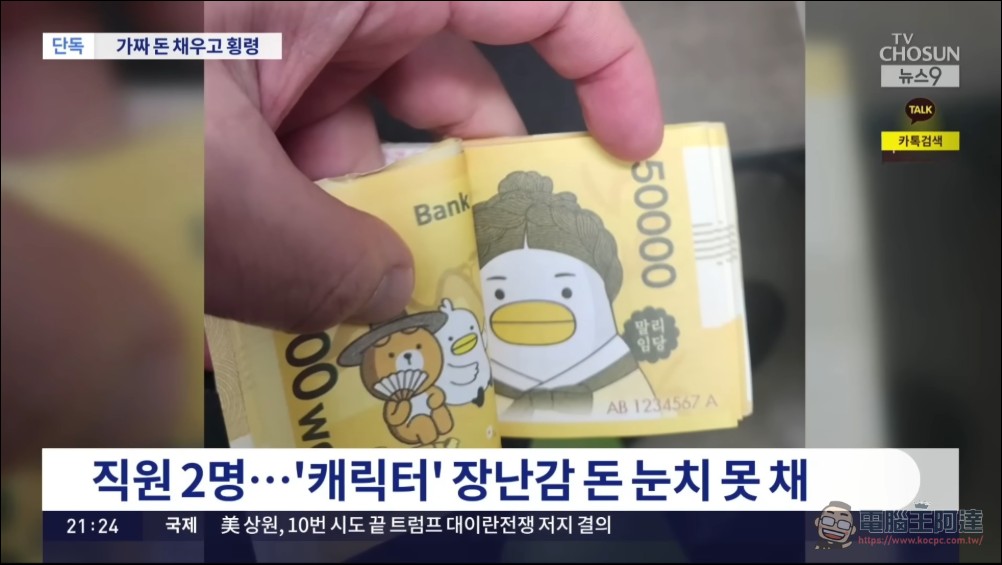
Some legal experts also pointed out that because A was not using counterfeit currency that was “enough to be mistaken for real banknotes”, but obvious toy banknotes, he may not be legally prosecuted for the crime of “counterfeiting currency” (simply put, it means “deliberately” confusing with obvious toy banknotes), but he will still face prosecution for misappropriation of public funds, business misappropriation and other crimes.
What is Sinchon Treasury? Supervision loopholes in South Korea’s grassroots finance
“Sinchon Bank” (새마을금고) is a unique grassroots mutual aid financial institution in South Korea, similar to Taiwan’s credit cooperatives or farmers’ association credit departments. It mainly serves the savings and loan needs of community residents. The name comes from the “Saemaul Movement” (새마을운동) promoted by the Park Chung-hee administration in the 1970s, and there are still thousands of strongholds across South Korea.
The size of Sinchon Treasury varies greatly, from large branches with dozens of employees in the city to small branches with only two or three people in the countryside. The Gyeongju branch where the incident happened this time falls into the latter category. The minimal manpower allocation makes the internal supervision mechanism ineffective. The manager alone controls the entry and exit of the vault, and the section chief cannot and does not have the authority to independently verify. Such a system design itself is a major risk.
In fact, Sinchon Treasury has experienced similar internal fraud incidents in the past. Such grassroots financial institutions often become hotbeds for internal crimes because of less intensive supervision than commercial banks and because some branches have streamlined manpower. This case once again highlights the systemic deficiencies in internal control and supervision of South Korea’s grassroots financial institutions.
From counterfeit money to cryptocurrencies: The absurd spectrum of financial crime in South Korea
This case is reminiscent of the diversification trend of financial crimes in South Korea in recent years. In the past few years, there have been many cases in South Korea of bank employees embezzling public funds and investing them in the cryptocurrency market. An employee of a bank in Gwangju once stole hundreds of millions of Korean won in public funds to purchase cryptocurrency, but ultimately lost all his money;Kyungnam BankCases of collective management fraud were also revealed.
In comparison, the approach of this Sinchon treasury manager seems extremely “retro” and even has a bit of absurd comedy. In the era of digital finance, using toy banknotes with cartoon ducks printed on them to fill the vacancies in the treasury is technically the crudest cover-up method, and it also reflects the desolation and drama of the entire case.
Source: KOCPC Chinese