


When it comes to the AMD BC-250, many people might not be familiar with it. In fact, it was a dedicated mining graphics card/small motherboard designed by AMD and ASRock during the 2021 cryptocurrency mining boom, specifically for blockchain mining. At its core, it was essentially a “defective (secondary-grade) chip” from Sony PlayStation 5 (PS5) consoles—a customized APU codenamed “Cyan Skillfish” (also known as Oberon)—containing a 6-core CPU based on the Zen 2 architecture and a GPU based on the GFX1013 (RDNA 1.5) architecture. It was equipped with 16GB of unified GDDR6 memory (UMA, shared between CPU and GPU), with 24 compute units (CU) enabled by default out of the box, though the chip physically contained 40 CU, with 16 of them masked off by firmware. As Ethereum transitioned to Proof of Stake (PoS) and the cryptocurrency market rapidly cooled down, the BC-250 quickly fell out of favor with miners, and massive inventories flooded the e-waste market, almost becoming recycling center fodder or being forgotten and left to gather dust in warehouse corners.
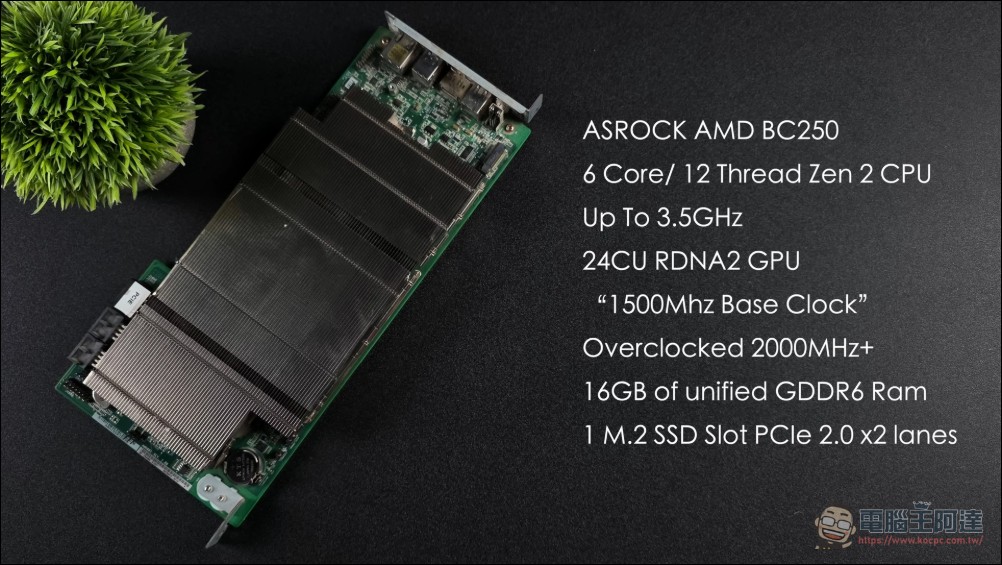
PS5 Scrap Turned Into AI Powerhouse! AMD BC-250 Uses PS5 Chips for LLM Inference
However, as open-source community developers have progressively uncovered its gaming and AI potential in Linux environments, this card has recently gained a new lease on life in the secondhand market. Beyond akandr’s AI deployment project, the BC-250 community has also established the bc250-collective organization, consolidating drivers, BIOS tools, and various tutorial documents. Previously, BC-250 prices on eBay were around $80 to $120less than a fraction of an NVIDIA RTX 5090, though the price has recently been hyped up
From Mining Rigs to AI Servers: A Software Stack Breakthrough
BC-250’s ability to become an AI reasoning tool is most crucially attributed to GitHub developer akandr’s release.Complete Deployment GuideThis guide details how to run various large language models (LLMs) on the BC-250 using the Vulkan graphics API with Ollama or llama.cpp on Fedora Linux. Even more impressive, the developer also deployed a Signal-based instant messaging AI monitoring system on this card, running 330 autonomous scheduled tasks, covering everything from code review to webpage monitoring.
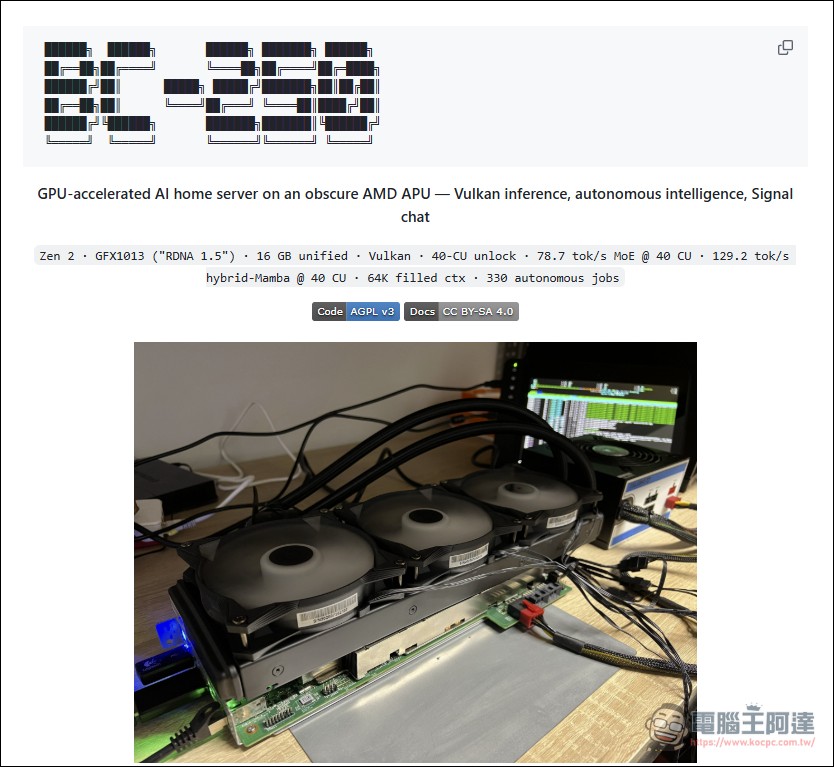
Because AMD’s ROCm compute platform doesn’t support the GFX1013 chip, OpenCL cannot run properly on this hardware either,Vulkan became the only available GPU compute pathThis is a relatively niche but community-proven viable approach, where developers still need to fine-tune core parameters (GTT capacity limit and TTM pages_limit) to successfully load models with over 14B parameters.
AI Inference Real-World Test: Performance That Exceeds Expectations
According to detailed benchmarks publicly shared by akandr on GitHub (updated as of June 2026), BC-250’s AI inference performance is quite impressive:
- After unlocking 40 CUs, the Qwen3.5 35B-A3B MoE (Mixture of Experts) model can achieve 78.7 tok/s the generation speed of
- Granite 4.0-H Tiny (Hybrid Mamba Architecture) Achieves 129.2 tok/s
- DeepSeek-R1-14B achieves 30.4 tok/s
- Qwen3.5:9b (Ollama) achieves 31.1 tok/s
Compared to the default 24 CU, unlocking 40 CU brings on average Generation speed +32%, prefill speed +50% This improvement was made possible by a core kernel patch contributed by community developer S. Duggan. After independent FP32 precision verification (1 billion multiply-accumulate operations with zero errors), the developer conducted rigorous A/B testing with 11 models.
| Model | Gen 24-CU | Gen 40-CU | Δ gen | Pfill 24-CU | Pfill 40-CU | Δ pfill |
|---|---|---|---|---|---|---|
| qwen3.5:9b (Ollama) | 23.1 | 31.1 | 1.34× | 143.1 | 225.3 | 1.57× |
| deepseek-r1-14b | 21.2 | 30.4 | 1.43× | 98.0 | 140.5 | 1.43× |
| gpt-oss-20b MXFP4 | 66.1 | 87.5 | 1.32× | 181.0 | 248.3 | 1.37× |
| gpt-oss-20b (Ollama) | 45.9 | 51.4 | 1.12× | 253.6 | 390.4 | 1.54× |
| qwen3-coder-30b IQ2_M | 57.7 | 76.7 | 1.33× | 178.2 | 264.6 | 1.49× |
| qwen3.5-35b-a3b IQ2_M | 59.5 | 78.7 | 1.32× | 171.8 | 245.9 | 1.43× |
| qwen3.6-35b-a3b IQ2_M | 59.6 | 78.0 | 1.31× | 170.8 | 250.2 | 1.46× |
| granite-4.0-h-tiny (hybrid Mamba) | 104.2 | 129.2 | 1.24× | 510.6 | 765.0 | 1.50× |
| gemma4-latest (Ollama) | 28.9 | 33.0 | 1.14× | 304.0 | 463.5 | 1.52× |
| mistral-small-3.2 (Ollama) | 11.6 | 18.3 | 1.57× | 51.5 | 83.7 | 1.62× |
| qwq-32b IQ2_M | 9.6 | 14.9 | 1.55× | 47.9 | 74.8 | 1.56× |
| Median | 1.32× | 1.50× |
Long Context and Energy Efficiency Advantages
BC-250’s long-context performance is also worth noting. Qwen3.5 35B MoE can reach 64K filled context(16.6 tok/s), while the smaller Qwen3.5:9b can even reach 128K context while maintaining 5/5 Needle Retrieval accuracy, meaning it can handle large document analysis or long conversation histories. In terms of power consumption, at the default 24 CUs the card draws approximately 101W, and after unlocking to 40 CUs the median is around 116W—compared to a single H100’s 700W power draw, the BC-250’s energy efficiency is quite outstanding.
- hardware cost$80-120 USD vs. the H100 at approximately $30,000 USD (a difference of 250-375x)
- Power consumption101-116W compared to the H100’s 700W (approximately 1/6)
- AI inferenceCan run a 35B MoE model at ~78 tok/s (40 CU), compared to ~200+ tok/s on H100 running the same model (estimated, as precise comparison is difficult due to different architectures and quantization methods).
- UsabilityThe BC-250 is available on eBay for immediate ordering—no need to wait in line for months.
Physical Specifications and Deployment Pitfalls
BC-250 is not a standard PCIe graphics card. It is essentially a small motherboard using the M.2 interface, containing a complete APU (CPU+GPU+RAM). Users need to provide their own ATX power supply and cooling solution. The community commonly uses a broken all-in-one liquid cooler with three fans pressed directly onto the chip, reportedly capable of 24/7 stable operation. To unlock the 40 CUs, one also needs to use a CH341A flash clip to flash the BIOS.
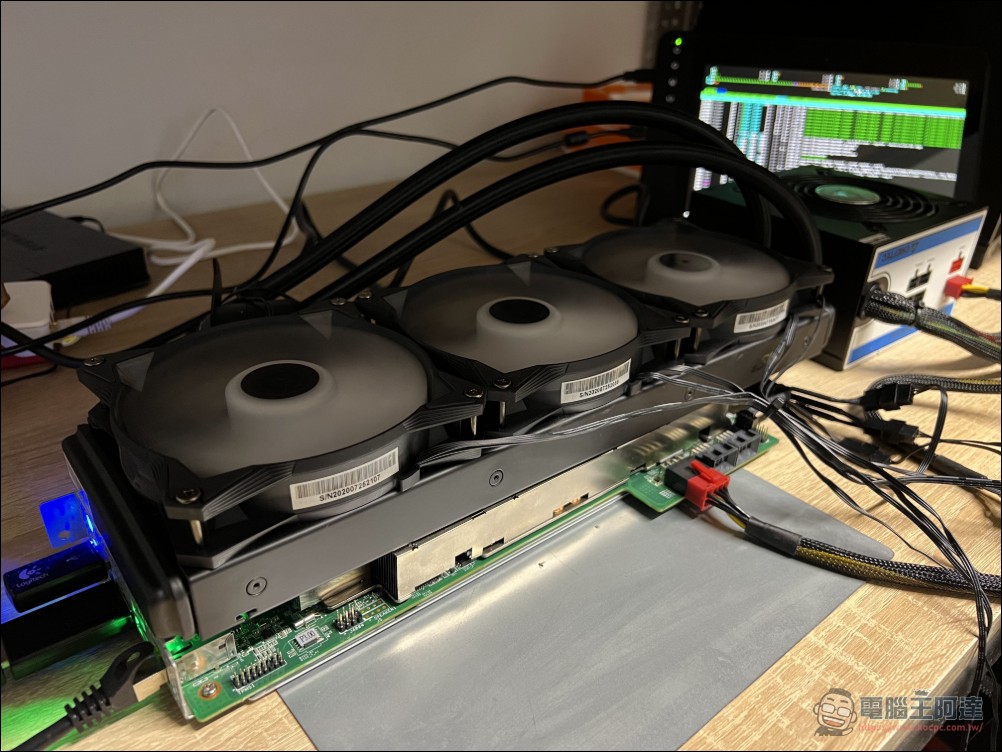
Additionally, the BC-250 was originally designed for Samsung’s 4U rack servers (12 per unit), so buyers purchasing separately will need to source their own power supplies and enclosures. For developers with Linux experience who enjoy DIY projects, these challenges are manageable. There are also versions of the Cyan Skillfish architecture used in servers from brands like HP, though specifications differ slightly.
Who is suitable for purchasing the BC-250?
- Individual developerLimited budget but want to run local LLM inference, can accept Linux environment and manual setup
- Edge computing scenariosLow-power, cost-effective edge AI inference node, ideal for IoT and remote deployment
- AI Teaching and ExperimentsAffordable entry-level hardware for students or self-learners — quick setup with Ollama
- Not suitableUsers who want plug-and-play functionality, complete Windows driver support, or top-tier AI training performance
It’s worth noting that both Hackaday’s reports and Reddit discussions point out that as the BC-250’s “mining waste turns to gold” story spreads widely across YouTube and tech media, prices on eBay have already shown a clear upward trend (now exceeding 10,000 TWD). Developers genuinely interested in getting one may need to act fast.
Source: KOCPC Chinese