


To judge the success of an operating system, you have to see whether someone tries to crack it or uses it as a target for attacks. Apple’s M1 chip has attracted a lot of attention since its launch. Of course, it has also attracted the covetousness of some unscrupulous individuals. The M1 chip set used in the latest MacBook Air, MacBook Pro 13, and Mac Mini is considered a close relative of the iPad Pro chip, and it has already begun to get a taste of some evil programs.

In response to the emergence of malware on Apple M1, there are three things to keep in mind when it comes to security:
Malware is an established fact in today’s increasingly digital life. Although the number of malware on MacOS is relatively small (not non-existent), the continuously growing market share is very attractive to unscrupulous elements. Adware and ransomware tailored specifically for Mac have appeared one after another, and have bypassed Apple’s latest defense mechanisms as targets.

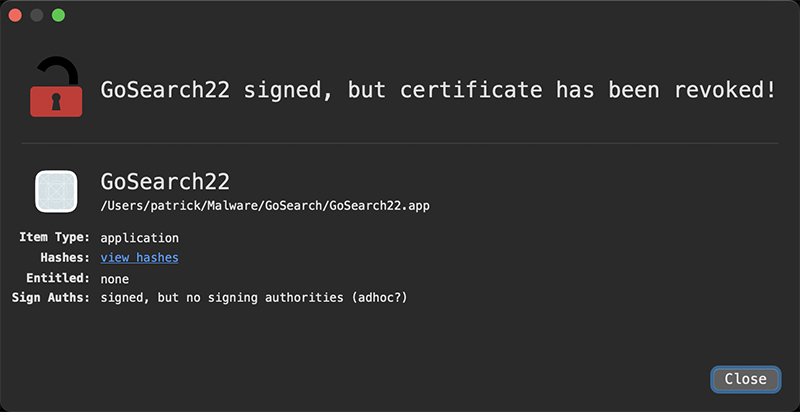
foreign security researchers Patrick Wardle A piece of malware specifically targeting the Arm 64 architecture has been found to exist. This new version, code-named “GoSearch22”, exists as a Safari adware extension and is also a member of the notorious PirritMac adware family. Although it was originally designed for Intel and AMD’s X86 processors, researchers have discovered a specific version that targets the latest M1 chips. This malware uses a more classic approach, which is to pretend to be a legitimate Safari extension, collect user data and serve illegal advertisements, including banners, pop-up windows, links to other malicious websites, etc. Although Apple has revoked their certificates, it cannot be ruled out that attackers use other certificates to change their tactics. Coincidentally, security research organization Red Canary is investigating another case of locally infected M1 malware, which appears to be a completely different virus than the one described above. Apple has not commented on these investigations at this time.
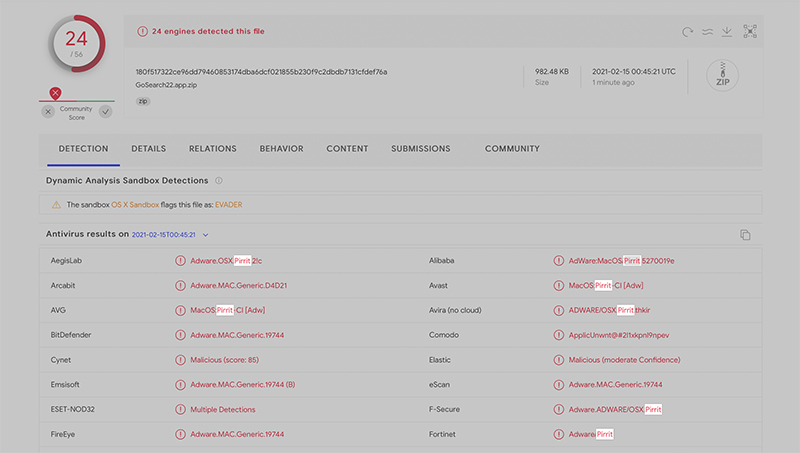
The problem in the short term is that some current defense tools, including anti-virus software, have a certain difficulty in processing this emerging (not actually new) binary file format. They can easily detect the Intel Before the current security protection tools have prepared a complete corresponding strategy, the growth of M1 malware is obviously worth paying attention to, and users should abide by the three principles:
- Don’t click on attachments in emails you don’t know
- Do not install unknown random extension plug-ins
- Don’t trust too much strange links from others
Remember! The most direct and simple way to avoid the impact of malware is to not actively give them the opportunity to enter your computer system. (Same for Windows)
◎Data source:Wired
Source: KOCPC Chinese