


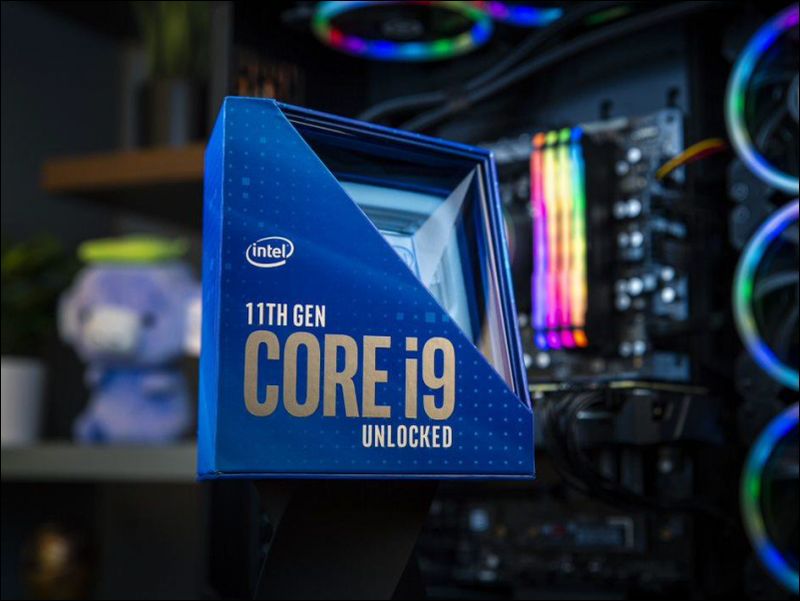
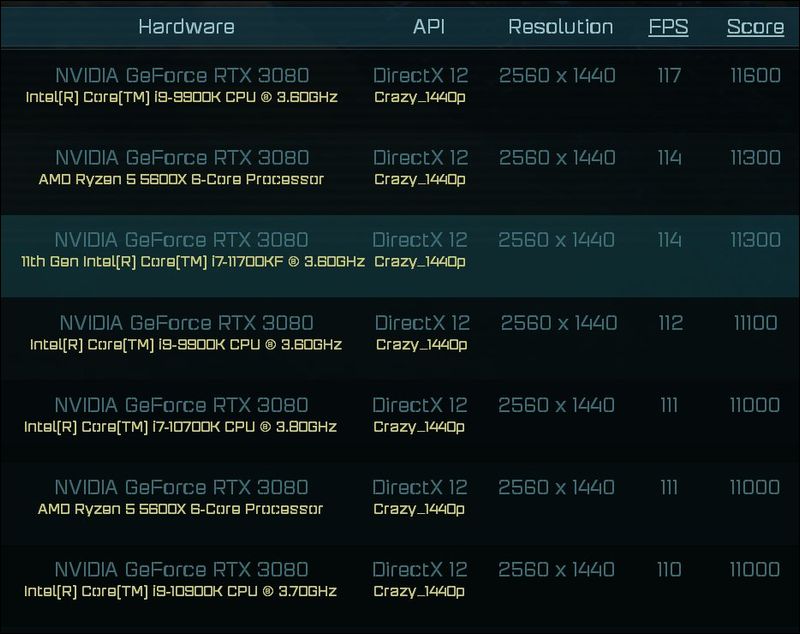
Intel’s latest generation of processors, the Rocket Lake-S architecture, is expected to be available to everyone early next year, and the time is almost here. Recently, foreign media discovered that the flagship Core i7-11700KF among the 11th generation processors appeared on the benchmark ranking list of the famous game “Ashes of the Singularity”. Interestingly, this processor, which currently doesn’t have much information except the processor model, actually tied with Intel’s 10th generation flagship processor Core i9-10900K in the game’s benchmark test. Considering that the Core i7-11700KF only has 8 cores, while the Core i9-10900K is a 10-core processor, it can’t help but make people smile. With only 8 cores, the new generation of processors is evenly matched with the previous generation of 10-core processors. This may mean that this generation of processors will have surprising improvements:
▲(Image source)
Many times people have some misconceptions when buying computers. In the past, they thought that the one with a higher clock speed would have better performance. However, as the manufacturing process becomes more and more complex, and with the recent rise of AMD, when looking at a processor, you can no longer just look at the clock speed. As a result, some people look at the number of cores to determine performance. This perception is actually not completely wrong. If the products are from the same manufacturer and are in the same series, this score can roughly distinguish the performance level and market positioning. However, if you compare processors of different generations, brands, and architectures horizontally, it may not be accurate.
The 11th generation 8-core processor is tied with the 10th generation 10-core processor, Intel is making progress
Core i7-11700KF is one of the latest Intel processor models to be exposed recently. The specifications are similar to the Core i9-11900K. The only difference between the two is the clock speed and power limit. Both are 8-core processors with twice as many threads thanks to HT technology. The L3 cache is also 16MB. Clock-wise, the 11700KF is 100 MHz faster than the 11900K with a 3.60 GHz clock:
▲(Image source)
This setting is right in line with the comparison between the Core i7-10700K and Core i9-10900K, with the 10700K also clocking 100MHz higher than the 10900K. However, the 10900K has two more cores and four more threads than the 10900K, so the performance of multi-threads determines the difference between the two.
The Core i7-11700KF and Core i9-11900K have a TDP of 125W (PL1), but the Core i9-11900K has a TDP of 250W (PL2). As for the TDP of Core i7-10700KF, it may be set at 225 ~ 230W.
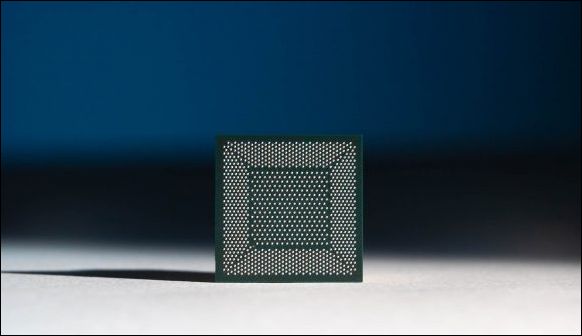
In addition, Core i9 has an additional feature of Thermal Velocity Boost, but Core i7 does not. Therefore, the 11700KF clock may be 100~200 MHz lower than the 11900K. However, the actual information still depends on what is announced at the time of official announcement:
▲(Image source)
Although the “Ashes of the Singularity” test can distinguish the performance of hardware, considering that the test data is uploaded by players themselves, it may not be fair enough on the benchmark platform. For example, in the test data chart, it can be found that the score of Ryzen 5 5600X is higher than that of Core i7-11700KF. There are still doubts about the actual reference degree.
The author believes that Intel has really worked hard to improve performance in the new Rocket Lake-S architecture, and it should have a chance to catch up with the AMD Ryzen 5000 series. However, the actual gap between the two parties, and even the comparison results of previous and later generations of products, still need to be analyzed in detail by a third-party evaluation organization before a fair result can be reached.
Source: KOCPC Chinese