


As long as your Apple mobile device is not too old, you can basically get the advantage of iOS/iPadOS system upgrades every year, which is quite enviable by many users of other systems (although Google has also recentlyFind ways to make updates fasterOh~ sweat). However, if you can upgrade, you can upgrade. Whether the functions of the new system will make users willing to upgrade is another “fragmented” concern. Soon, Apple delivered a very good performance with iOS 14. Continue reading The update rate of iOS 14 has reached 72%, surpassing the performance of iOS 13 in the same period.
▲Image source: Apple
The update rate of iOS 14 has reached 72%, surpassing the performance of iOS 13 in the same period
Being able to deliver good materials and good enough stability in the new system is definitely the biggest key to attracting users to quickly upgrade and adopt the system as soon as the system is updated. iDevice has nothing to do with fragmentation and has always performed very well in new system installation rates. Last year, the editor was aiming for the dark mode that is more friendly to OLED screens, and basically went straight to iOS 13 from the beginning of the public beta. In fact, it only took Apple a month to complete the follow-upAchieving a strong performance of 50% install rate。
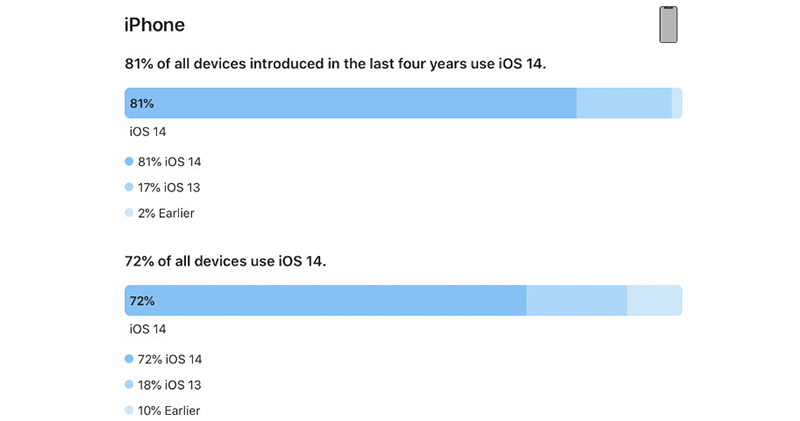
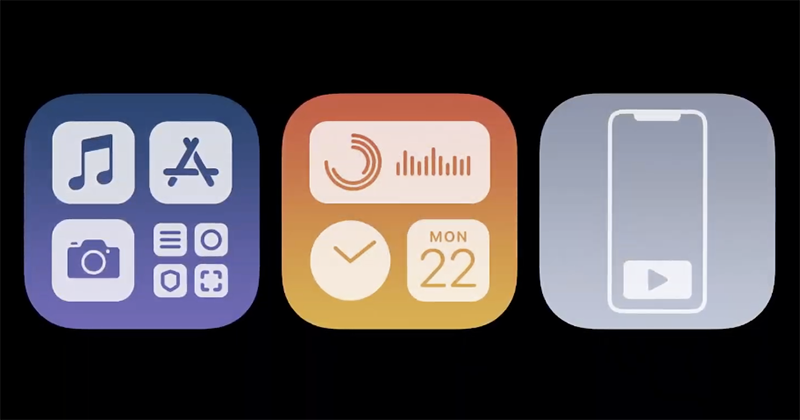
This year, it is even more topical and equipped with very easy-to-use widget desktop gadgets, floating videos and app database functions. iOS 14. Apple surpassed the performance of iOS 13 in the same period last year with an update installation rate of 72% (this figure was not reached until close to February of the following year); if it is narrowed down to devices launched in the past four years, it has increased to 81% – both figures for iOS 13 are now only about 18%.
In addition to allowing users to continue to use new functions, it also proves that the evolutionary direction of the system is generally welcomed. However, the excellent system upgrade rate actually allows developers to not have to deal with the problem of fragmentation, thereby improving the efficiency of software development.
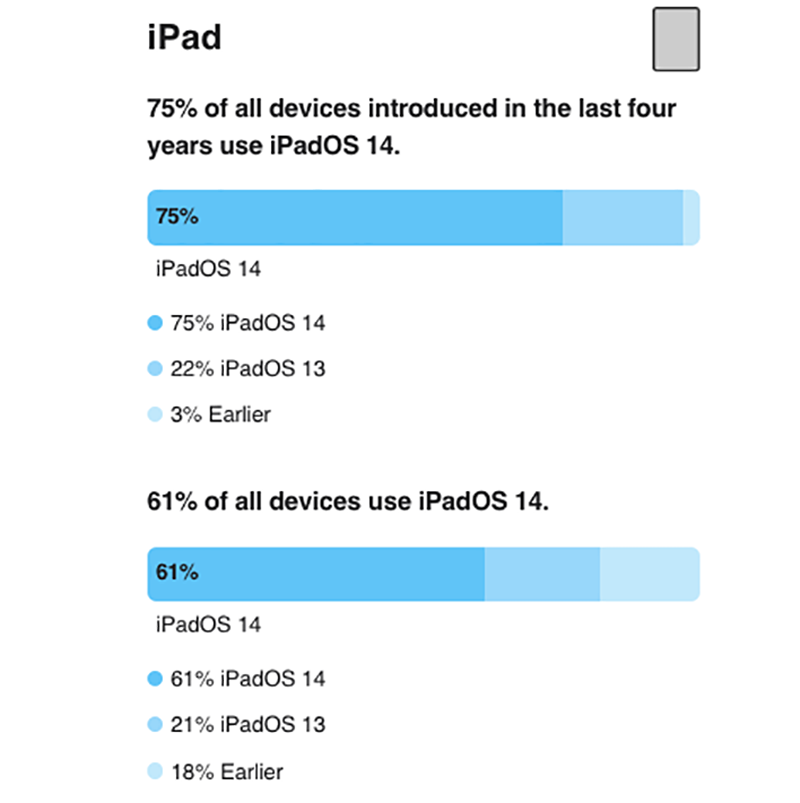
Under the table comparing the installation rate of iPhone / iPod Touch devices during the same period, iPadOS also has related information that can be seen on the official website – although it still lost to iOS in the online battle (?), iPadOS 14 actually still has a good update rate of 61% (75% for devices in the past four years). It seems that iPadOS gadgets cannot really be placed on the desktop. Maybe for those who want a deeply customized system experience, they feel there is no need to rush to upgrade, right?
Pictures/sources cited in this article
Further reading:
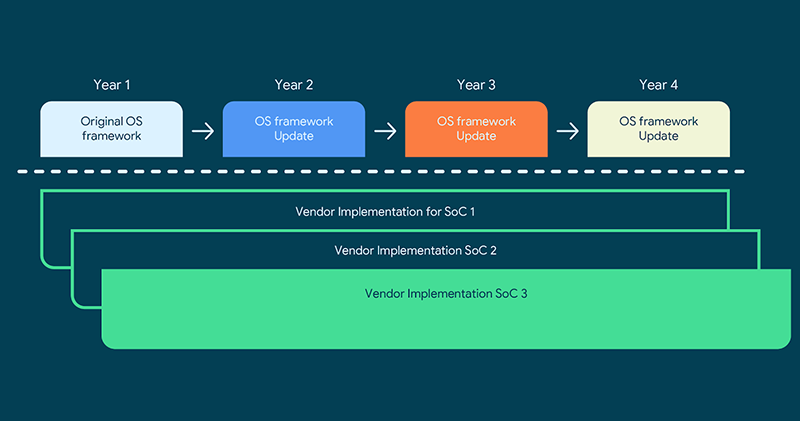
Starting with Qualcomm 888 SoC, it will be easier to upgrade Android to larger versions
Apple TV confirmed to arrive with Chromecast with Google TV TV stick
Source: KOCPC Chinese