


with OpenAI launch Codex Desktop App Afterwards, they also quickly announced the new GPT-5.3-Codex model. By version number, it might seem like just a minor update, but the actual changes are quite significant. GPT-5.3-Codex transforms Codex from an agent that “simply writes and checks code” into one that can “complete entire workflows on the computer.”
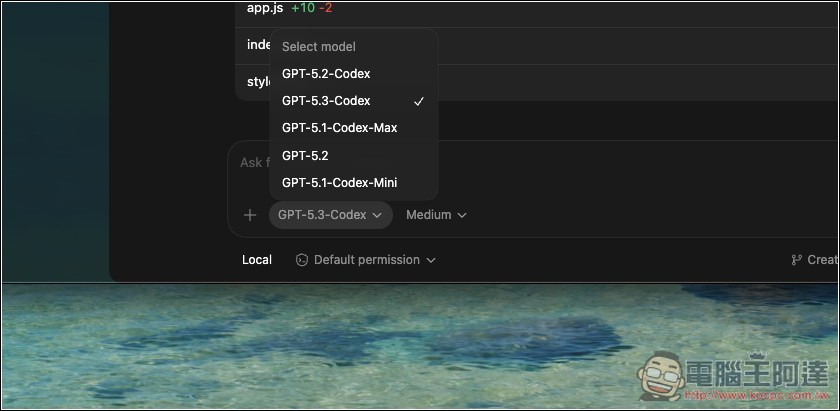
Key Updates: New Changes and Features in GPT 5.3 Codex
OpenAI stated that “GPT-5.3-Codex simultaneously advances GPT-5.2-Codex’s frontier coding capabilities and GPT-5.2’s reasoning and domain expertise, integrating them into a single model while also improving speed by 25%. It set new industry records across the four benchmarks of SWE-Bench Pro, Terminal-Bench, OSWorld, and GDPval.”
Simply put, the key point of GPT-5.3-Codex isn’t that it’s better at writing code—it’s that it can break a task into steps, use tools, run workflows, and ultimately deliver results. Along the way, you can guide it like a colleague, stepping in anytime to steer the direction, without having to wait until it produces the entire output to realize it’s gone off track.
GPT-5.3-Codex 擁有更強的 agentic 能力,能在工作時持續互動、保持上下文不掉線。
According to the officially released data, the most notable improvement of GPT-5.3-Codex over GPT-5.2-Codex is in the ability to use computers for completing tasks in terminal operations and desktop environments.
- Terminal-Bench 2.0: GPT-5.3-Codex scores 77.3%, while GPT-5.2-Codex scores 64.0%.
- OSWorld-Verified (computer usage ability for completing desktop environment tasks): GPT-5.3-Codex is 64.7%, GPT-5.2-Codex is 38.2%.
- SWE-Bench Pro (which more closely approximates real-world engineering scenarios) shows 56.8% versus 56.4%, a negligible difference.
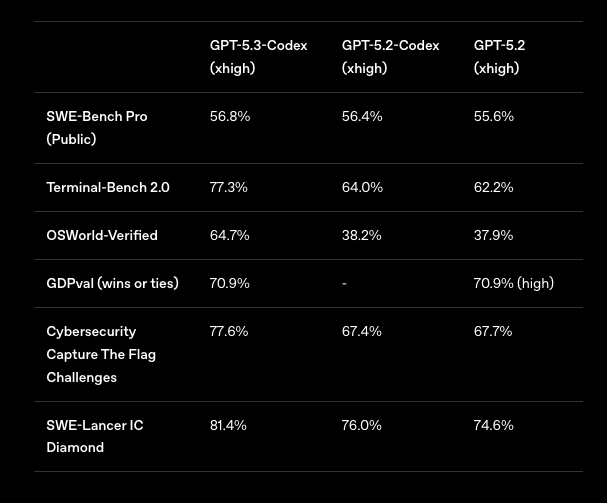
OpenAI further emphasized that GPT-5.3-Codex uses fewer tokens than any previous model when completing these tasks, enabling users to accomplish more.
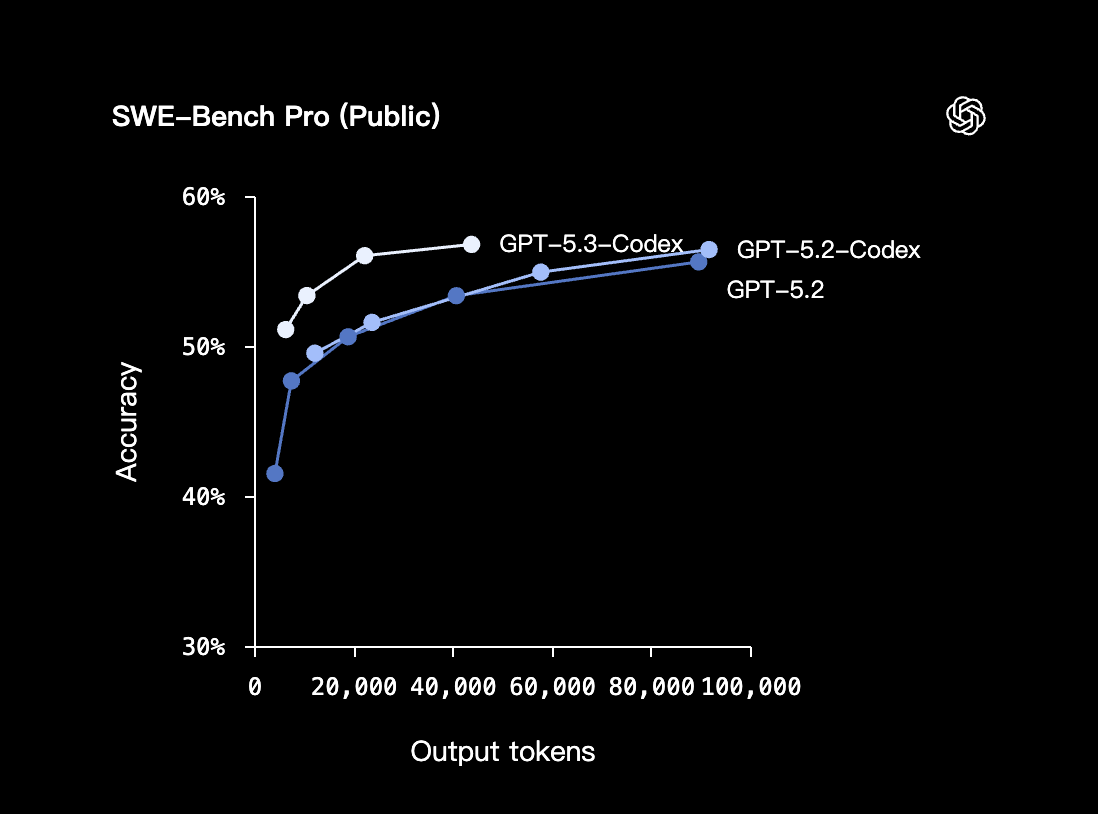
Specifically, three main changes will be more noticeable in everyday use.
First is the availability of “long tasks.” The speed improvement this time is up to 25%, meaning there’s a better chance of running tasks that require research, tool usage, or multi-step execution to completion, rather than getting stuck in waiting or repetitive confirmations.
The second is approaching it “more like thinking about the entire project” rather than “thinking about a single answer.” OpenAI gave an example, asking it to create two games:
- Version 2 of the Racing Game at Codex App’s Launch
- An underwater exploration game

With nothing more than generic follow-up instructions like “fix bugs” or “improve the game,” GPT-5.3-Codex can autonomously iterate and refine these works across millions of tokens.
The third one is “not just writing code.” GPT-5.3-Codex is designed to support all tasks throughout the entire software lifecycle, including debugging, deployment, monitoring, writing PRDs, revising copy, conducting user research, completing tests, organizing metrics, and more. It even mentions being able to create presentations, spreadsheets, and other “knowledge work products.”
Additionally, GPT-5.3-Codex will provide more frequent updates on progress and key decisions, and you can ask questions, modify requirements, and adjust the approach in real-time—rather than waiting until it completes an entire workflow to review the results.
What’s even more interesting is that on the same day, Claude actually released a new model called Claude Opus 4.6, with a Terminal-Bench 2.0 score of 65.4%, which was higher than all its competitors at the time:
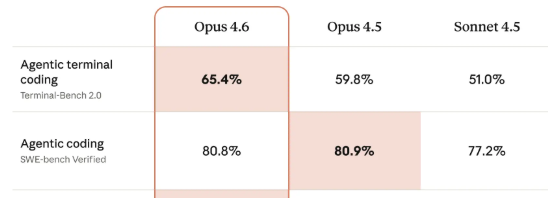
But unexpectedly, less than an hour later, OpenAI released GPT-5.3-Codex, which immediately surpassed it with a score of 77.3%, and many netizens joked that Claude had been sniped.
Paid ChatGPT users can now use GPT-5.3-Codex, available through the following platforms:
- App
- CLI
- IDE extensions
- Web
Source: KOCPC Chinese