


This year many things have been postponed due to the epidemic. Including many new products scheduled to be released by major technology companies had to be postponed due to the impact of the epidemic, and some large-scale exhibitions such as Computex had to continue to be postponed this year, and finally were held next year. However, as the epidemic control gradually improves, major manufacturers are gradually catching up on the progress that has been delayed. AMD is preparing to use Ryzen “Vermeer” desktop processors and Radeon RX “Big Navi” graphics cards to make everyone shout “Yes”. Interestingly, a whistleblower recently provided information pointing out that in addition to the regular version of BIg Navi, it will also prepare a player version of the graphics card with slightly stronger specifications. Although it is unclear what features the player version will have, at least the memory part shows the 16GB spectrum:
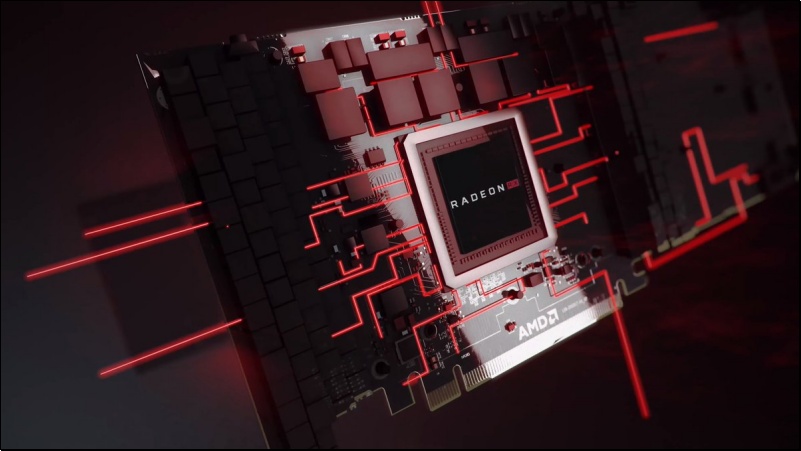
▲
Big Navi is expected to be released this year, but there is also a player version with 16GB display memory?
Chinese Chiphell forum user wjm47196 has always accurately predicted the functional evolution of AMD graphics cards. This time he also took action and published relevant news about Big Navi graphics cards. According to him, although Big Navi will be launched later than expected this time, AMD is striving to launch it within this year. At least we are expected to see news from AMD at the end of the year. On the other hand, NVIDIA’s new architecture Ampere has also entered the final sprint stage. It is also rumored that the GPU will be launched at the end of this year and strives to “launch it earlier than AMD.” It is obvious that NVIDIA does not underestimate the strength of its opponents. If the two sides can compete with each other in terms of graphics card performance, they may have to use precise “sword skills” like this year to launch a Super version of the graphics card with precise pricing and enhanced performance.
Returning to AMD Big Navi, although there is currently no exact detailed specification information about this new architecture, at least some aspects have been rumored. For example, wjm47196 believes that AMD Big Navi will also launch a so-called “player version” in addition to the regular product line. The difference between the gamer version and the regular version is that it is said to have increased display memory, and there will be at least a 16GB display memory version. Although the amount of display memory has a limited impact on the actual performance of the graphics card, for games with increasingly complex scenes, larger display memory still has a place. Not to mention that gamers’ demand for larger screens still exists. Although such a change may be reflected in the price, it should be quite popular for certain users:
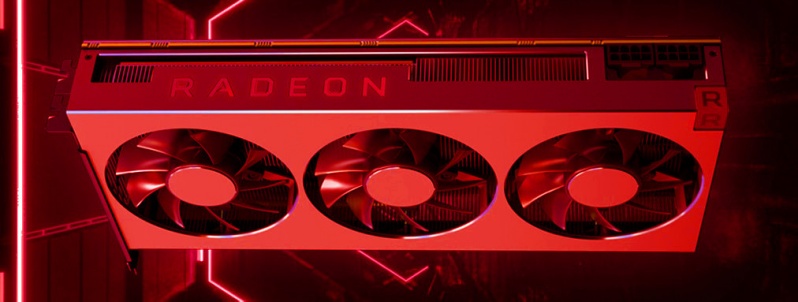
▲Big Navi (or Radeon RX 6000 series) is expected to be launched by the end of the year and may have a so-called “player version”
▲The graphics card war between AMD and NVIDIA is fierce. Both sides have exciting price offensive and defensive battles, and players will naturally enjoy greater discounts.
In addition, the display memory specifications are known to use GDDR 6, which can achieve a transmission speed of 18 Gbps, so the bandwidth should be better than the previous generation product. Coupled with a large enough display memory capacity, perhaps Big Navi will be a competent 4K gaming card. Even if you don’t play games at such a high resolution, you can still use it with a high refresh rate screen:
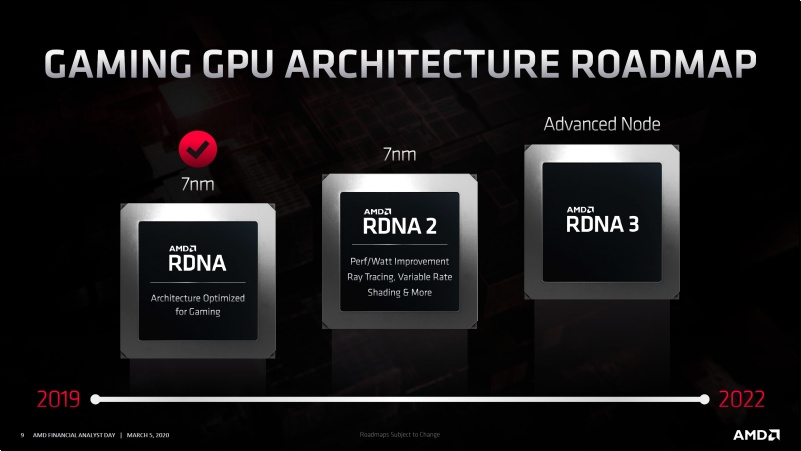
▲With the support of the new process, the new architecture is expected to perform well in terms of performance and price, but players also hope that the AMD driver will not hold back at a critical moment.
Currently, Big Navi will benefit from the new manufacturing process and achieve better growth in performance per watt. The ray tracing function that AMD fans have longed for will also be added to this generation of products. Even if players don’t really care about whether there is support for light chasing, it still has an impact on game console manufacturers. This feature may allow next-generation consoles to uniformly have ray tracing effects, narrowing the gap between the image quality of game consoles and PCs. However, it may be similar to the NVIDIA Turing architecture, where only mid-to-high-end graphics cards can support this effect. The actual situation remains to be verified.
Pictures and sources:wccftech
Source: KOCPC Chinese