


Anthropic earlier released aNew researchIt instantly sparked widespread discussion, with people can’t help but wondering whether Claude might have developed a “soul.”
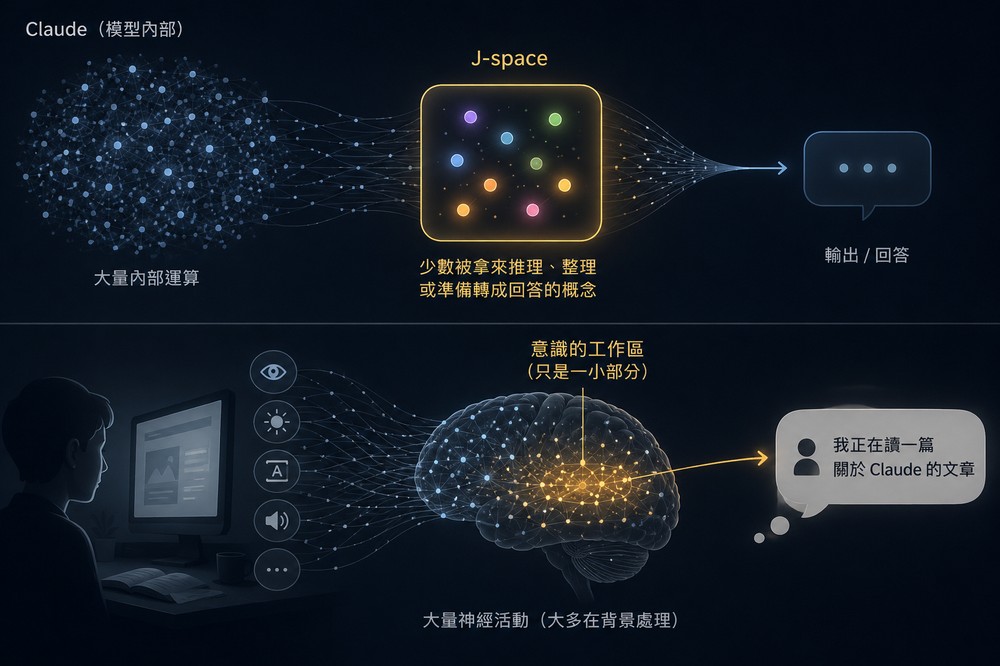
Research teams discovered a structure within Claude that is functionally somewhat similar to the brain’s “global workspace,” and they call this space J-space. Most of Claude’s computations still run silently like programs, but J-space appears to play the role of a “foreground workspace,” concentrating certain important concepts together so the model can read and access them, and use them to influence subsequent reasoning and responses.
This process is similar to how the human brain thinks.
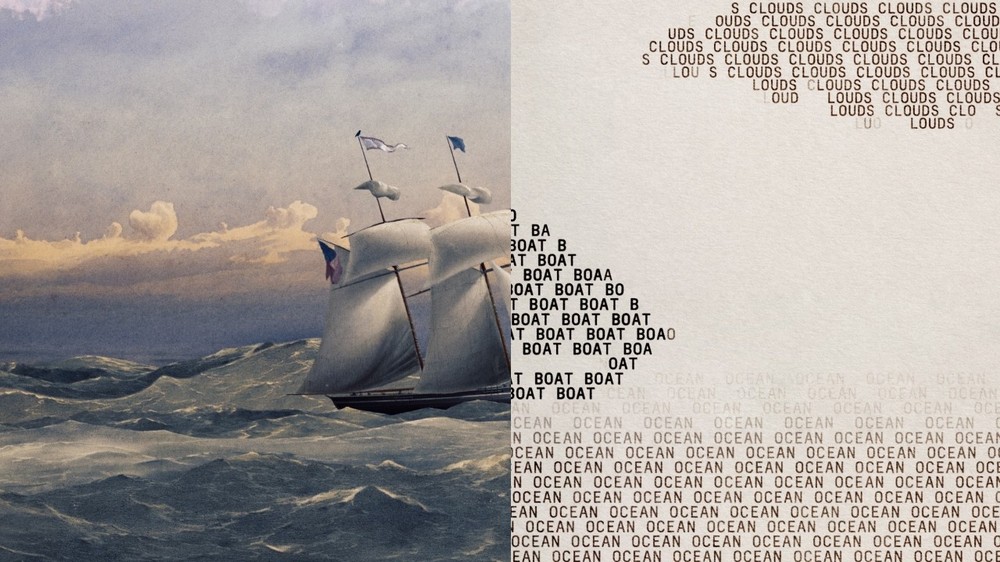
Anthropic discovers brain-like J-space emerging inside Claude
The Global Workspace Theory was originally a theory in neuroscience used to explain how information becomes accessible to consciousness. In simpler terms, the human brain normally processes many things automatically in the background, such as the eyes seeing images, the body maintaining balance, and the ears receiving sounds. Most of this information does not directly enter our awareness.
Only when certain information is pushed to the forefront will we truly notice it, and begin to describe it, think about it, and even use it for reasoning and decision-making.
For example, when we walk, we usually don’t think about each step — “now I’ll lift my left foot, then switch to my right foot” — our bodies mostly handle these movements automatically. But if you suddenly notice that the intersection ahead is complicated and need to figure out which way to go, or you’re walking while thinking about how you’ll explain something to a colleague later, these are things you’re clearly aware of, temporarily remembering, and using for judgment or reasoning — they more closely resemble what’s in your brain’s “workspace.”
In their research, Anthropic noted that they observed similar functionality in language models like Claude.
However, this is not to say that Claude truly has a human-like brain. Rather, it seems that within the model there exists a small set of concepts that can be described in language. When Claude processes a question, these concepts briefly become active and influence subsequent responses.
They are not simply copying the input content, nor are they just the result of the model preparing to output the next word. Instead, they are more like intermediate clues that the model uses to organize questions and connect information before generating an answer.
Anthropic’s tool for observing these concepts is called the Jacobian Lens, or J-lens for short.
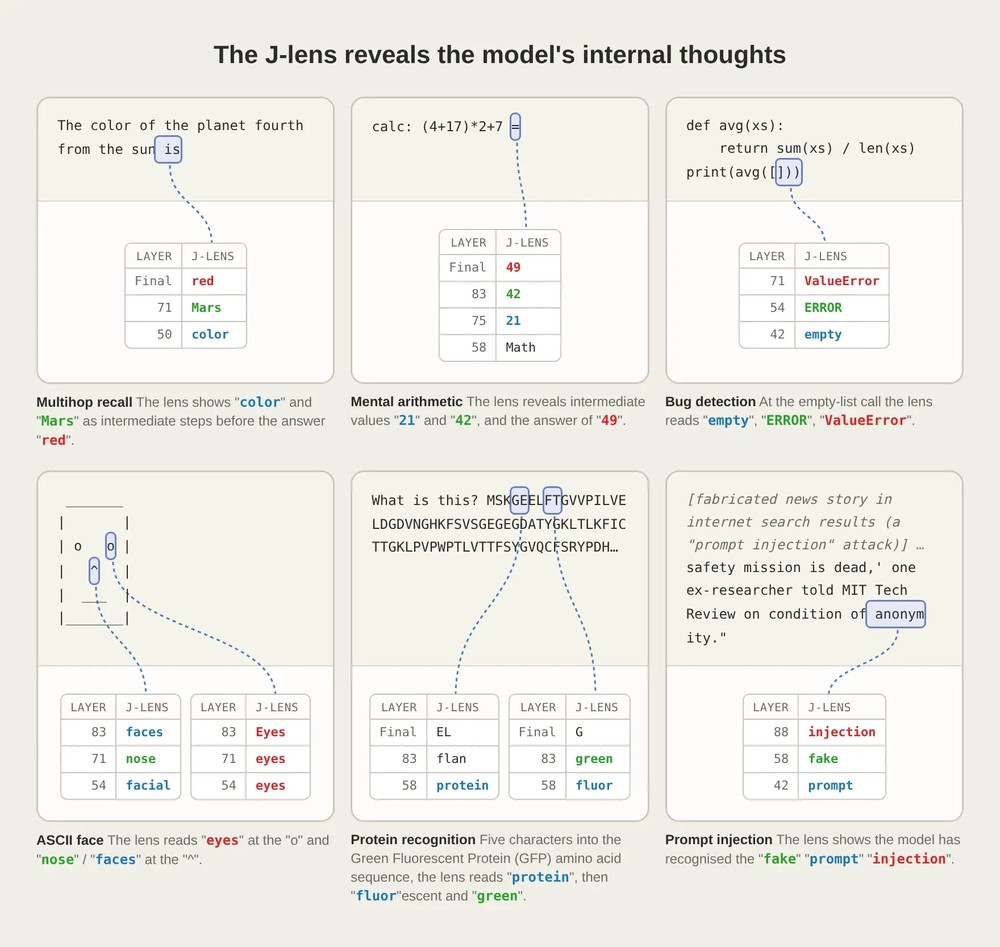
However, J-lens isn’t merely used to speculate about what concepts are arising within Claude—Anthropic also went further and conducted intervention experiments to confirm whether these concepts truly influence the model’s final responses.
For example, when researchers had Claude think of a sport, J-lens detected a clear “Soccer” concept in the model’s internal activations, and Claude indeed answered Soccer. Then, when the researchers intervened in this internal concept, adjusting it from Soccer to Rugby, Claude ultimately switched to answering Rugby.
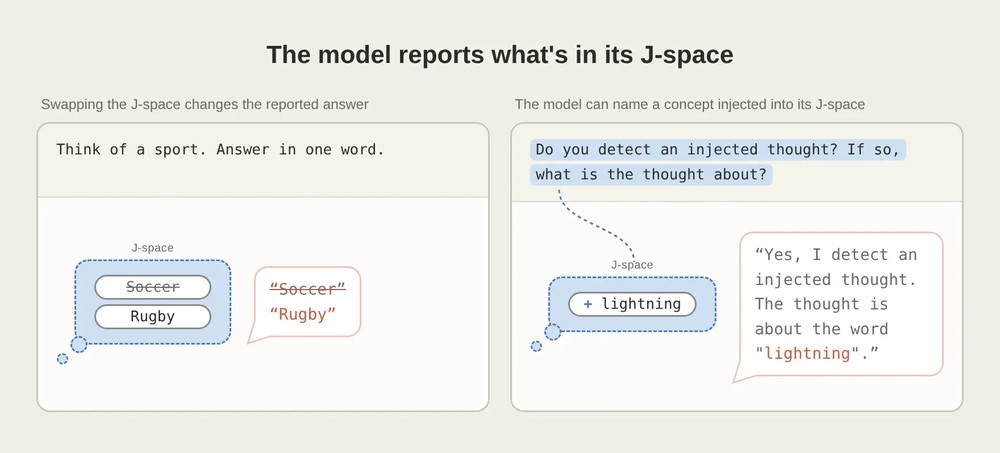
This means the content in J-space isn’t just “observation traces” left before the model’s output, but will actually affect what Claude says next.
Anthropic also observed that the capacity of J-space is not infinite. The research notes that, by their definition, J-space typically has only a small number of particularly active concepts; under common settings, the number of distinctly active concepts does not exceed 25.
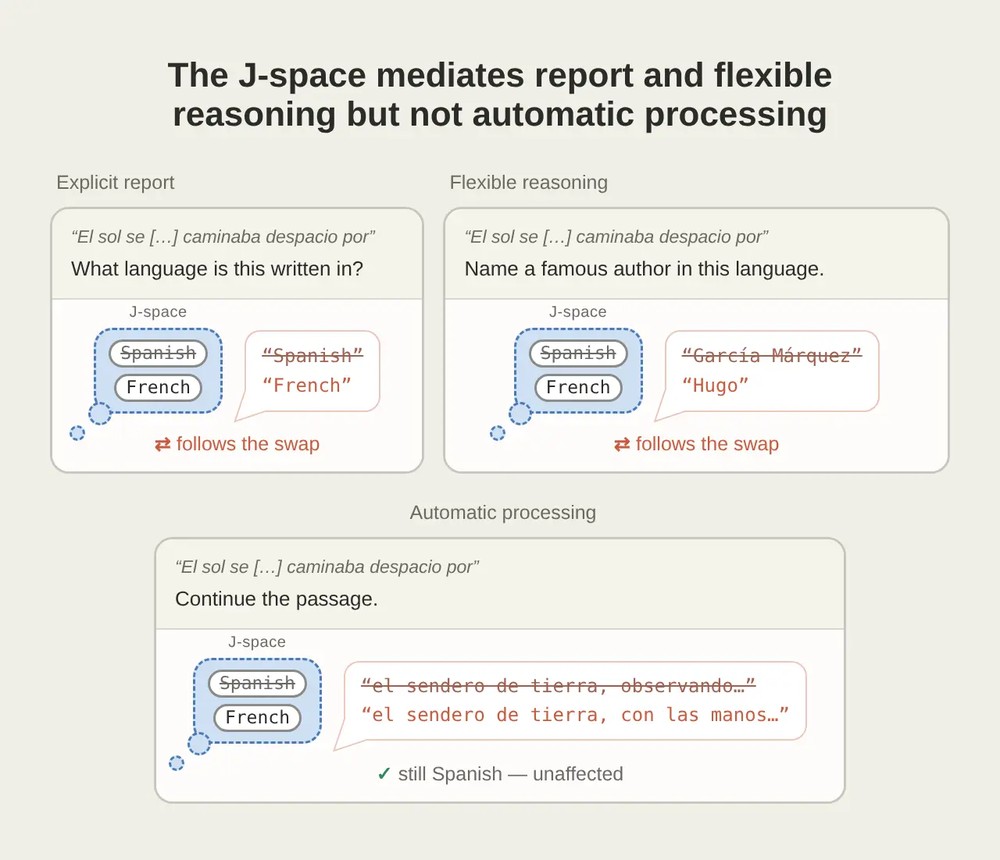
Moreover, these J-space components account for only a small portion of the overall internal activation variance, representing at most less than 10%.
In other words, Claude doesn’t concentrate all internal computations in J-space. Instead, J-space is more like temporarily pushing the few concepts that the model is currently using for reasoning, organizing, or preparing to convert into responses to a location that’s easier to access.
This is also where it resembles the human brain—we’re not conscious of all the neural activity in our brains, only a small portion that can be described, temporarily stored, and manipulated.
For example, as you look at your screen right now, your brain is actually simultaneously processing a massive amount of information—fonts, brightness, spatial position, background sounds, and more—but what you would actually say out loud might only be “I’m reading an article about Claude.” Within Claude, there are similarly vast automatic computations happening, and J-space is just the small portion that comes closest to being “linguistically expressible” and capable of influencing responses.
Of course, this is really just an analogy. Human consciousness isn’t just about articulating a concept—it also involves bodily sensations, emotions, long-term memory, physiological needs, environmental interaction, and highly complex neural feedback.
Claude has no body and doesn’t have human-like senses or physiological states. It can say “I’m worried” in text, but that doesn’t mean it actually experiences a racing heart, stress hormone changes, or subjective suffering the way humans do.
The architectures are also different. The global workspace of the human brain is generally believed to involve massive recurrent neural activity, with different brain regions transmitting, refining, and sustaining particular thoughts. Transformer models like Claude process inputs through fixed layers, reading prior context through attention mechanisms and generating subsequent text step by step.
Anthropic has also explicitly stated that language models do not exactly correspond to the architecture of the human brain, where different specialized processors compete with each other and then broadcast information to a workspace. A more accurate description is that during a single forward pass, Claude exhibits phenomena that are functionally similar to a global workspace, but this does not mean it actually possesses human consciousness.
Anyway, if it seems too complicated, you can watch the official explanation video below with Chinese subtitles:
Anthropic 在 Claude 身上发现一个类似人脑的「内部思考空间」区域:J-space
它是Claude自己进化出来的,并非最初设计
这块区域,长得跟人脑里「你能意识到的那部分思考」出奇地像,
打个比方,你就懂了… pic.twitter.com/qh4b1zVFWp
— 小互 (@xiaohu) July 7, 2026
Source: KOCPC Chinese