


When European and American consumers are still adapting to Tiktok During Live Shopping, this type of online livestream sales,Chinalive streaminge-commerceA quiet milestone has been reached. Imagine this: it’s 3 AM, you open the Taobao app on your phone, and the livestream host on screen is still full of energy, introducing the latest smartphone to you. She doesn’t get tired, doesn’t get thirsty, and doesn’t feel lonely sitting alone in front of the camera late at night: because she’s not a person at all but rather a “AI digital human」(Virtual streamer). This is not a sci-fi plot, but an industrial transformation that is beginning to happen in China and around the world.
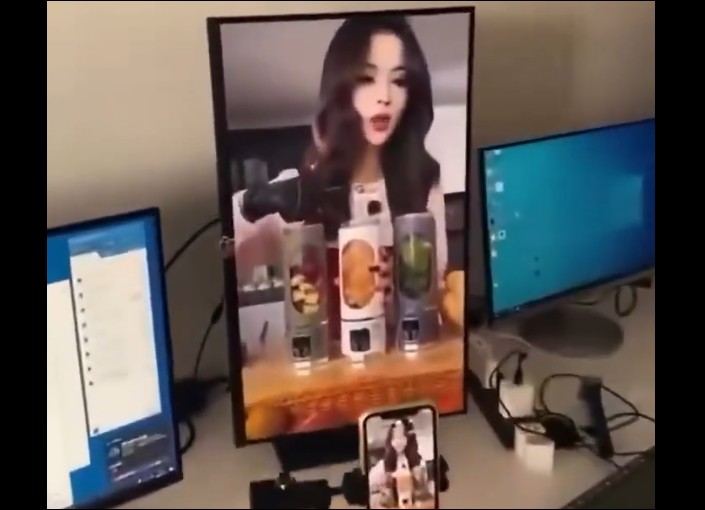
China’s Latest AI Digital Human Tech Unveiled: Simply “Holding Products” Enables Automatic 24/7 Sales
On social platform X, digital marketing expert Charly Wargnier observed this trend and directly stated: “Yep, it’s happening. Chinese AI avatars now sell products 24/7 on livestreams.” This post quickly attracted over 50,000 views, sparking heated discussions among netizens worldwide. From Chinese domestic brands to international internet celebrities, an AI-driven livestream commerce revolution is reshaping China’s livestream e-commerce market of nearly 5 trillion RMB.
Yep, it’s happening.
Chinese AI avatars now sell products 24/7 on livestreamspic.twitter.com/Y2QXLqjYzS
— Charly Wargnier (@DataChaz) February 10, 2026
In this revolution, Shanghai-based marketing company PLTFRM stands as one of the most proactive pioneers. The company currently deploys over thirty AI virtual streamers across major e-commerce platforms such as Taobao and Pinduoduo. These digital streamers are not traditional pre-recorded videos, but interactive AI systems capable of responding to viewer questions in real-time and flexibly adjusting their pitch. PLTFRM’s technical architecture combines Baidu AI video generation technology with the DeepSeek large language model, enabling virtual streamers to interact with consumers using natural tones and near-human facial expressions, completely breaking away from the past limitation of live streaming relying solely on rotating human hosts.
More convincing are the actual performance figures. When global office equipment brand Brother integrated PLTFRM’s AI virtual streamer, it generated $2,500 in sales within the first two hours, with overall performance improving 30% compared to traditional methods. PLTFRM co-founder Alexandre Ouairy highlighted the key factor: “Human salespeople experience fatigue that affects performance, while AI maintains consistent quality.” This “hybrid human-machine model” has become the dominant approach in China’s industry: real salespeople livestream during prime hours for three to four hours, and once the audience disperses, AI virtual streamers seamlessly take over, extending the livestream’s momentum late into the night, even running continuously across multiple days.
Luo Yonghao’s AI Digital Avatar: 26 Minutes Surpassing One Hour of Human Performance
If PLTFRM represents an accessible solution for small and medium-sized brands, then Luo Yonghao’s collaboration with Baidu E-commerce showcases the pinnacle potential of this technology. In June 2025, Luo Yonghao, the tech celebrity known for his “Smartisan” phones, partnered with Baidu E-commerce to launch an AI digital human livestream (i.e., “virtual streamer”). This six-hour livestream set staggering records: over 13 million viewers, with GMV (gross merchandise volume) exceeding 55 million RMB, approximately 240 million TWD. Even more astonishing, within just 26 minutes of going live, the AI Luo Yonghao’s sales had already surpassed the real Luo Yonghao’s one-hour sales revenue.
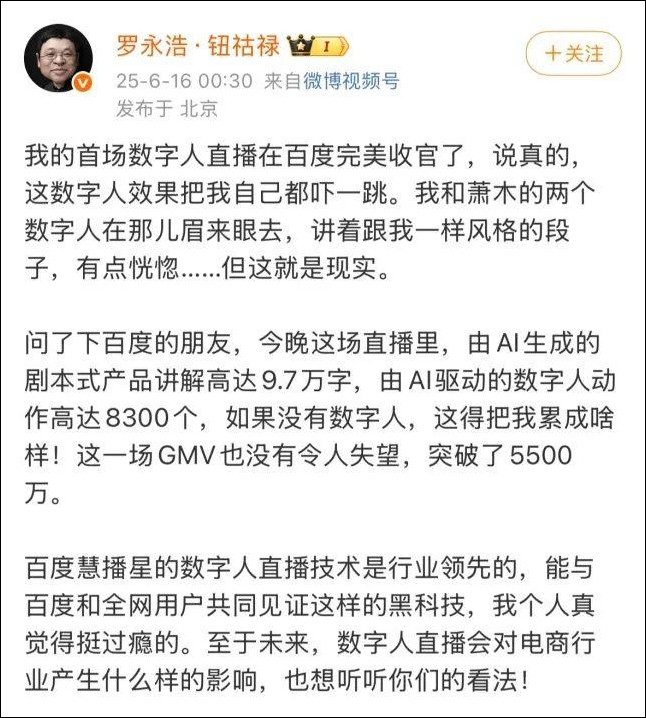
The technical backbone of this livestream comes from Baidu’s “Huibo Xing” platform, which leverages the ERNIE 4.5 large model to instantly generate up to 97,000 words of livestream scripts and drive over 8,300 action and expression combinations. In other words, this is not a rigid system that merely reads scripts, but an intelligent entity capable of dynamically adjusting sales strategies based on real-time sales data, viewer chat sentiment, and inventory levels. When a product sells out, the AI immediately switches to the next compelling option; when viewers raise pointed questions, it can call upon its knowledge base to provide professional responses. This speed of reaction and information processing capability is unattainable for any human livestream host.
Recently, an evolved version of this type of AI livestreaming has already emerged on the X platform. The host doesn’t even need to speak— they just hold an item and make gestures in front of the camera, and the AI digital persona in the livestream automatically delivers the sales pitch. Anyone can step in as an AI digital sales host without any preparation (though it seems like even that person might not be necessary, possibly just used as initial livestream material).
中国のライブコマースは、さらに進化している。
販売員は商品を手に持つだけで、あとはAIが口の動きや表情、トーク内容までリアルタイムで生成・制御する。
ライブ配信者は、商品を持って立っているだけで成立する時代になった。… pic.twitter.com/KZveAl2d42
— 荒井健一 AK (@aarai666) February 10, 2026
Khaby Lame’s China Push: The AI Clone Strategy of an International Influencer
This AI livestream revolution is now preparing to expand beyond China. In February 2026, Khaby Lame, the world’s hottest TikTok star with 160 million followers, announced an all-stock deal worth nearly $1 billion with China’s Three Little Lambs Group.Transaction AgreementThis Chinese company plans to use AI technology to create a virtual avatar of Khaby Lame, targeting the US, Middle East, and Southeast Asia markets.
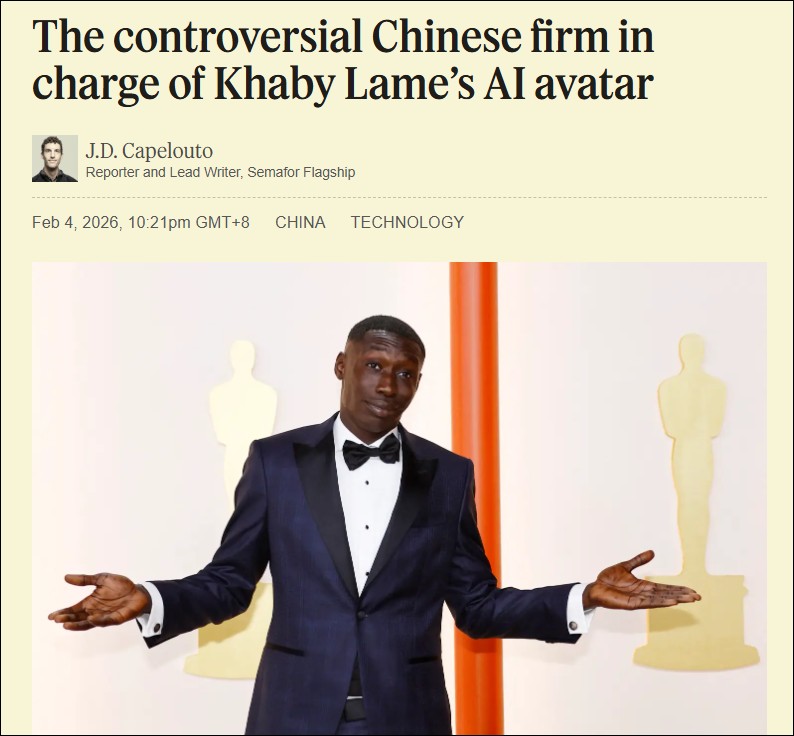
The “Three Sheep” group may be unfamiliar to many, but when it comes to its leader “Crazy Little Yang Brother,” almost everyone in China knows him. This Douyin super influencer ranked fourth in the 2024 China Influencer Impact Ranking, with astonishing e-commerce abilities. However, Three Sheep’s business empire has also come with controversies—the company was fined $10 million for selling counterfeit mooncakes, yet has now become a partner in international influencer AI cloning, showcasing remarkable business acumen.
Regulatory Challenges in the Trillion-Dollar Market: Bringing AI Anchors Under Legal Framework
According to Statista data, one-third of China’s e-commerce sales in 2024 came from live-stream shopping. The overall live-stream e-commerce market approached 5 trillion RMB in 2023, projected to grow to 8.16 trillion RMB by 2026. In 2025, the Chinese government included AI virtual hosts in its live-stream e-commerce regulatory framework for the first time. Consumers have the right to know whether they are interacting with a real person or AI, and product recommendations from virtual hosts must comply with advertising regulations. However, no other country currently has similar laws in place.
Implications for Taiwan: Opportunities and Warning Signs
This AI live streaming revolution is both a wake-up call and a potential opportunity for Taiwan’s e-commerce ecosystem. While Chinese businesses have fully embraced AI for 24/7 uninterrupted sales streaming, most Taiwanese e-commerce platforms still cling to the traditional model of “human live streaming during the day, pause at night.” However, Taiwan still has unique advantages in semiconductor design, consumer electronics, and creative content industries, and could potentially develop differentiated AI streamers with Taiwan-specific localization (though personally, I’d love to find streamers like that to shop from). At 3 AM, AI streamers on Taobao, Xiaohongshu, or Facebook are still online, smiling and introducing products. They don’t get tired, they don’t complain, and they don’t feel lonely from lack of audience interaction: because they were never designed to feel anything in the first place. It’s a technological marvel, and the greatest irony of this era.
Source: KOCPC Chinese