


AMD has achieved considerable success with its Ryzen 3000 series processors in the past few months. Whether it is price or performance, it can compete with Intel or even take advantage of it. This situation is obviously very beneficial to AMD. In order to avoid further suppressing its opponents and allowing itself to win too much, AMD has recently announced in a low-key manner that it will postpone the Zen 3 processor to 2021. It is certain that no new processor will be released within this year:

▲AMD will not launch Zen 3 processors this year. It seems that people who want to switch to AMD platforms will have to wait, or they will have to buy Zen 2 first (Image source)
according to Digitimes The report pointed out that although Intel’s desktop processor product Comet Lake (Core i 10000 series) launched in May this year, although it strives to prevent the invasion of opponents, the opponent’s products still have excellent performance and amazing cost-effectiveness and have won the praise and job-hopping of many players.
AMD platform configurations have also been common in computer assembly menus in recent months. Even if the Intel processor assembly menu is offered, netizens can easily be persuaded to change to the AMD menu to achieve greater cost performance. It is enough to show that the AMD processor platform has been very popular recently. Not only is the price and performance above the standard, even the opinion leaders on the Internet almost all recommend the AMD platform.
AMD Yes, what about Intel?
Of course, this phenomenon naturally causes Intel to suffer a lot. Even though Intel still dominates the truly profitable notebook and package computer markets, laptops and package computers using AMD platforms have begun to gradually erode the market share held by Intel platforms. These phenomena naturally caused Intel to suffer a lot of losses.
Although Intel is expected to launch the Rocket Lake processor platform that maintains the 14nm process by the end of the year, and next year will launch the Alder Lake, a new series of desktop processors with a 10nm process, it still lags behind the AMD Ryzen 3000 series, which is currently using a 7nm process. None of this is good news for Intel:

▲Zen 3 is actually delayed for six months to compete with Intel’s Alder Lake (if there is one).Image source)
AMD’s current sales have enabled related motherboard, packaged host or server manufacturers to make good profits. The launch of the “Zen 3” Ryzen 4000 series processors using the 7nm EUV process may not need to be so urgent. In addition, this year’s Computex 2020 is confirmed to be suspended due to the epidemic, and if Intel cannot bring the processor process below 10nm in the short term, it may be a good idea to launch a new architecture processor at the CES 2021 conference early next year.
Of course, by that time, AMD may no longer use the 7nm EUV process, but may advance to the 5nm EUV process:
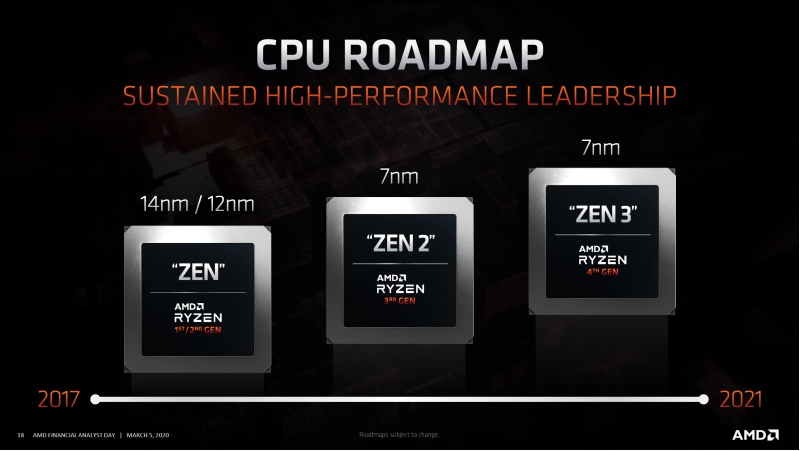
▲According to current progress, Zen 3 should maintain the 7nm EUV process, but if the launch is delayed, it may jump to the 5nm EUV process (Image source)
Update: AMD refutes delay claims, stressing that Zen 3 will indeed launch in 2020. As for the actual release time and processor-related information, the information has not yet been made public. The so-called delay in launching in 2021 is purely conjecture and absolutely untrue.
Source: KOCPC Chinese