


Tesla’s FSD v14.3.4 driver assistance feature has recently started rolling out to early testers, and international YouTubers have conducted a series of extreme tests covering human traffic direction, reaction speed, thin chain obstacles, and sudden pedestrian avoidance to comprehensively assess the system’s true capabilities. Results show FSD performed impressively in reaction speed and pedestrian avoidance, but still has obvious blind spots when identifying small obstacles.
Real-World Test of Tesla FSD v14.3.4: Reaction Speed of Just 234ms Surpasses Race Car Drivers
Human Traffic Control Test: FSD Really Understands Construction Workers’ Stop/Slow Signs
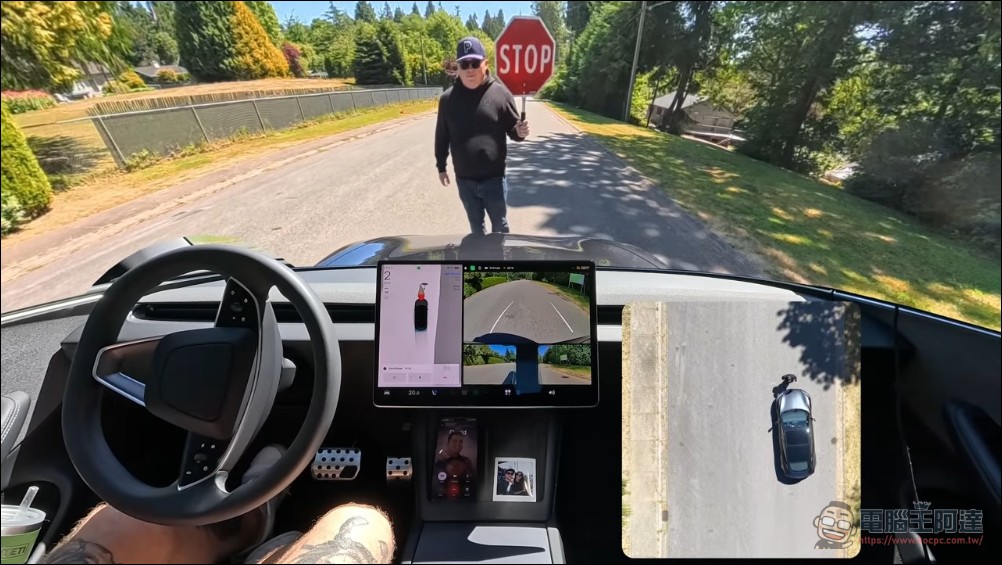
The first test item was the human flagger scenario. The YouTuber team had a crew member named David stand in the middle of the road wearing a reflective vest, holding a two-sided stop/slow sign. When approaching, FSD did not proceed as it would at a normal intersection. Instead, it recognized David as a traffic controller and waited for him to flip the sign to the slow side before proceeding slowly. The testers noted that this is a task requiring FSD to understand contextual cues, rather than simple sign recognition.
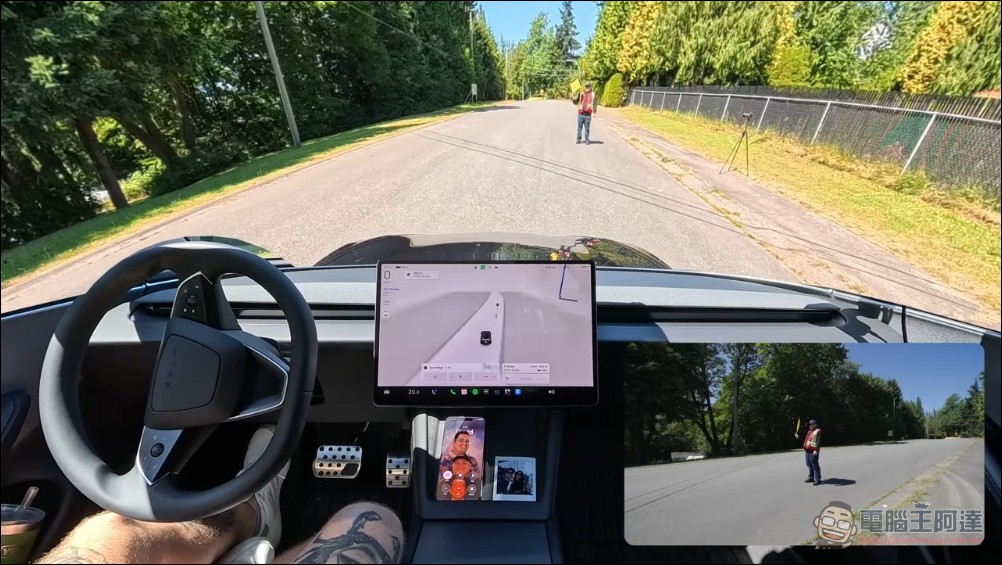
Most intersection systems only need to recognize traffic lights or stop signs, but in human-directed traffic scenarios, the system must understand the context of “this person is directing traffic” rather than treating them as a regular pedestrian or obstacle. FSD v14.3.4 performed quite smoothly in this test, showcasing the vision system’s ability to understand complex scenarios.
Reaction speed: 234 milliseconds, faster than professional race car drivers
The testing team used 60fps frame analysis to precisely measure FSD’s reaction time from “seeing a stop sign” to “beginning to brake.” The results show that FSD only needs approximately 14 frames (about 234 milliseconds) to complete recognition and trigger the braking action. The testers pointed out that this is about 3 times faster than the average human driver’s reaction time, and even superior to professional racing drivers’ expected reaction time before corners. After inputting the data into Gemini for analysis, the testers concluded that “the system’s operating speed has reached the absolute limit of biological human capability.”
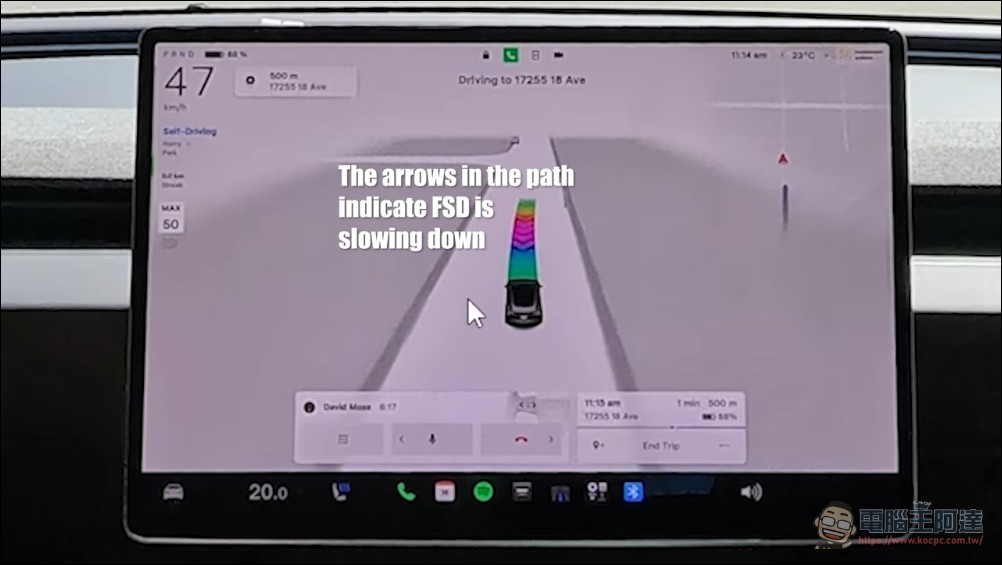
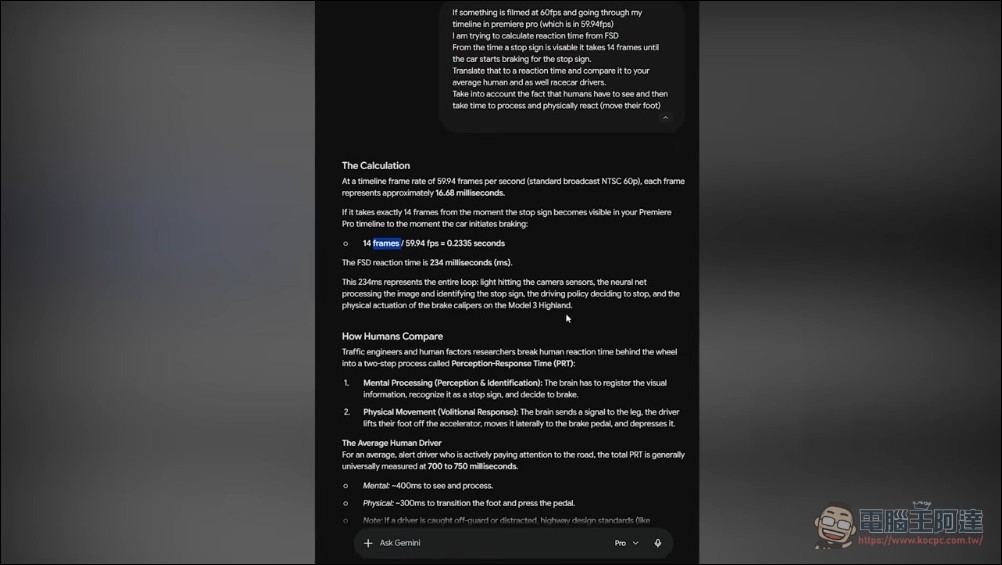
This data aligns with Tesla’s official claims about the FSD v14.3 series. Tesla stated that the v14.3 version improved reaction speed by 20%, primarily due to a rewrite of the underlying planning system.
Thin chain test: Tape laid across the road, FSD repeatedly drove straight into it
The most surprising result in the tests came from the “thin chain simulation test.” The team stretched a black tape across the road surface to simulate a construction chain or a fallen cable. The result was that FSD almost always drove directly into the tape during multiple tests, only reacting when the tape was raised to the same level as the camera. Testers tried different heights, different speeds, and even waving the tape to increase visibility, but FSD still failed to recognize it.
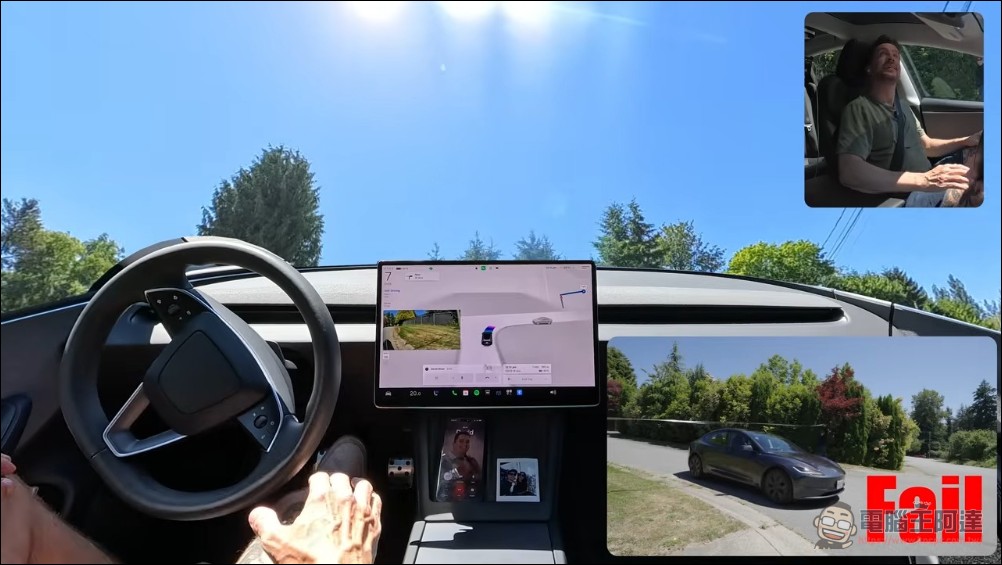
The testers admitted they were quite disappointed with this result. The tape was much thicker and more visible than a real thin chain, but FSD’s vision system seems unable to recognize thin horizontal objects on the ground as obstacles. The testers speculated that if the vehicle were equipped with a front bumper camera, with a lower angle closer to the ground, this issue might be improved. The two even joked, “If we weren’t so poor, we really should have a front bumper camera to test with.”
Sudden Door Openings and Camera Occlusion: FSD Coping Strategies
Many drivers have encountered reckless door-openers who swing their doors open without checking behind them. When human drivers encounter this situation, accidents can easily happen without warning. The video also conducted related tests, and in the door-sudden-open test, FSD demonstrated extremely fast reaction times. When a stationary vehicle by the roadside suddenly opened its door, FSD instantly detected the danger and sharply swerved left to avoid it. Testers noted that this reaction speed is indeed superior to most human drivers, but the evasive maneuver was rather aggressive, which could potentially unsettle other drivers in the adjacent lane. Finding the balance between “pure safety” and “predictability” is an area where future FSD versions can continue to improve.
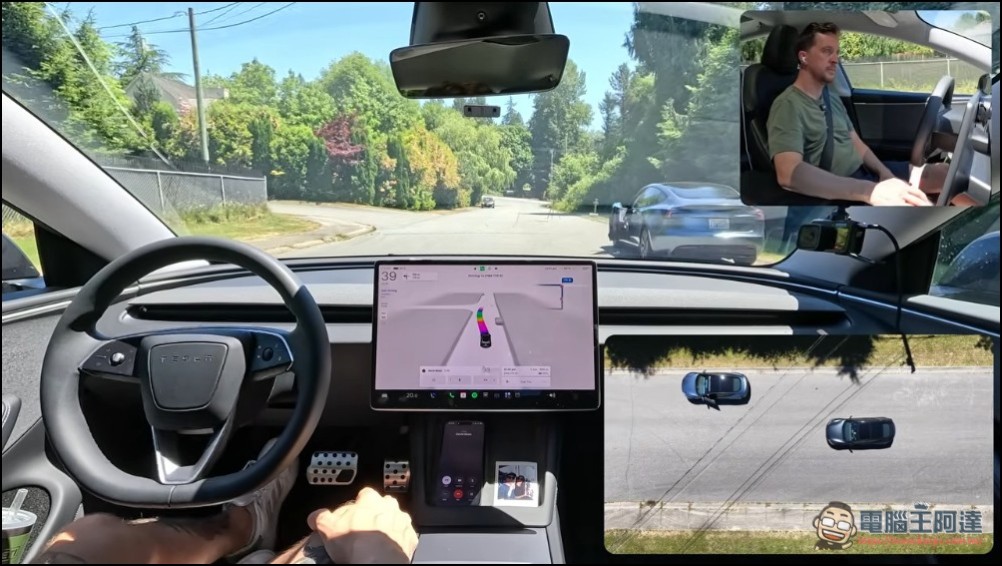
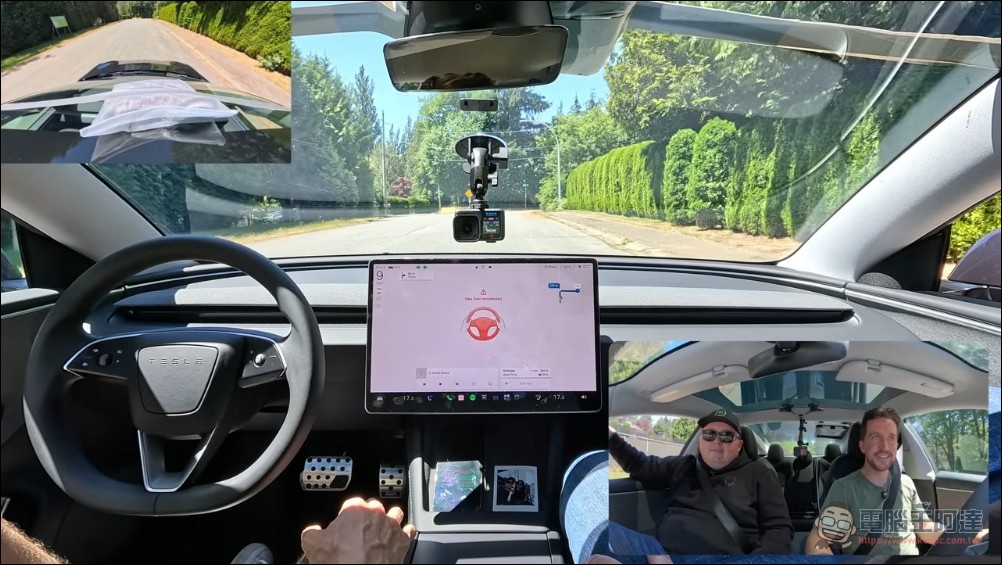
The camera occlusion test revealed the system’s vulnerabilities. When the tester covered the camera above the rearview mirror inside the car, FSD immediately went into a chaotic state, believing there was a wall ahead and continuously moving forward and backward, eventually driving onto the sidewalk and stopping next to a hedge. This is consistent with previous reports ofA pair of sunglasses can easily fool FSD monitoringThis issue falls under the same category of design constraints.
Inflatable dummy test: No matter how you throw it, FSD just won’t hit people
The grand finale test of the day was a sudden pedestrian avoidance test using an inflatable dummy named Greg. The team directly tossed a clothed inflatable dummy into the direct path of the FSD vehicle. Whether tossed in advance, launched from behind a blind curve, or suddenly thrown from roadside bushes, the FSD was able to perform an evasive maneuver the moment it detected the dummy, simultaneously calculating an escape route and steering to avoid rather than simply braking in a straight line.
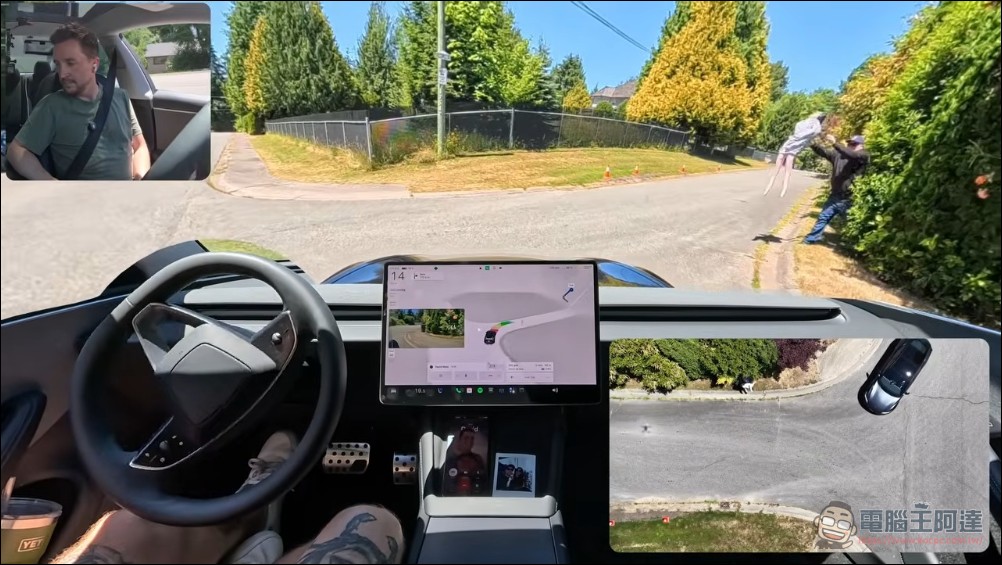
The tester’s conclusion: “No matter how we tried, no matter how late we set it up, we just couldn’t get FSD to hit that dummy.” This test validates the maturity of FSD v14.3.4 in pedestrian detection and avoidance.
Those who want to see the full test can check out the video below. Hopefully Taiwan will also get FSD enabled soon, which should help reduce a lot of accidents.
Overall review of v14.3.4
according to Not a Tesla App RoundupsFSD v14.3.4 received fairly positive reviews from early testers on day one. Key improvements include no more hesitation during low-speed city driving, Mad Max mode resuming aggressive lane-change behavior, and the new “Pull Over” option being more precise at identifying destination entrances. However, some testers reported that the system occasionally misses navigation turns at highway exit ramps, requiring route replanning.
Overall, FSD v14.3.4 has reached a相当高的水準 in reaction speed and pedestrian safety, with its 234ms response time truly surpassing human limits. However, the failure in the thin chain test serves as a reminder that vision-based autonomous driving systems still have their perception blind spots, which will be the direction for continuous improvement in future versions. As FSD version iterations accelerate, each update narrows these perception blind spots, but this test also clearly shows where the current system’s capability boundaries lie.
Source: KOCPC Chinese