


Here’s my recommendation for my most-used eSIM service recently: DJB eSIM. When it comes to traveling abroad, besides your passport and local currency, the most important thing is getting your internet sorted out — otherwise, you can barely do anything and you’ll be cut off from the outside world. As for Japan, the top destination for Taiwanese travelers, there are currently many great ISPs and plans to choose from. So why recommend DJB eSIM? Because it’s affordable, has the most partner carriers, offers dedicated lines, and provides 24/7 live customer service — the list of benefits really goes on and on.

I’ve shared quite a few Japan internet options before, including carrier roaming, choosing a quality eSIM provider, and renting WiFi devices, each with their own pros and cons. Carrier roaming is the most convenient but also the most expensive, plus you can’t enjoy the benefit of voWiFi for making calls abroad at domestic rates. Roaming prepaid cards are cheap but a bit troublesome since you need to reload them every few months. WiFi devices are plug-and-play and convenient, but they need their own power source, and the replacement cost if lost is quite steep. If you only travel abroad occasionally, eSIM is probably the most convenient option currently, since they’re usually instant to set up, offer flexible choices, and are affordable.
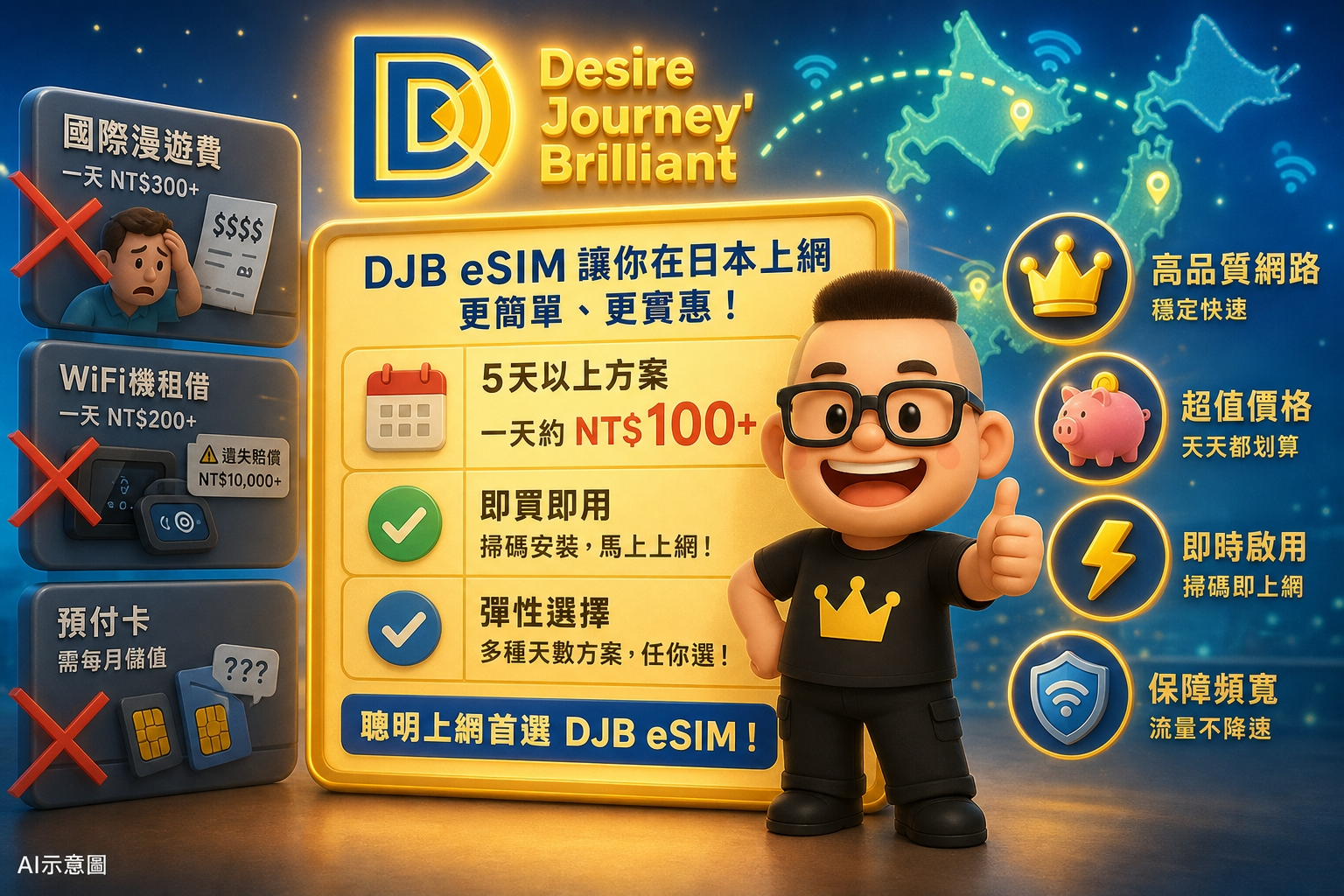
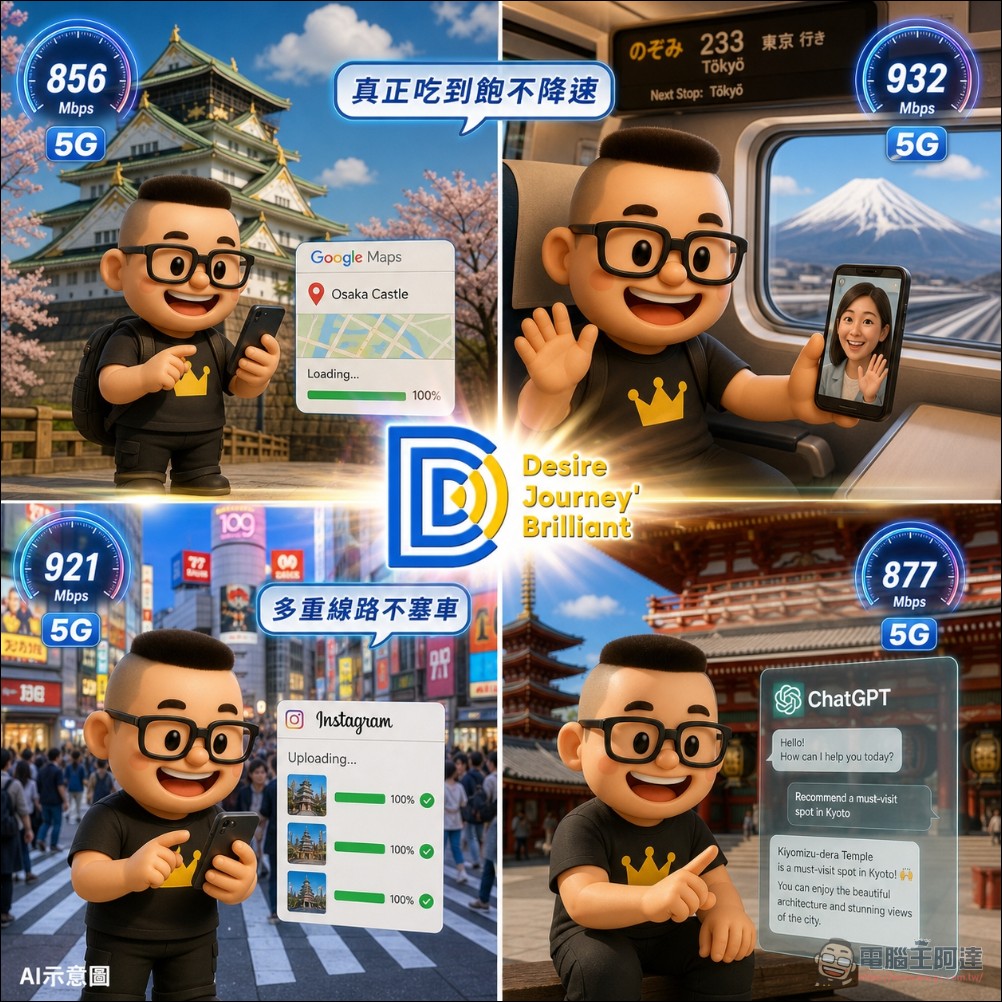
However, eSIM isn’t just about being cheap. When traveling abroad, the biggest concern isn’t how great your speed test results look on an average day—it’s when you actually arrive at your destination, especially in a place like Japan where Taiwanese travelers go all the time. At airports, train stations, shopping districts, and tourist spots, the real question is whether it’ll lag when things get crowded. Whether Google Maps keeps spinning, whether your LINE photos won’t send, or when you urgently need to ask ChatGPT something only to find it’s not working—those are the things that will really make you want to pull your hair out.
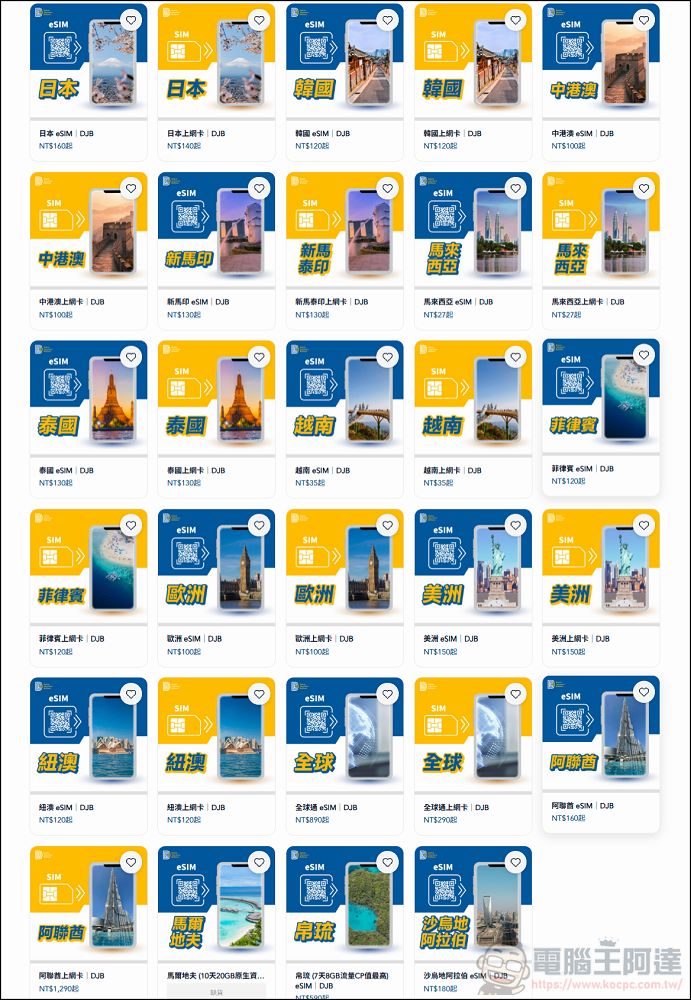
This time in Japan, Ada used DJB’s eSIM service. I’m sure many people have heard of or used their SIM cards before. DJB is different from the typical roaming SIM resellers that most people are familiar with. They’re not just simply buying cards in bulk from others to resell — they function more like a telecom service provider. They have branches in 10 countries worldwide, covering Japan, Korea, Europe, the Americas, the Middle East, Southeast Asia… essentially almost the entire world. If you’re traveling abroad and don’t know where to get internet service, DJB makes it much more convenient. For Japan, the most popular destination for Taiwanese travelers, DJB also holds MVNO and MVNE virtual telecom operator licenses there, and has invested significantly in infrastructure specifically for Japan, including their own lightweight core network.
DJB eSIM Book Here
So when it comes to Japan roaming internet, what makes DJB different from other eSIM providers? Here are the main differences:
- First: DJB has its own core data centers. Currently there are four core data centers worldwide—one in Europe and three in Asia—with approximately 45 directly contracted telecom operators. With so many partners, you don’t have to worry about unsupported destinations or slow network speeds.
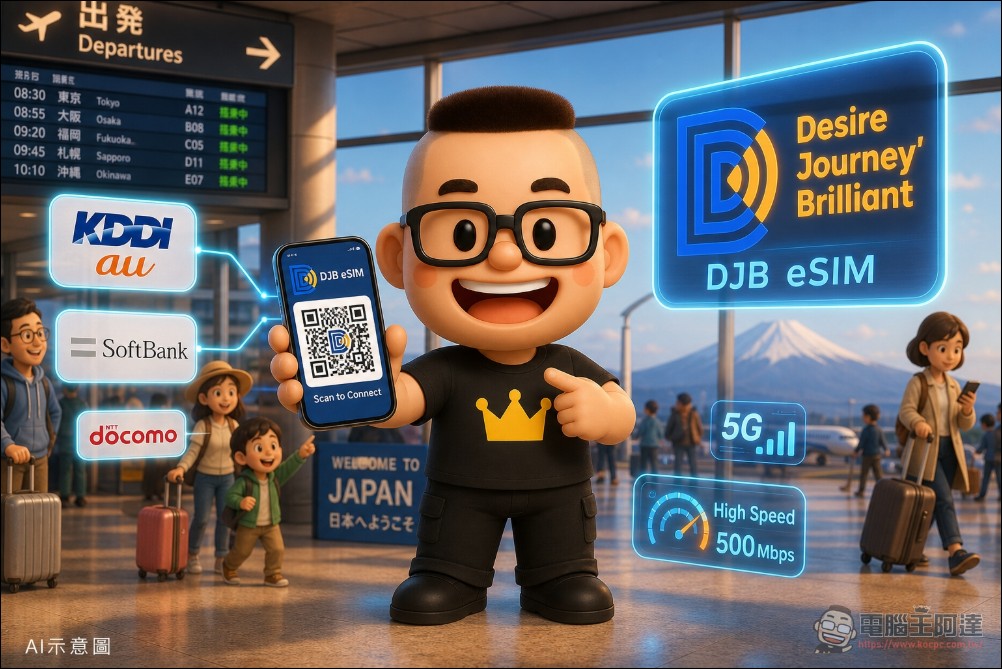
- The second is Japanese network resources: carriers like KDDI, SoftBank, and Docomo that people are more familiar with, all have partnerships and related resources with DJB, and DJB even has direct connections with Docomo’s core network. Unlike some unknown eSIMs or data cards sold on online marketplaces that may be outsourced and resold multiple times, leaving you with no idea which carrier service they’re actually running on—those are basically shady cards that leave you stuck with no recourse when they don’t work at your destination.
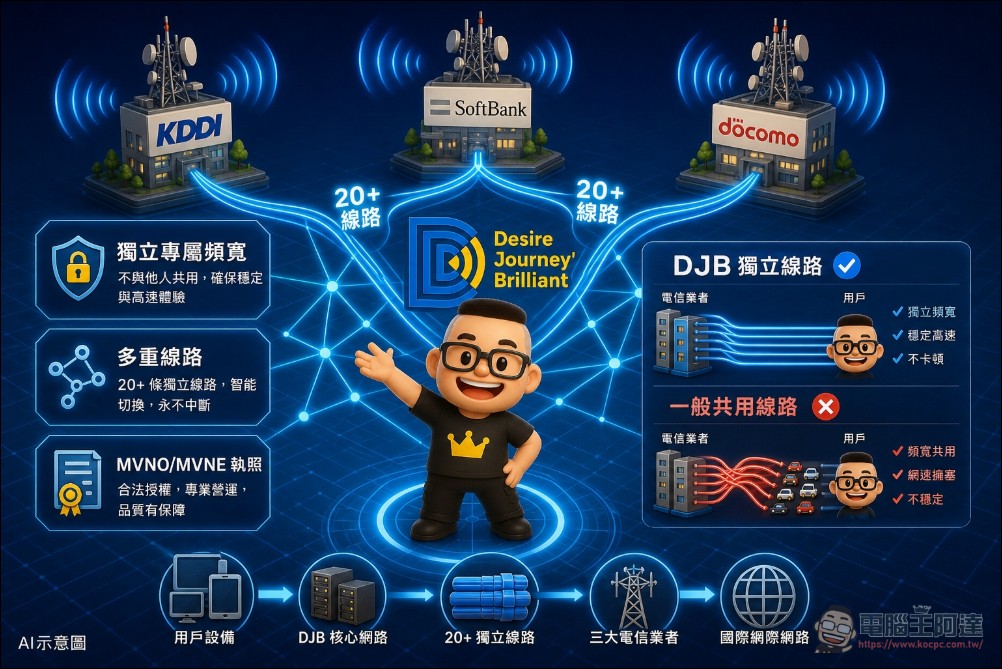
- The third is dedicated guaranteed bandwidth. Simply put, regular carriers’ networks may use shared lines, causing everyone to get congested during peak hours. DJB’s concept is more like having negotiated a certain level of guaranteed bandwidth with the telecom carrier—similar to having a more stable dedicated lane. Of course, this doesn’t mean DJB will never experience slowdown anywhere, since base stations, crowds, weather, and the phone itself can all affect network speed. But at least it’s not completely throwing you into a free-for-all with people all over the world competing for the same network resources, so the “too many mouths, not enough food” situation is less likely to happen.

- Number four is multi-line routing: for Japan, DJB has over 20 lines available for routing, which is more important than many services that simply tout 5G, because 5G doesn’t necessarily mean faster speeds — many times you see 5G displayed on your phone, but in practice it can still be slow (similar to how 5G in Taiwan doesn’t feel much better than 4G right now). The key point of multi-line routing is that if a particular line gets congested at a certain location, during certain hours, or due to heavy traffic, there are other routes available for switching or handling.

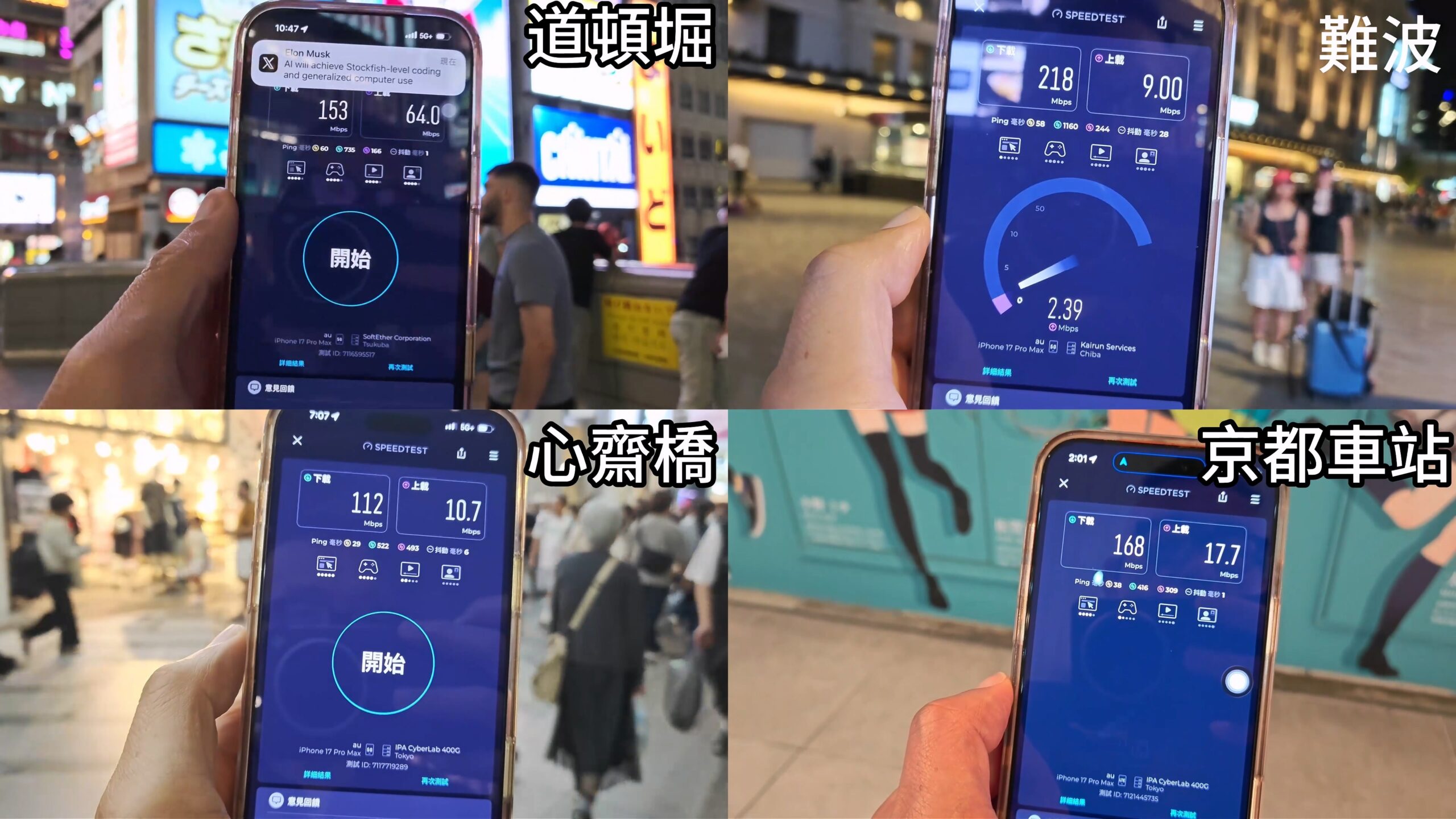
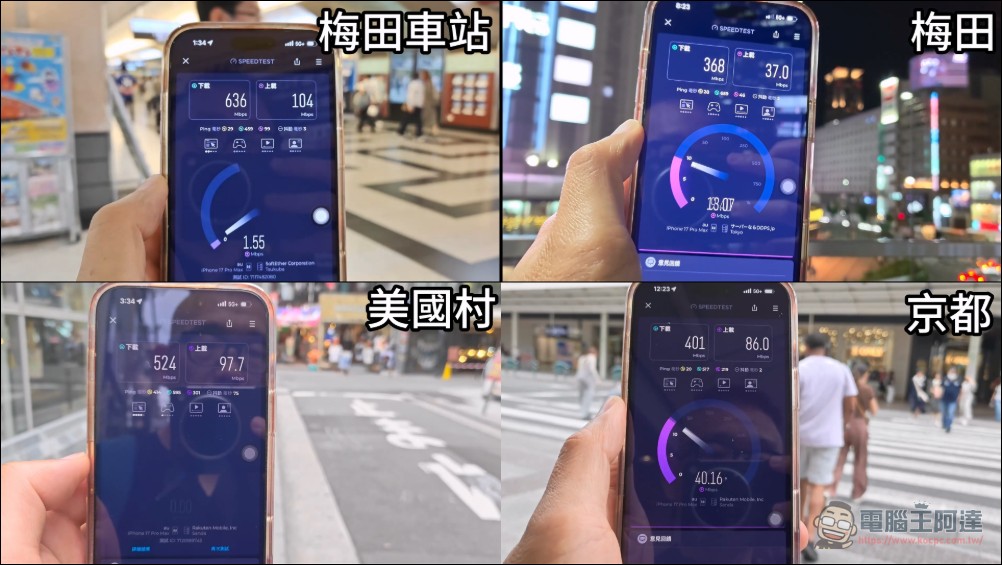
- The fifth one offers truly unlimited data without throttling: DJB’s selling point is that you get exactly what they advertise, no initial speed caps that drop after a certain amount of use. During my trip to Osaka and the wider Kansai area, I tested it extensively and even shared the connection with other devices, but never got throttled once. I’m personally very satisfied with it.
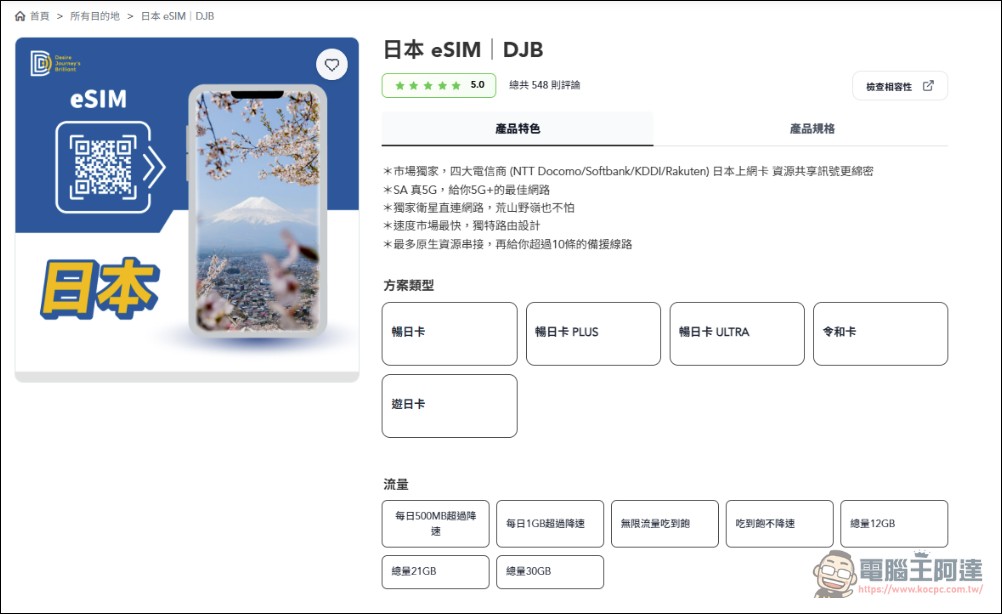
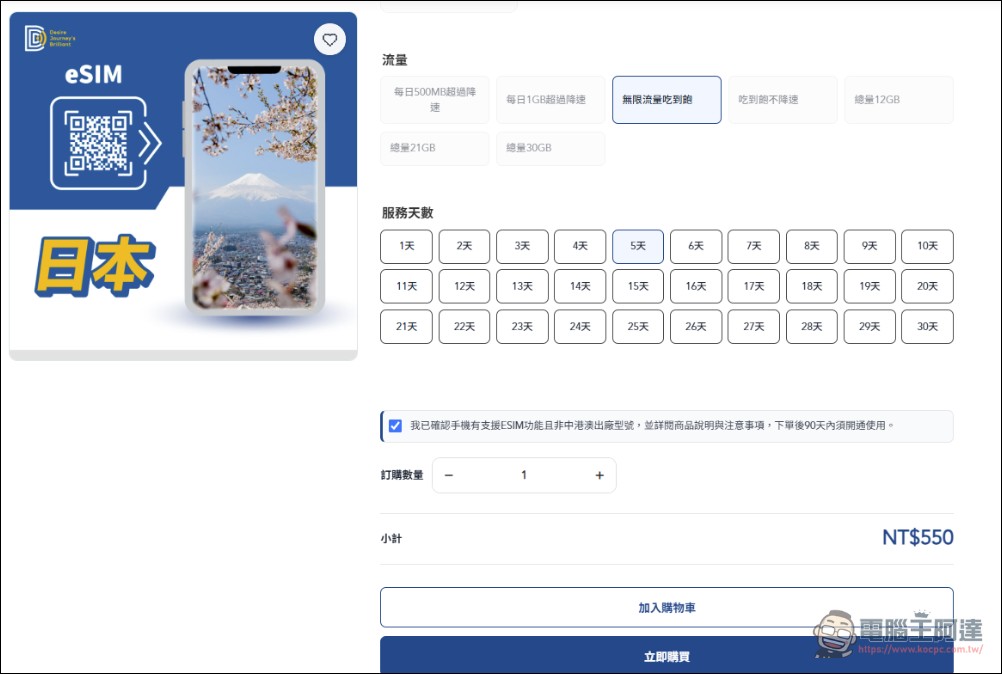
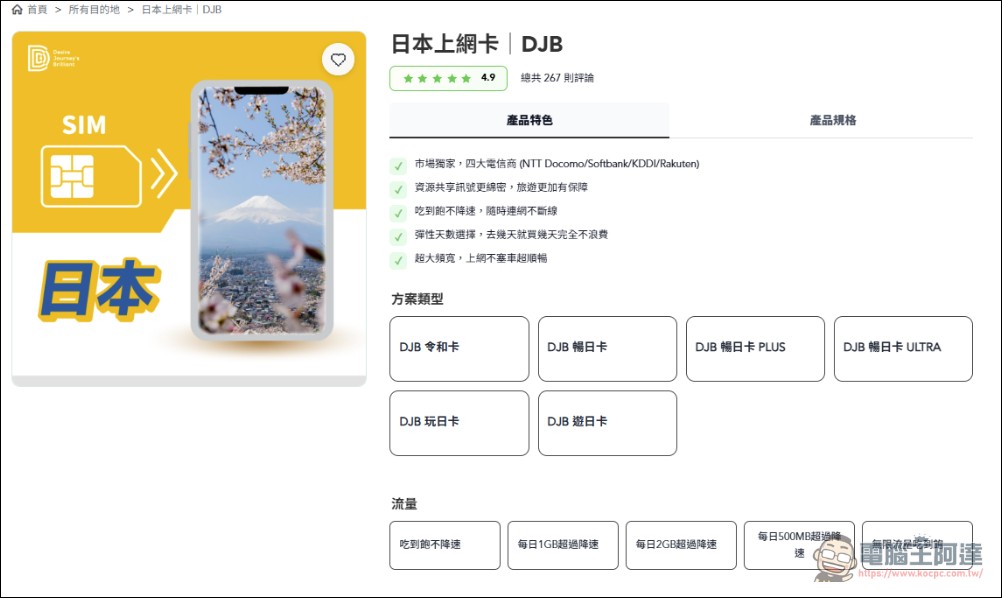
Buying DJB service is super easy – just go to the DJB website and register with your Facebook account or Google email. Then choose between a physical SIM card or eSIM, followed by your country, data plan, and number of days. For most people, the unlimited daily data plan is sufficient – unlimited data (unless you exceed 5GB per day, in which case you should choose PLUS or ULTRA).
Plus, the prices are very affordable. Taking Japan as an example, if you choose a plan of five days or more, it works out to just over a hundred per day—super cheap!
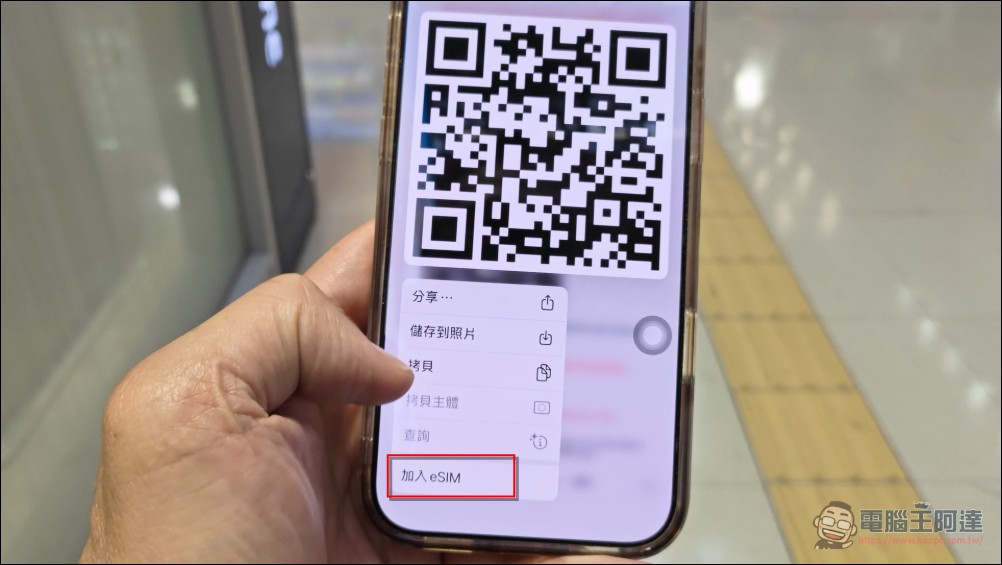
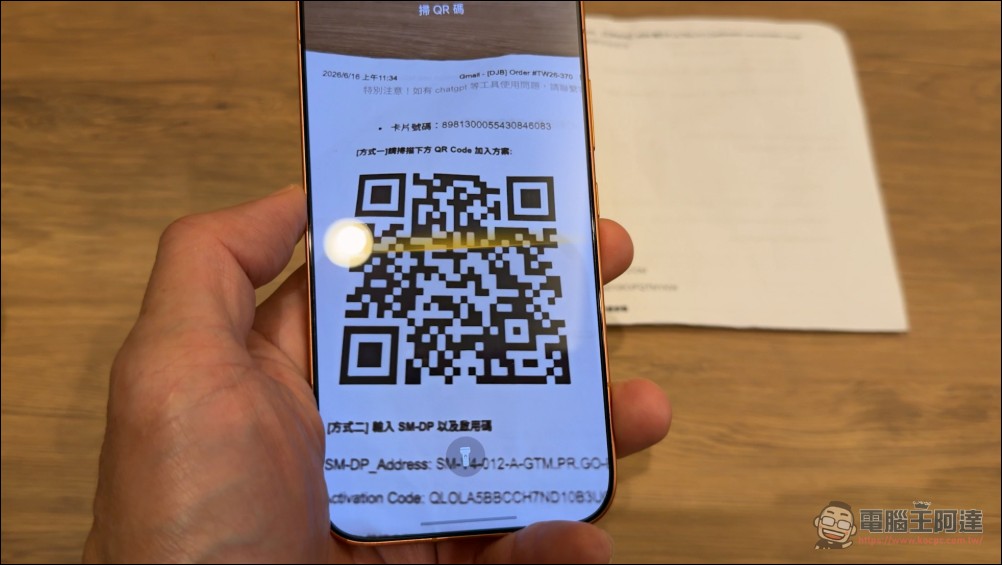
Another great advantage of DJB is that it’s “fast” – even if you forget to buy it before your trip, no problem. You can purchase it on the spot at the airport, and you’ll receive the QR code immediately. Even if you’re abroad, you can take care of it using the airport WiFi first. iPhone users can just long-press the QR code in the email to set it up directly (Android users can use the scanning option). And if your phone doesn’t support it or you’re not sure how to use it, you can always choose a physical SIM card.
The easiest way to test if an eSIM service works well is to try it yourself. Just open Google Maps – if the map keeps spinning in circles, your whole trip will be miserable. There are also social media uploads and video watching to consider, like sharing photos on LINE, posting Instagram Stories, or uploading photos on Facebook or Threads. These are things you’ll be using constantly while traveling. Especially since everyone now takes photos and checks in when they travel – if your uploads keep getting stuck, it’s really frustrating.

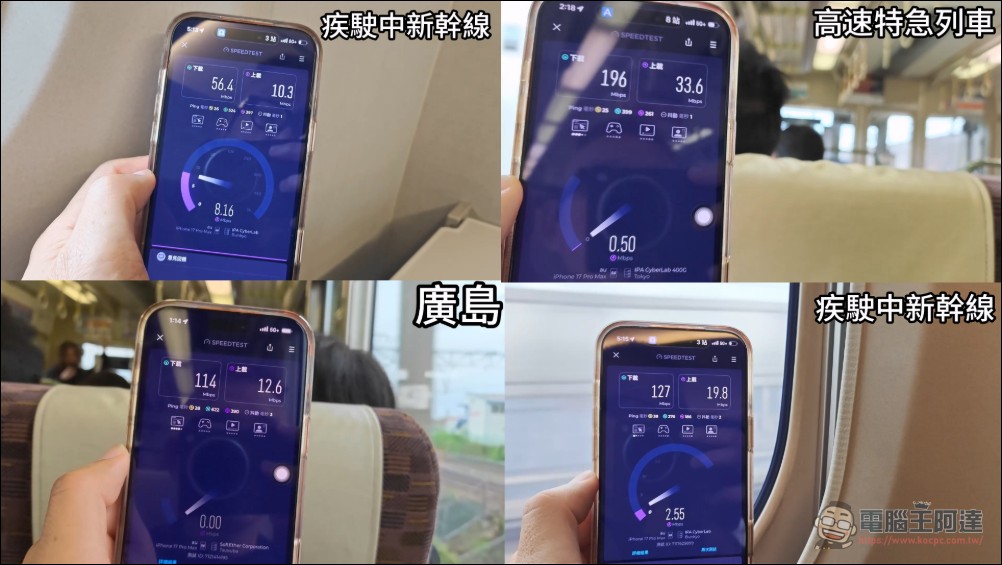
Also, if watching videos isn’t smooth, it can get really boring on long-distance transportation. I tested the internet on the Shinkansen and various other transportation methods this time, and everything worked smoothly. Just a reminder: if you want to watch videos on your phone in Japan, make sure to use Bluetooth earphones so you don’t disturb others.

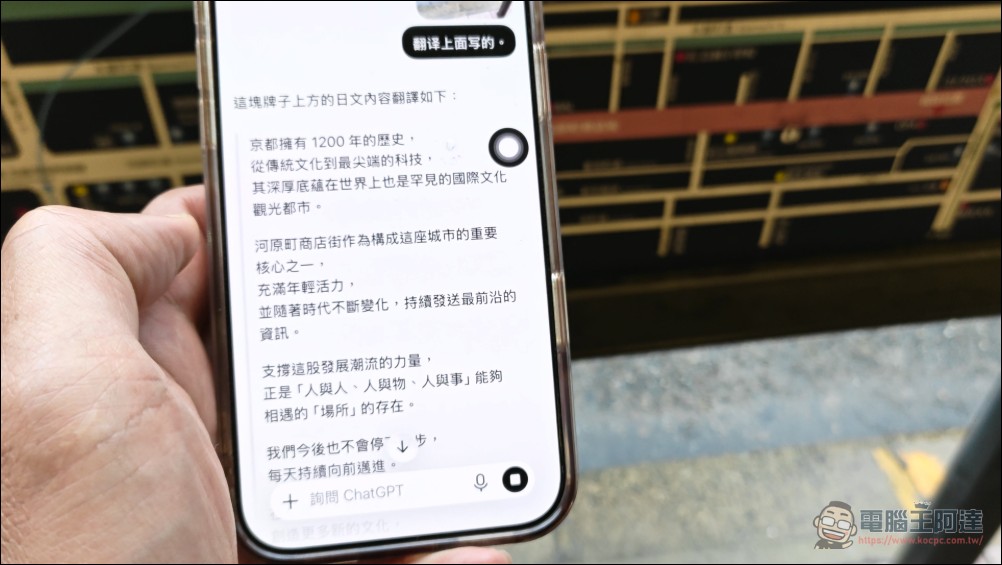
Another important but often overlooked point is AI services. Some cheap SIM cards or roaming plans that route through China/Hong Kong IPs may affect certain AI services due to well-known reasons, causing slower connections, higher latency, or complete incompatibility with some apps. That’s usually why you sometimes see people online complaining that their roaming cards don’t work with ChatGPT and similar AI services when traveling abroad. If you’ll be using Google services, AI tools, translation, or doing research while traveling, pay attention to relevant reviews.
Another thing about DJB that I think is worth mentioning is their 24-hour live customer service. With travel WiFi, you don’t usually think about customer service when everything’s working fine, but when something goes wrong, you want someone to respond immediately. DJB offers 365-day, 24-hour AI and live customer service, and they respond almost instantly — the average wait time is less than two minutes. I personally tested it three times at different hours, and every time I got a live response within one to two minutes.
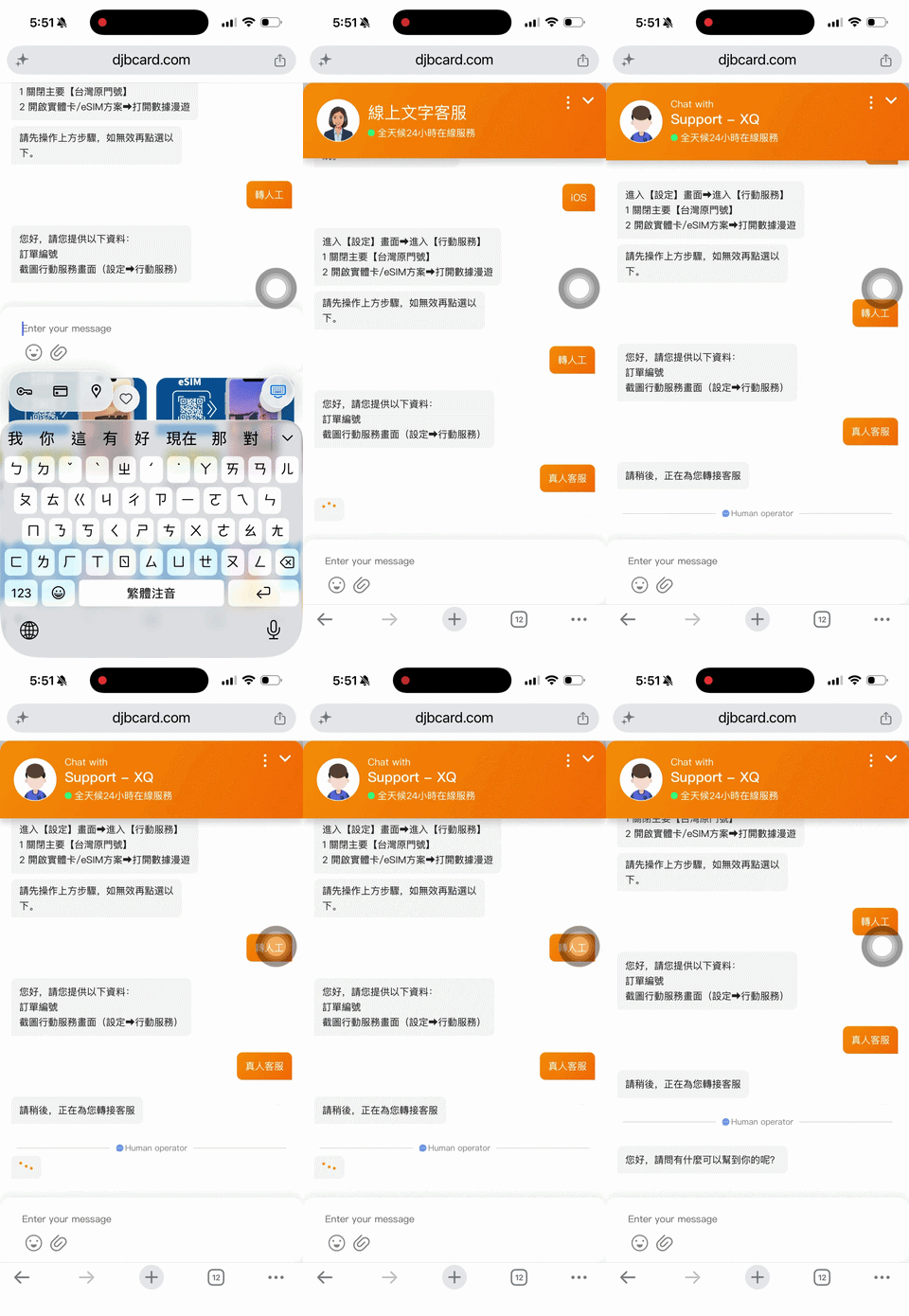
Also, if your phone doesn’t support eSIM, DJB also offers physical SIM cards, with options for home delivery, convenience store pickup, or airport pickup. This is helpful for elderly people or those not familiar with eSIM setup, so they don’t have to force themselves to learn something new. However, keep in mind that eSIM products must be activated within 90 days of purchase. If you don’t add a plan and start using it within 90 days, the eSIM will automatically expire. So don’t buy it too early and forget about it—it’s best to take care of it a while before your trip.
DJB eSIM – Book Here
Ada also documented this trip to Japan and his experience using DJB eSIM in a video. Friends who are interested can check it out:
Finally, if you’re only visiting Japan for a few days and just occasionally use LINE or check maps, then many providers’ data plans could work for you. But if you’re like me and need to work abroad, upload photos and videos, look up information, use Google services or AI tools, or if a lost connection could disrupt your entire trip, then I think a service like DJB with multiple routes, guaranteed bandwidth, and real human support is worth considering. I had a great experience using it this time, and I hope this helps for your reference.
Source: KOCPC Chinese