


In addition to those who are interested in developing in the field of foreign languages, there are many people who rely on translation tools on the Internet to read foreign language information. Among them, Google Translate is the one that most people have heard of in this field. In addition to its good translation skills, its support for many languages is also a major feature of it. However, there have always been companies or organizations that intend to challenge the status of Google Translate. Microsoft’s Bing Translate is believed to be one of the challengers. However, the DeepL to be introduced today is actually not ambiguous. It comes from a German startup company. Although the language projects of this translation service are mainly European language translation services. But he recently added Chinese and Japanese translation, and also claimed that the performance of Chinese-English translation and Japanese-English translation is far better than Google Translate. Is it really so amazing?
▲DeepL claims that its translation quality is better than Google Translate (limited to Chinese-English and Japanese-English translation)
There are a lot of translation services online, but many people are probably used to the quality and convenience of Google Translate. As long as you use Google Chrome to surf the Internet, there is Google Translate integrated into the browser, and it is very convenient to use. Microsoft also knows that to promote its own translation service, it must be tied to its own products. Therefore, you can also see traces of Bing Translate in Microsoft’s new Edge browser, and the translation performance also means that it is different from Google Translate.
But among the two giants, the translation service of DeepL, which was born in a small company, seems a bit weak. However, despite being a small company, the service quality is better than expected. In the past, DeepL mainly focused on translation of European languages, such as English, German, French, Spanish, Portuguese, Italian, Dutch, Polish, Russian, etc. Although the number of translation languages is much smaller than that of Google and Bing, it adheres to the strategy of small quantity and high quality in providing services. It has even been praised by many companies, believing that as long as small mistakes such as subjects and honorifics are corrected, it can be directly regarded as a perfect translation:
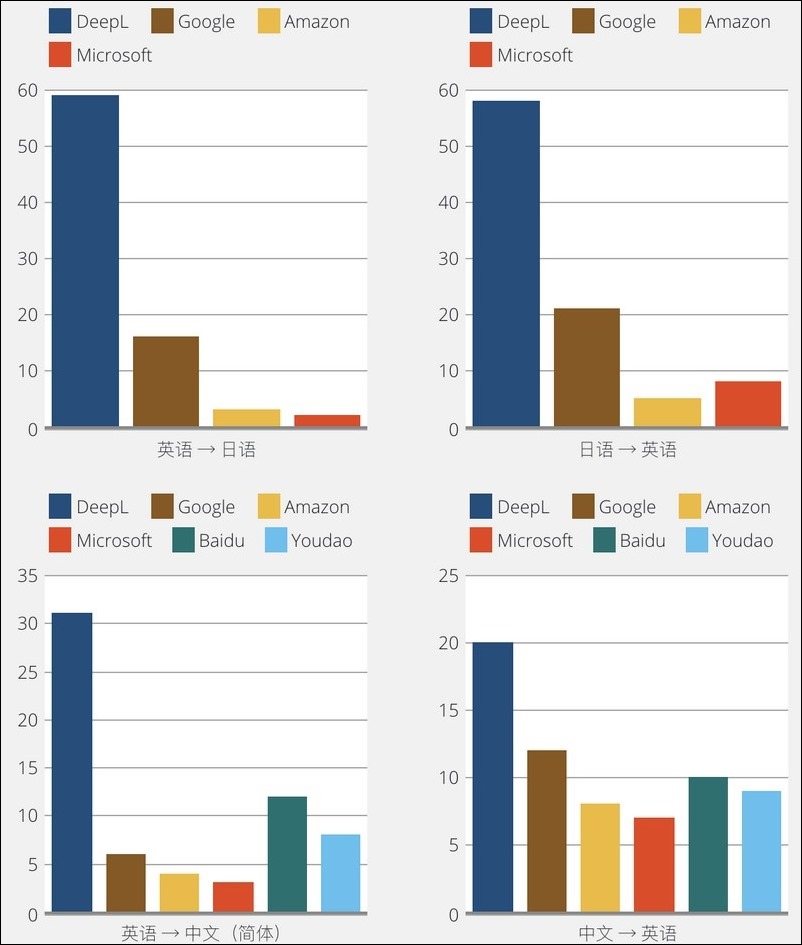
▲DeepL claims that its own translation service is of excellent quality in translating Chinese into English and Japanese into English, and is better than its competitors (Image source)
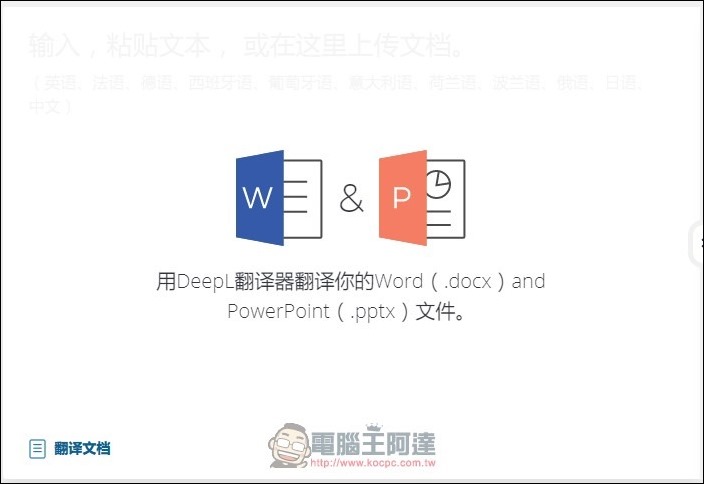
▲It is very practical to directly import .docx files or .pptx files for translation.
DeepL was launched in 2007, and according to the company, the service uses deep learning to optimize translation quality. Only recently have Chinese and Japanese been added. In addition to pure text translation, it also supports document translation like Google Translate. Users can easily import Word files or PowerPoint slides, and DeepL will automatically interpret the content and then translate it. In addition to web services, DeepL has also launched a software version for Windows/Mac dual platforms. The content and layout are exactly the same as the web version, and the functions are exactly the same. It must have been launched considering that some areas are insufficient in network construction, or the network fees are high, making it inconvenient to use network services for a long time:
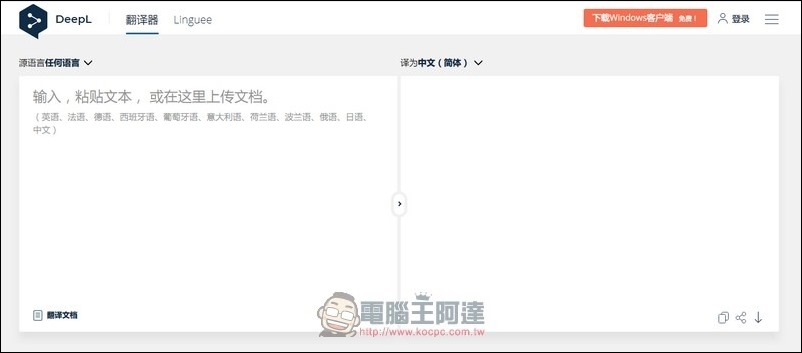
▲The web version interface is quite simple and can even directly detect the user environment and directly display the localized interface. It’s just that DeepL has not yet launched a Traditional Chinese interface, so you will see Simplified Chinese directly.
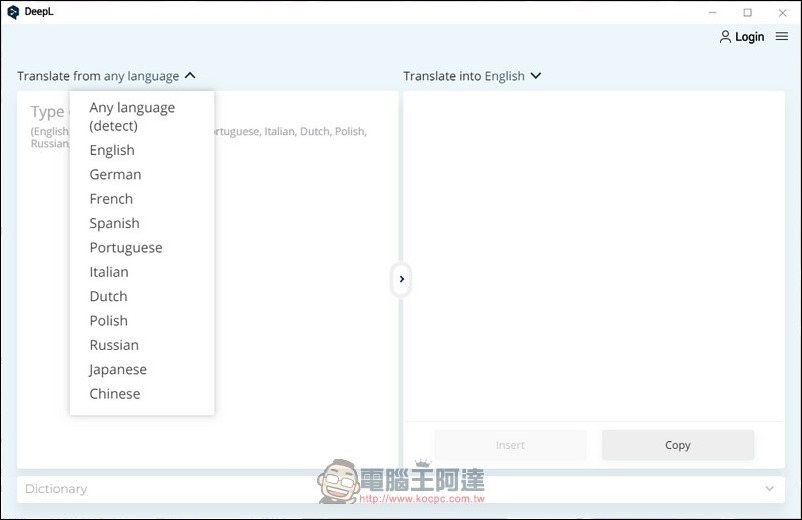
▲The interface of the software version is almost the same as that of the web version, and the functions are also similar.
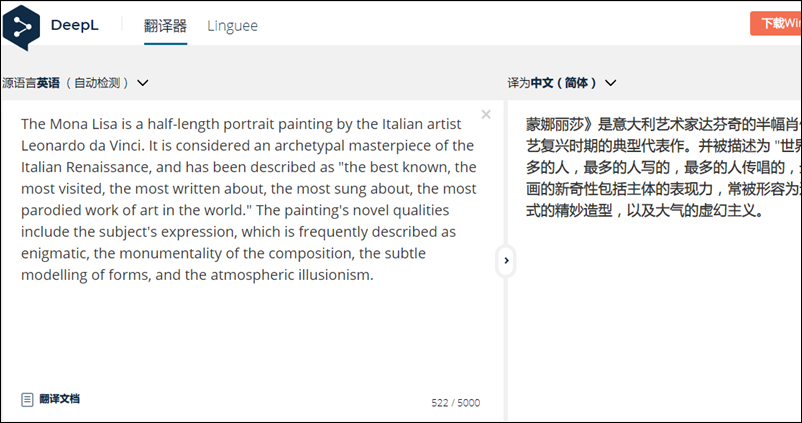
In order to verify whether DeepL is as amazing as stated on its official website, the author found two paragraphs of text from Wikipedia. One is the introduction to the English version of the Mona Lisa entry, and the other is the introduction to the Japanese version of Prince Shotoku’s entry. After testing both of them in Chinese, they made a simple comparison with Google Translate:
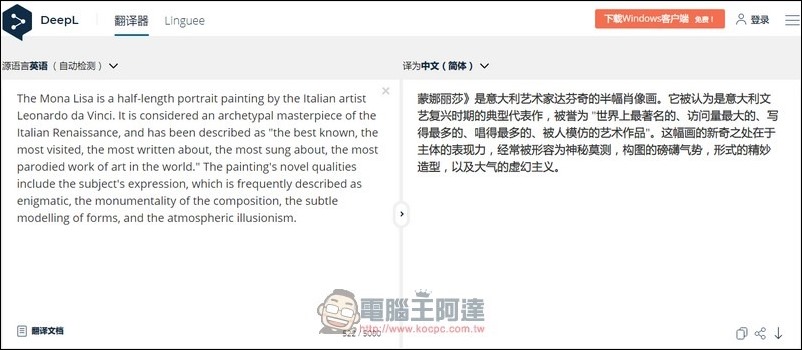
▲First, DeepL attacks first and challenges the English-Chinese translation. The Chinese translation is only available in simplified Chinese
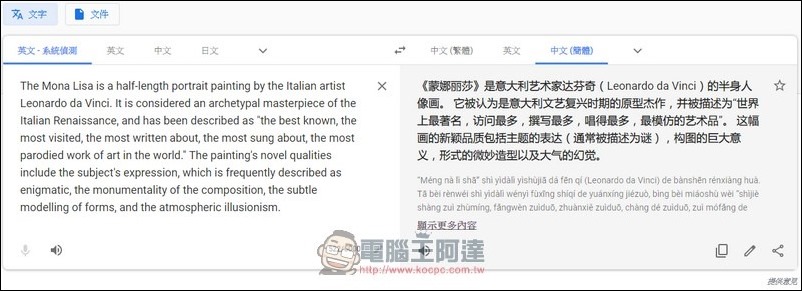
▲Then Google Translate, the same translation from English to Chinese, and for the convenience of comparison, set the translation to Simplified Chinese
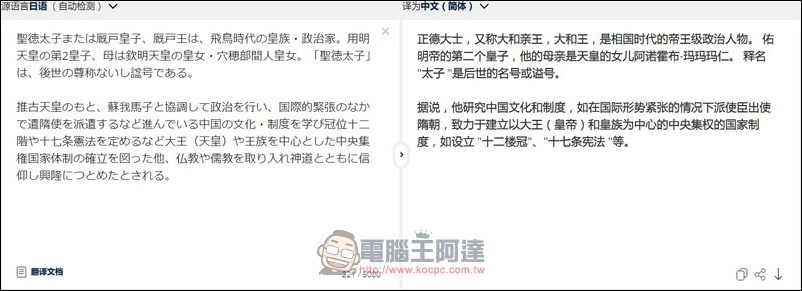
▲Then there is Japanese. Although the translation of proper nouns is miserable, it seems to be smooth. I just don’t know why there are so many words missing in the second half?
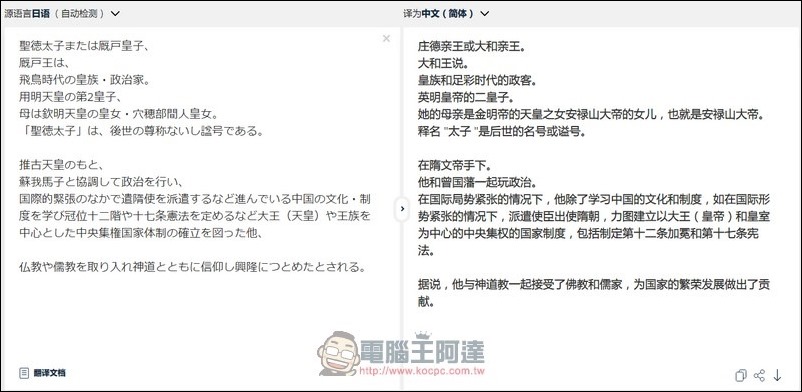
▲Break up the text and the subsequent translation will appear. But there are still strange results in the names of people.
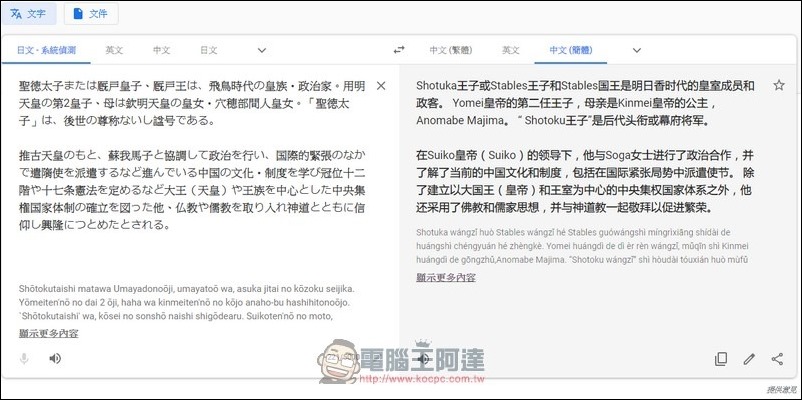
▲The performance of Google Translate cannot be said to be very good. All proper nouns are replaced with pinyin, but it is not like DeepL where the second half of the translation disappears.
Judging from the results, at least the English-Chinese translation is good. Comparing with Google Translate, we can see that Google Translate has a slightly heavier machine translation feel. DeepL may benefit from the deep learning training, and the translation seems to have almost no machine translation feeling. Although Xindaya may not be called it, at least it does not give people a feeling that it is difficult to understand. However, the Japanese translation is not satisfactory, and both DeepL and Google Translate have something to complain about.
From all appearances, DeepL at least did not overly brag about the strength of its translation services, and indeed its performance in English translation was not inferior to that of Google Translate. For daily reading of foreign language information, DeepL’s performance in English translation is enough to replace Google Translate. If you need to search a large amount of foreign information, perhaps DeepL, a new translation service, will play a key role.
DeepL translation website:https://www.deepl.com/translator
Source: KOCPC Chinese