


Grok 4.5 this time focuses on improving programming and agent task capabilities. In fact, xAI even claims that Grok 4.5 was trained specifically for use with Cursor. So many people are curious whether AI development can actually compete with GPT-5.5, Claude Opus 4.8, and Fable 5. Recently, the AI integration platform TryAI conducted a round of testing, using completely identical prompts to generate an app and comparing which one performs best.
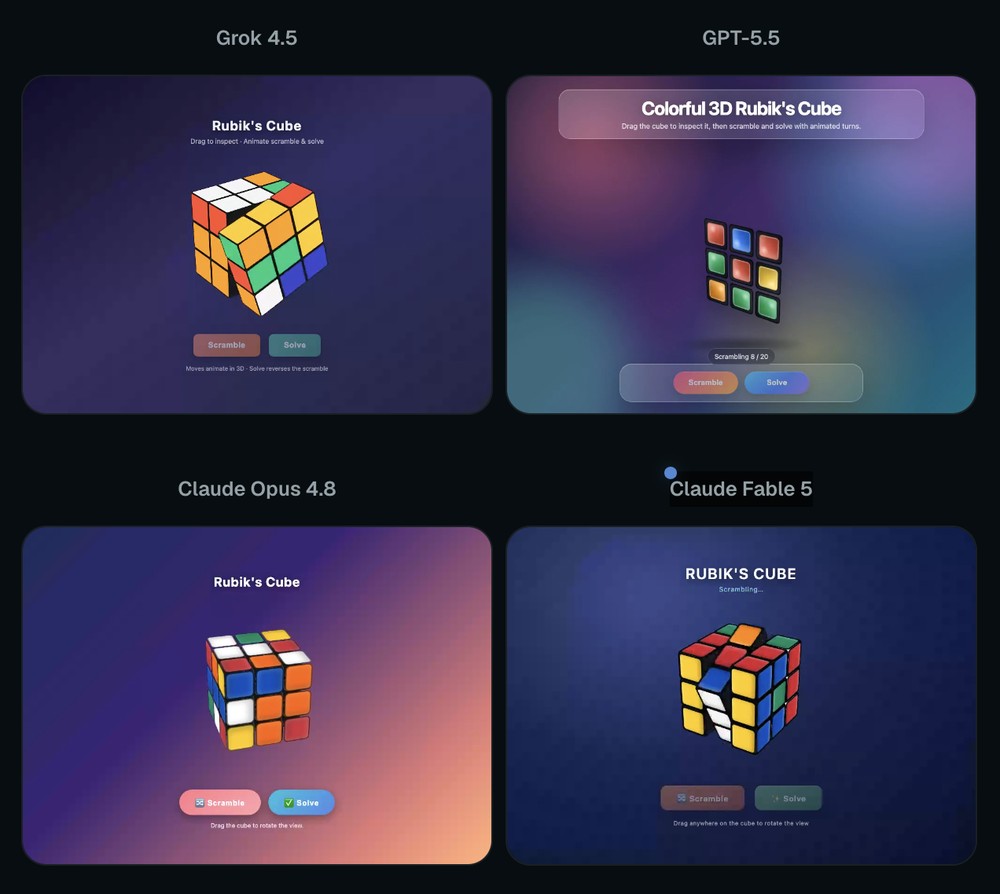
Grok 4.5, GPT-5.5, Claude Opus 4.8, and Fable 5 use the same prompt to build three HTML apps
TryAI The testing method is straightforward: all four models use the same prompt to generate a single HTML App, with no external libraries or network requests allowed. In other words, HTML, CSS, and JavaScript must all be packed into one file – no CDNs, pre-built packages, or API rescues allowed.
Each model will in principle only run once, with no manual code modifications, additional instructions, or iterative prompt refinement allowed during the process. A single retry will only be granted if the app completely fails to render, and the article will note which model used the retry.
1. Generate a 3D Rubik’s cube to test complex app capabilities
The first app displays a colorful, 3D-looking Rubik’s cube, with “Scramble” and “Reset” buttons, and shows animation for every rotation.
This is quite difficult—it’s not just about stacking a few colored blocks together. It also involves orientation states, rotation logic, animation, and visual presentation, making it arguably the most failure-prone level of all.
The results show that both Claude Opus 4.8 and Claude Fable 5 completed a 3D cube with scramblable and restorable functionality, proper colors and animations, on their first try, thus tying for first place.
The first version of Grok 4.5 only displayed the title and buttons without showing the cube body itself, so a retry was needed to generate a clean, colorful usable version. GPT-5.5 only showed an approximation of a single dark surface, failing to form a complete Rubik’s cube.
This is the result of Grok 4.5:
GPT-5.5 Results:
Opus 4.8 Results:
Fable 5 Results:
2. Create a particle gravity sandbox and compare visual effects
Next is creating a Canvas particle gravity sandbox app. The screen should display hundreds of particles with trail animations. When users click, a gravity point that attracts particles gets added. This challenge isn’t as difficult as the Rubik’s cube, so all four models successfully got the sandbox running. Therefore, the winner comes down to visual style and physics effects.
In the end, GPT-5.5 takes this round. TryAI believes that its neon attractor points, dense colorful trails, and vortex-like feel create an effect that makes people want to keep watching. Grok 4.5’s version is relatively cleaner, with particles moving along neat attractor rings and orbits; Fable 5 leans toward soft glowing spheres; Opus 4.8’s particle field is the busiest, with good physics feel, though it lacks a bit of visual polish.
Grok 4.5 Results:
GPT-5.5 Results:
Opus 4.8 Results:
Fable 5 Results:
3. Build a Breakout Game with Four Complete Models
Finally, the familiar brick breaker game featuring a mouse-controlled paddle, a ball that bounces and breaks colorful bricks, and a score and lives system.
All four models delivered without a miss. Grok 4.5, GPT-5.5, Claude Opus 4.8, and Claude Fable 5 all produced actually playable versions on their first output, complete with score, lives, and glowing paddle effects. While Grok and GPT’s creations leaned more toward a neon arcade aesthetic, with all core functionality passing the test, TryAI ranked all four as tied for first place.
Grok 4.5 Results:
GPT-5.5 Results:
Opus 4.8 Results:
Fable 5 Results:
Extra test of SVG drawings, Claude Fable 5 wins with creativity
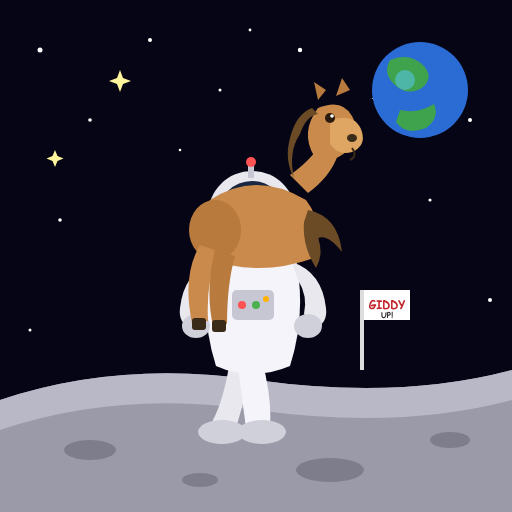
TryAI also tested an additional challenge without relying on bitmap images or library-based SVG drawing: a role-reversal scene of a horse riding on an astronaut’s back on the moon.
This isn’t testing precise physics, but rather whether the model can simultaneously handle composition, character relationships, and a bit of humor in a parseable vector file.
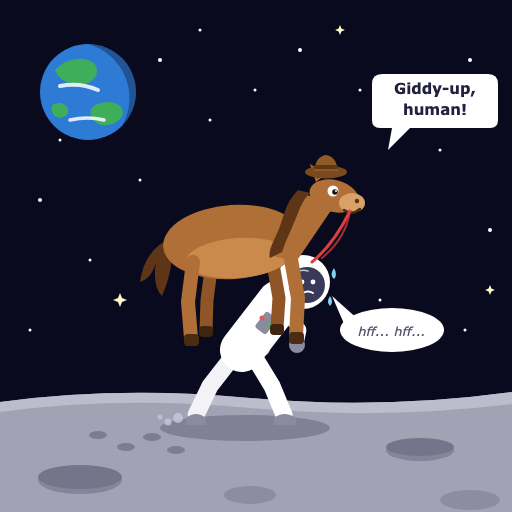
Fable 5 was the most creative this time, featuring a horse in a cowboy hat with the dialogue “Giddy-up, human!” paired with a gasping astronaut, taking first place:
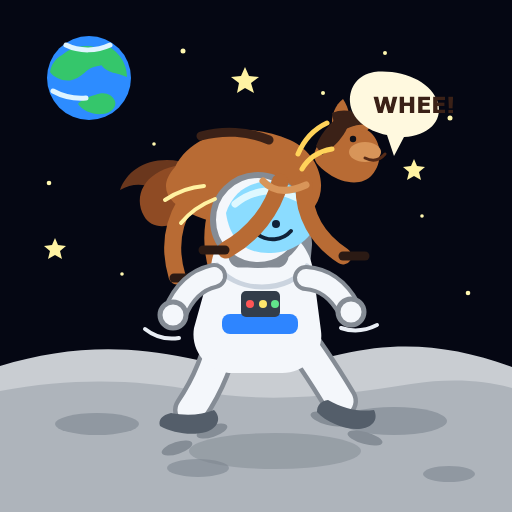
Horses drawn by GPT-5.5 shouting “WHEE!” in second place:
Grok 4.5’s display is clear and colorful, fully presenting all the questions.
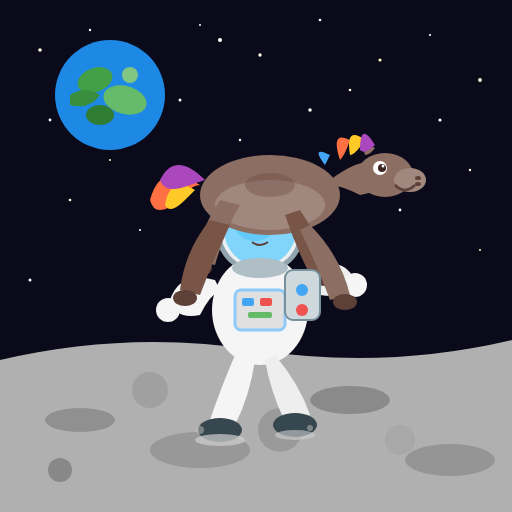
Opus 4.8 also completed the character artwork, but the original SVG has duplicate attributes, so it was deducted some correctness points:
Speed and Cost Benchmarks: Grok 4.5’s Biggest Advantage
Although Grok 4.5 didn’t rank first in any of the previous tests, it stands out as the most compelling option in terms of speed and cost.
Grok 4.5 has a time to first token of 0.44 seconds, a throughput of about 110 tokens/s—nearly double that of its competitors—and also the lowest cost per response.
| Model | Output speed | Cost per response |
|---|---|---|
| Grok 4.5 | 110 tok/s | 0.002¢ |
| GPT-5.5 | 53 tok/s | 0.004¢ |
| Opus 4.8 | 47 tok/s | 0.004¢ |
| Fable 5 | 28 tok/s | 0.009¢ |
Final Result
The table below shows the final comparison results.
| item | Winning model |
|---|---|
| App Build Reliability | Opus 4.8、Fable 5 |
| speed | Grok 4.5 |
| Cost | Grok 4.5 |
| visual effects | GPT-5.5 |
| Creative ability | Fable 5 |
Source: KOCPC Chinese