


“If the world is divided for a long time, it will be united, and if it is united for a long time, it will be divided.” Oh, this is not the right word. All in all, since watching Facebook separate out the built-in communication functions, the functions have become more and more complex, until now, they finally decided to simplify the instant messaging application and bring a more responsive version. According to Facebook’s official announcement, Facebook Messenger, which focuses on “smaller, faster, and simpler”, will soon arrive. Continue reading It’s Lite, but no, Facebook Messenger is getting faster and simpler Story content.

▲Image source: Facebook
Lite but no, Facebook Messenger is about to get faster and simpler
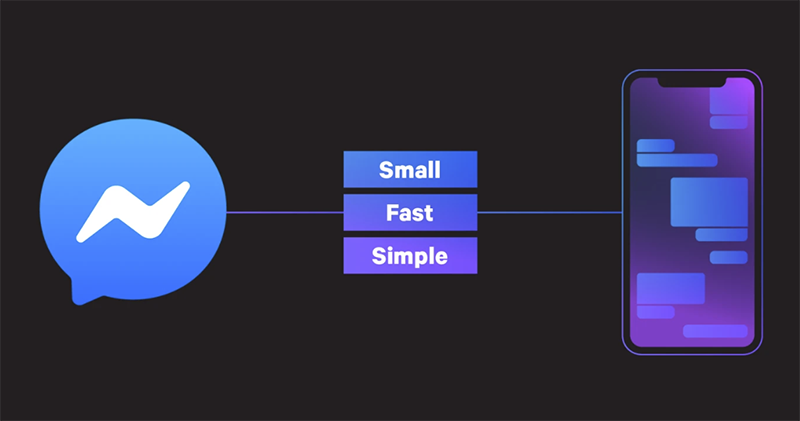
I have to say that Facebook Messenger has really many functions. In addition to the GIF stickers, voice calls, location sharing, etc. that can be basically seen in the interface, there are even bots and games for merchants to play. But the core requirement of a messaging application is that it should be fast and easy to use – after all, normally it will be started many times a day, so startup speed and efficiency are really big issues. In this regard, Facebook recently launched Project LightSpeed to pursue faster/simpler/slimming messaging applications by rewriting the basic code of the application.
▲Image source: Facebook
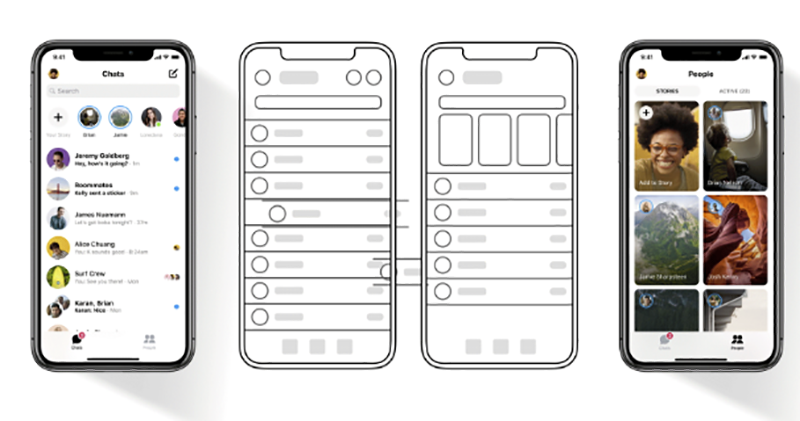
In the latest version of Facebook Messenger for iOS, which will be launched in a few weeks (the most obvious change is that there are only two tabs at the bottom), the developers have rebuilt the application’s code base, using the native resources of the mobile system as much as possible, and simplifying the UI interface through dynamic templates. In the end, the core code of the upcoming Facebook Messenger has been reduced by 84% (from 1.7 million lines to 360,000 lines), which can be said to be a great “slimming”.
▲Image source: Facebook
For the current iOS version of the Facebook Messenger app, the basic storage space occupied by the application exceeds 130MB. Officials reviewed themselves and believed that this was caused by the construction of huge and complex coding. As a result, the startup and use speed of old mobile devices is a bit difficult. In addition, the UI interface part of the current version has 9 different tab page buttons, which also makes it difficult for users to browse and use. Therefore, while maintaining existing functions as much as possible, they chose a more optimized way of writing core code—even in the future, developers will be restricted from excessively fattening the application in order to add new functions.
At present, it seems that the effect of this revision taking the “physical adjustment” route should be good. Please wait for the update of the iOS version. I wonder if Android will have a similar rewriting plan, which is also very exciting.
Pictures/sources cited in this article
Further reading:
After Tesla rewrites the Autopilot code, new features will be available soon

Source: KOCPC Chinese