


Tesla has achieved another breakthrough in battery technology. A new patent application (US 2026/0196678 A1) published on July 9 reveals an innovative design called a “hemmed electrode” that does away with laser cutting or welded metal tabs. Instead, it uses a “metal origami” approach to fold the edge of the electrode foil into a continuous micron-level hem that serves as a current collection channel. For those who have been following the development of Tesla’s 4680 battery, this patent may be more significant than it appears on the surface—it addresses a manufacturing bottleneck that Tesla has been trying to overcome since Battery Day 2020.
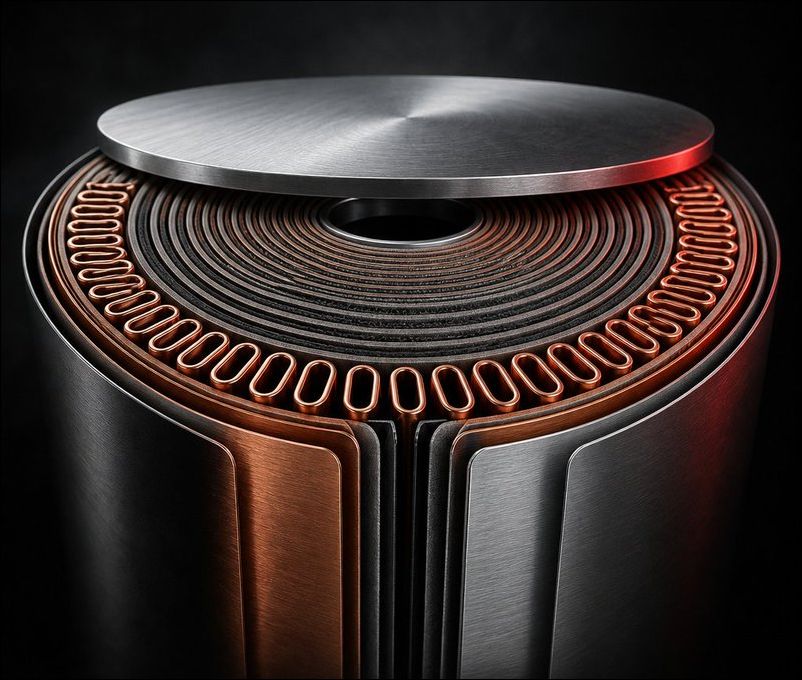
Current Bottleneck in Traditional Batteries: Why Metal Foil is the Problem
To understand the value of this patent, one must first understand how traditional cylindrical batteries collect current. In standard cylindrical lithium batteries, the positive and negative electrode materials are coated onto long strips of metal foil, with a separator sandwiched in between, and then tightly rolled into a cylinder like a Swiss roll (known in the industry as a jellyroll).
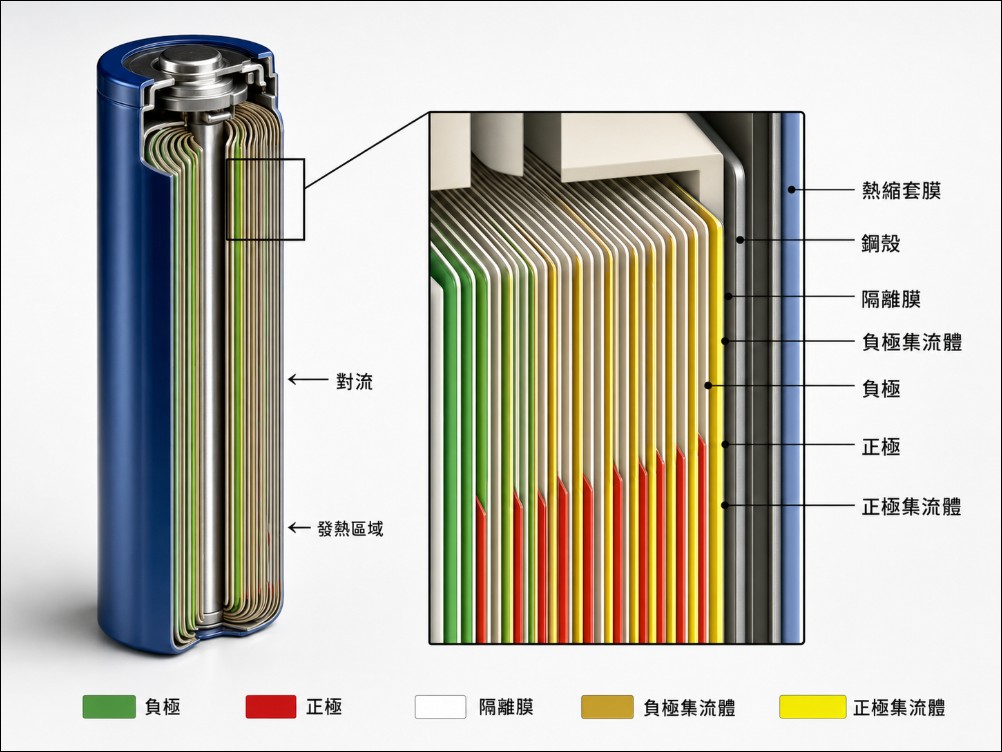
The problem lies in current collection. Traditional designs rely on one or two separate metal “tabs” welded to the electrode foil, serving as channels for current to enter and exit. Current far from the tabs must travel laterally through the extremely thin foil to reach the exit, and this long path creates enormous internal resistance—it’s like trying to empty an entire stadium through just a few narrow gates. The higher the internal resistance, the more heat is generated during fast charging, which is why traditional batteries tend to overheat during rapid charging.
Additionally, the physical presence of the tab itself is a manufacturing headache. Welding tabs increases local thickness, disrupts the uniformity of the winding process, and can puncture the thin separator. Once the separator is damaged, direct contact between the positive and negative electrodes may cause an internal short circuit, and in severe cases, can even lead to thermal runaway. Tab cutting and welding also require dedicated laser equipment and debris handling systems, increasing the factory’s capital expenditure and maintenance costs.
Tesla’s solution: No cutting, no welding, just fold the edges
Tesla’s 4680 battery introduced in 2020 features a tabless design that uses distributed edge contacts instead of a few tabs. However, the original tabless design still requires densely packed finger-shaped or flag-shaped cuts to be laser-cut into the foil edge, requiring laser cutting equipment and debris control systems, and the cuts weaken the foil, making it prone to breaking during high-speed production.
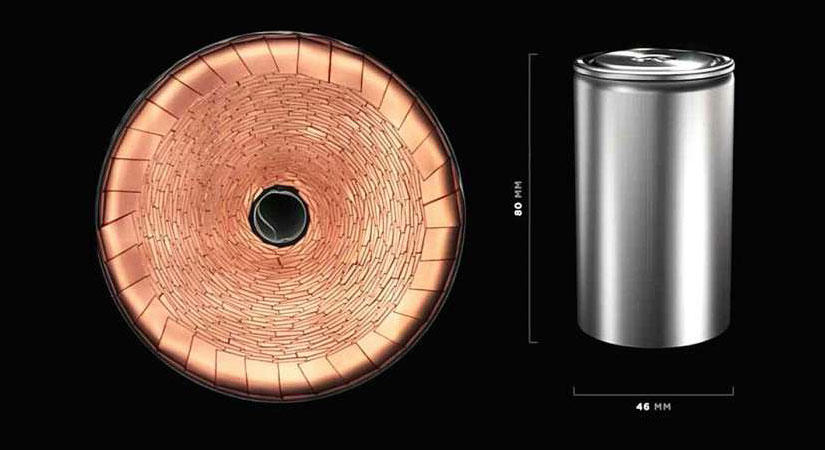
The core concept of this new patent is elegantly simple: instead of cutting the foil, simply fold over the uncoated edge of the foil where no active material is applied. Like hemming a piece of clothing, the metal foil edge is folded inward to create a continuous micron-level loop structure. When the electrode is rolled up, each turn’s hem contacts the adjacent hem, forming a continuous conductive path that encircles the entire jellyroll.
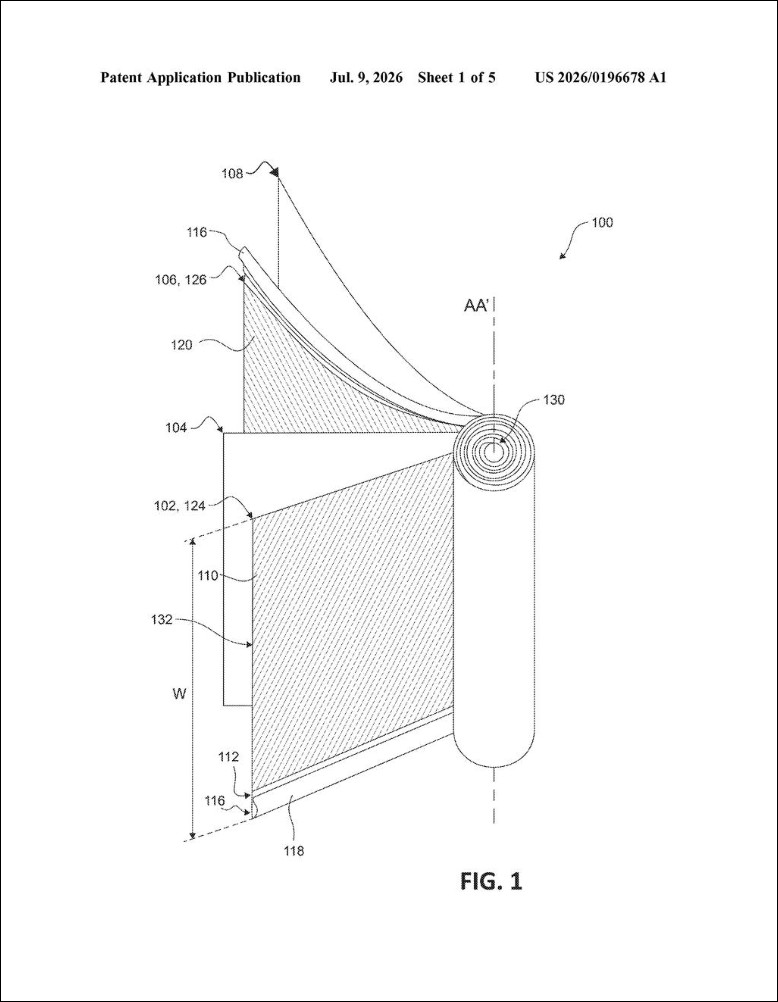
After winding is complete, factory equipment can flatten the protruding tabs to form a dense, uniform end-face interface, to which the current collector plate is then connected. This allows current to be collected simultaneously from thousands of contact points along the entire spiral, rather than relying on just a few tabs. In some embodiments, Tesla even lets the battery housing or lid itself serve as the current collector, further reducing the number of parts.
Technical Details: From Droplet Shape to Double-Folded Edge
The patent document describes various hem geometry shapes. The simplest embodiment folds the foil into a teardrop loop, where adjacent loops naturally contact each other during winding. Additionally, there are rectangular, triangular, trapezoidal, circular, and completely flattened profiles. The variety of shapes provides engineers with room to adjust contact area and compression behavior.
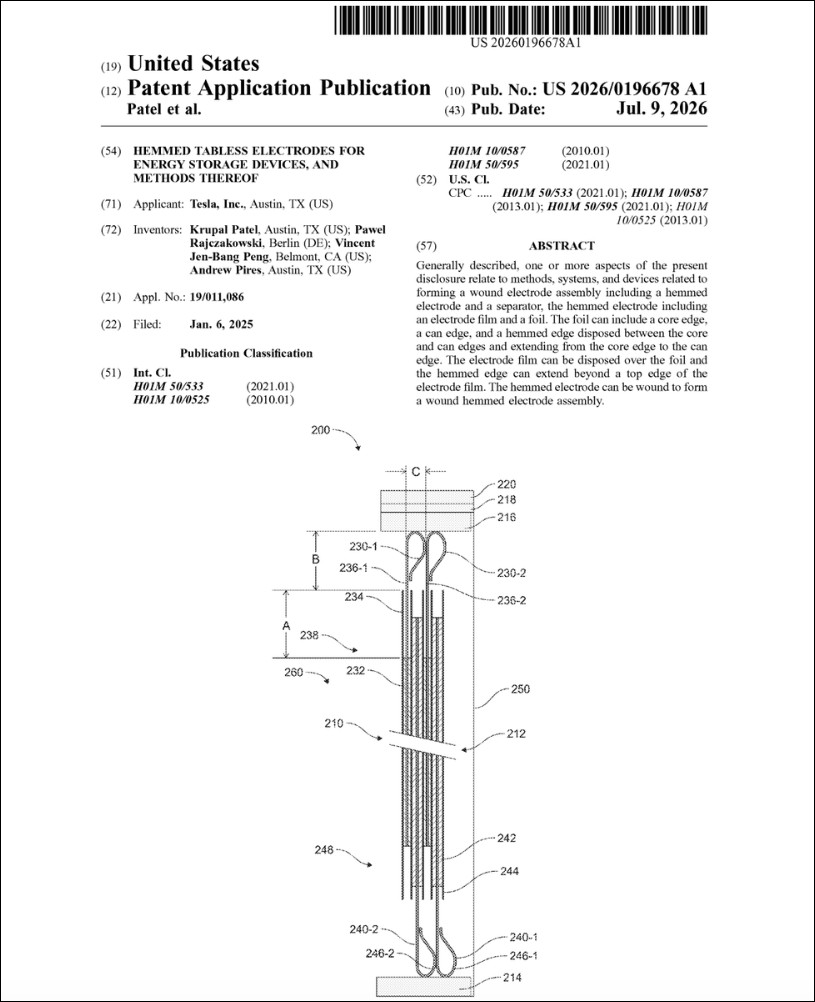
A more advanced version uses a double-loop hem, where the two bend directions can be the same or opposite, and adjacent windings can contact through one or both loops. This gives engineers more metal volume and contact area to work with during the flattening process.
Tesla defined three key geometric variables: separation distance A (the uncoated foil distance between the active membrane and the start of the folded edge, 0 to 2 mm, example value 1.14 mm), ring height B (the vertical projection height of the folded edge, 0.1 to 3.0 mm), ring width C (the ring width before compression, 0.05 to 0.9 mm). These three parameters provide engineers with a wide design window that can be adjusted according to different battery sizes and performance requirements.
Manufacturing Simplification: Cutting an Entire Production Line
The most practical value of this patent lies in manufacturing. Production lines using folded-edge electrodes may no longer need separate tab welding, slitting, notching, flag interleaving, and foil debris handling equipment. Removing multiple processes can reduce equipment complexity, factory floor space, energy consumption, waste, and labor, while improving foil running speed and tension control accuracy. Without notches, foils are also less prone to bending or tearing at high production speeds. The patent also notes that the simplified end structure can free up more internal space, helping to improve electrolyte filling time. This is a frequently underestimated bottleneck in mass production.
This tabless technology pairs perfectly with Tesla’s dry electrode process. Dry electrodes eliminate solvents, ovens, and solvent recovery systems; tabless technology eliminates the complex equipment needed for tab cutting, debris handling, and current collection. Together, they fundamentally simplify the entire battery production line.
Performance advantages: Lower resistance, faster charging, safer
From an electrical performance standpoint, continuous edge current collection reduces the lateral distance current must travel to just a few tenths of a millimeter. This directly lowers internal resistance, meaning less heat is generated at the same power output. For Model Y, which already supports 250 kW fast charging, and Cybertruck, which can accept 325 kW, the value of this technology lies not in achieving higher peak power, but in maintaining more uniform current distribution and lower internal heat generation at high power levels.
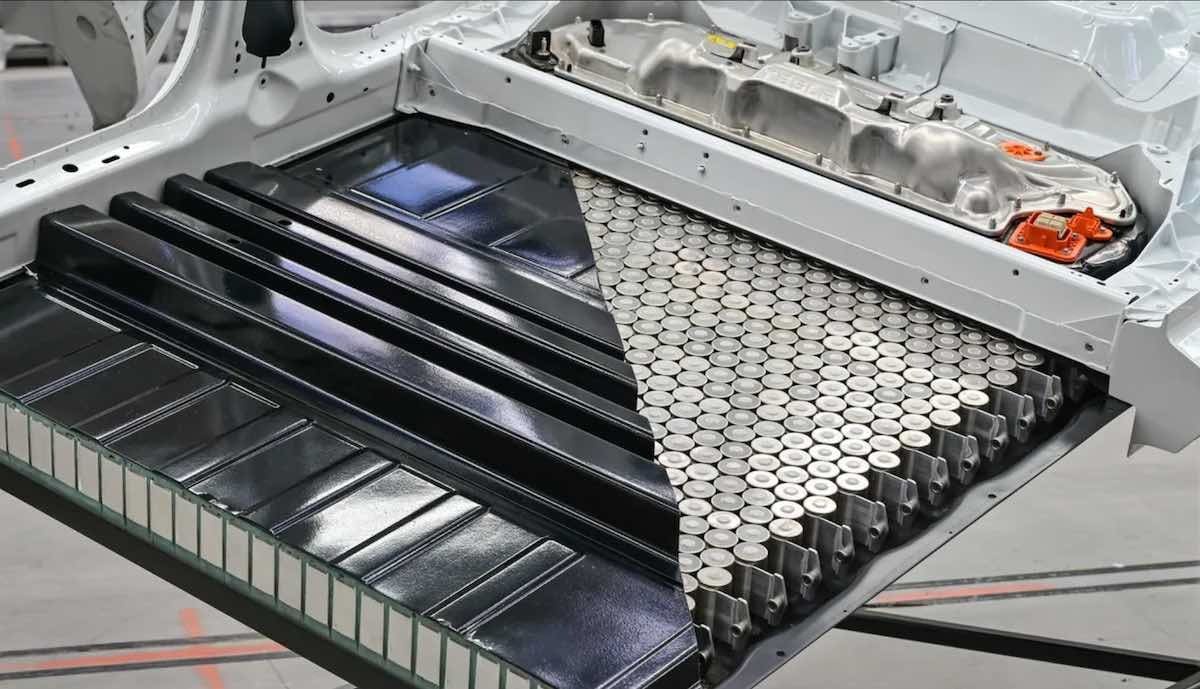
There are also potential safety improvements. Traditional tabs, flags, and bulky welded structures occupy space at the ends of the jellyroll, and if the battery fails and produces gas, these structures can block gas from escaping. The uniform folded-edge interface leaves a clearer path for gas, helping to release pressure quickly and reducing the risk of thermal runaway.
Additionally, the patent describes a stress relief design for the current collector plate, where triangular, circular, square, and other geometric areas are removed from the plate, allowing it to flex during the battery’s charge and discharge cycles as the internal materials expand and contract, rather than transmitting all mechanical stress directly to the welding joints. This flexible design helps extend the battery’s cycle life.
Chemically neutral: compatible with multiple battery materials
Folded-edge technology is a current collection and manufacturing architecture, not a new chemical formulation. The patent clearly states that it is applicable to various cathode materials including lithium iron phosphate (LFP), lithium manganese iron phosphate (LMFP), lithium nickel manganese cobalt oxide (NMC), and lithium nickel cobalt aluminum oxide (NCA), as well as graphite, graphene, and silicon-based anodes. This technology can continue to be used as battery chemistry evolves in the future.
This aligns with Tesla’s overall battery strategy. From the 56% cost reduction per kWh target announced at Battery Day in 2020, to solving the dry cathode mass production challenges by end of 2025, and now further streamlining production lines through tabless technology, Tesla is turning the blueprint from five years ago into reality step by step. The dry electrode process is believed to reduce energy consumption during battery manufacturing by over 70%, while tabless technology adds another layer of simplification in cutting, cleaning, and current collection. However, since Tesla’s 4680 batteries have been in development for so long and have only been used in certain models, starting from just thicker and longer cylindrical batteries to successfully implementing dry coating this year, and continuing with the latest tabless technology iteration, when Tesla owners will actually get to use the complete 4680 battery in the true sense remains uncertain.
Source: KOCPC Chinese