


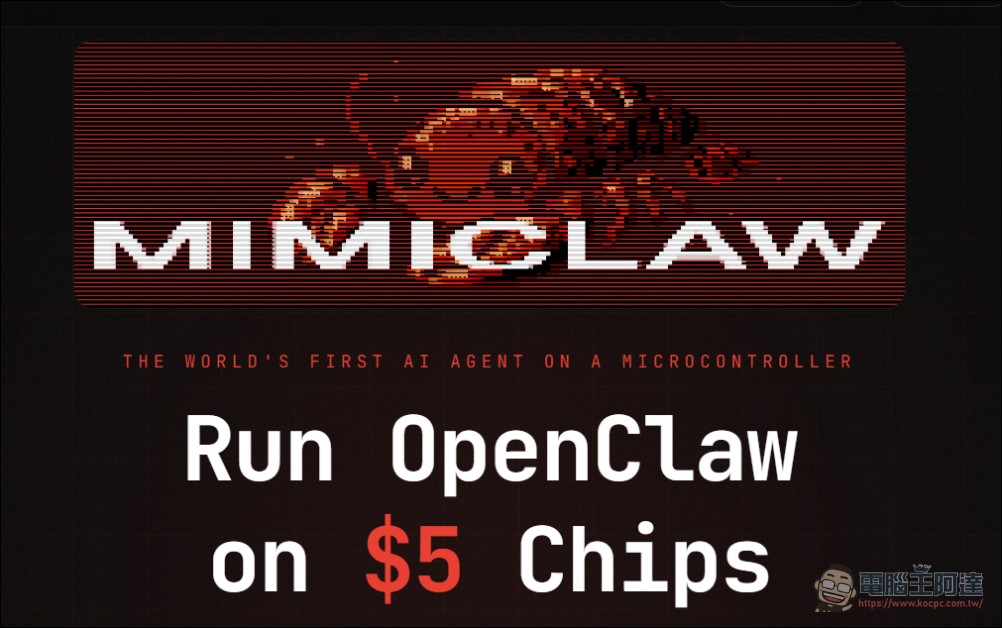
Following our previous introduction of the option available for just $10 PicoClawIts price-to-performance ratio and boot speed are already quite impressive. But an even lower-cost solution has now appeared—also an open-source project—and all it takes is a $5 development board for everyone to have their own dedicated one. AI assistant。「MimiClawthis closing quotation markopen sourceThe project did it; it… OpenClaw the core of AI The Agent architecture was ported to the ESP32-S3 microcontroller in pure C, realizing the dream of a “pocket AI assistant.”
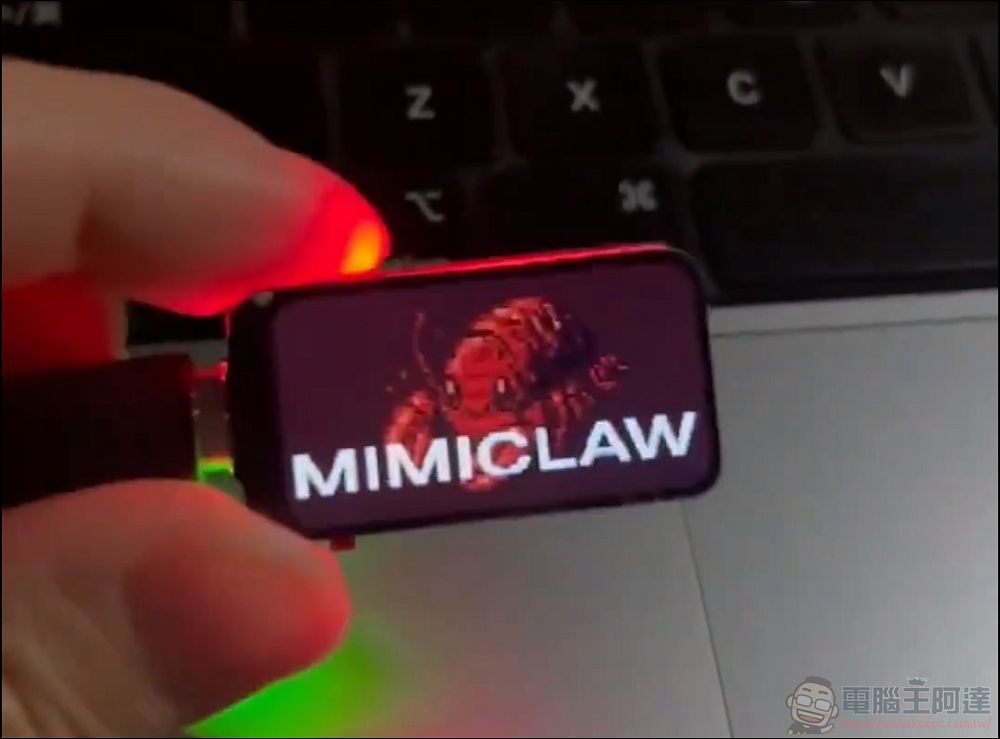
Your own AI assistant for just $5: MimiClaw
When it comes to AI assistants, many people first think of cloud services running on powerful servers, or at least a computer or a Raspberry Pi. But MimiClaw shows us that AI can also run on a modest development board costing just a few hundred dollars. Built by developer @ssslvky, the project uses the ESP32-S3, a chip that costs just $5, letting users chat directly with AI through Telegram, and also control hardware, read temperature, toggle switches, and even control lights and fans.
I made OpenClaw can run on a $5 chip. @openclaw @steipete
>No OS(Linux). No Node.js. No Mac mini. No Raspberry Pi. No VPS.
>Local-first memory. Shareable. Privacy-first.
Meet MimiClaw:
•Tiny — Just pure C
•Handy — Message it from Telegram, it handles the rest
•Loyal —…— EricWang (@ssslvky) February 7, 2026
Technical highlights: Small but complete
MimiClaw’s core architecture is impressive. It uses a full ReAct Agent loop: the Claude API handles reasoning and decision-making, then calls tools, reads memory, and finally replies. Its memory system is almost identical to OpenClaw’s: SOUL.md defines personality, USER.md stores user information, MEMORY.md holds long-term memory, and there are daily notes as well. This means that this tiny development board can actually remember context across conversations.
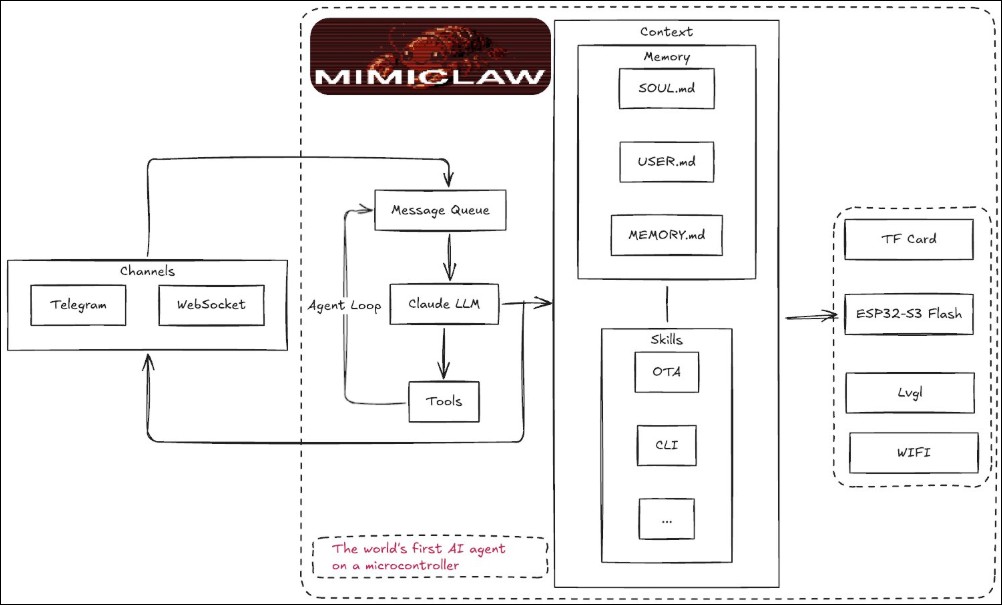
MimiClaw Github
What’s even more impressive is that it also includes a WebSocket Gateway (port 18789), allowing LAN connections; supports OTA wireless firmware updates without needing to reflash via USB; uses a dual-core design that runs network I/O and AI processing separately; and even supports HTTP Proxy. The hardware requirements are also very accessible: an ESP32-S3 development board with 16MB Flash and 8MB PSRAM is sufficient, costing about NT$150–300 each.
这怕是有点屌哦,几十元就可以拥有自己的 OpenClaw
MimiClaw 把一块小小的 ESP32-S3 开发板变成你的私人 AI 助理。插上 USB 供电,连上 WiFi,通过 Telegram 跟它对话
它能处理你丢给它的任何任务,还会随时间积累本地记忆不断进化,全部跑在一颗拇指大小的芯片上。https://t.co/RRIWJcvOD3 pic.twitter.com/FiU1b6VhhH
— Geek Lite (@QingQ77) February 11, 2026
MimiClaw and PicoClaw: Brothers Climbing the Mountain, Each Striving in Their Own Way
Speaking of lightweight AI assistants, we have to mention the one we introduced earlier. PicoClawThese two projects share the same origin—both derived from OpenClaw—but have headed in different development directions. According to our previous report, PicoClaw is developed in Go, supports the three major architectures RISC-V, ARM, and x86, requires hardware costing around US$10 and 10MB of memory, and boots in less than one second.
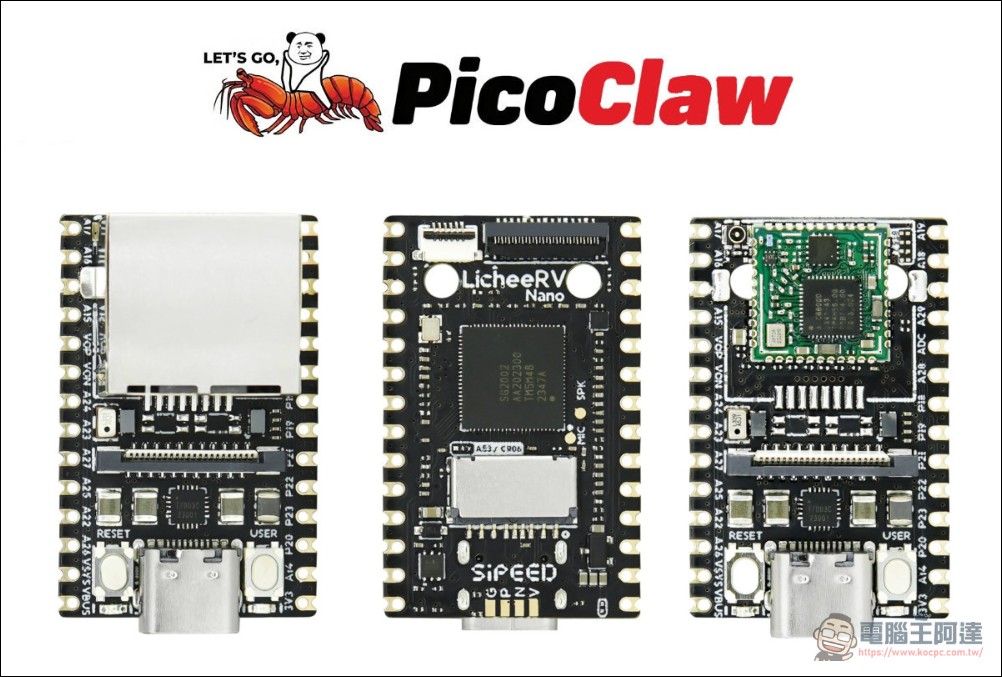
MimiClaw takes it even further: it drops Linux entirely, is written in pure C directly on the ESP32-S3, and skips the operating system altogether. Hardware cost is driven down to $5, power consumption is only 0.5W, and it can run 24/7. But the trade-off is a more stripped-down feature set: currently it only has two tools, web_search and get_current_time,Unable to operate the browser.、Cannot control the computer.Essentially, it is a “Telegram Claude chatbot that can remember you,” plus hardware control capabilities.
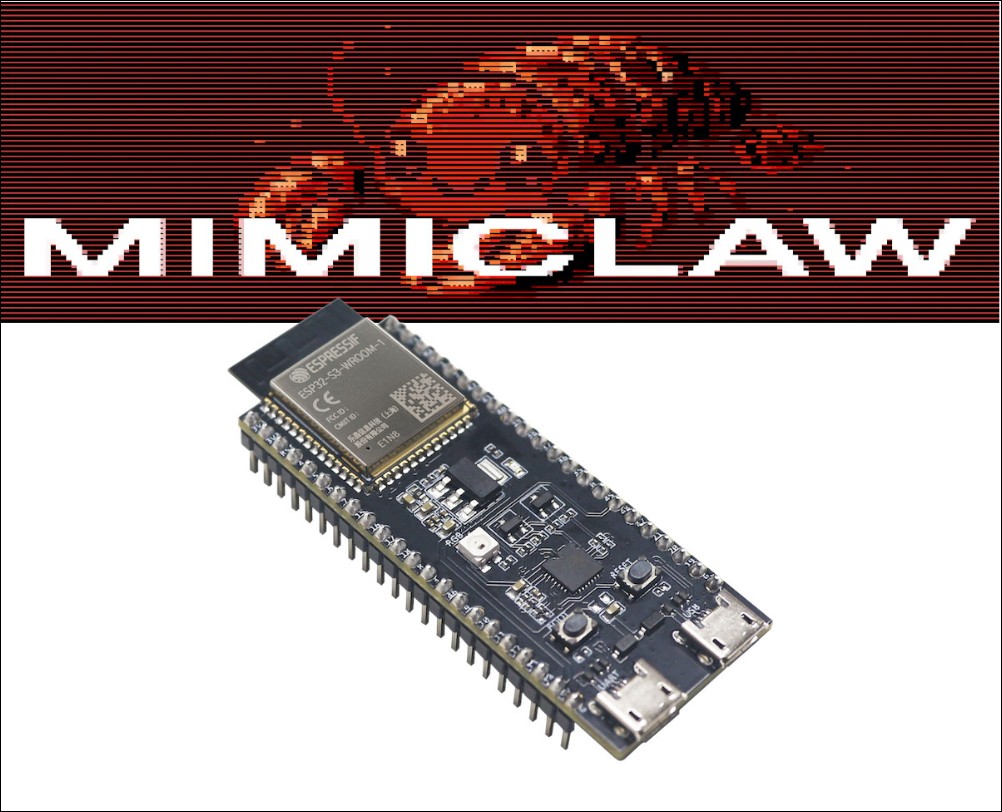
Simply put:PicoClaw is the lightweight version of OpenClaw., suitable for those who want to run an AI assistant on various low-cost Linux devices;MimiClaw is the minimalist version.Suitable for those who want to experience “pocket AI” or even control IoT hardware with it. Both have their own strengths, representing two paths in Edge AI development. Of course, these devices also have clear limitations: they all require you to bring your own Anthropic API Key (not free).
Discussion on X: Skepticism and Expectations
This project sparked heated discussion on X. Some questioned its feasibility, arguing that people unfamiliar with ESP32 development might be intimidated. Others noted that it targets a different use case than OpenClaw: OpenClaw operates computers, while this one operates microcontrollers. Some predicted a “USBClaw” would emerge by the end of the year—a USB AI assistant that plugs directly into a computer—while others suggested pairing it with Cloudflare Browser Rendering to compensate for missing browser functionality. Notably,mimiclaw.io The website has already launched and appears to be showing signs of commercialization.
Summary
MimiClaw’s greatest significance may lie not in how powerful its features are, but in the possibility it demonstrates: AI doesn’t necessarily have to rely on expensive hardware and complex architectures. Of course, to enjoy this “$5 AI assistant,” you’ll need a certain level of technical skill—you need to know how to flash an ESP32 and apply for an API key. But if you just want to experience the thrill of “owning a chip that can think,” this is undoubtedly the option with the lowest barrier to entry right now. Perhaps in the near future, we’ll see more similar “edge AI” projects that truly bring AI into every corner of daily life.
Source: KOCPC Chinese