


In 2026, flagship mobile phones will fully enter the era of high-capacity batteries, but are larger batteries really more durable? YouTuber Mrwhosetheboss directly ranked all the most powerful mobile phones on the market, used them from morning to night, and measured battery life, performance and temperature performance. Samsung Galxay S26 Ultra、iPhone 17 Pro Max、Google Pixel 10 Pro XL、OnePlus 15、OPPO Find X9 Pro、Xiaomi 17 Ultra , and even includes a cross-reference of the previous generation S25 Ultra. This test is not just about numbers, it also reveals the real gap between battery technology, thermal design and chip efficiency.
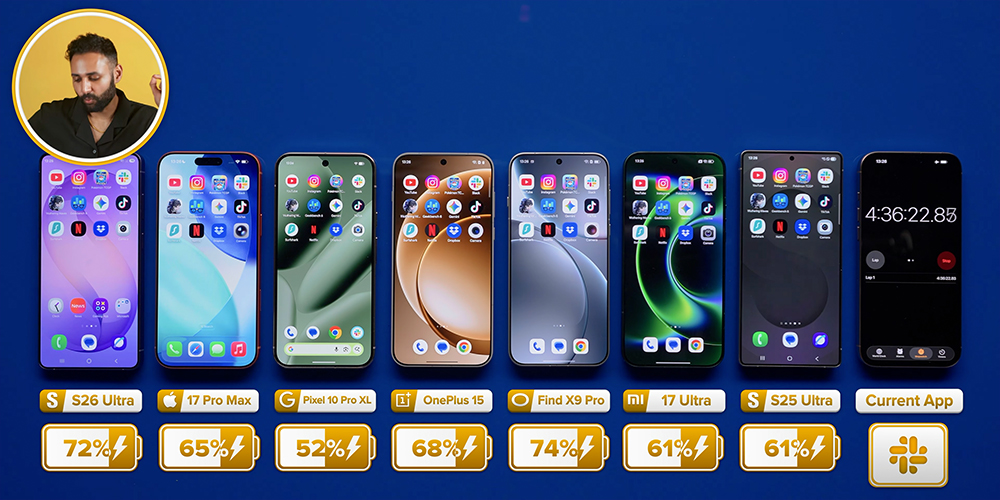
Samsung Galaxy S26 Ultra competes with iPhone, Xiaomi, OPPO, and Google flagship phones in terms of battery life
The Mrwhosetheboss flagship phone test lineup this time is quite complete, including: Samsung Galaxy S26 Ultra, iPhone 17 Pro Max, Google Pixel 10 Pro XL, OnePlus 15, OPPO Find X9 Pro, Xiaomi 17 Ultra and last year’s Samsung Galaxy S25 Ultra. If you only look at the battery capacity, the picture is actually very obvious.
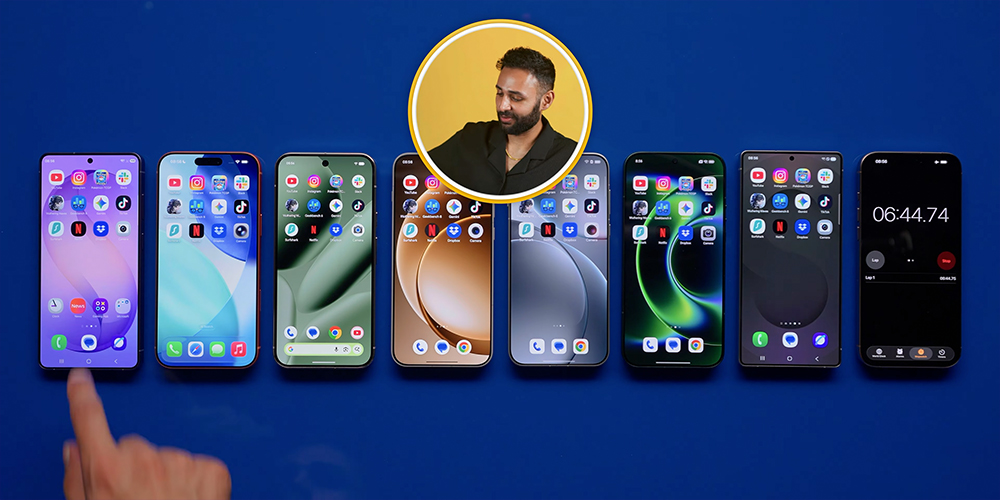
Traditional camp:
- Samsung Galaxy S26 Ultra/Galaxy S25 Ultra:5,000mAh
- iPhone 17 Pro Max:4,823mAh
- Google Pixel 10 Pro XL:5,200mAh
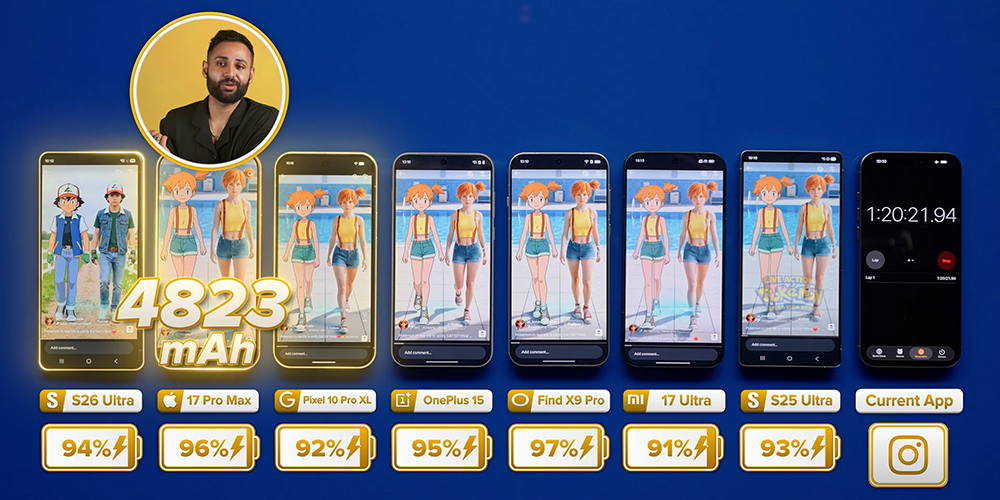
High capacity camp:
- Xiaomi 17 Ultra:6,800mAh
- OnePlus 15:7,300mAh
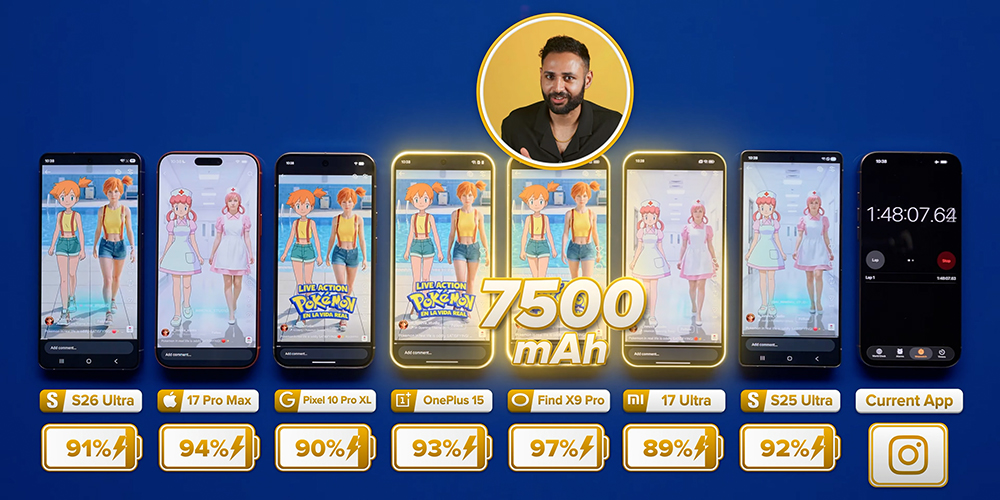
- OPPO Find X9 Pro:7,500mAh
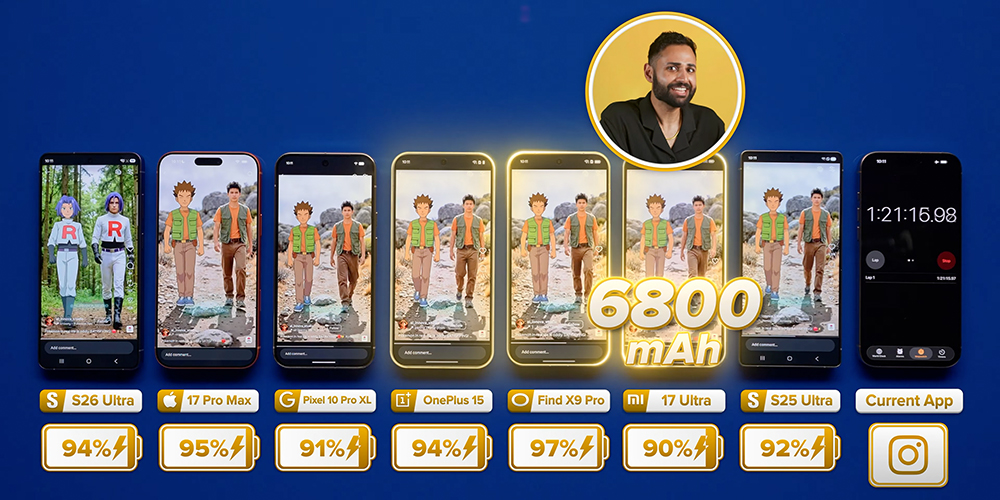
The difference on paper is almost over 2,000mAh, which at first glance looks like a heavyweight versus a lightweight. But what Mrwhosetheboss wants to verify this time is actually whether battery capacity is the only key to determining battery life.
Heat dissipation is the real invisible key
This test not only ran daily apps and high-intensity games, but also used a thermal imager to monitor the temperature throughout the process. Interestingly, the temperature control of Samsung S26 Ultra and iPhone 17 Pro Max is quite beautiful under moderate load, with the highest temperature area almost always being around 27°C.
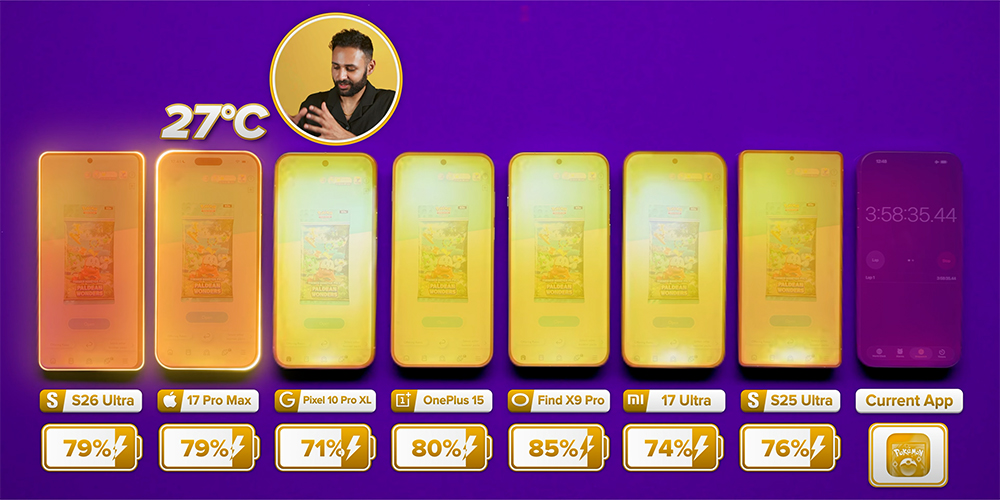
In contrast, most other brands exceed 32°C, and Google Pixel 10 Pro XL is even more shiny white.
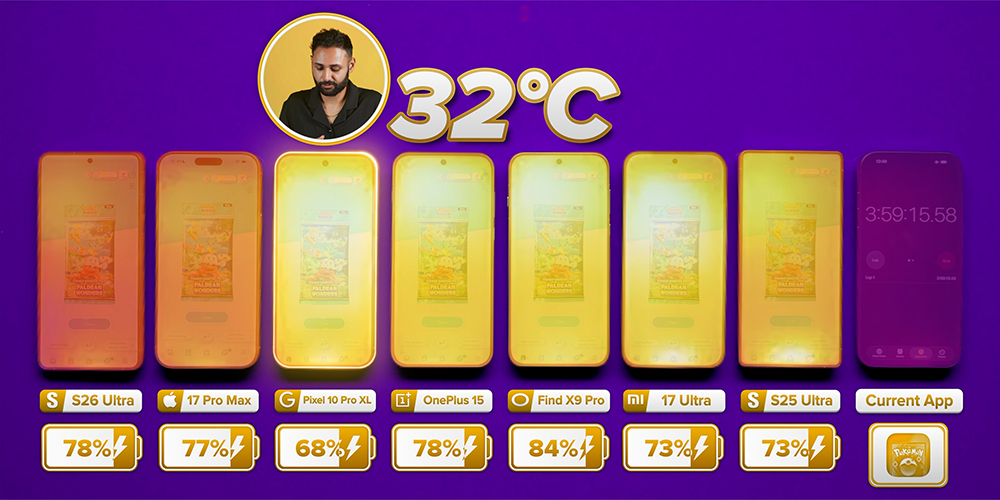
This generation of Samsung Galxay S26 Ultra and iPhone 17 Pro Max have both changed from titanium to aluminum alloy body middle frames. Aluminum conducts heat more efficiently and is actually more helpful for heat dissipation. The higher the temperature, the easier it is for performance to drop, and the faster the battery will be consumed, which will affect your health in the long run. In other words, the quality of temperature control directly affects battery life performance.
High-intensity game stress test, the gap begins to widen
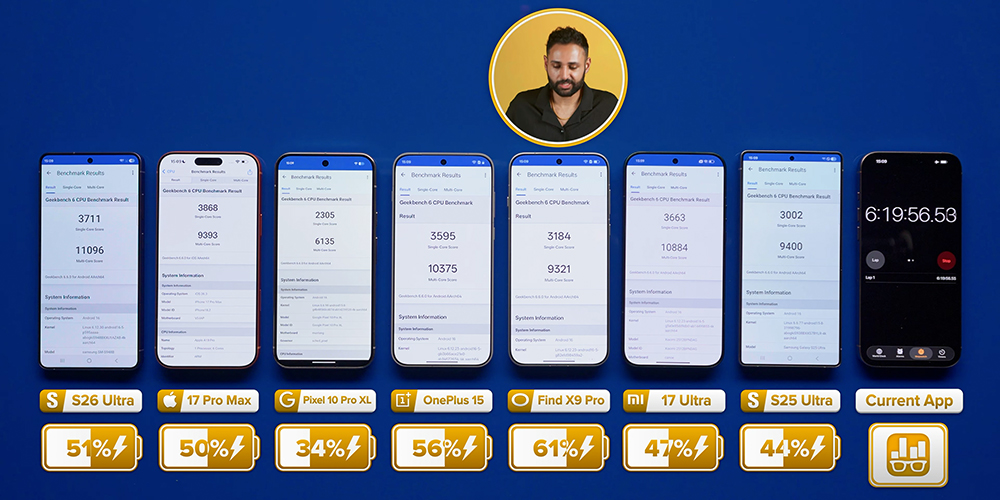
After running heavy games for a long time and three rounds of Geekbench testing, the situation began to become clear. OPPO Find X9 Pro reached 42°C under pressure, which is so hot that it feels hot when held in hand. The single-core score also dropped significantly to 3,184 points, which is lower than other Snapdragon 8 Elite Gen 5 models. The performance of Google Pixel 10 Pro XL is even more embarrassing. Not only is the performance at the bottom, it even loses to the previous generation Galaxy S25 Ultra. It might be okay for day-to-day use, but is noticeably 2 or 3 generations behind in extreme testing. The Samsung S26 Ultra unexpectedly widens the gap with the S25 Ultra. Even though the battery capacity is the same, the new chip and heat dissipation optimization have substantially improved the battery life. This also proves that efficiency is more important than capacity.
Final battery life ranking
After more than 7 hours of continuous use, including social networking, games, and video playback, the complete ranking is released.
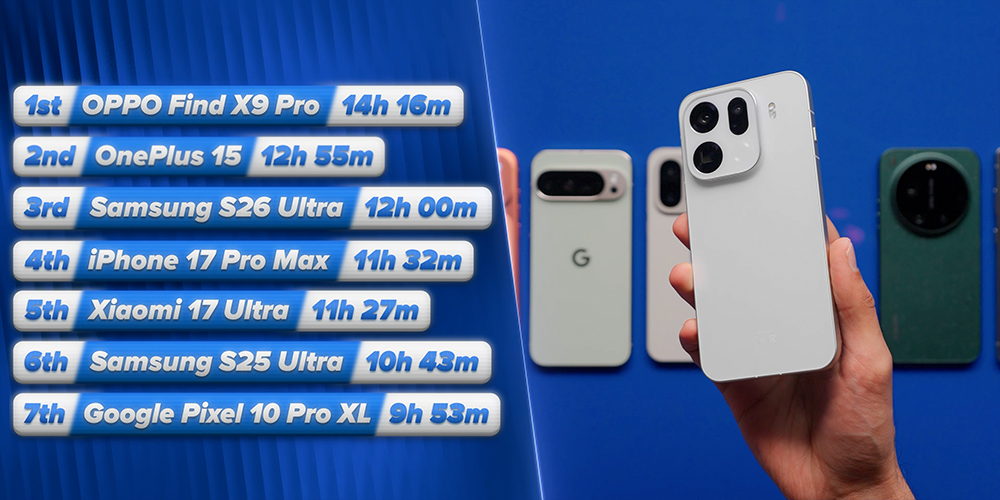
No. 7: Google Pixel 10 Pro XL (9 hours, 53 minutes)
No. 6: Samsung Galaxy S25 Ultra (10 hours, 43 minutes)
No. 5: Xiaomi 17 Ultra (11 hours, 27 minutes)
No. 4: iPhone 17 Pro Max (11 hours, 32 minutes)
No. 3: Samsung S26 Ultra (12 hours)
No. 2: OnePlus 15 (12 hours, 55 minutes)
No. 1: OPPO Find X9 Pro (14 hours, 16 minutes)
The iPhone 17 Pro Max only lasts about 5 minutes longer than the Xiaomi 17 Ultra, but considering it has the smallest battery capacity in the market, this result is actually very impressive. The US eSIM version will have about 6% more battery life. Samsung Galaxy S26 Ultra relied on efficiency and heat dissipation to achieve a 12-hour result, proving that 5,000mAh can also perform at a high level. The real power king is OPPO Find X9 Pro. Its 14 hours and 16 minutes of battery life is quite amazing under this high-intensity test.
Conclusion
This test once again proved that battery capacity is only a reference value, and what really affects battery life is chip efficiency, heat dissipation design and software optimization. High capacity does have advantages, but without good temperature control and performance management, no matter how beautiful the numbers are, they may not translate into actual usage time.
For Taiwanese consumers, if they are looking for extreme battery life, the dual-cell solution of OPPO Find X9 Pro is indeed attractive. But if you care more about global stability, temperature control and overall balance, Samsung Galaxy S26 Ultra and iPhone 17 Pro Max are still mature choices. The battlefield for flagship mobile phones in 2026 is no longer just about specifications, but about efficiency. The next step is to see who can find the perfect balance between safety, cost and battery life.
Source: KOCPC Chinese