


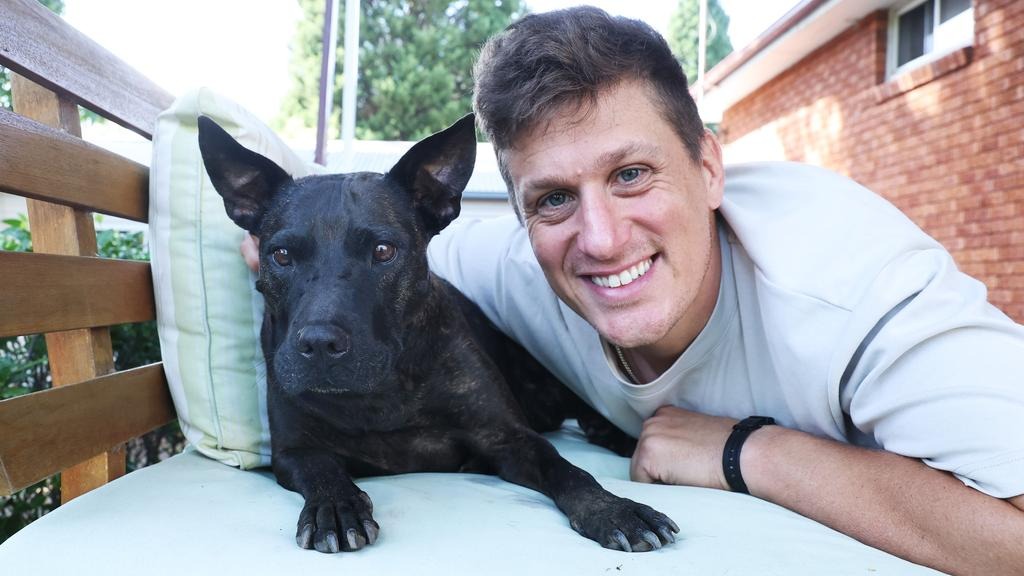
In traditional thinking, getting cancer could mean facing various chemotherapy treatments and difficult recovery processes, with new drugs being prohibitively expensive and clinical cycles being long. For rare cancers, except for a small number of patients diagnosed early or lucky individuals, most cases would still end up being futile. However, AI may now have the potential to completely change this situation. Paul Conyngham, a tech entrepreneur in Sydney, Australia, used ChatGPT and Google DeepMind’s AlphaFold to design the world’s first personalized mRNA vaccine for his cancer-stricken dog, all without any medical background. This successfully shrank the tumor by 75%, creating a medical miracle in the AI era.
When sick, please seek help from professional medical teams. This is a special case.
Darkest Hour: Chemotherapy Fails, Beloved Dog Given Death Sentence
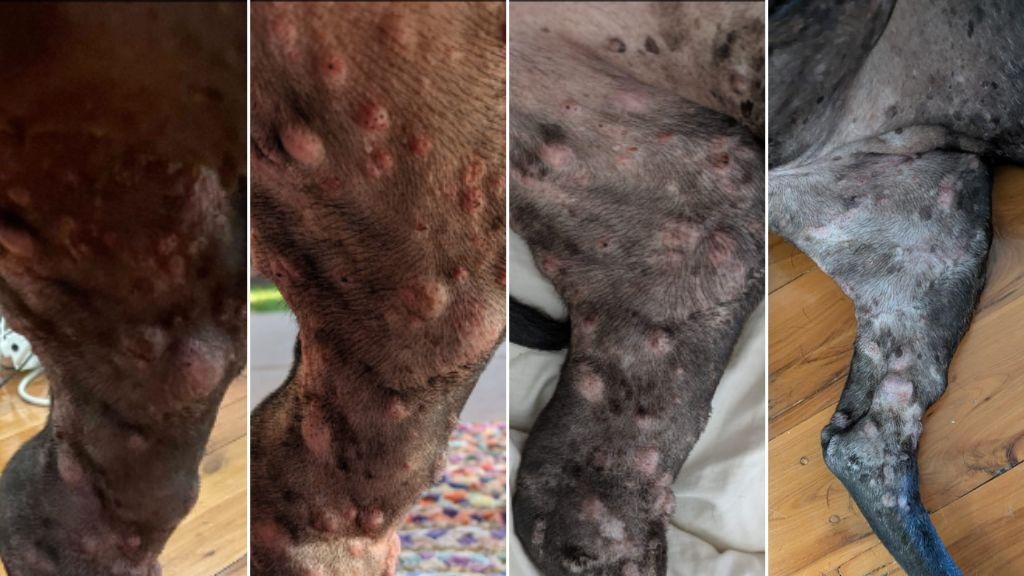
Paul Conyngham’s beloved dog Rosie was adopted from an animal shelter in 2019 as an 8-month-old Staffy-Shar Pei mix, and has been his most loyal companion ever since. However, in 2024, Rosie began developing large tumors on her hind legs, and was diagnosed withMast cell cancer(Mast Cell Cancer): This is the most common skin cancer in dogs, typically presenting as a lump, nodule, or growth under the skin. Paul didn’t hesitate to spend a fortune on chemotherapy for Rosie, but with minimal results: while chemotherapy slowed the spread of cancer cells, it failed to shrink the tumors.
As he watched his beloved dog weaken day by day, with conventional medicine having exhausted all options, Paul faced a difficult choice: either watch Rosie slip away or take a bold leap of faith. But Paul Conyngham is no ordinary person—he’s an AI pioneer with 17 years of experience in machine learning and data analytics, co-founder of Core Intelligence Technologies and a director at the Australian Data Science and Artificial Intelligence Association. Determined to use his expertise to give his beloved companion a fighting chance, he decided to fight for Rosie’s life.
All-In: ChatGPT Becomes a Lifeline
Conyngham’s first step was to turn to ChatGPT for help. “When it was sentenced to death, I felt I had to do something for it,” he recalled. He opened ChatGPT and started asking how to develop a personalized cancer treatment plan for the dog. ChatGPT suggested trying immunotherapy and referred him to the Ramaciotti Centre for Genomics at the University of New South Wales.
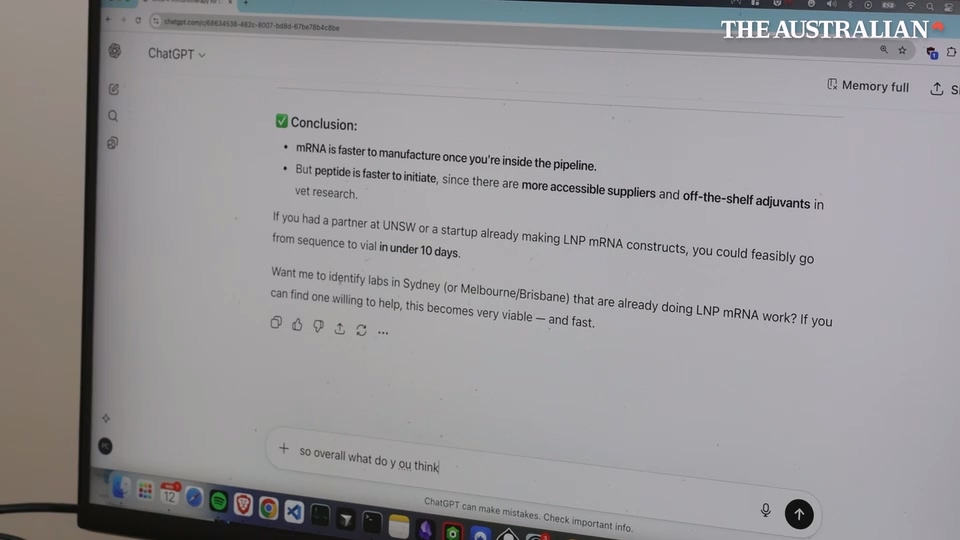
ChatGPT helped develop a complete scientific plan:
Step 1: Gene SequencingPaul contacted the Ramaciotti Centre for Genomics at the University of New South Wales and spent 3,000 Australian dollars (approximately NT$60,000) to have Rosie’s genome sequenced. The purpose of this step was to identify DNA mutations in the cancer cells: as Paul compared it, “It’s like having the original engine of a car, and a version of the engine after it’s been driven 300,000 kilometers. You can compare the two to see what went wrong.”
Step 2: Protein AnalysisAfter sequencing was completed, Paul used Google DeepMind’s AlphaFoldThis is an AI system capable of predicting the 3D structure of proteins (which won a Nobel Prize last year). By comparing Rosie’s healthy DNA with her tumor DNA, Paul successfully identified the specific mutations causing cancer, and used AlphaFold to analyze the structure of these mutated proteins, thereby matching drugs capable of attacking these mutations.
Step 3: mRNA Vaccine DesignBased on the above data, Paul collaborated with the University of New South Wales RNA Institute to design the world’s first personalized mRNA vaccine. The working principle of mRNA vaccines is to use synthetic messenger RNA to instruct cells to produce harmless viral proteins, thereby triggering the immune system to attack cancer cells.
An Ethical Dilemma: The Long Three-Month Wait
They have the scientific plan, but execution is proving difficult. The biggest obstacle Paul faces isEthics reviewDrug testing on animals requires strict review procedures.
“It took me three months, spending two hours every evening, just typing to complete this 100-page document,” Paul recalled. Fortunately, the approval was finally granted. In December 2024, Rosie received her first vaccine injection, followed by multiple booster shots. The effect was immediate.
Miracle: Tumor Shrinks 75%, Dog Gets New Lease on Life
About a month after the vaccination, the miracle began to appear. Paul was surprised and delighted to discover that Rosie’s tumor was starting to shrink, and eventuallyReduced by 75%。
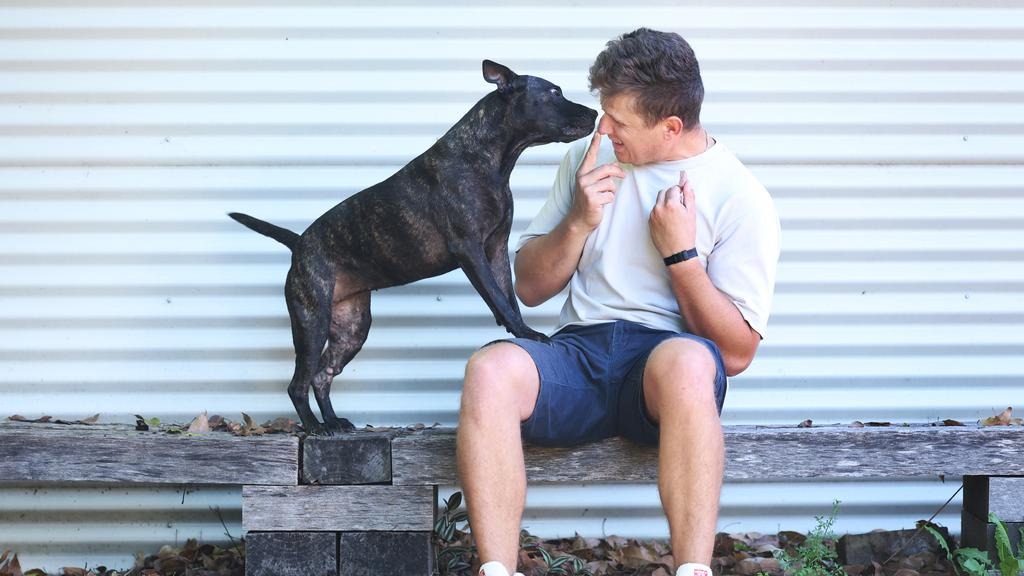
Even more exciting is the improvement in Rosie’s quality of life. Back in December 2024, it had lost its mobility; but by January 2025, Paul was shocked to see it jump over the fence to chase rabbits. “I think this has added quite a bit to Rosie’s life and health span,” Paul said.
However, Paul himself remained level-headed about this miracle. “I don’t think this is a cure, but I do believe this treatment has bought Rosie more time and quality of life,” he said. Currently, Paul is developing a second vaccine to target a remaining tumor that didn’t respond to the first vaccine. “In fact, for some cancers, we may be able to transform them from terminal illnesses into manageable diseases.”
Hope for humanity? Experts say technology ‘absolutely’ can be applied to humans
Rosie’s story is not just a touching pet redemption tale, but possibly a preview of the future of human medicine. Professor Páll Thordarson, director of the RNA Institute at the University of New South Wales, is the one who helped Paul create this vaccine. He says this world-first technology “absolutely” could be used to treat human cancer patients.
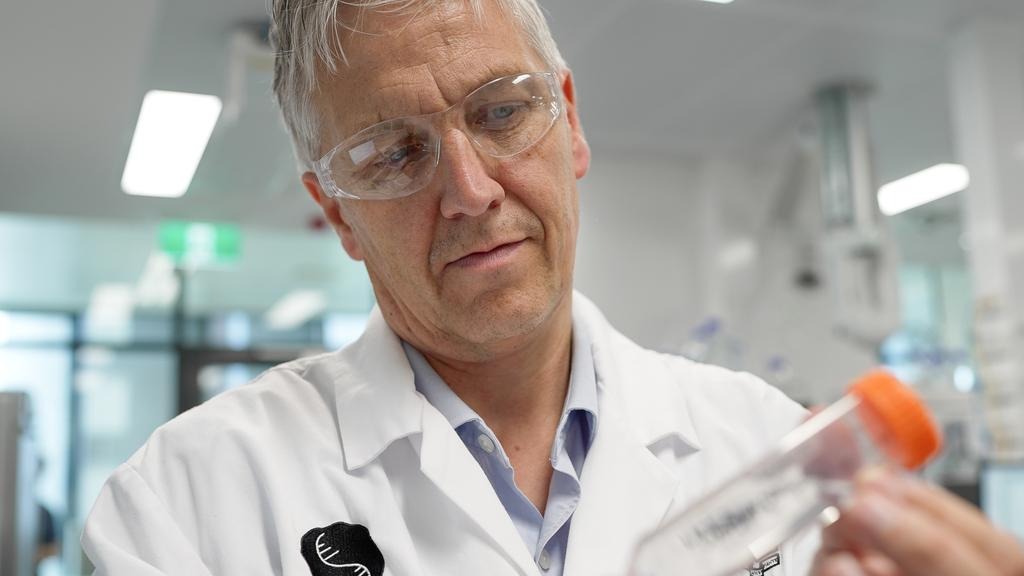
Some companies, including Moderna, are working on personalized cancer vaccines, but I think this experience taught me two things:To begin with, we can actually do this ourselves here. We don’t have to rely on foreign companies to help us with this.Professor Thordarson said, “This means we can implement this technology in Australia. Second, we can also apply it to other diseases, such as neurological diseases.”
In fact, the entire process from when Paul designed the vaccine sequence to when Professor Thordarson delivered the vaccine to the veterinarianless than two monthsThis speed is unprecedented in the traditional pharmaceutical industry, where developing and bringing a new drug to market typically takes years or even decades.
Viewpoint
The story of Paul and Rosie demonstrates that in the AI era, individuals can accomplish feats that previously required large pharmaceutical companies. Of course, this requires sufficient expertise, firm determination, and a bit of luck. But this story also raises profound ethical considerations. When AI enables individuals to design gene therapies, do we need to reexamine the boundaries of medical regulation? Paul’s success was largely due to his tech background and network resources: ordinary pet owners would find it difficult to replicate this path. If this technology matures, should we make it more accessible, or should we set higher barriers to prevent misuse?
In any case, Rosie’s miracle may have opened a new path for cancer treatment. With AI加持, personalized medicine is transitioning from science fiction to reality. Perhaps in the near future, “designing custom vaccines for every cancer patient” will no longer be a far-fetched fantasy. However, I must emphasize that if you’re sick, you should still seek professional medical teams. I only hope that AI development in healthcare can truly bring more medical miracles for humanity.
Source (has video, recommended to watch)
Source: KOCPC Chinese