


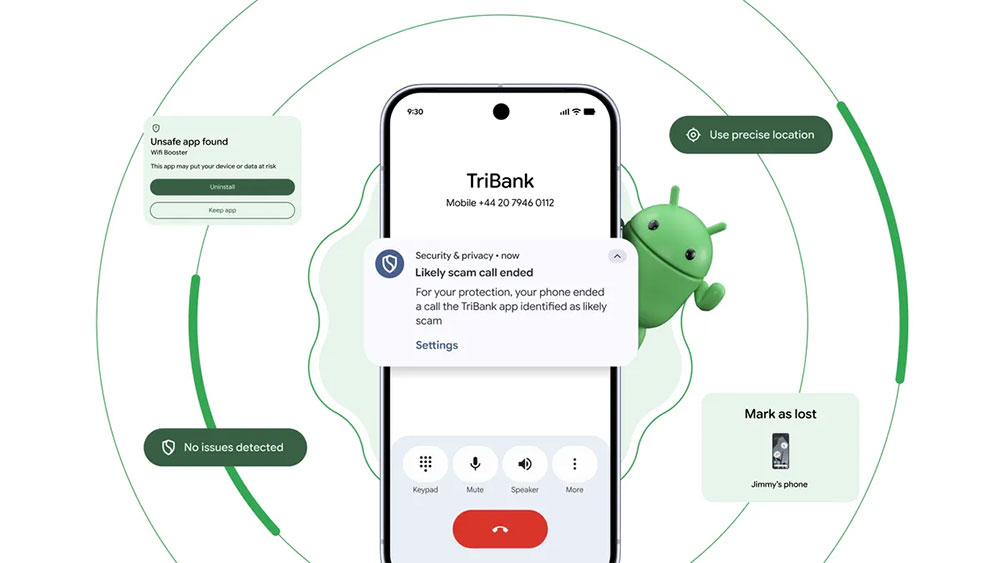
Android 17 is this year’s big update, and while it’s not the most talked-about or anticipated release in recent years, it still brings some changes that really improve the day-to-day experience. One of the relatively low-key but very useful new features is to make location access permissions more precise and controllable.
Android 17’s best privacy feature: Temporary location access
Of all Android permissions, location information has always been the most sensitive. No one wants any app to be able to track their real-time location over time, but many services cannot function properly without location permissions, and users are often forced to grant full access. For years, Android has taken a “give it to everything or none” approach to location permissions. Once you press Allow, apps can read your precise location at any time unless you actively go to the system settings to revoke it, but most people don’t do that.
It wasn’t until 2021 that Android 12 began to improve this problem, adding “exact” and “approximate” location options to allow users to control the level of sharing in more detail. Coupled with the “period of use” and “this time only” authorization introduced in Android 10, it seems to have provided more flexibility. However, many apps don’t make it clear why they require a precise location; they’ll even refuse to work if you choose an approximate location, so users are still forced to choose between “too much” and “unusable”.
Android 17 attempts to resolve this longstanding dilemma. You can now select “This time only” to grant precise location, but you no longer need to be interrupted by a pop-up every time you open the app, nor do you need to completely paralyze the app due to denial of authorization. What’s more, the system is starting to support a smarter mode: temporary precise location.
The core concept of this new feature is that not all apps need to constantly track your precise location. Some services only require precise positioning for specific tasks, such as a food delivery platform when you select a pickup location, a map application when you start navigation, or a shopping platform when you confirm the inventory of nearby stores. These situations are all “short-term and clear” needs, not long-term monitoring.
Therefore, Android 17 allows apps to make temporary requests to you to “use precise location” when necessary. You’ll see a button on the screen clearly telling you that precise positioning is enabled, and only for the current task. After the task is completed, the permissions will be automatically revoked, and access will not continue in the background, nor will it disturb you again the next time you open the app.
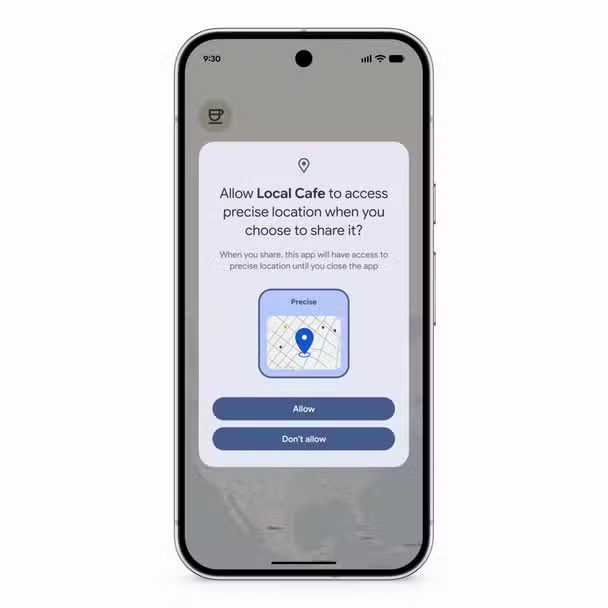
Imagine you are ordering coffee using a takeaway app. The items have been added to your shopping cart and you need to select a pickup location. At this time, the “Use Precise Location” button will appear on the screen. After you click it and authorize it, the application can read your location. Once the order is sent and you leave the app, the permissions will expire immediately. The entire process is simple, transparent, and fully meets users’ privacy expectations.
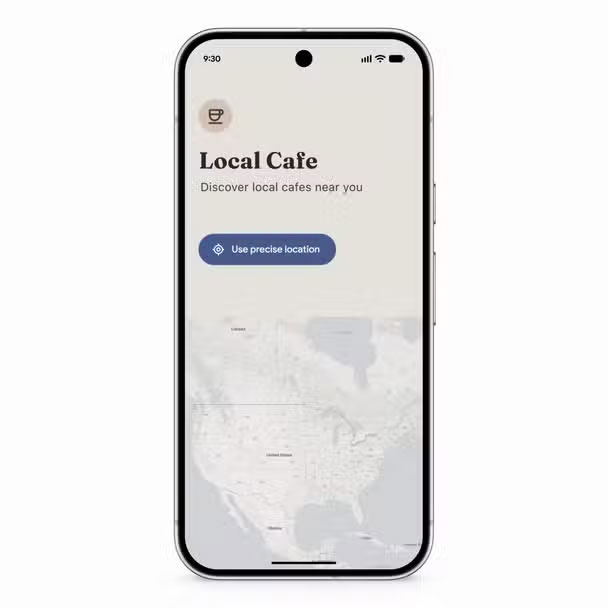
At first glance, this may seem like just a small tweak to the permissions system, but it’s actually an important evolution in Android’s privacy design over the years. Although Android 12 provides more options, it still cannot prevent apps that are eager to ask for location from popping up prompts on startup. The temporary precise location of Android 17 truly makes permission requests “contextual”. The application no longer asks you to make important decisions at the beginning, but waits until you really need the location information to make the request. For users, this means less interference, clearer information, and more detailed control; for developers, it means a more reasonable permission design. I look forward to seeing more apps adopt this new feature, making location permissions no longer an annoying pop-up but a smart tool that is naturally integrated into the workflow.
Source: KOCPC Chinese