


When Openclaw was sweeping the globe, many people wondered why Anthropic wasn’t more accommodating and instead sent their legal heavy hitters to crack down, driving OpenClaw’s founder to OpenAI. The answer might be simple—Anthropic wanted to build it themselves. Tech insider account TestingCatalog First revealed Anthropic’s brand-new resident AI agent currently being tested internally: codename “Conway”. This is not another chatbot, nor is it the previousDispatchConway is a 24/7 AI workspace that actively responds to external events, supports third-party extensions, and deeply integrates with Chrome. It is seen as the clearest signal of Anthropic directly challenging OpenAI.
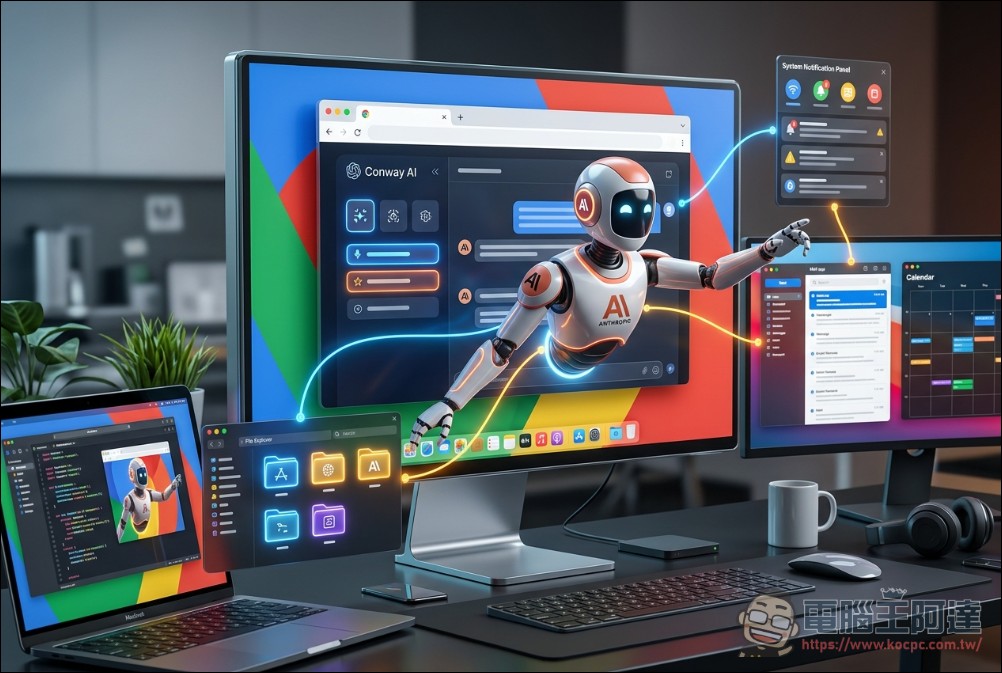
From Passive Conversations to Autonomous Workspaces: Conway’s Design Architecture
According to source code analysis, Conway doesn’t run as a parasitic element within traditional chat windows—instead, it operates as an independent web page instance, giving each user their own dedicated AI workspace interface. This design choice itself carries significant strategic implications: where the previous Claude user experience was “humans initiate conversations, AI responds passively,” the emergence of Conway suggests Anthropic is reconstructing Claude as an “always-online, continuously monitoring, proactively intervening” digital agent option.
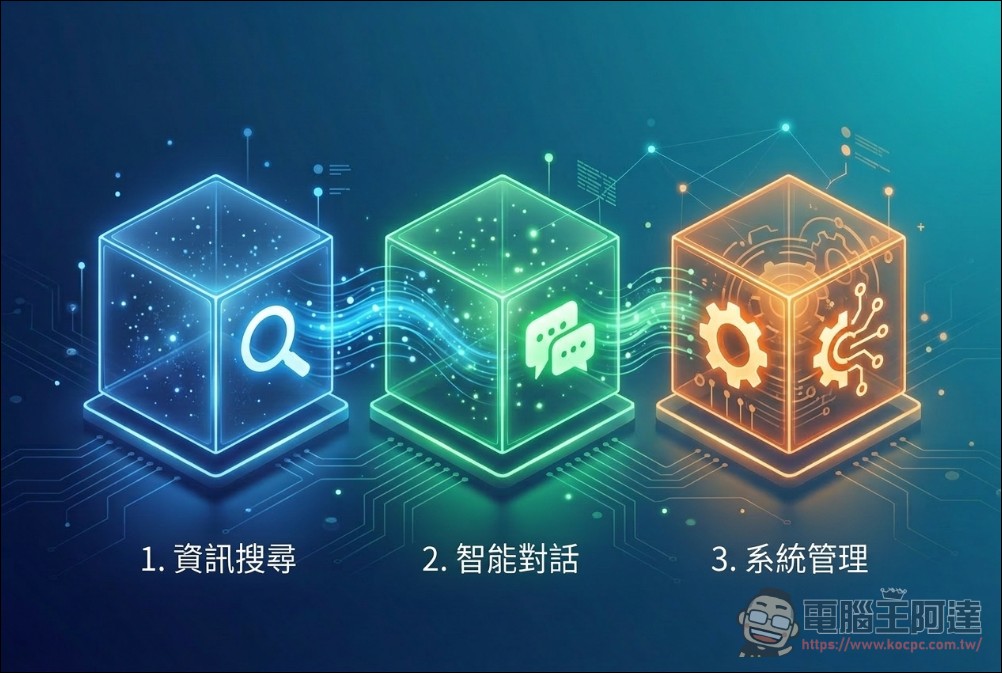
Conway’s sidebar is divided into three major core modules:SearchBind experimental hotkeys, emphasizing rapid invocation abilityChat(Main conversation interface for handling daily tasks and questions)System(The most critical instance management zone, controlling AI’s runtime state and extensions).
The three major modules have distinct responsibilities: Search ensures users can quickly access specific information whenever needed, Chat is the core space for daily interaction with AI, and System serves as the hub for managing Conway’s operational state—including instance switching, performance monitoring, and most importantly, Extension management.
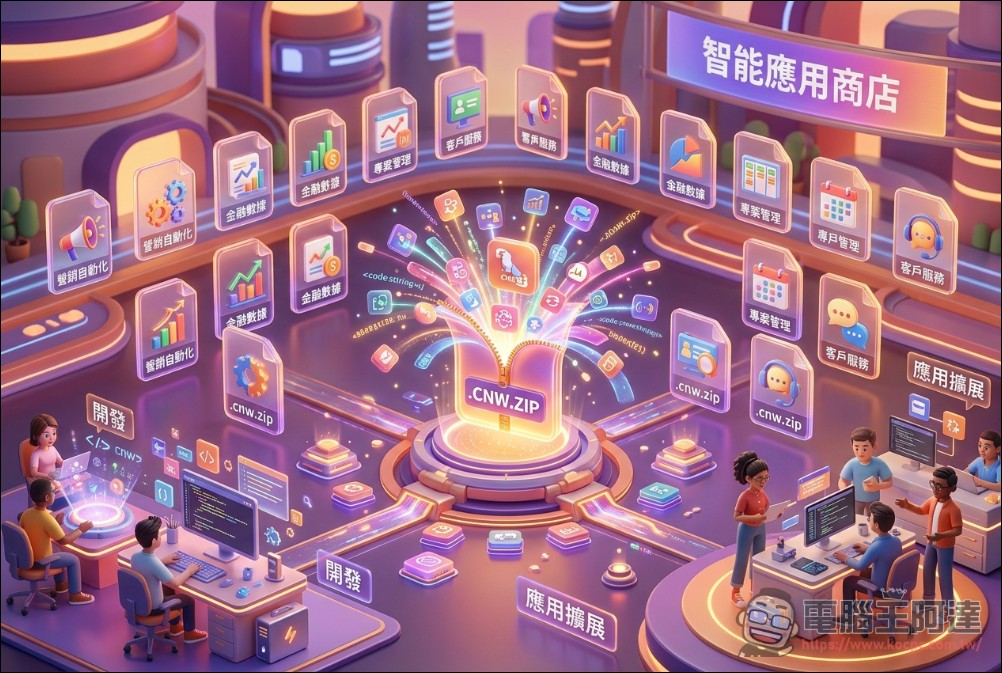
Among them, the System module includes a built-in “Extensions” section that supports uploading .cnw.zip Format plugin installation: This is a brand-new AI agent extension format that Anthropic built specifically for Conway, capable of bundling custom tools, UI labels, and content processors in one package.
Here’s the plain-English translation:
In simple terms, Anthropic is building an “AI-native App Store” extension standard for Claude. Developers can install new capabilities onto Conway simply by following the .cnw.zip format specification—just like how third-party developers added features to smartphones through apps after they hit the market. Once this format and ecosystem mature enough, users will be able to customize their experience like assembling a personal workstation, installing different functional plugins based on their needs: automated marketing tools, financial data processing modules, CRM integrations, project progress tracking assistants—the possibilities are virtually endless. For enterprise users, this also means IT departments can develop custom plugins tailored to their internal workflows, deeply integrating AI capabilities into existing enterprise systems.
Webhook Wake-up Mechanism and Chrome Integration: AI Evolves from Tool to Agent
The most strategically significant function of Conway is Webhook wake-up mechanismThis design allows external services to trigger Conway’s operations through webhook calls, enabling autonomous event responses even when the front-end page is not active, achieving 7×24 uninterrupted operation. Compared to traditional chatbot mode, where users must open the window and actively input prompts to receive responses, the webhook wake-up mechanism completely flips this relationship: Conway no longer requires users to keep their eyes on the page. Instead, it functions like a true digital assistant, continuously monitoring for specific trigger conditions in the background and proactively taking action when events occur.
What does this mean? Enterprise users can integrate Conway with internal inventory systems, customer support platforms, or email services. When inventory drops below the threshold, Conway automatically generates purchase recommendations and compiles supplier comparison reports. When an important customer sends an email, Conway instantly organizes conversation summaries, extracts action items, and drafts replies. When the system detects abnormal transaction behavior, Conway proactively sends alerts along with possible risk factors. These are scenarios that previously required repeated human checks and manual operations, but can now be entirely handled by AI—without needing users to monitor in real time.
Beyond Webhook activation, the Conway settings page includes a built-in toggle for direct connection to the Chrome browser, along with system notification sending capabilities.[1]Combined, browser operation permissions and proactive push notifications virtually extend AI agents’ reach from the cloud directly into users’ daily internet browsing and work workflows. AI no longer exists solely within chat dialogs—it actively intervenes in every aspect of users’ web browsing, email, and scheduling. This level of integration has far exceeded what general chatbots can achieve, bringing us closer to an AI Agent that can operate computers on behalf of humans.
Week 10 Thursday: Anthropic’s Complete Timeline of Rapidly Catching Up to OpenClaw
Conway’s arrival was not a sudden ambush, but an inevitable result of Anthropic’s strategic positioning over the past ten weeks. According to NewClaw Times’ timeline tracking report, since the beginning of 2026, Anthropic has been releasing four features directly targeting OpenClaw at a breathless pace:
January 12, 2026: Cowork:This is an AI work collaboration tool that Anthropic has specifically launched for non-technical employees within enterprises. Unlike Claude Code, which primarily serves the developer community, Cowork is designed to enable employees who don’t know how to program — representing approximately 95% of total enterprise staff in most companies — to easily use AI to complete daily tasks. Anthropic’s Chief Business Officer Paul Smith recently revealed in an interview that Cowork’s early user growth has already surpassed Claude Code at the same stage, suggesting that this market, previously overlooked by major tech companies, has far more surprising potential than imagined. Non-technical employees in enterprises have always been the largest but most difficult-to-reach demographic for AI tools. What they need is a programming-free, intuitive interface — and this is precisely Cowork’s core design objective.
Dispatch:The mobile remote dispatch feature allows users to issue complex commands to their home AI system directly from their phones while commuting or attending meetings, eliminating the need to be at a computer.[4]This feature addresses a critical gap in AI’s evolution from “stationary use” to “available anytime, anywhere.” For business professionals or executives who need to move between multiple locations, Dispatch represents a new work model: even when you’re on the go, your thoughts can be handed off to AI for processing at any time, so that by the time you return to the office, most of the tasks are already done.
Claude Code Channels:Integrate Claude Code with popular communication platforms like Telegram, Discord, and Slack, making the vision of “calling on AI directly within users’ existing work environments” a reality. Engineers no longer need to switch windows and leave their terminals, and sales teams can stay in Slack threads while directly invoking AI to process data, generate copy, or answer technical questions. This “embedded AI” strategy significantly reduces cognitive load—there’s no need to learn an entirely new tool; if you can use your existing communication software, you can use AI capabilities.
Computer Use:The most radical step: AI can directly control the Mac desktop, simulating human mouse and keyboard operations to complete complex multi-step tasks that require coordination across multiple applications.[4]This is a key milestone in upgrading AI from “providing suggestions” to “executing tasks on behalf of users.” When AI can actually operate desktop applications, users no longer need to learn how to “give commands to AI” — they simply describe the desired outcome, and AI will open the relevant programs, perform the necessary operations, and deliver the completed result to the user.
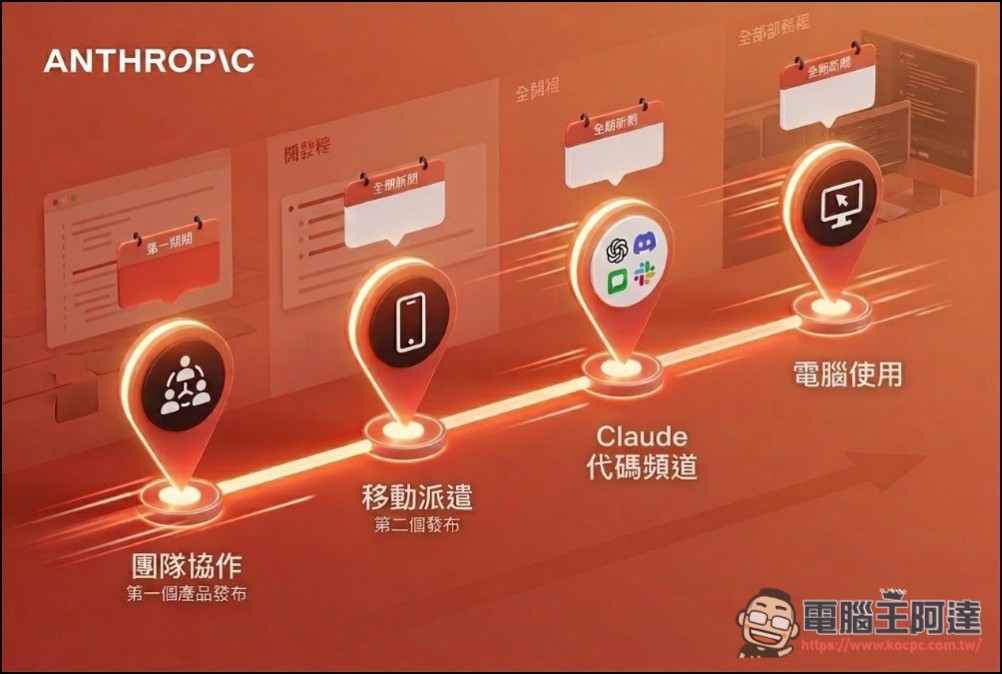
Four functions across four different dimensions:Access interface, cross-platform compatibility, everyday collaboration scenarios, desktop control capabilitiesTransform Claude from a passive Q&A tool into an autonomous digital twin that proactively engages with users’ digital lives. Conway’s positioning serves as the unified workspace for all these capabilities—integrating the features released over ten weeks into a single agent environment running 24/7, eliminating the fragmented experience of users having to switch between multiple independent tools.
Epitaxy: Conway Ecosystem’s Backend Control Panel
In the same leak, another newly surfaced interface has the codename EpitaxyAccording to TestingCatalog’s report, Epitaxy is not aimed at general users but is positioned as an alternative interface for Claude Code Desktop, featuring a more comprehensive shortcut key system and an animation themed around Claude’s mascot shooting fireballs—somewhat symbolizing the product vision of AI moving from passive responses to proactive engagement.
The industry interprets Epitaxy as the “operator interface” for the Conway environment. This layered division of logic is common in tech product design: general users interact with mobile apps, while developers use command-line tools to manage servers. The two interfaces serve different user groups but share the same core system. Applied to the Conway ecosystem: general users interact with AI through a visual workspace using mouse and graphical interface, making it task-oriented and intuitive; advanced users, developers, or system administrators control the same underlying system more efficiently via keyboard-driven shortcuts through Epitaxy, suitable for professional scenarios requiring precise control or high-volume repetitive operations.
AI’s New Frontier: The Race to Control the Desktop Agent Layer
From a broader industry perspective, Conway’s disclosure marks a shift in AI competition from “model capability races” to “the battle for the agent layer.” OpenAI, Google, and Anthropic each have their strengths in foundation model performance, but differentiation is becoming increasingly difficult to achieve through the models themselves: as model capabilities across providers gradually converge, users will start choosing the AI that “best integrates into my daily workflow” rather than “the one with the highest benchmark scores.” The real battlefield has already shifted to: who can first establish AI’s presence in users’ daily digital lives, becoming the tool users think of first when they open their eyes and confirm last before going to sleep.
Conway isn’t the only player on this road. OpenClaw has already established itself as a “resident AI agent,” building a first-mover advantage; Perplexity launched the Personal Computer project, attempting to extend AI search capabilities into a complete desktop assistant; NVIDIA released the Agent Toolkit, providing enterprises with the foundational framework for building AI agents. Every tech giant is trying to answer the same question: how to make AI not just a tool occasionally used in a chat window, but something that penetrates every aspect of operating systems, browsers, and workflows, becoming an indispensable part of users’ digital lives?
For Anthropic, Conway’s strategic significance lies in integrating the four features released over the first ten weeks into a single unified, scalable, always-on agent environment, opening the door to a third-party ecosystem through the Extensions mechanism. This isn’t just feature stacking—it’s an architectural-level redefinition of how Claude is used: upgrading from “you ask, I answer” to “you set the goal, I complete it autonomously.” Cowork simplifies onboarding for non-technical users, Dispatch enables remote usage scenarios, Channels embeds into existing work platforms, and Computer Use takes over desktop operations. Conway, meanwhile, gives all these capabilities a shared home.
As for when this system will be officially released to the public, there is currently no clear timeline – Conway is still in internal testing. However, given the remarkable execution speed Anthropic has demonstrated over the past ten weeks, the answer is likely closer than the outside world expects. For OpenClaw and its users, this is undoubtedly a signal that warrants close attention: the battle for the desktop agent layer has officially entered the second half.
Source: KOCPC Chinese