


As OpenClaw moved AI agents from simple chat interfaces to 24/7 “digital assistants,” the token usage that previously had little relevance to everyday people suddenly came under scrutiny. Recently, the open-source project OpenClaw was hit by AI giant Anthropic’shardline crackdown, sparking heated discussions in the tech community about the boundaries between third-party tools and model providers. However, what fewer people care about is that the core reason behind this blockade drama is not simply Anthropic’s exclusionary practices. Fuli Luo, the developer lead of Xiaomi’s recently trending MiMo large language model (Luo FuliOne of the core reasons for OpenClaw’s ban actually stems from its extremely poor context management design, which not only wastes staggering computational resources but also pushes Claude’s burden to the breaking point.
Two days ago, Anthropic cut off third-party harnesses from using Claude subscriptions — not surprising. Three days ago, MiMo launched its Token Plan — a design I spent real time on, and what I believe is a serious attempt at getting compute allocation and agent harness…
— Fuli Luo (@_LuoFuli) April 5, 2026
Banned for Consuming Tens of Times More Tokens Than Average Users: Analyzing OpenClaw’s Technical Debt Issues
The Cost of 24/7 Operation: Endless Token Burning
OpenClaw was designed to function as an AI agent running continuously on WhatsApp, Telegram, or iMessage. This means it’s fundamentally different from the web versions of Claude or ChatGPT, where users typically close the window after finishing a conversation and start a new topic. OpenClaw is deeply integrated with your messaging app, so conversation history accumulates naturally over time.
The problem is that OpenClaw itself lacks a smart context management mechanism. According to Luofuli’s observations, when OpenClaw handles each interaction, it almost adopts a “brute force” strategy: it stuffs the entire conversation history into the current context window – whether it’s the lunch discussion from three minutes ago or the technical document processed three days ago – and this typically exceeds 100,000 tokens.
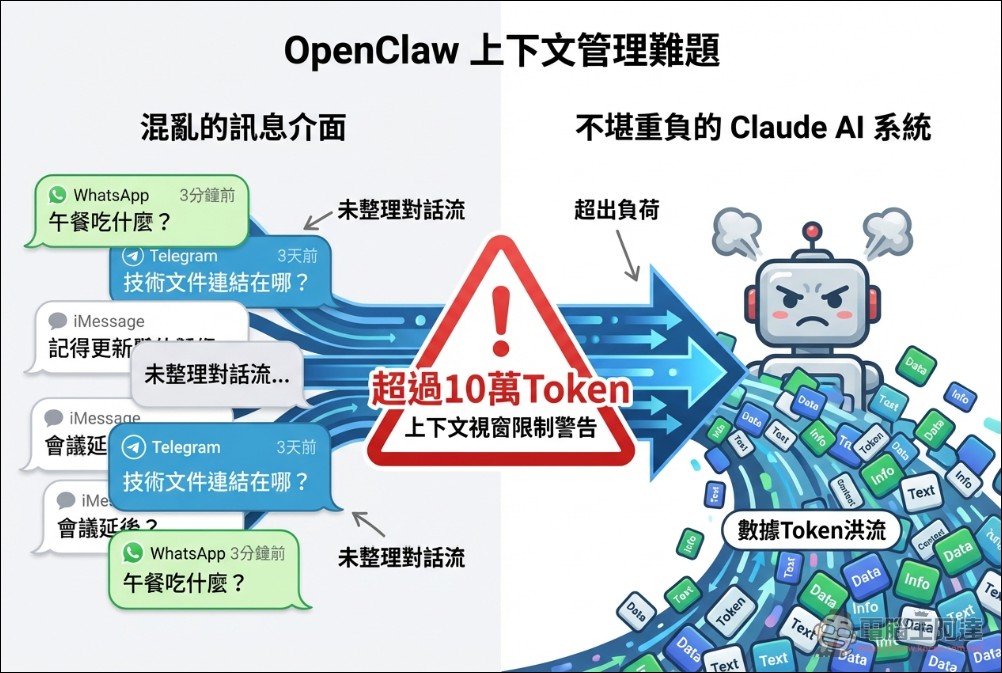
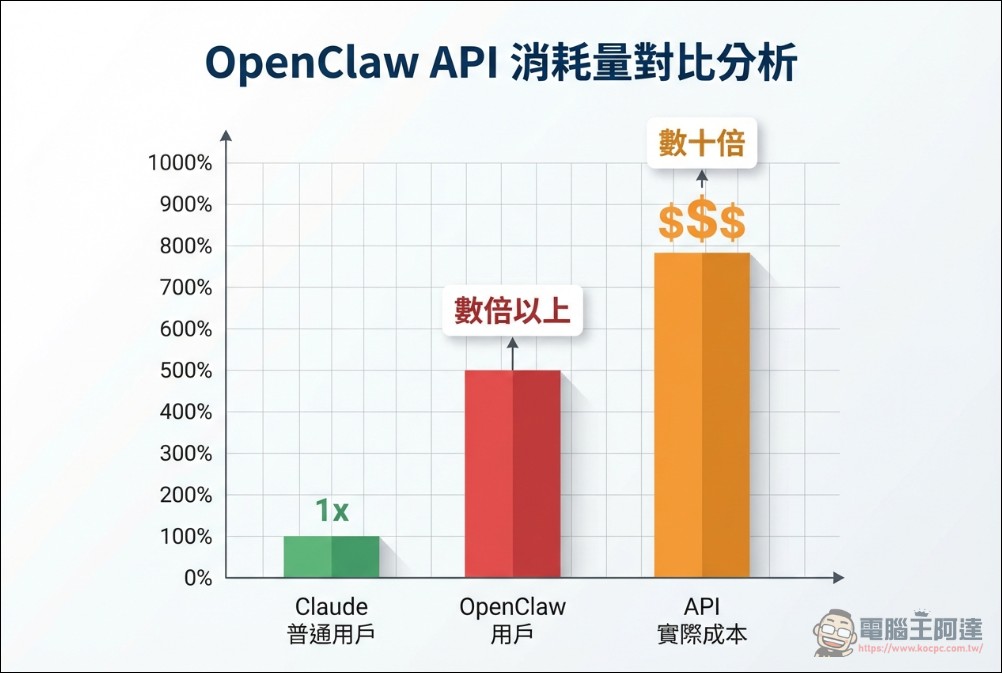
For service providers like Claude, this means that every time it receives a brief instruction from an OpenClaw user, it has to re-read tens of thousands or even hundreds of thousands of tokens of irrelevant history. This design causes OpenClaw’s API consumption to be several times higher than that of an average Claude Code user. When calculated against API pricing, the actual cost could be dozens of times the subscription price—especially since she also estimated that Claude Max is actually operating at a loss, so being squeezed by OpenClaw like this is naturally even more unbearable.
Technical Analysis: Overlooked Compression and Smart Discard Mechanisms
In modern AI Agent development standards, context management (Memory Management) is the key to determining performance and cost. Mature systems typically have the following three core mechanisms, but OpenClaw appears to be extremely lacking in these areas:
- Context CompressionSemantically compress lengthy dialogue to retain key information while removing redundant words.
- Automatic Summarization (Recursive Summarization)When the conversation history reaches a certain length, the model automatically generates a “summary” to replace the original dialogue, freeing up token space.
- Smart PruningIdentify which information is outdated or irrelevant to the current task, and proactively remove it from the context window.
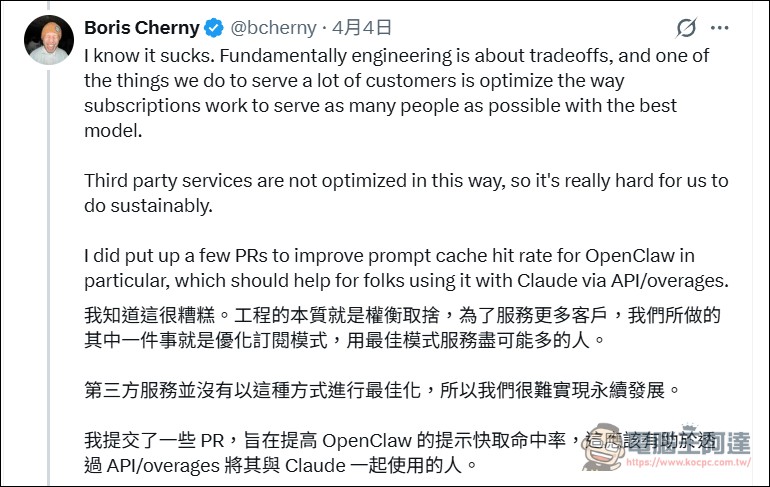
Since OpenClaw failed to implement these effective mechanisms, its operation model was described by the industry as “burning down the Golden Pavilion.” Boris Cherny, head of Claude Code at Anthropic, publicly explained that some third-party tools placed excessive strain on the system—tools that often weren’t optimized for usage, leading to unnecessary consumption of server resources. This technical shortcut ultimately became the last straw.
Comparison test: Normal Claude usage vs. OpenClaw Crazy Mode
To understand this “dozens of times” consumption difference, we can create a simple comparison scenario. In the normal Claude web version or official app, when a user starts a new conversation, the context starts counting from zero. Even in long conversations, Anthropic’s official system caches and manages past conversations through backend algorithms. However, as an intermediate layer, OpenClaw forces the complete conversation history to be sent to the API with every request.
According to industry analysis, a Claude Max subscriber paying $200 per month could generate computational costs equivalent to $5,000 if they engage in high-frequency interactions through unoptimized tools like OpenClaw. For Anthropic, this is no longer just a commercial licensing issue, but a serious technical abuse vulnerability. The official accusations against OpenClaw explicitly state that the tool’s failure to optimize usage causes unsustainable service operations, making this less of a business excuse and more of a public accusation of the OpenClaw development team’s technical debt.
Conclusion: Technical Debt and AI Ecosystem Sustainability
OpenClaw’s case serves as a wake-up call for all AI Agent developers. In the era of API billing, the quality of code is no longer just about whether functionality is implemented, but also about resource utilization efficiency. Although OpenClaw achieved 24/7 convenient access, it overlooked the burden placed on Claude as the underlying infrastructure. This isn’t simply a matter of whether Anthropic allows third-party clients, but rather a pure engineering quality issue.
When developers take shortcuts and don’t handle complex memory management and context compression, these debts eventually get paid by the model providers. Or, as we see today, paid with the project’s very right to exist. For AI agents to achieve true mass adoption in the future, maximizing intelligence within limited context space will be a more critical race than model scaling. Anthropic’s blocking of OpenClaw marks a potential need to re-examine the “brute force token stacking” approach, and hopefully OpenClaw can address and improve this issue.
Source: KOCPC Chinese