


NVIDIA GeForce RTX 5090 The default power consumption is already quite high. Even though manufacturers have fully adopted the 12V-2×6 specification, there have still been sporadic reports of burnouts online, and these incidents have not stopped. Recently, an overseas enthusiast took things to an even crazier level by overclocking the power draw to 1,350W. However, luck was on his side, and in the end, he managed to keep his RTX 5090—which costs around 100,000—intact. Graphics CardIt didn’t burn out because of that; instead, it was saved by the ASRock power supply.
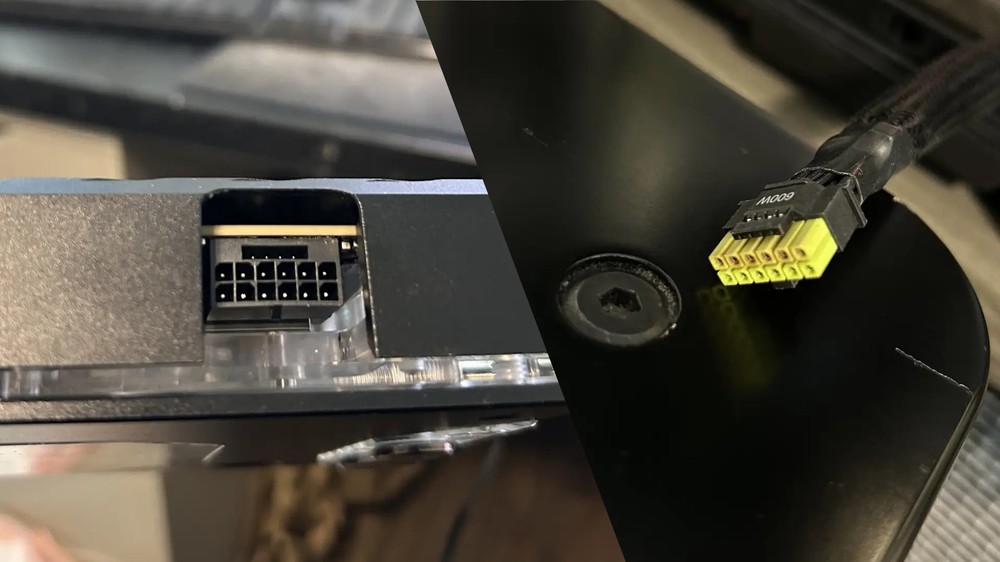
Image source: Wccftech
An enthusiastic gamer overseas overclocked his RTX 5090 to 1350W and nearly burned it out—luckily, the ASRock power supply saved his graphics card.
Recently abroad Overclock.net On the forum, a user named motivman shared his experience of how an ASRock power supply saved his RTX 5090. He mentioned that this RTX 5090 graphics card had been modified with shunt resistors and a water-cooling setup, and coated with liquid metal. While running 3DMark performance tests, the RTX 5090 drew approximately 1,350W—several times its rated power consumption. More importantly, he ran the test over 200 times at 1,350W, indicating that it was stable—which is pretty intense. He also admitted that he was playing with fire.
But then something unexpected happened. After turning off the power, he noticed that the power connector on the graphics card had not only changed color but had even melted slightly. The power supply couldn’t be restarted until the power cables had cooled down.
一直玩火,最後一定會被燒到,哈哈。ASRock 的電源供應器救了我的 Ventus,直接關機,而且在線材冷卻之前完全不會再供電……Ventus 可能再也回不到原本的狀態了,不過這段時間真的很刺激 🙂 …..motivman

GPU-side power connector:
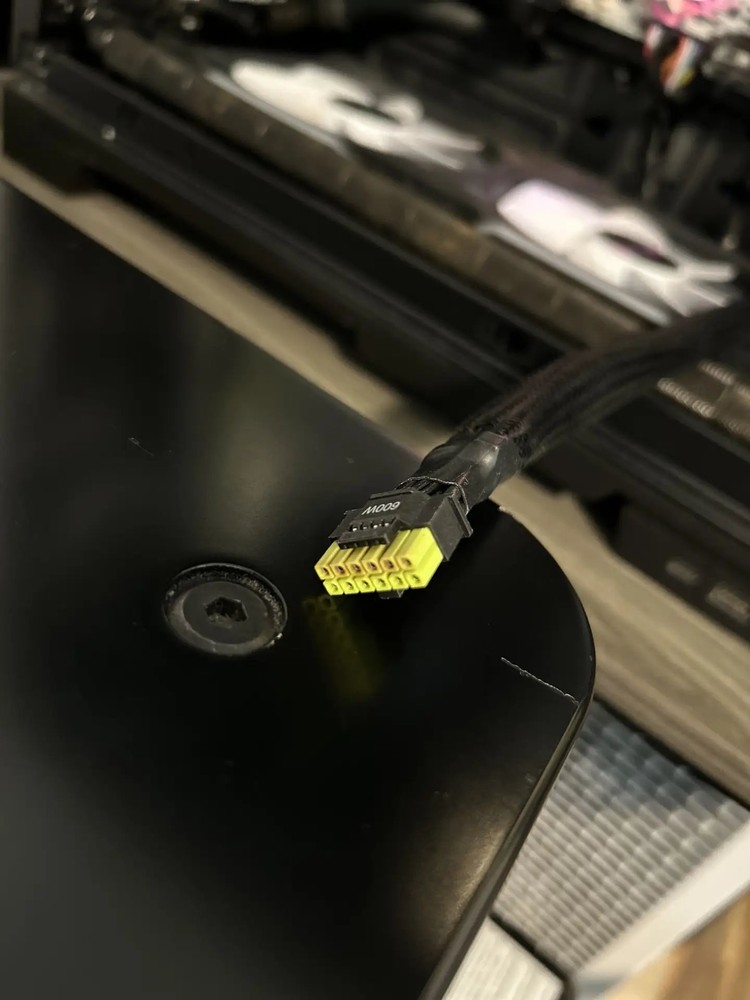
Image source: Overclock.net
Photo of the RTX 5090’s power connector:
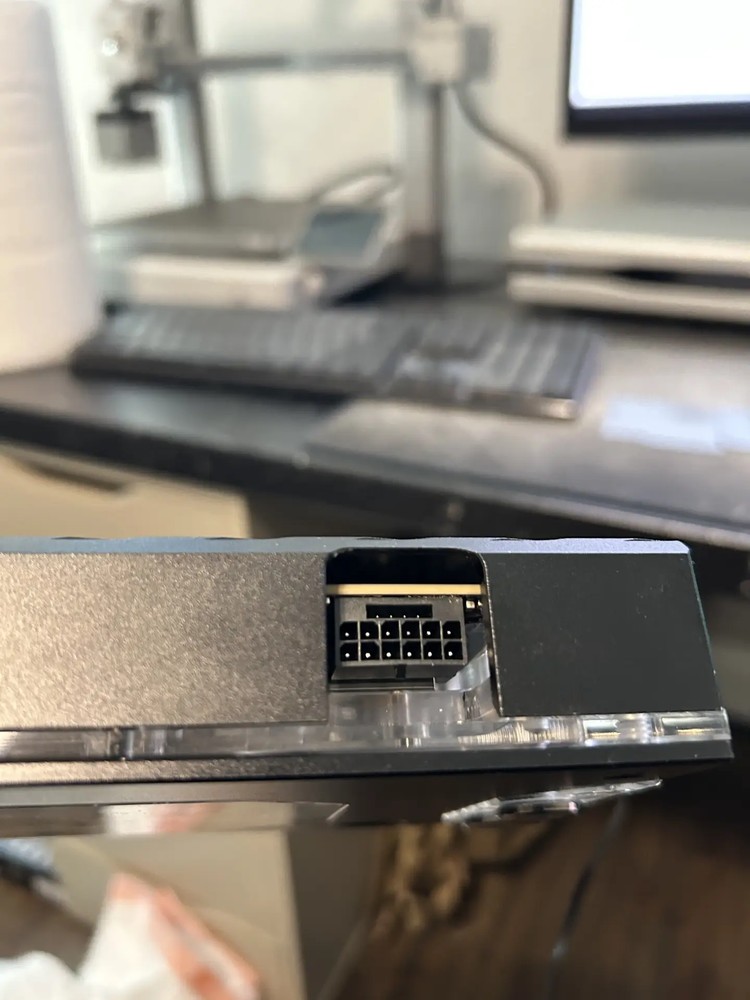
Image source: Overclock.net
As you can see, the ASRock power supply he used really saved this RTX 5090; if he’d used cables from another brand, the connector on the graphics card might have melted as well.
ASRock power supplies are equipped with native PCIe 12V-2×6 power cables, which feature built-in NTC temperature sensors at the graphics card connector end. According to the manufacturer, this sensor monitors the connector’s temperature in real time; if the temperature exceeds the safe range (105°C), a protection mechanism is triggered, and the cable will stop delivering power.
This approach can be seen as a way for power supply manufacturers to go beyond simply “updating connector specifications” and further reduce the risk of failures caused by 16-pin power connectors. For those unfamiliar with the details, this update to the 12V-2×6 specification focuses primarily on more reliably detecting whether a connector is not fully inserted, achieved through “shorter sensing pins” and “slightly longer power terminals.”
motivman believes that because of this issue, ASRock will likely sell a large number of power supplies, which is a good thing for them. If any ASRock representative happens to see this, I suggest considering lowering the power supply’s shutdown protection temperature from the current 105°C to around 85°C—this would provide a safer threshold.
ASRock Japan also shared details about this incident on its official social media channels:
Source: KOCPC Chinese